Best Essential Oils for Dandruff
Tired of those embarrassing white flakes on your shoulders? You’re not alone. Millions of people struggle with dandruff, but before reaching for harsh chemical treatments, consider nature’s powerful remedies. The best essential oils for dandruff offer gentle yet effective solutions that work with your body’s natural healing processes, not against them.
Essential oils have been used for centuries to treat scalp conditions, and modern research backs up many traditional uses. These concentrated plant extracts can help reduce inflammation, fight fungal overgrowth, and restore balance to your scalp – all without the side effects of conventional treatments.
Key Takeaways
• Tea tree oil is the most researched essential oil for dandruff, with proven antifungal properties
• Always dilute essential oils with carrier oils before applying to prevent skin irritation
• Consistency is key – regular use for 4-6 weeks typically shows the best results
• Natural doesn’t mean risk-free – patch test all oils before full application
• Combine oils strategically for enhanced benefits and better scalp health
Understanding Dandruff: Why Natural Solutions Work
Dandruff isn’t just about dry skin. This common scalp condition often results from an overgrowth of Malassezia, a yeast-like fungus that naturally lives on our scalp. When this fungus multiplies too quickly, it causes inflammation, itching, and those telltale white flakes.
Traditional dandruff shampoos work by using harsh chemicals like selenium sulfide or zinc pyrithione. While effective, these ingredients can strip your scalp of natural oils, leading to dryness and potential irritation over time.
Essential oils take a different approach. They work by:
- Fighting fungal overgrowth naturally
- Reducing inflammation without harsh chemicals
- Balancing oil production on the scalp
- Soothing irritation and itching
- Nourishing the scalp with beneficial compounds
Top 8 Best Essential Oils for Dandruff Treatment
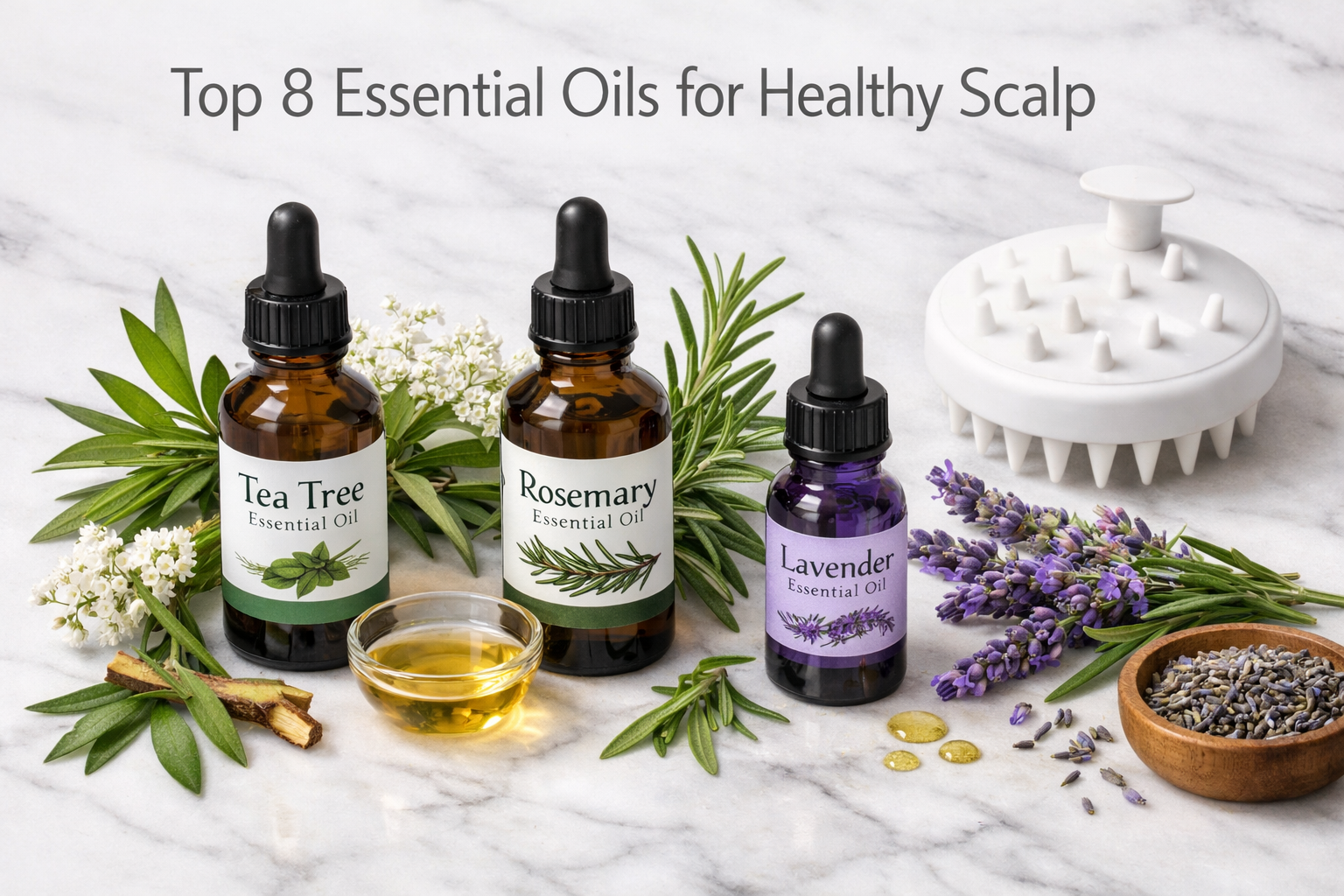
1. Tea Tree Oil 🌱
Why it works: Tea tree oil contains powerful antifungal compounds, particularly terpinen-4-ol, which directly targets the Malassezia fungus responsible for dandruff.
Research backing: A 2002 study found that 5% tea tree oil shampoo reduced dandruff severity by 41% after just four weeks of use.
How to use:
- Mix 2-3 drops with 1 tablespoon carrier oil
- Massage into scalp 30 minutes before washing
- Use 2-3 times per week
2. Rosemary Oil
Why it works: Rosemary oil improves circulation to the scalp and has antimicrobial properties that help control fungal growth.
Additional benefits:
- Stimulates hair growth
- Reduces scalp inflammation
- Balances oil production
Best for: People with oily scalp conditions and thinning hair alongside dandruff.
3. Lavender Oil 💜
Why it works: While gentler than tea tree oil, lavender offers antimicrobial benefits plus powerful anti-inflammatory properties.
Perfect for:
- Sensitive scalps
- Stress-related dandruff
- Nighttime treatments (calming scent promotes better sleep)
4. Peppermint Oil
Why it works: The menthol in peppermint oil provides immediate relief from itching while its antimicrobial properties help control fungal growth.
Caution: Very potent – use sparingly (1-2 drops per tablespoon of carrier oil).
5. Lemon Oil 🍋
Why it works: Natural acids in lemon oil help balance scalp pH and remove dead skin cells that contribute to flaking.
Benefits:
- Clarifies the scalp
- Adds natural shine to hair
- Fresh, clean scent
Important: Avoid sun exposure after use – lemon oil can increase photosensitivity.
6. Eucalyptus Oil
Why it works: Strong antifungal and anti-inflammatory properties make eucalyptus effective against stubborn dandruff.
Best combined with: Milder oils like lavender to reduce potential irritation.
7. Thyme Oil
Why it works: Contains thymol, a compound with powerful antifungal properties that rivals commercial treatments.
Note: Very concentrated – always dilute well and patch test first.
8. Cedarwood Oil
Why it works: Helps regulate oil production and has gentle antifungal properties, making it ideal for long-term scalp health.
Perfect for: Maintenance after clearing active dandruff.
How to Use the Best Essential Oils for Dandruff Safely
Essential Dilution Guidelines
Never apply essential oils directly to your scalp. Always dilute with carrier oils to prevent irritation:
| Essential Oil Strength | Drops per 1 Tbsp Carrier Oil | Best For |
|---|---|---|
| Gentle (Lavender, Cedarwood) | 3-5 drops | Sensitive scalps, daily use |
| Moderate (Tea Tree, Rosemary) | 2-3 drops | Regular treatment |
| Strong (Peppermint, Thyme) | 1-2 drops | Occasional use, severe cases |
Best Carrier Oils for Dandruff
Coconut Oil: Natural antifungal properties enhance essential oil benefits
Jojoba Oil: Closely mimics scalp’s natural sebum
Sweet Almond Oil: Gentle and nourishing for sensitive scalps
Argan Oil: Rich in vitamins, helps repair damaged scalp
Application Methods
Pre-Shampoo Treatment
- Mix essential oils with carrier oil
- Part hair into sections
- Apply mixture to scalp using fingertips
- Massage gently for 2-3 minutes
- Leave on for 20-30 minutes
- Wash with gentle, sulfate-free shampoo
Shampoo Enhancement
- Add 2-3 drops of essential oil to your regular shampoo
- Mix in palm before applying
- Massage into scalp and leave for 2-3 minutes before rinsing
Scalp Spray
- Mix 10 drops essential oil with 2 oz water and 1 tsp carrier oil
- Shake well before each use
- Spray on clean, damp scalp
- Do not rinse out
Creating Effective Essential Oil Blends for Dandruff
Anti-Fungal Power Blend
- 2 drops tea tree oil
- 1 drop thyme oil
- 2 drops lavender oil
- 1 tablespoon coconut oil
Best for: Active dandruff with visible flaking
Soothing Sensitive Scalp Blend
- 3 drops lavender oil
- 2 drops cedarwood oil
- 1 drop rosemary oil
- 1 tablespoon jojoba oil
Best for: Irritated, itchy scalps
Balancing Oily Scalp Blend
- 2 drops rosemary oil
- 1 drop peppermint oil
- 2 drops lemon oil
- 1 tablespoon sweet almond oil
Best for: Greasy hair with dandruff
Safety Considerations and Precautions ⚠️
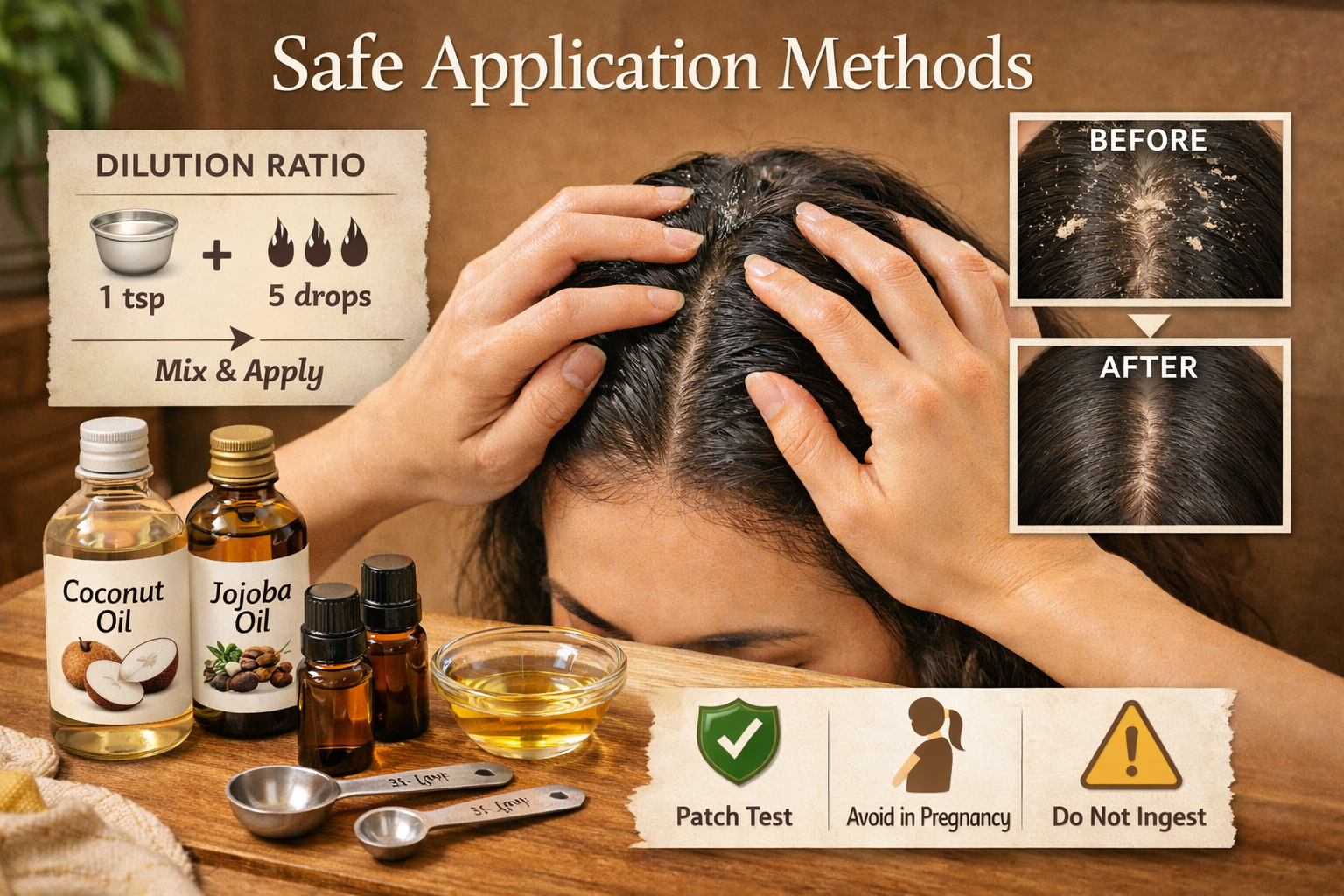
Always Patch Test
Before using any new essential oil:
- Mix a small amount with carrier oil
- Apply to inside of wrist or behind ear
- Wait 24 hours for any reaction
- Look for redness, itching, or swelling
Common Side Effects to Watch For
- Skin irritation (redness, burning)
- Allergic reactions (rash, hives)
- Increased sensitivity to sun (with citrus oils)
Who Should Avoid Essential Oils
- Pregnant or breastfeeding women (consult healthcare provider)
- Children under 6 years old
- People with severe allergies or asthma
- Those taking blood-thinning medications (some oils may interact)
Storage and Quality Tips
- Store in dark, cool places
- Use within 6-12 months of opening
- Choose organic, therapeutic-grade oils
- Avoid oils with synthetic fragrances
What to Expect: Timeline and Results
Week 1-2: Initial Response
- Reduced itching and irritation
- Less visible flaking
- Scalp may feel more balanced
Week 3-4: Noticeable Improvement
- Significant reduction in dandruff
- Healthier-looking scalp
- Less frequent flare-ups
Week 5-8: Long-term Benefits
- Maintained scalp health
- Improved hair texture
- Reduced need for frequent treatments
Pro Tip: Take photos of your scalp before starting treatment to track progress objectively.
Supporting Your Essential Oil Treatment
Lifestyle Factors That Help
Diet: Reduce sugar and processed foods that can feed fungal growth
Stress Management: Practice relaxation techniques – stress worsens dandruff
Sleep: Aim for 7-9 hours nightly for optimal scalp healing
Hydration: Drink plenty of water to support skin health
Hair Care Best Practices
- Use lukewarm water when washing (hot water strips natural oils)
- Choose sulfate-free, gentle shampoos
- Avoid over-washing (2-3 times per week is usually enough)
- Don’t scratch or pick at flakes
- Clean hair tools regularly to prevent reinfection
When to See a Professional
While the best essential oils for dandruff work well for most people, some situations require professional attention:
See a dermatologist if:
- Dandruff doesn’t improve after 6-8 weeks of consistent treatment
- You develop severe itching or pain
- Hair loss occurs alongside dandruff
- Scalp becomes red, swollen, or develops sores
- You suspect a more serious condition like seborrheic dermatitis
Conclusion
The best essential oils for dandruff offer a natural, effective alternative to harsh chemical treatments. Tea tree oil leads the pack with strong scientific backing, while gentler options like lavender and cedarwood provide excellent results for sensitive scalps.
Remember these key points for success:
- Start slowly with properly diluted oils
- Be consistent with your treatment routine
- Listen to your scalp and adjust as needed
- Combine with healthy lifestyle habits for best results
Ready to start your natural dandruff treatment journey? Begin with a patch test of tea tree oil diluted in coconut oil – this combination offers the best research-backed results for most people. Give it 4-6 weeks of consistent use, and you’ll likely see significant improvement in your scalp health.
Your journey to a flake-free, healthy scalp starts with choosing the right essential oils and using them safely. Nature provides powerful solutions – you just need to know how to use them effectively.