Best Essential Oils for Sleep
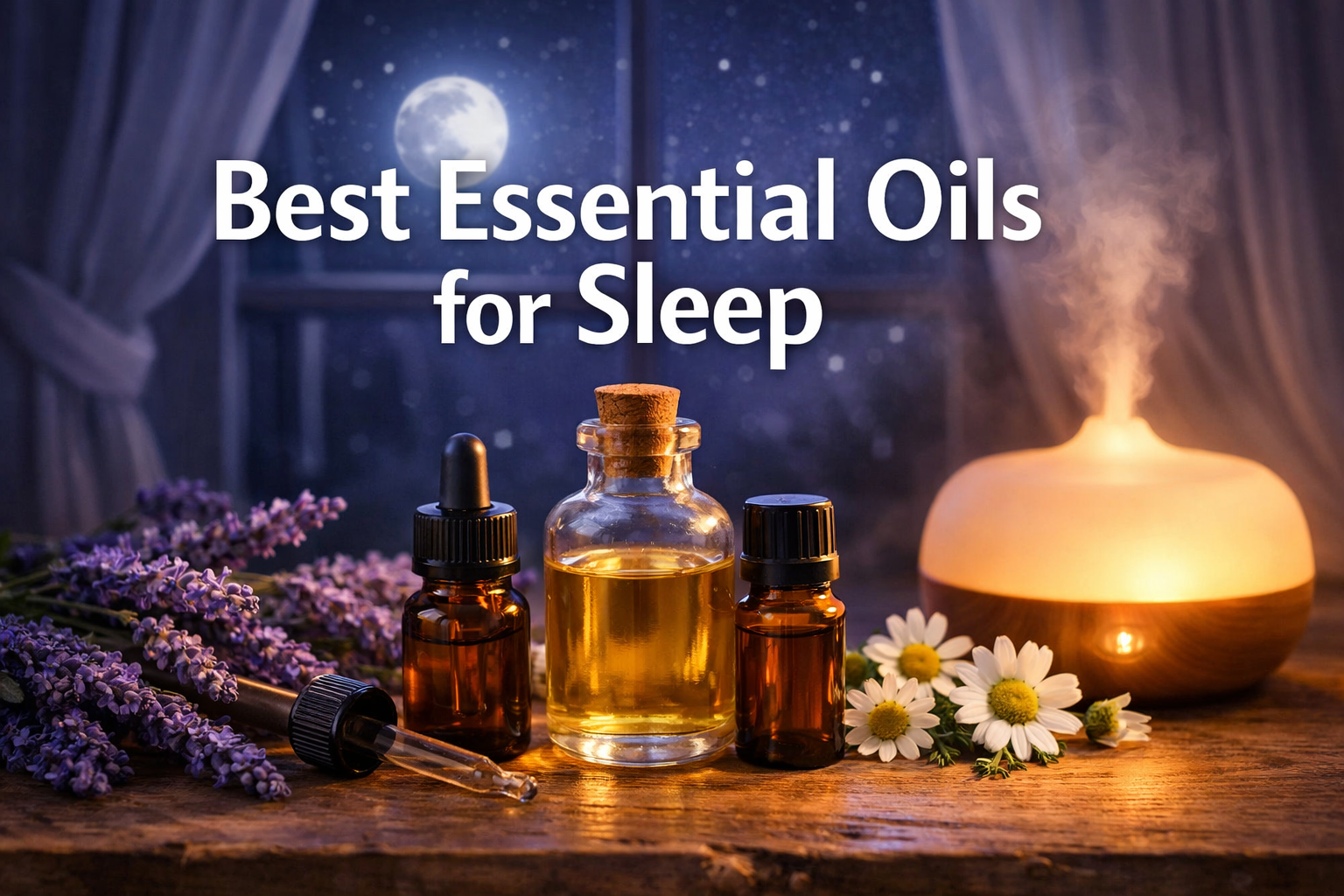
Tossing and turning all night? Staring at the ceiling while your mind races? You’re not alone. Millions of people struggle with sleep issues, and many are turning away from synthetic sleep aids toward natural alternatives. The best essential oils for sleep offer a gentle, non-toxic approach to achieving the restful nights your body craves. 🌙
These aromatic plant extracts have been used for centuries to promote relaxation and improve sleep quality. Unlike harsh chemicals or habit-forming medications, essential oils work with your body’s natural rhythms to create a peaceful environment that encourages deep, restorative sleep.
Key Takeaways
• Lavender, chamomile, and bergamot are among the most effective essential oils for promoting better sleep quality
• Proper dilution and application methods are crucial for safety and effectiveness when using sleep-promoting oils
• Aromatherapy through diffusion is the most popular and safest method for nighttime essential oil use
• Scientific research supports the sleep benefits of several essential oils, particularly lavender and chamomile
• Consistency in use helps train your body to associate certain scents with sleep time, improving long-term results
Top Essential Oils That Promote Better Sleep

When exploring the best essential oils for sleep, certain varieties consistently rise to the top for their proven calming and sedative properties. These natural sleep aids work by interacting with your nervous system to reduce stress hormones and promote relaxation.
Lavender Oil: The Sleep Champion 💜
Lavender stands as the most researched and widely recommended essential oil for sleep. This purple flower produces an oil that contains compounds like linalool and linalyl acetate, which have natural sedative effects.
Studies show that lavender oil can:
- Increase deep sleep stages
- Reduce heart rate and blood pressure
- Lower cortisol levels
- Improve overall sleep quality
Chamomile Oil: Gentle and Effective
Roman chamomile offers a sweet, apple-like scent that’s particularly effective for anxious sleepers. This oil contains chamazulene, a compound known for its calming properties.
Benefits include:
- Reducing anxiety and nervous tension
- Soothing digestive issues that interfere with sleep
- Promoting feelings of peace and tranquility
- Working well for children and sensitive individuals
Bergamot Oil: Citrus Calm
Unlike most citrus oils that energize, bergamot has unique calming properties. This Earl Grey tea-scented oil contains linalool and helps balance emotions.
Key benefits:
- Reduces stress and anxiety
- Balances mood swings
- Lowers blood pressure
- Creates a sense of joy and relaxation
Ylang-Ylang Oil: Exotic Relaxation
This tropical flower produces an oil with a sweet, floral fragrance that’s deeply relaxing. Ylang-ylang is particularly helpful for stress-related sleep issues.
Cedarwood Oil: Grounding and Warm
Cedarwood provides a woody, masculine scent that many find grounding. It contains cedrol, which may increase melatonin production.
Frankincense Oil: Ancient Wisdom
Frankincense has been used for spiritual and medicinal purposes for thousands of years. Its earthy, resinous scent promotes deep breathing and meditation.
Sandalwood Oil: Luxurious Calm
Sandalwood offers a rich, creamy fragrance that’s both calming and grounding. It’s particularly effective for quieting mental chatter.
How to Use Essential Oils for Better Sleep
Understanding the best essential oils for sleep is only half the equation. Proper application methods ensure you get maximum benefits while staying safe. Here are the most effective ways to incorporate these natural sleep aids into your nighttime routine.
Aromatherapy Diffusion 🌸
Ultrasonic diffusers are the safest and most popular method for nighttime essential oil use. These devices disperse oils into fine mist particles that you inhale naturally.
Best practices for diffusion:
- Add 3-5 drops of oil to your diffuser
- Start diffusing 30 minutes before bedtime
- Use a timer to run for 1-2 hours maximum
- Place diffuser 3-6 feet from your bed
- Clean diffuser regularly to prevent buildup
Topical Application
When properly diluted, essential oils can be applied directly to the skin for targeted benefits.
Safe dilution guidelines:
- Adults: 1-2% dilution (6-12 drops per ounce of carrier oil)
- Children: 0.5% dilution (3 drops per ounce of carrier oil)
- Sensitive skin: 0.5-1% dilution
Best application spots:
- Wrists and pulse points
- Temples (avoid eye area)
- Bottom of feet
- Behind ears
- Chest area
Pillow and Linen Sprays
Create your own sleep spray by mixing essential oils with water and witch hazel.
Simple recipe:
- 2 oz spray bottle
- 1 tablespoon witch hazel
- 10-15 drops essential oils
- Fill remainder with distilled water
- Shake before each use
Bath Time Bliss 🛁
Adding essential oils to your evening bath creates a spa-like experience that prepares your body for sleep.
Safe bath method:
- Mix 5-8 drops of oil with 1 tablespoon carrier oil or Epsom salts
- Add mixture to warm (not hot) bath water
- Soak for 15-20 minutes
- Never add undiluted oils directly to bath water
Inhalation Techniques
For quick relief, direct inhalation can be very effective.
Methods include:
- Adding 1-2 drops to a tissue and inhaling
- Using personal aromatherapy inhalers
- Steam inhalation with 2-3 drops in hot water
- Applying diluted oil under the nose
Safety Guidelines and Best Practices
While the best essential oils for sleep are natural, they’re also highly concentrated plant compounds that require careful handling. Following proper safety guidelines ensures you enjoy their benefits without adverse effects.
Essential Oil Quality Matters ✨
Look for these quality indicators:
- 100% pure, therapeutic-grade oils
- Dark glass bottles that protect from light
- Clear labeling with botanical names
- Third-party testing certificates
- Reputable suppliers with good reviews
Avoid oils that:
- Contain synthetic fragrances
- Are sold in plastic or clear bottles
- Lack proper labeling
- Are unusually cheap
- Make unrealistic health claims
Important Safety Precautions
General safety rules:
- Always dilute oils before skin application
- Perform patch tests before first use
- Keep oils away from eyes and mucous membranes
- Store in cool, dark places away from children
- Never ingest essential oils unless under professional guidance
Special considerations:
- Pregnant women: Avoid certain oils and consult healthcare providers
- Children: Use lower concentrations and child-safe oils only
- Pets: Many oils are toxic to cats and dogs
- Medical conditions: Check with doctors if taking medications
Potential Side Effects
While rare when used properly, some people may experience:
- Skin irritation or allergic reactions
- Headaches from overuse
- Respiratory irritation
- Photosensitivity with citrus oils
If reactions occur:
- Discontinue use immediately
- Wash affected area with soap and water
- Seek medical attention for severe reactions
Creating Your Perfect Sleep Routine
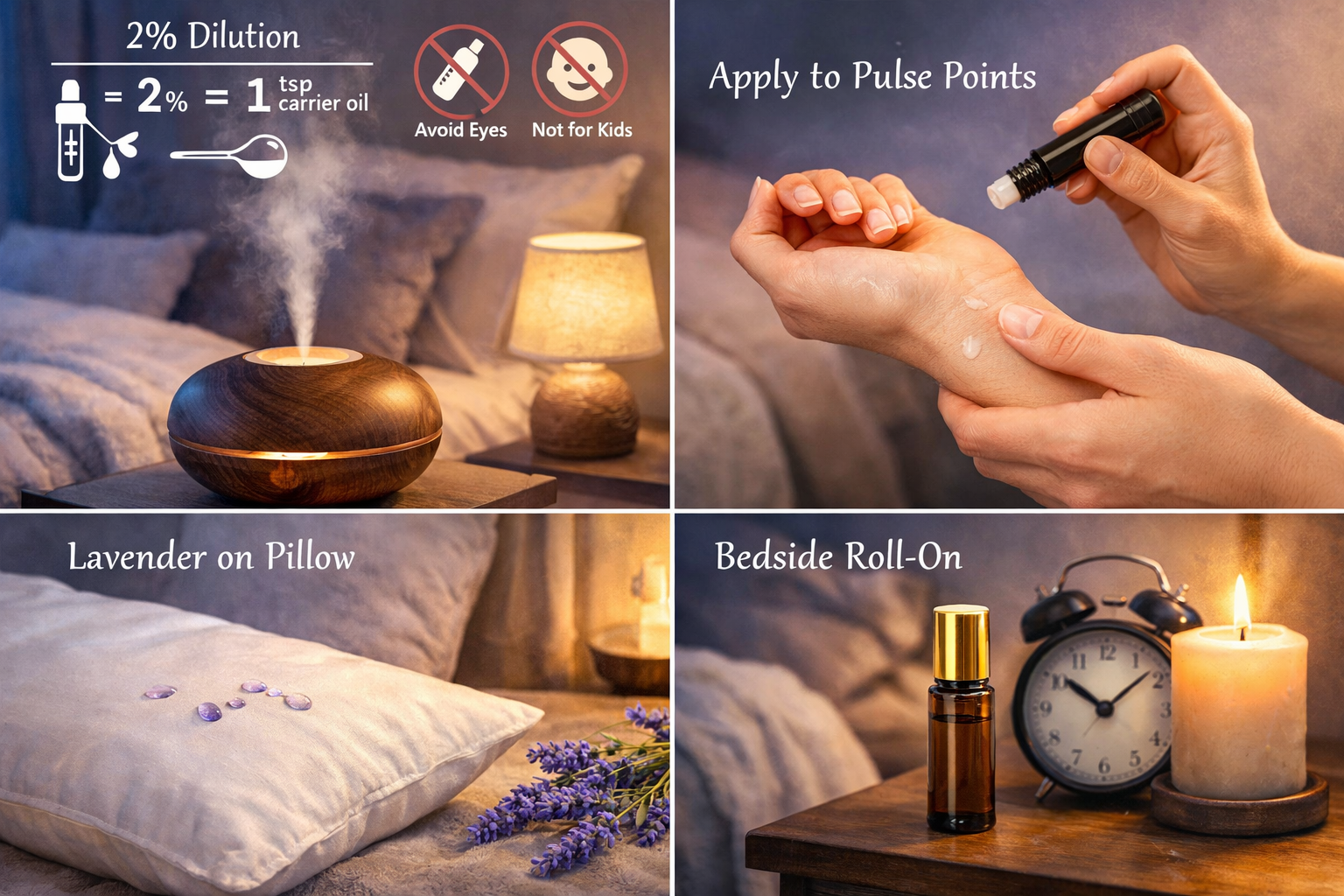
The best essential oils for sleep work most effectively when incorporated into a consistent bedtime routine. Building healthy sleep habits alongside aromatherapy creates powerful synergy for better rest.
Building Your Evening Ritual 🌛
1-2 hours before bed:
- Dim lights throughout your home
- Start your diffuser with calming oils
- Take a warm bath with essential oils
- Practice gentle stretching or yoga
30-60 minutes before bed:
- Apply diluted oils to pulse points
- Spray pillow with sleep blend
- Read a book or practice meditation
- Avoid screens and stimulating activities
At bedtime:
- Ensure room temperature is cool (65-68°F)
- Use blackout curtains or eye masks
- Keep diffuser running on timer
- Practice deep breathing with aromatherapy
Customizing Oil Blends
Creating personal blends allows you to target specific sleep challenges.
For anxiety and racing thoughts:
- 3 drops lavender
- 2 drops bergamot
- 1 drop frankincense
For physical tension:
- 3 drops chamomile
- 2 drops ylang-ylang
- 1 drop cedarwood
For hormonal sleep issues:
- 3 drops clary sage
- 2 drops lavender
- 1 drop geranium
Tracking Your Success
Keep a sleep journal to monitor which oils and methods work best for you:
- Note which oils you used each night
- Rate sleep quality on a 1-10 scale
- Track how long it took to fall asleep
- Record any dreams or night wakings
- Note morning energy levels
Scientific Research Behind Sleep-Promoting Oils
The effectiveness of the best essential oils for sleep isn’t just based on tradition—modern science increasingly supports their use. Research studies provide evidence for how these natural compounds influence sleep patterns and quality.
Lavender Research Findings 🔬
Multiple studies demonstrate lavender’s sleep benefits:
2015 Study Results:
- Participants using lavender aromatherapy showed 20% improvement in sleep quality
- Deep sleep stages increased significantly
- Morning alertness improved compared to control groups
2017 Clinical Trial:
- Lavender inhalation reduced anxiety scores by 45%
- Sleep onset time decreased by an average of 37 minutes
- Participants reported feeling more refreshed upon waking
Chamomile Scientific Evidence
Research on chamomile shows promising results for sleep disorders:
Key findings:
- Apigenin compound in chamomile binds to brain receptors that promote sleepiness
- Studies show 15% improvement in sleep efficiency
- Particularly effective for people with mild to moderate anxiety
Bergamot and Stress Reduction
2017 Research demonstrated:
- Bergamot aromatherapy reduced cortisol levels by 25%
- Heart rate variability improved, indicating better stress response
- Participants reported feeling calmer within 15 minutes of exposure
How Essential Oils Affect the Brain
Neurological pathways involved:
- Olfactory system: Scent molecules travel directly to limbic brain areas
- Neurotransmitter influence: Certain compounds may increase GABA production
- Hormone regulation: Some oils may influence melatonin and cortisol levels
- Autonomic nervous system: Aromatherapy can shift the body toward parasympathetic dominance
Budget-Friendly Ways to Start Your Journey
Beginning your exploration of the best essential oils for sleep doesn’t require a huge investment. Smart shopping and DIY approaches can help you experience these benefits affordably.
Starter Oil Recommendations 💰
Essential beginner kit:
- Lavender: Most versatile and well-researched ($8-15)
- Sweet orange: Affordable and calming ($5-10)
- Eucalyptus: Multi-purpose and budget-friendly ($6-12)
Total startup cost: Under $30 for three quality oils
DIY Diffusion Methods
No diffuser? No problem:
- Bowl method: Add 3-4 drops to bowl of hot water near bed
- Tissue technique: Place 1-2 drops on tissue and inhale
- Cotton ball placement: Put oil-soaked cotton balls around bedroom
- Homemade reed diffuser: Use carrier oil, reeds, and small bottle
Money-Saving Tips
Smart shopping strategies:
- Buy from reputable online retailers for better prices
- Look for sales and bulk purchasing options
- Start with single oils before investing in blends
- Join loyalty programs for discounts
- Consider sharing larger bottles with friends
Making oils last longer:
- Store properly to maintain potency
- Use appropriate amounts (more isn’t always better)
- Rotate different oils to prevent nose blindness
- Clean diffusers regularly for efficiency
Conclusion
The best essential oils for sleep offer a natural, effective path to better rest without the side effects of synthetic sleep aids. From lavender’s scientifically-proven benefits to chamomile’s gentle calming effects, these plant-based solutions work with your body’s natural processes to promote deep, restorative sleep.
Success with essential oils comes from understanding proper usage, maintaining consistency, and finding the right oils for your individual needs. Whether you choose simple diffusion or create elaborate bedtime rituals, these aromatic allies can transform your relationship with sleep.
Ready to start your journey to better sleep? Begin with high-quality lavender oil and a basic diffuser. Start your routine tonight, and give your body 2-3 weeks to adjust to this new approach. Track your progress, experiment with different oils, and most importantly, be patient with the process.
Remember that good sleep is an investment in your overall health and well-being. The best essential oils for sleep provide a gentle, sustainable way to reclaim your nights and wake up feeling truly refreshed. Sweet dreams await! 🌙✨