DIY Non-Toxic Cleaning Sprays for a Healthier Home
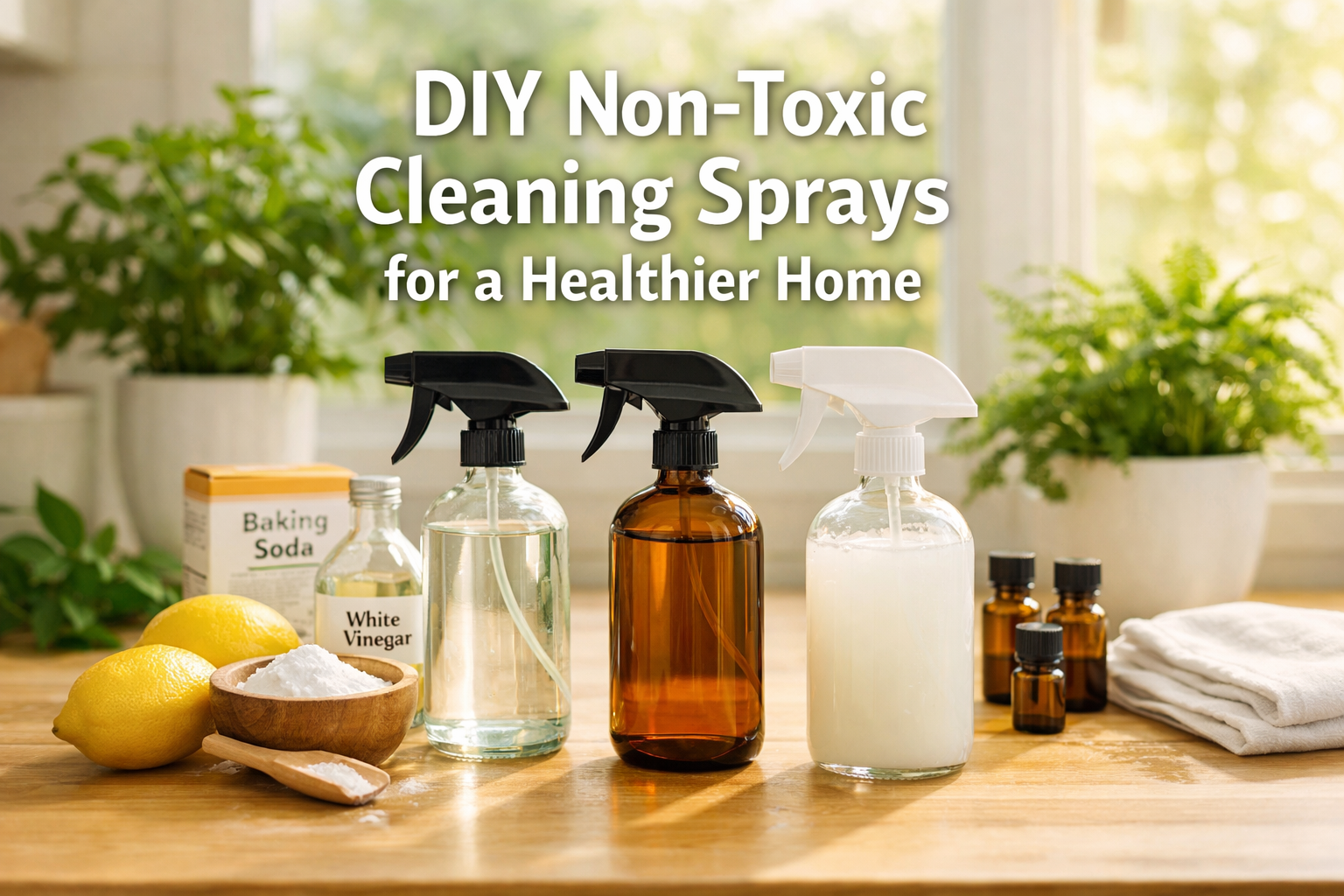
Picture this: you’re cleaning your home, but instead of harsh chemical fumes making your eyes water and lungs burn, you’re surrounded by the fresh scent of lemon and lavender. Your family breathes easier, your pets are safer, and your wallet is happier too. This isn’t just a dream – it’s the reality of DIY Non-Toxic Cleaning Sprays for a Healthier Home. 🌿
In 2026, more families than ever are making the switch from store-bought chemical cleaners to homemade, natural alternatives. The reasons are compelling: better indoor air quality, reduced exposure to harmful toxins, significant cost savings, and the satisfaction of knowing exactly what’s in every bottle you use.
Key Takeaways
• Simple ingredients like white vinegar, baking soda, and essential oils can replace expensive commercial cleaners
• Homemade cleaning sprays are safer for children, pets, and people with allergies or respiratory conditions
• DIY solutions can save families up to 70% on cleaning costs compared to store-bought products
• Natural cleaners are just as effective as chemical alternatives for most household cleaning tasks
• Five basic recipes can handle 90% of your home cleaning needs
Why Choose DIY Non-Toxic Cleaning Sprays for a Healthier Home?
The Hidden Dangers in Commercial Cleaners
Most conventional cleaning products contain a cocktail of chemicals that can harm your family’s health. Common ingredients like ammonia, chlorine bleach, and phthalates have been linked to respiratory issues, skin irritation, and even hormone disruption.
“The average household contains 62 toxic chemicals, with cleaning products being one of the primary sources.” – Environmental Working Group
When you create DIY Non-Toxic Cleaning Sprays for a Healthier Home, you eliminate these risks while maintaining a spotless living space.
Benefits That Go Beyond Clean
Health Benefits:
- Improved indoor air quality
- Reduced allergy and asthma triggers
- Lower risk of chemical burns or poisoning
- Safer environment for pregnant women and children
Environmental Benefits:
- Biodegradable ingredients
- Reduced plastic waste from packaging
- Lower carbon footprint
- No harmful runoff into water systems
Financial Benefits:
- 80% cost savings compared to brand-name cleaners
- Bulk ingredient purchases last for months
- Multi-purpose recipes reduce product variety needed
Essential Ingredients for DIY Non-Toxic Cleaning Sprays for a Healthier Home
Your Natural Cleaning Arsenal
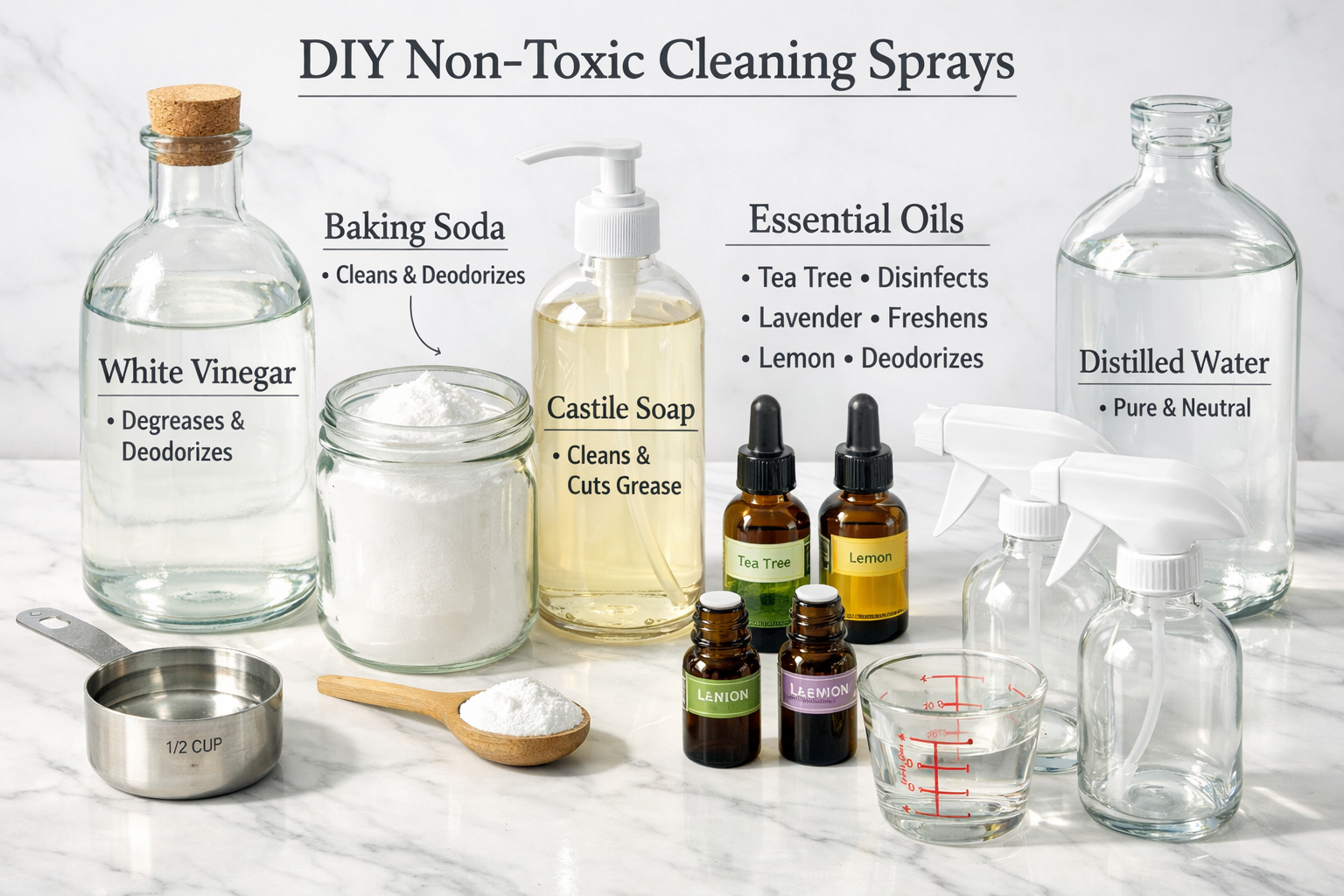
Building an effective collection of DIY Non-Toxic Cleaning Sprays for a Healthier Home starts with understanding these powerhouse ingredients:
| Ingredient | Primary Function | Best For | Cost per Use |
|---|---|---|---|
| White Vinegar | Disinfectant, degreaser | Glass, counters, floors | $0.02 |
| Baking Soda | Abrasive, deodorizer | Scrubbing, odor removal | $0.01 |
| Castile Soap | Surfactant, gentle cleaner | General cleaning, dishes | $0.05 |
| Essential Oils | Antimicrobial, fragrance | All surfaces | $0.03 |
| Lemon Juice | Natural acid, brightener | Stains, mineral deposits | $0.04 |
Shopping List for Success
Basic Supplies Needed:
- 32 oz glass spray bottles (4-6 bottles)
- Distilled water (1 gallon)
- White vinegar (64 oz)
- Baking soda (5 lb box)
- Liquid castile soap (32 oz)
- Essential oils: tea tree, lavender, lemon (10ml each)
- Measuring cups and funnels
- Waterproof labels
Total Investment: Approximately $45-60
Cleaning Supply Value: Equivalent to $200+ in commercial products
Top 5 DIY Non-Toxic Cleaning Spray Recipes
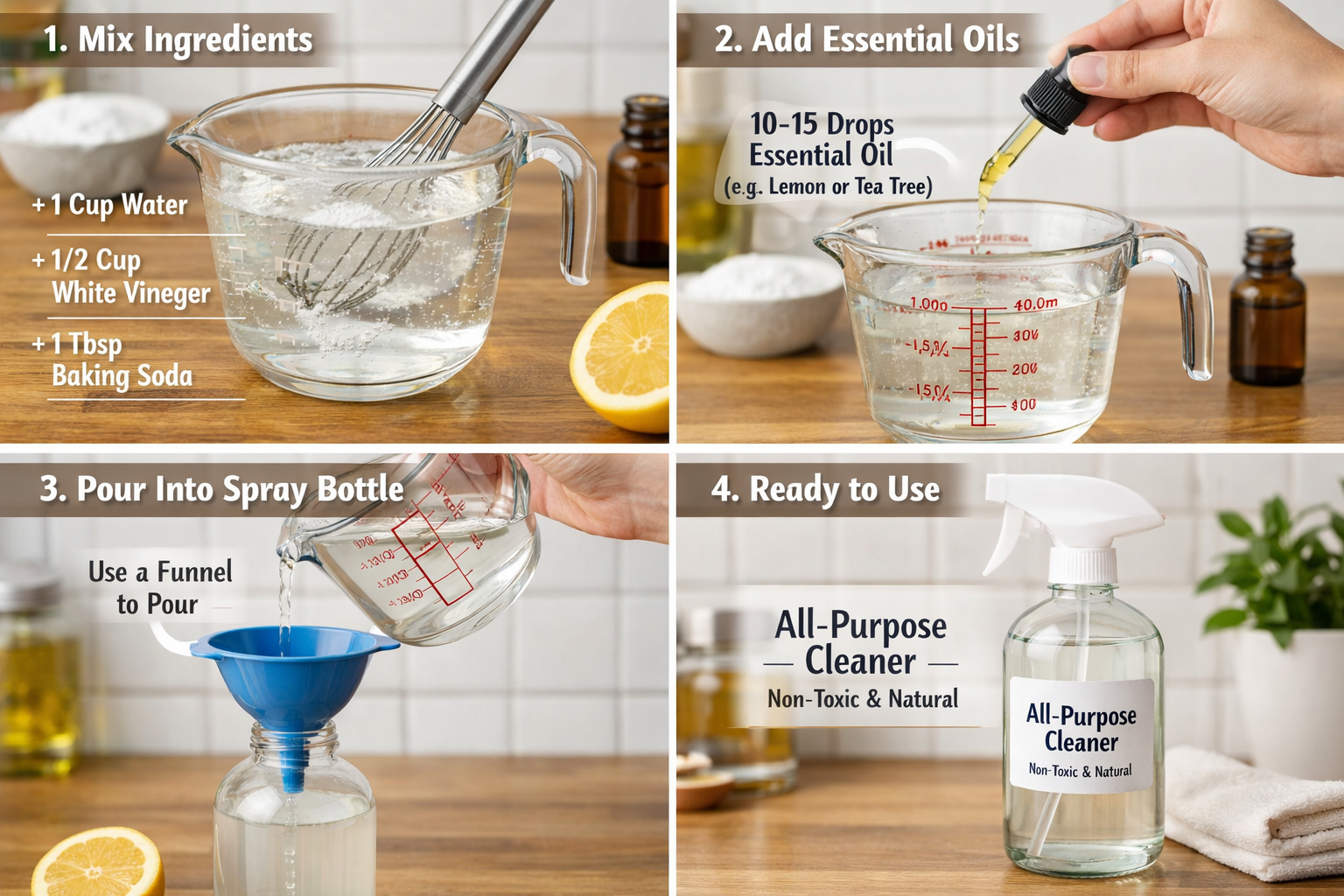
1. All-Purpose Wonder Spray ✨
This versatile cleaner handles 80% of your cleaning tasks and is the cornerstone of DIY Non-Toxic Cleaning Sprays for a Healthier Home.
Ingredients:
- 2 cups distilled water
- ½ cup white vinegar
- 2 tablespoons castile soap
- 15 drops tea tree oil
- 10 drops lemon essential oil
Instructions:
- Combine water and vinegar in spray bottle
- Add castile soap slowly to prevent excessive suds
- Add essential oils
- Shake gently before each use
Best For: Countertops, appliances, light switches, door handles
2. Glass & Mirror Magic 🪟
Ingredients:
- 2 cups distilled water
- ½ cup white vinegar
- 2 tablespoons rubbing alcohol
- 5 drops peppermint oil
Pro Tip: Use newspaper or microfiber cloths for streak-free results!
3. Kitchen Degreaser Supreme 🍳
Ingredients:
- 1 cup warm water
- 1 cup white vinegar
- 2 tablespoons baking soda (add slowly!)
- 1 tablespoon castile soap
- 10 drops orange essential oil
Perfect For: Stovetops, range hoods, greasy surfaces
4. Bathroom Disinfectant & Soap Scum Fighter 🛁
Ingredients:
- 1½ cups water
- ½ cup white vinegar
- ¼ cup rubbing alcohol
- 1 tablespoon castile soap
- 15 drops tea tree oil
- 10 drops eucalyptus oil
5. Fresh & Clean Floor Spray 🏠
Ingredients:
- 2 cups warm water
- ¼ cup white vinegar
- 1 tablespoon castile soap
- 10 drops lavender oil
Note: Avoid on natural stone floors like marble or granite.
Safety Tips and Best Practices
Storage and Labeling
Essential Safety Guidelines:
- Always use glass bottles to prevent chemical reactions
- Label each bottle clearly with contents and date
- Store in cool, dark places away from children
- Use within 3-6 months for best effectiveness
What NOT to Mix
⚠️ Never combine these ingredients:
- Vinegar + Hydrogen peroxide (creates unstable acid)
- Vinegar + Castile soap (neutralizes effectiveness)
- Different recipes in the same bottle without cleaning first
Testing and Troubleshooting
Before using any new recipe:
- Test on inconspicuous area first
- Check manufacturer’s care instructions
- Allow 24 hours to observe any reactions
Advanced Tips for Maximizing Your DIY Non-Toxic Cleaning Sprays
Customization for Specific Needs
For Homes with Pets:
- Avoid essential oils toxic to animals (eucalyptus, tea tree around cats)
- Increase vinegar concentration for odor control
- Add enzyme cleaners for accident cleanup
For Allergy Sufferers:
- Skip fragranced essential oils
- Use unscented castile soap
- Focus on dust mite reduction with regular cleaning
For Busy Families:
- Prepare large batches monthly
- Create cleaning stations throughout the house
- Involve kids in age-appropriate mixing tasks
Seasonal Adjustments
Spring Cleaning Boost:
- Add extra baking soda for deep cleaning power
- Include lemon oil for fresh, energizing scent
- Create stronger concentrations for annual tasks
Winter Dry Air Solutions:
- Reduce alcohol content to prevent over-drying
- Add glycerin for moisturizing properties
- Focus on static-reducing formulas
Cost Comparison: DIY vs. Store-Bought
Annual Cleaning Budget Breakdown
Traditional Commercial Products:
- All-purpose cleaner: $48/year
- Glass cleaner: $24/year
- Bathroom cleaner: $36/year
- Kitchen degreaser: $30/year
- Floor cleaner: $42/year
- Total: $180/year
DIY Non-Toxic Cleaning Sprays:
- Initial ingredient investment: $55
- Annual refill costs: $25
- Total first year: $80
- Subsequent years: $25
Savings: $100+ annually 💰
Environmental Impact of Your Choice
Reducing Your Household’s Chemical Footprint
When families switch to DIY Non-Toxic Cleaning Sprays for a Healthier Home, the environmental benefits multiply:
Packaging Reduction:
- Reusable glass bottles eliminate 50+ plastic containers annually
- Bulk ingredient purchases reduce packaging waste by 75%
Water Quality Protection:
- Natural ingredients biodegrade safely
- No phosphates or surfactants entering waterways
- Reduced chemical runoff from manufacturing
Carbon Footprint Reduction:
- Local ingredient sourcing when possible
- Elimination of transportation for frequent product purchases
- Reduced manufacturing energy consumption
Troubleshooting Common Issues
When Things Don’t Go as Planned
Problem: Spray leaves streaks
- Solution: Reduce soap concentration, increase vinegar
- Use distilled water only
- Clean application cloths more frequently
Problem: Weak cleaning power
- Solution: Increase vinegar or add baking soda
- Allow longer contact time before wiping
- Use warm water for mixing
Problem: Unpleasant smell
- Solution: Adjust essential oil ratios
- Ensure bottles are thoroughly clean before refilling
- Check ingredient freshness dates
Problem: Ingredients separate
- Solution: Add emulsifier (more castile soap)
- Shake vigorously before each use
- Store at consistent temperatures
Building Your Cleaning Routine
Weekly Cleaning Schedule with DIY Sprays
Monday – Kitchen Deep Clean:
- Use degreaser on appliances and surfaces
- Apply all-purpose spray to counters and cabinets
Wednesday – Bathroom Refresh:
- Disinfectant spray on all surfaces
- Glass cleaner for mirrors and shower doors
Friday – Whole House Touch-Up:
- All-purpose spray for quick surface cleaning
- Floor spray for high-traffic areas
Sunday – Prep Day:
- Mix fresh batches as needed
- Refill spray bottles
- Organize cleaning supplies
Special Considerations for Different Home Types
Apartments and Small Spaces
Storage Solutions:
- Use smaller 16 oz bottles for limited space
- Create concentrated formulas that mix with water
- Store ingredients in multi-purpose containers
Homes with Well Water
Adjustments Needed:
- Test water pH before mixing
- May need additional vinegar for hard water
- Consider water filtration for best results
Historic or Delicate Surfaces
Gentle Formulas:
- Reduce acid concentrations
- Test extensively before use
- Consult preservation specialists when needed
The Science Behind Natural Cleaning
How These Ingredients Actually Work
Vinegar’s Cleaning Power:
- Acetic acid breaks down mineral deposits
- pH of 2.5 kills most bacteria and viruses
- Dissolves soap scum and hard water stains
Baking Soda’s Versatility:
- Mild abrasive action removes stuck-on grime
- Neutralizes odors by balancing pH
- Creates fizzing action when combined with acids
Essential Oils’ Benefits:
- Many contain natural antimicrobial compounds
- Provide pleasant fragrance without synthetic chemicals
- Some oils have specific cleaning properties (tea tree for antifungal)
Conclusion
Creating DIY Non-Toxic Cleaning Sprays for a Healthier Home isn’t just a trend – it’s a smart, sustainable choice that benefits your family’s health, your budget, and the environment. With just five basic recipes, you can handle virtually every cleaning task in your home while eliminating exposure to harmful chemicals.
The journey to a cleaner, healthier home starts with a single spray bottle and a commitment to better choices. As more families discover the effectiveness and affordability of homemade cleaning solutions, they’re finding that the best cleaning products aren’t found on store shelves – they’re mixed with love and care in their own kitchens.
Your Next Steps:
- Start small – Choose one recipe and try it for a week
- Gather supplies – Invest in quality glass bottles and basic ingredients
- Create a routine – Set aside time weekly for mixing fresh batches
- Share the knowledge – Teach family members to make and use the sprays safely
- Expand gradually – Add new recipes as you gain confidence and experience
Remember, every spray bottle you fill with natural ingredients is a step toward a healthier home and a cleaner planet. Your family will breathe easier, and you’ll feel good knowing that you’re providing the safest possible environment for the people you love most.