Non Toxic Toaster Ovens and Small Appliances (No Teflon)
Quick Answer: Non-toxic toaster ovens and small appliances skip PTFE-based coatings (commonly sold under the brand name Teflon) in favor of safer materials like stainless steel, ceramic, and glass. These are the right choice for anyone who wants to avoid potentially harmful fumes from overheated non-stick coatings, especially families with young children or people with respiratory sensitivities.
Key Takeaways 🌿
- Teflon = PTFE coating. When overheated above 500°F (260°C), PTFE can release fumes that are harmful to birds and may irritate human airways.
- PFOA (used in older Teflon manufacturing) was phased out by major manufacturers around 2013, but PTFE itself remains a concern at high temperatures.
- Safer coating alternatives include ceramic non-stick, stainless steel interiors, and pure cast iron.
- Not all “non-stick” means Teflon — ceramic coatings are a popular PTFE-free option, though they vary in durability.
- Toaster ovens reach very high temperatures, making the interior coating material especially important to check.
- Look for appliances labeled “PTFE-free,” “PFOA-free,” and “PFAS-free” for the most complete assurance.
- Small appliances beyond toaster ovens — including air fryers, waffle makers, and rice cookers — can also contain non-stick coatings worth checking.
- Consumer Reports and Good Housekeeping both test toaster ovens and note interior material as a key quality factor.
Why Does Non-Stick Coating Matter in a Toaster Oven?
Toaster ovens regularly hit temperatures between 400°F and 500°F — sometimes higher during broiling. At those temperatures, PTFE-based coatings can begin to break down and release fumes. For most healthy adults, brief exposure causes mild irritation at worst. But for pet birds, even small amounts can be fatal. Children and people with asthma or lung conditions are also more vulnerable.
The concern isn’t just theoretical. The Environmental Working Group has documented cases of “polymer fume fever” in humans exposed to overheated non-stick cookware, and the issue is well-established enough that many manufacturers now market PTFE-free products specifically.
Bottom line: Because toaster ovens run hotter than stovetop pans and cycle heat repeatedly, the coating inside the cavity matters more than people often realize.
What Makes a Toaster Oven Truly Non-Toxic?
A genuinely non-toxic toaster oven avoids PTFE, PFOA, and ideally the broader class of PFAS chemicals throughout its interior surfaces. Here’s what to look for:
| Material | Non-Toxic? | Durability | Notes |
|---|---|---|---|
| Stainless steel interior | ✅ Yes | Excellent | Most durable; easy to clean |
| Ceramic non-stick coating | ✅ Generally yes | Moderate | Degrades over time; check brand claims |
| PTFE/Teflon coating | ❌ No | Good initially | Releases fumes when overheated |
| Enameled steel | ✅ Yes | Good | Common in higher-end models |
| Bare aluminum | ⚠️ Caution | Fair | Can leach at high heat; avoid acidic foods |
Choose stainless steel if you want the longest-lasting, lowest-maintenance non-toxic option. Choose ceramic if you want easier food release and don’t mind replacing the appliance sooner.
“The safest interior for a toaster oven is one you don’t have to worry about scratching — stainless steel wins on that count every time.”
Top Non-Toxic Toaster Ovens and Small Appliances (No Teflon) Worth Considering
Several well-known brands now offer PTFE-free options. Good Housekeeping’s testing of toaster ovens highlights models with stainless steel interiors as top performers for both safety and cooking consistency. Consumer Reports similarly evaluates interior materials as part of their toaster oven assessments.
Brands and models frequently recommended in the non-toxic category:
- OurPlace Wonder Oven – 6-in-1 compact air fryer toaster oven
- Breville Smart Oven series — stainless steel interior, no non-stick coating in the cavity
- Cuisinart Chef’s Convection Toaster Oven — stainless steel interior, widely available
- KitchenAid Digital Countertop Oven — stainless interior, no PTFE coating
- Ninja Foodi models (select versions) — some offer ceramic-coated baskets; always verify the specific model
⚠️ Always verify at the product level. Brands update their product lines, and a brand being “generally safe” doesn’t guarantee every model is PTFE-free. Check the product description or contact the manufacturer directly.
What About Other Small Appliances? (Air Fryers, Waffle Makers, Rice Cookers)
Non-toxic toaster ovens and small appliances (no Teflon) is a category that extends well beyond the toaster oven itself. Many common kitchen appliances use non-stick coatings on their cooking surfaces.
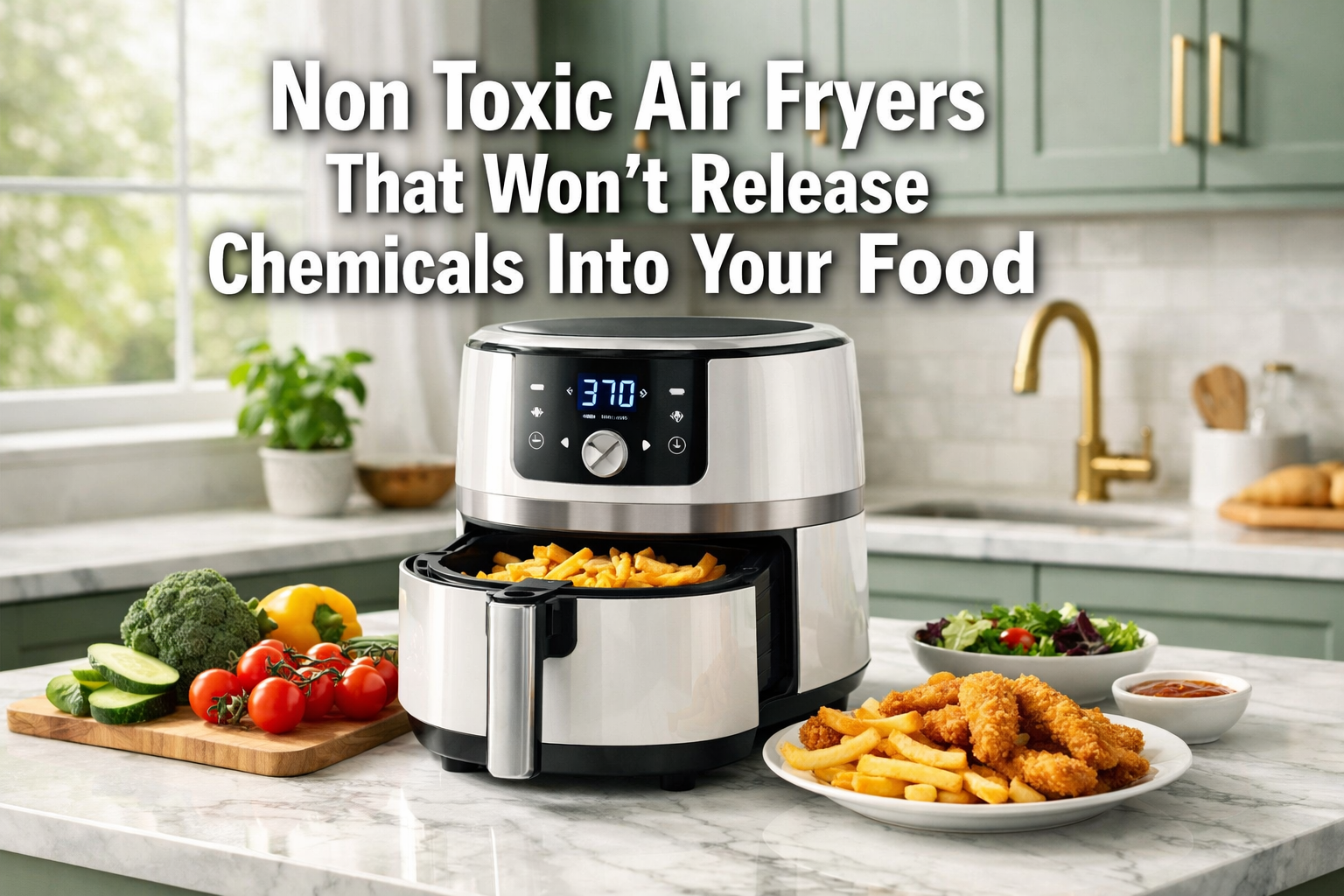
Air fryers: The basket and drawer are the main concern. Look for stainless steel baskets or ceramic-coated options labeled PTFE-free.
Waffle makers: Most traditional waffle irons use PTFE coatings. Cast iron waffle makers (stovetop versions) are the cleanest alternative. Some brands now offer ceramic-coated electric waffle makers.
Rice cookers: The inner pot is where the coating matters. Stainless steel inner pots are available from brands like Zojirushi and Instant Pot (select models). Ceramic-coated pots are another option.
Electric griddles: These almost universally use non-stick coatings. Stainless steel or cast iron griddles are the safest swap.
Common mistake: Buying an appliance labeled “PFOA-free” and assuming it’s fully non-toxic. PFOA-free means one specific chemical was removed — the PTFE coating itself may still be present.
How to Shop for Non-Toxic Small Appliances (A Simple Checklist)
Use this checklist before purchasing any small appliance:
- Check the product description for the words “PTFE-free,” “PFAS-free,” or “ceramic non-stick.”
- Look at the interior material — stainless steel is the gold standard for toaster ovens.
- Read the manual or spec sheet if the listing is unclear. Manufacturers are required to disclose coating materials.
- Search “[brand name] PTFE” online — community forums and review sites often flag coating issues faster than official listings.
- Contact customer service if you still can’t confirm. A reputable brand will answer this question directly.
- Avoid very cheap appliances with no material disclosure — the coating is often the first cost-cutting measure.
Are Ceramic Non-Stick Coatings Actually Safe?
Ceramic non-stick coatings are generally considered a safer alternative to PTFE-based coatings. They’re made from inorganic materials (silica-based) and don’t release the same fumes when overheated. However, “ceramic” is a broad marketing term, and quality varies significantly between brands.
What’s known:
- High-quality ceramic coatings from reputable brands have not shown the same toxicity profile as PTFE at high temperatures.
- Ceramic coatings do wear down over time, especially with metal utensils or abrasive cleaning.
- Once the coating chips or scratches significantly, it’s worth replacing the appliance or insert.
Edge case: Some lower-cost appliances market themselves as “ceramic” but use a thin ceramic-like finish over an aluminum base. The ceramic layer itself may be safe, but a heavily worn coating that exposes the base material is worth replacing.
Conclusion: Making the Switch to Non-Toxic Appliances
Switching to non-toxic toaster ovens and small appliances (no Teflon) doesn’t require replacing everything at once. Start with the appliances that run at the highest temperatures most often — the toaster oven and air fryer are the highest priority. When those wear out or need replacing, choose stainless steel or verified PTFE-free ceramic alternatives.
Actionable next steps:
- This week: Check your current toaster oven and air fryer for PTFE coatings. If the interior is scratched or peeling, move replacement up the priority list.
- Next purchase: Use the checklist above to verify any new appliance before buying.
- Long term: Build a kitchen where stainless steel, cast iron, and glass do most of the work — these materials are durable, non-toxic, and don’t require second-guessing.
The goal isn’t perfection — it’s making smarter choices over time. And for families with kids or pets, even one non-toxic swap can make a meaningful difference.
Frequently Asked Questions
Q: Is PFOA-free the same as Teflon-free? No. PFOA was a chemical used in manufacturing PTFE (Teflon). Removing PFOA means one processing chemical is gone, but the PTFE coating itself may still be present. Look for “PTFE-free” for full assurance.
Q: At what temperature does Teflon become dangerous? PTFE coatings begin to break down around 500°F (260°C) and release more significant fumes above 570°F (300°C). Toaster ovens on broil settings can reach these temperatures.
Q: Are stainless steel toaster ovens harder to clean? They can be, since food doesn’t release as easily as from non-stick surfaces. Soaking the interior tray and using a baking soda paste makes cleanup manageable without any toxic tradeoff.
Q: Can birds really be harmed by Teflon fumes? Yes. Birds have highly sensitive respiratory systems, and PTFE fumes from overheated cookware or appliances can be fatal to them. This is well-documented and widely acknowledged by veterinarians.
Q: Is ceramic non-stick coating safe for high-heat cooking? Generally yes, for reputable brands. Ceramic coatings don’t release the same fumes as PTFE. However, they degrade faster, so inspect them regularly and replace when heavily worn.
Q: What’s the safest toaster oven interior material? Stainless steel is the most durable and consistently non-toxic option. It doesn’t degrade, doesn’t release fumes, and doesn’t require special care beyond regular cleaning.
Q: Do Instant Pots have Teflon coatings? Some Instant Pot inner pots use non-stick coatings; others offer stainless steel inserts. Check the specific model. Stainless steel inner pots are available as upgrades or standard in many models.
Q: How do I know if my current appliance has PTFE? Check the product manual or the manufacturer’s website under “materials” or “specifications.” If it says “non-stick” without specifying ceramic or PTFE-free, assume it contains PTFE.
Tags: non-toxic toaster ovens, Teflon-free appliances, PTFE-free kitchen, ceramic non-stick, PFAS-free cookware, safe small appliances, non-toxic air fryer, healthy kitchen, stainless steel toaster oven, PFOA-free appliances, non-toxic cooking, kitchen safety