Best Essential Oils for Muscle Pain

Picture this: you’ve just finished an intense workout, spent hours gardening, or maybe you’re dealing with everyday tension from sitting at a desk all day. Your muscles are screaming for relief, but you want to skip the harsh chemicals and synthetic pain relievers. What if nature had already provided the perfect solution? The best essential oils for muscle pain have been used for thousands of years to soothe aching muscles, reduce inflammation, and promote healing – and modern science is finally catching up to what traditional healers have always known.
Key Takeaways
• Peppermint and eucalyptus oils provide immediate cooling relief through natural menthol compounds that block pain signals
• Always dilute essential oils with carrier oils before applying to skin – a 2-3% dilution ratio is safe for most adults
• Wintergreen and birch oils contain natural salicylates that work similarly to aspirin for pain relief
• Lavender and chamomile oils excel at reducing inflammation and promoting muscle relaxation
• Proper application techniques like gentle massage and warm compresses can enhance the pain-relieving effects
Understanding How Essential Oils Work for Muscle Pain

Essential oils aren’t just pleasant-smelling liquids – they’re concentrated plant compounds that interact with your body in specific ways. When applied topically, these oils penetrate the skin and reach underlying muscle tissue, where they can reduce inflammation, improve blood flow, and interrupt pain signals.
The magic happens through several mechanisms:
🌿 Anti-inflammatory action: Many essential oils contain compounds that reduce swelling and inflammation in muscle tissue
❄️ Cooling and warming effects: Some oils create cooling sensations that numb pain, while others increase warmth and circulation
🧠 Neurological impact: Certain compounds can actually block pain receptors from sending distress signals to your brain
💆♀️ Improved circulation: Massage with essential oils increases blood flow, bringing healing nutrients to damaged muscle fibers
Top Essential Oils for Muscle Pain Relief
Peppermint Oil: The Cooling Champion
Peppermint oil stands out as one of the best essential oils for muscle pain thanks to its high menthol content. This natural compound creates an immediate cooling sensation that can override pain signals – a phenomenon called the “gate control theory” of pain management.
Benefits:
- Provides instant cooling relief
- Reduces muscle spasms
- Increases blood circulation
- Natural antimicrobial properties
Best for: Post-workout soreness, tension headaches, and acute muscle strain
Eucalyptus Oil: The Inflammation Fighter
Eucalyptus oil contains powerful anti-inflammatory compounds called eucalyptol and alpha-pinene. These substances help reduce swelling and promote healing in damaged muscle tissue.
Benefits:
- Strong anti-inflammatory effects
- Cooling sensation similar to peppermint
- Helps clear mental fog often associated with chronic pain
- Natural decongestant properties
Best for: Chronic muscle pain, arthritis-related discomfort, and sports injuries
Wintergreen Oil: Nature’s Aspirin
Wintergreen oil is rich in methyl salicylate, a compound closely related to aspirin. This makes it one of the most potent best essential oils for muscle pain when you need serious relief.
Benefits:
- Contains up to 99% methyl salicylate
- Provides deep, penetrating pain relief
- Reduces inflammation at the cellular level
- Long-lasting effects
Best for: Deep muscle pain, chronic conditions, and severe soreness
Important Safety Note: Wintergreen oil is very potent and should always be heavily diluted. Pregnant women and people taking blood thinners should avoid this oil.
Lavender Oil: The Gentle Healer
Don’t underestimate lavender’s power for pain relief. While known for relaxation, lavender oil also has significant anti-inflammatory and analgesic properties.
Benefits:
- Reduces muscle tension and spasms
- Promotes relaxation and better sleep
- Anti-inflammatory and antimicrobial
- Gentle enough for sensitive skin
Best for: Stress-related muscle tension, nighttime pain relief, and gentle daily care
Rosemary Oil: The Circulation Booster
Rosemary oil excels at improving blood circulation, which is crucial for muscle healing and pain relief. It also has natural anti-inflammatory and antioxidant properties.
Benefits:
- Increases blood flow to affected areas
- Reduces muscle stiffness
- Antioxidant protection for muscle cells
- Mental clarity and focus enhancement
Best for: Stiff muscles, poor circulation, and mental fatigue from chronic pain
How to Use Essential Oils Safely for Muscle Pain
Dilution Guidelines
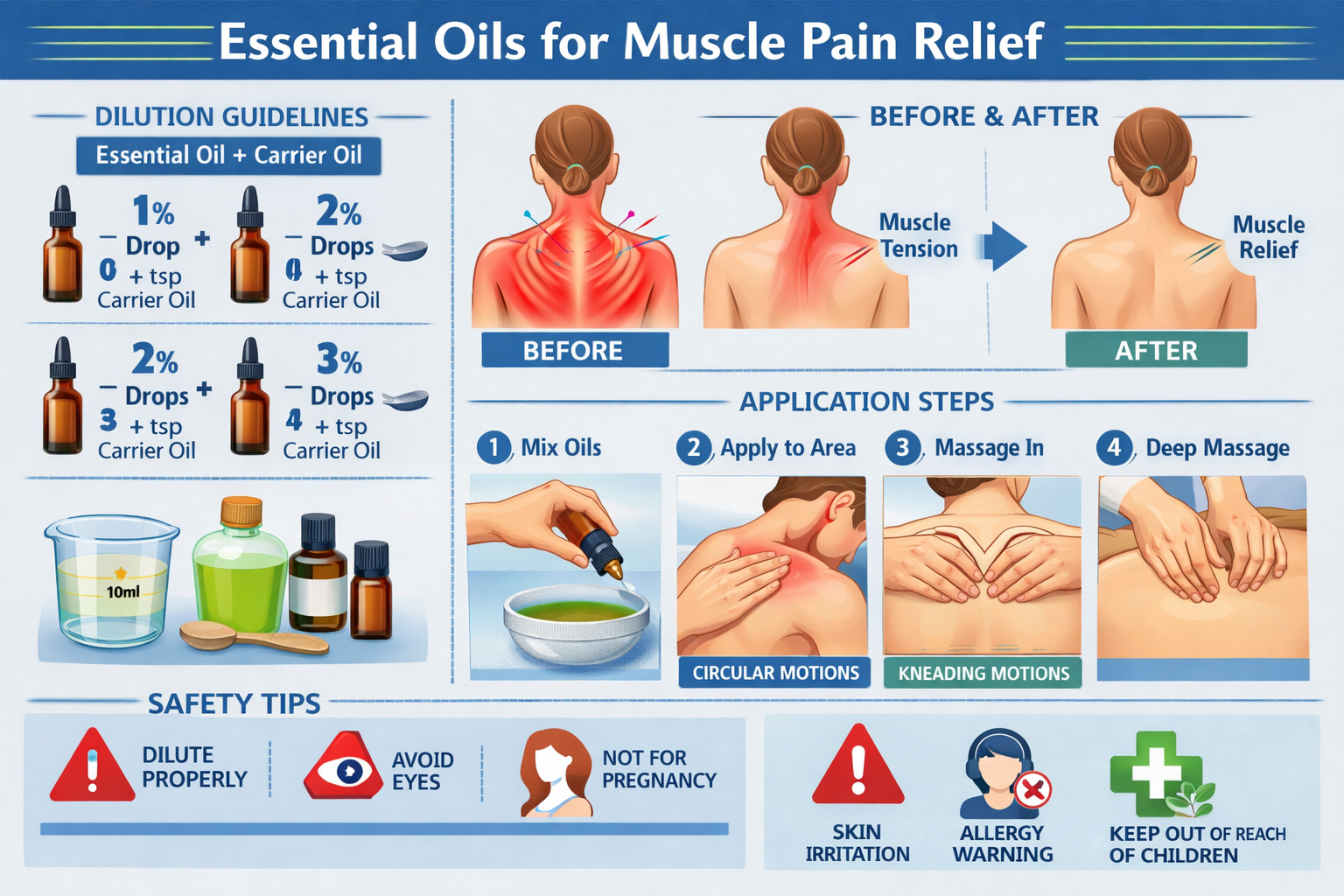
Never apply essential oils directly to your skin. Always dilute them with carrier oils to prevent irritation and ensure safe absorption.
| Dilution Ratio | Essential Oil | Carrier Oil | Best For |
|---|---|---|---|
| 1% | 6 drops | 1 ounce | Sensitive skin, daily use |
| 2% | 12 drops | 1 ounce | General muscle pain |
| 3% | 18 drops | 1 ounce | Acute pain, short-term use |
| 5% | 30 drops | 1 ounce | Severe pain, limited use |
Best Carrier Oils for Muscle Pain
Arnica Oil: Already known for pain relief, making it perfect for muscle blends
Sweet Almond Oil: Light, easily absorbed, and suitable for all skin types
Jojoba Oil: Technically a wax, it penetrates deeply and doesn’t go rancid
Coconut Oil: Solid at room temperature, melts on skin, has natural anti-inflammatory properties
Grapeseed Oil: Light, non-greasy, and rich in antioxidants
Application Techniques
🤲 Massage Method:
- Warm the oil blend between your palms
- Apply gentle pressure in circular motions
- Work from the center of pain outward
- Spend 5-10 minutes massaging the area
🔥 Warm Compress:
- Add 3-5 drops of essential oil to warm water
- Soak a clean cloth in the mixture
- Apply to painful muscles for 15-20 minutes
- Reapply as needed
🛁 Pain-Relief Bath:
- Mix 5-8 drops of essential oil with Epsom salts
- Add to warm bath water
- Soak for 15-20 minutes
- Perfect for whole-body muscle soreness
Creating Your Own Muscle Pain Relief Blends
The “Post-Workout Recovery” Blend
- 4 drops peppermint oil
- 3 drops eucalyptus oil
- 2 drops lavender oil
- 1 ounce arnica carrier oil
This cooling blend is perfect for immediate post-exercise relief.
The “Deep Pain Relief” Blend
- 3 drops wintergreen oil
- 3 drops rosemary oil
- 2 drops peppermint oil
- 1 ounce sweet almond oil
Use this powerful combination for chronic or severe muscle pain.
The “Bedtime Relaxation” Blend
- 5 drops lavender oil
- 2 drops chamomile oil
- 2 drops ylang-ylang oil
- 1 ounce jojoba oil
Apply before bed to ease tension and promote restful sleep.
Safety Considerations and Precautions
Who Should Use Caution
Pregnant and nursing women: Avoid wintergreen, rosemary, and peppermint oils, especially in the first trimester
Children under 12: Use only lavender and chamomile oils at 0.5% dilution
People with sensitive skin: Always do a patch test before full application
Those taking medications: Some essential oils can interact with blood thinners and other medications
Signs to Stop Use
- Skin redness or irritation
- Increased pain or swelling
- Allergic reactions like hives or difficulty breathing
- Headaches or nausea from strong scents
Storage and Quality Tips
🌡️ Temperature: Store in cool, dark places away from heat and sunlight
🕐 Shelf life: Most essential oils last 2-3 years when stored properly
🏷️ Quality matters: Choose oils from reputable suppliers with third-party testing
🔒 Safety: Keep away from children and pets
When to See a Healthcare Provider
While the best essential oils for muscle pain can provide significant relief, they’re not a cure-all. Seek professional help if you experience:
- Severe pain that doesn’t improve after 3-4 days
- Signs of infection (fever, red streaks, warmth)
- Muscle weakness or numbness
- Pain following a significant injury
- Chronic pain that interferes with daily activities
Enhancing Results with Lifestyle Changes
Essential oils work best as part of a complete approach to muscle health:
💧 Stay hydrated: Dehydration contributes to muscle cramps and soreness
🥗 Eat anti-inflammatory foods: Berries, leafy greens, and fatty fish support muscle recovery
😴 Prioritize sleep: Your muscles repair themselves during deep sleep
🧘♀️ Manage stress: Chronic stress increases muscle tension and pain
🏃♀️ Stay active: Gentle movement prevents stiffness and promotes healing
The Science Behind Natural Pain Relief
Recent studies have validated what natural health enthusiasts have long believed about essential oils. Research published in the International Journal of Sports Medicine found that topical menthol (found in peppermint oil) significantly reduced muscle pain and improved recovery time.
Another study in the European Journal of Pain showed that lavender oil massage reduced pain intensity by up to 39% in participants with chronic muscle pain.
These findings support the use of best essential oils for muscle pain as legitimate alternatives or complements to conventional pain management.
Building Your Essential Oil Toolkit
Start with these basics for a complete muscle pain relief arsenal:
Essential Oils to Buy First:
- Peppermint (for cooling relief)
- Lavender (for relaxation and inflammation)
- Eucalyptus (for anti-inflammatory effects)
Carrier Oils to Have:
- Sweet almond oil (all-purpose)
- Arnica oil (pain-specific)
Additional Supplies:
- Dark glass bottles for storage
- Measuring droppers
- Small funnel for blending
- Labels for your custom blends
Conclusion
The best essential oils for muscle pain offer a natural, effective way to manage discomfort without relying solely on synthetic medications. From peppermint’s cooling relief to wintergreen’s deep-penetrating action, these plant-based solutions have stood the test of time for good reason.
Remember that success with essential oils requires patience, proper dilution, and consistent application. Start with gentle oils like lavender if you’re new to natural pain relief, and gradually experiment with stronger options as you learn what works best for your body.
Your next steps:
- Choose 2-3 essential oils that match your specific pain needs
- Purchase high-quality carrier oils for safe dilution
- Start with simple blends and basic application methods
- Keep a journal to track what works best for your pain patterns
- Consider consulting with a certified aromatherapist for personalized guidance
By embracing these natural solutions, you’re not just treating pain – you’re supporting your body’s innate healing abilities while avoiding the side effects that often come with conventional pain medications. Your muscles (and your overall health) will thank you for making this gentle, effective choice.