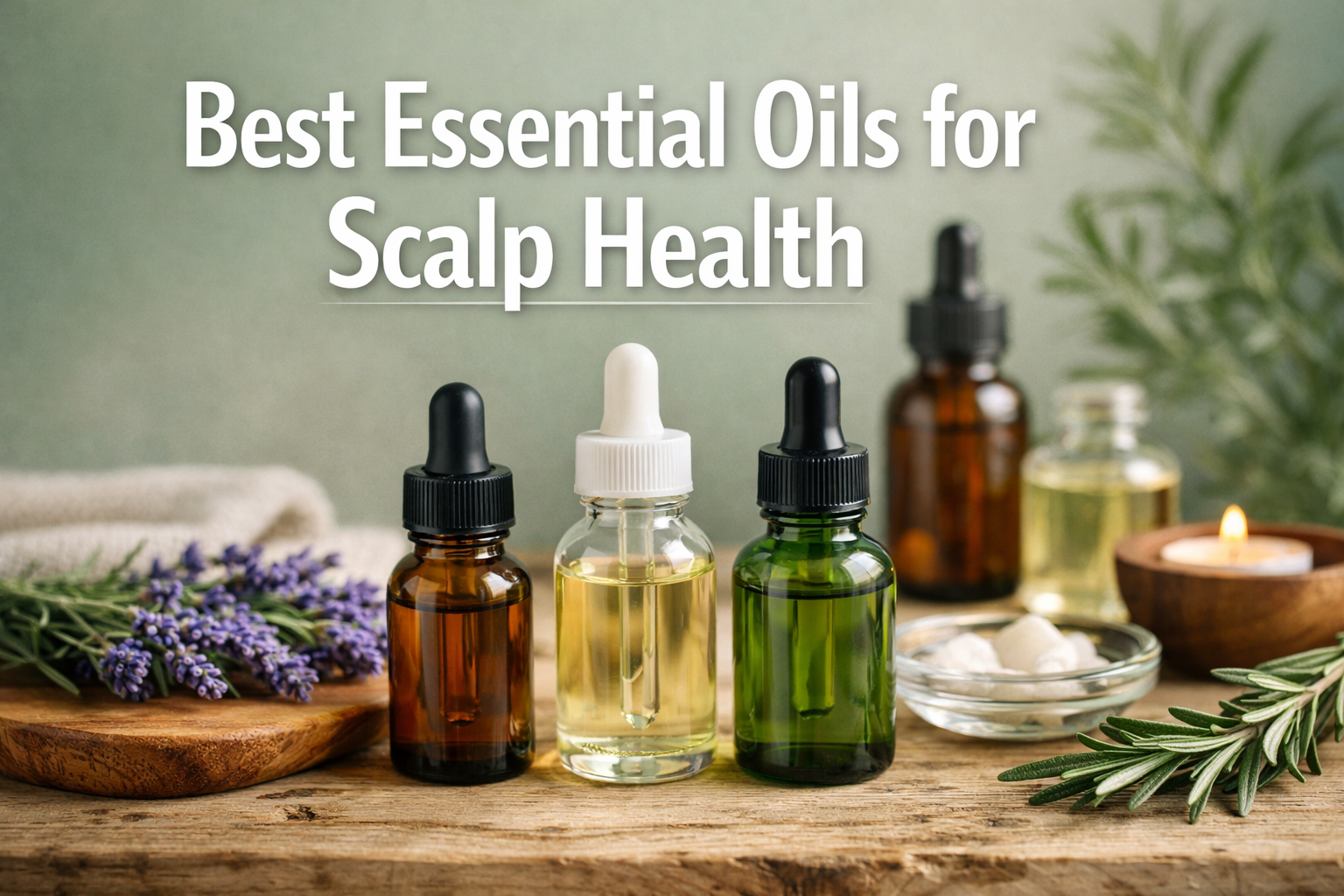
Best Essential Oils for Scalp Health
Imagine running your fingers through your hair and feeling a healthy, balanced scalp that’s free from irritation, dryness, or excess oil. For many people seeking natural wellness solutions, discovering the best essential oils for scalp health has become a game-changing approach to hair care that works in harmony with the body’s natural processes.
Essential oils have been treasured for centuries as powerful plant medicines that can transform scalp health from the roots up. These concentrated botanical extracts offer a chemical-free alternative to conventional hair products, providing therapeutic benefits that address everything from dandruff and inflammation to poor circulation and hair thinning.
Key Takeaways
• Tea tree, rosemary, and peppermint oils are among the most effective essential oils for promoting scalp health and addressing common issues
• Proper dilution with carrier oils is essential for safe application – never apply essential oils directly to the scalp
• Regular scalp massage with essential oil blends can improve circulation, reduce inflammation, and promote healthy hair growth
• Patch testing is crucial before using any new essential oil to avoid allergic reactions
• Consistency in application (2-3 times per week) yields the best results for long-term scalp health improvement
Understanding Scalp Health and Essential Oil Benefits
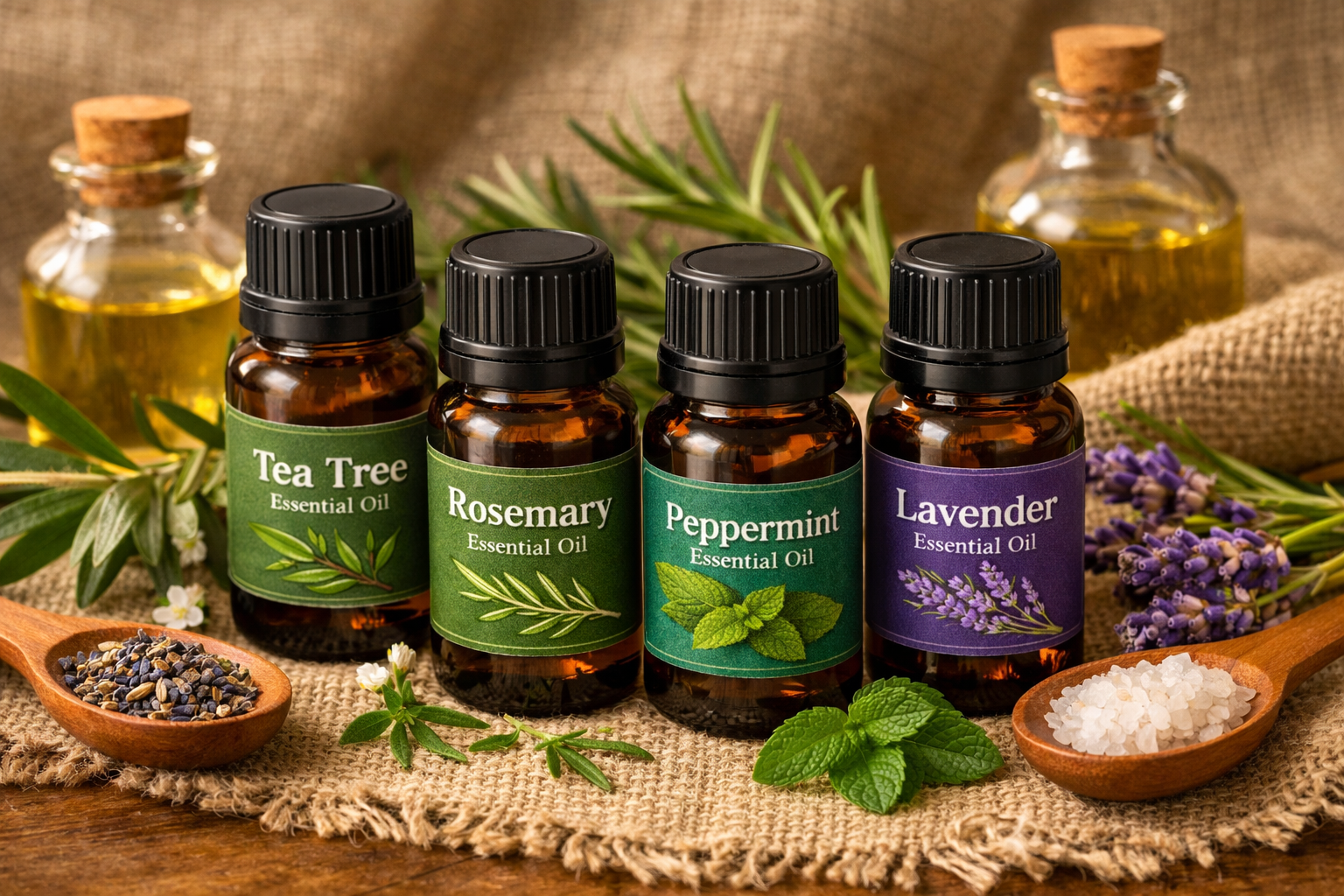
A healthy scalp forms the foundation for beautiful, strong hair. When the scalp becomes imbalanced due to stress, environmental factors, or harsh chemical products, it can lead to various issues including:
- Dryness and flaking
- Excess oil production
- Inflammation and irritation
- Poor blood circulation
- Clogged hair follicles
- Bacterial or fungal overgrowth
Essential oils work on multiple levels to restore scalp balance. These potent plant extracts contain active compounds that can:
🌿 Reduce inflammation through natural anti-inflammatory properties
🌿 Fight harmful microorganisms with antimicrobial and antifungal effects
🌿 Improve circulation by stimulating blood flow to hair follicles
🌿 Balance oil production by regulating sebaceous gland activity
🌿 Provide deep nourishment with vitamins, minerals, and fatty acids
“Essential oils offer a gentle yet powerful way to address scalp concerns while supporting the body’s natural healing processes.” – Natural Health Research Institute
Top Essential Oils for Scalp Health: Nature’s Scalp Healers
Tea Tree Oil: The Antimicrobial Powerhouse
Tea tree oil stands out as one of the most researched and effective options among the best essential oils for scalp health. This Australian native plant extract contains powerful compounds called terpenes that make it incredibly effective against:
- Dandruff-causing fungi
- Bacterial infections
- Scalp inflammation
- Clogged hair follicles
Benefits:
- Reduces dandruff by up to 40% in clinical studies
- Soothes itchy, irritated scalp
- Helps unclog hair follicles
- Provides deep cleansing action
How to use: Mix 3-5 drops with 1 tablespoon of coconut oil for a weekly scalp treatment.
Rosemary Oil: The Circulation Booster
Rosemary essential oil has gained attention for its ability to stimulate hair growth and improve scalp health. Research shows it can be as effective as conventional treatments for promoting hair growth.
Key benefits:
- Increases blood circulation to the scalp
- Strengthens hair follicles
- Reduces premature graying
- Provides antioxidant protection
Application tip: Combine 4 drops with jojoba oil and massage into scalp before washing.
Peppermint Oil: The Invigorating Stimulant
The cooling sensation of peppermint oil isn’t just refreshing – it’s therapeutic. This oil contains menthol, which creates a vasodilating effect that improves blood flow to hair follicles.
Scalp benefits:
- Dramatically increases blood circulation
- Provides antimicrobial protection
- Soothes scalp irritation
- Creates an invigorating, clean feeling
Safety note: Always dilute well, as peppermint oil can be very potent.
Lavender Oil: The Gentle Healer
Lavender essential oil offers a gentler approach to scalp care while still providing powerful benefits. It’s particularly suitable for sensitive scalps or those new to essential oil treatments.
Therapeutic properties:
- Anti-inflammatory and calming
- Promotes hair growth
- Balances oil production
- Provides stress-relieving aromatherapy benefits
Cedarwood Oil: The Follicle Strengthener
Cedarwood essential oil works by balancing the oil-producing glands in the scalp and has antifungal properties that help reduce hair loss.
Unique benefits:
- Stimulates hair follicles
- Reduces hair thinning
- Balances oily and dry scalp conditions
- Provides grounding, woodsy aroma
How to Use the Best Essential Oils for Scalp Health Safely
Essential Dilution Guidelines
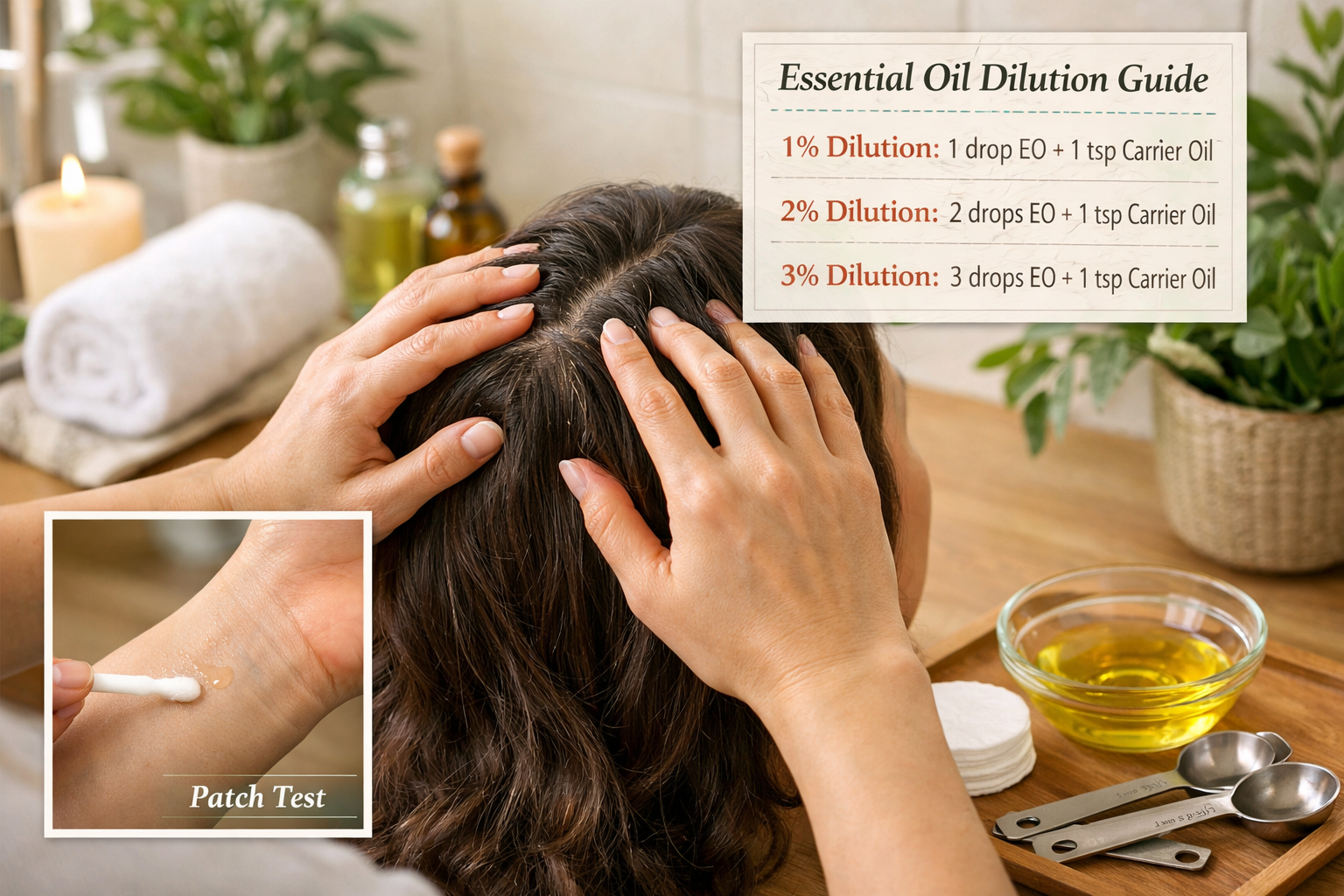
Never apply essential oils directly to the scalp. Always dilute with carrier oils to prevent irritation and ensure safe absorption.
Recommended dilution ratios:
- Sensitive scalp: 1-2% (3-6 drops per tablespoon of carrier oil)
- Normal scalp: 2-3% (6-9 drops per tablespoon of carrier oil)
- Tolerant scalp: 3-5% (9-15 drops per tablespoon of carrier oil)
Best Carrier Oils for Scalp Health
| Carrier Oil | Benefits | Best For |
|---|---|---|
| Jojoba Oil | Mimics natural sebum, lightweight | All scalp types |
| Coconut Oil | Antimicrobial, deeply moisturizing | Dry, flaky scalp |
| Argan Oil | Rich in vitamins, non-greasy | Damaged, brittle hair |
| Sweet Almond Oil | Gentle, hypoallergenic | Sensitive scalp |
| Castor Oil | Thick consistency, promotes growth | Hair thinning concerns |
Application Methods
🌟 Scalp Massage Treatment
- Mix essential oils with chosen carrier oil
- Part hair into sections
- Apply oil blend to scalp using fingertips
- Massage gently in circular motions for 5-10 minutes
- Leave on for 30 minutes to 2 hours
- Wash out with gentle, natural shampoo
🌟 Pre-Shampoo Treatment
Apply oil blend 15-30 minutes before regular hair washing routine for a quick conditioning treatment.
🌟 Overnight Treatment
For intensive care, apply oil blend before bed and wash out in the morning (use a towel on your pillow).
Creating Custom Blends: Best Essential Oils for Scalp Health Combinations
Dandruff-Fighting Blend
- 4 drops tea tree oil
- 3 drops rosemary oil
- 2 drops lavender oil
- 1 tablespoon coconut oil
Hair Growth Stimulating Blend
- 3 drops rosemary oil
- 3 drops peppermint oil
- 2 drops cedarwood oil
- 1 tablespoon jojoba oil
Sensitive Scalp Soother
- 4 drops lavender oil
- 2 drops chamomile oil
- 2 drops tea tree oil
- 1 tablespoon sweet almond oil
Oily Scalp Balancer
- 3 drops tea tree oil
- 3 drops lemon oil
- 2 drops rosemary oil
- 1 tablespoon jojoba oil
Safety Considerations and Best Practices
Patch Testing Protocol
Before using any new essential oil blend:
- Apply a small amount of diluted oil to inner wrist
- Wait 24-48 hours to check for reactions
- Look for signs of redness, itching, or irritation
- Proceed with caution if any reaction occurs
Important Safety Guidelines
❌ Avoid these mistakes:
- Using undiluted essential oils
- Applying oils to broken or irritated skin
- Using citrus oils before sun exposure
- Ignoring allergic reactions
✅ Follow these best practices:
- Start with lower concentrations
- Use high-quality, pure essential oils
- Store oils in dark, cool places
- Discontinue use if irritation occurs
Special Considerations
Pregnancy and nursing: Consult healthcare providers before using essential oils during pregnancy or while breastfeeding.
Children: Use extra caution and lower concentrations when using essential oils on children’s scalps.
Medical conditions: Those with scalp conditions like psoriasis or eczema should consult dermatologists before starting essential oil treatments.
Maximizing Results: Tips for Long-Term Scalp Health
Frequency and Consistency
For optimal results with the best essential oils for scalp health:
- Start slowly: Begin with once-weekly treatments
- Build gradually: Increase to 2-3 times per week as tolerated
- Maintain consistency: Regular use yields better results than sporadic intensive treatments
- Monitor progress: Keep track of scalp improvements over 4-6 weeks
Supporting Lifestyle Factors
Essential oil treatments work best when combined with:
🥗 Nutritious diet rich in omega-3 fatty acids, vitamins, and minerals
💧 Adequate hydration to support overall scalp health
😴 Quality sleep for cellular repair and regeneration
🧘 Stress management to reduce inflammation and hormonal imbalances
🚫 Gentle hair care avoiding harsh chemicals and excessive heat styling
Seasonal Scalp Care
Adjust your essential oil routine based on seasonal needs:
Winter: Focus on moisturizing oils like lavender and chamomile for dry, flaky scalps
Summer: Emphasize cleansing oils like tea tree and peppermint for increased oil production
Spring/Fall: Use balancing blends to help scalp adjust to changing weather
Troubleshooting Common Concerns
“My scalp feels greasy after treatment”
Solutions:
- Reduce carrier oil amount
- Use lighter oils like jojoba or grapeseed
- Apply treatment only to scalp, not hair lengths
- Ensure thorough washing with gentle shampoo
“I’m not seeing results”
Considerations:
- Increase treatment frequency
- Try different essential oil combinations
- Ensure oils are high quality and properly stored
- Be patient – natural treatments take 6-8 weeks for visible results
“My scalp is still irritated”
Action steps:
- Reduce essential oil concentration
- Switch to gentler oils like lavender or chamomile
- Increase carrier oil ratio
- Take a break and consult a healthcare provider if irritation persists
The Science Behind Essential Oils and Scalp Health
Recent research has validated many traditional uses of essential oils for scalp and hair health. Studies show:
- Tea tree oil reduces dandruff-causing fungi by up to 85%
- Rosemary oil increases hair count by 44% after 6 months of use
- Peppermint oil promotes hair growth better than conventional treatments in animal studies
- Lavender oil increases hair follicle depth and number in research trials
These findings support the use of essential oils as effective, natural alternatives to synthetic scalp treatments.
Building Your Essential Oil Scalp Care Routine
Week 1-2: Introduction Phase
- Choose one gentle essential oil (lavender or tea tree)
- Use once per week with proper dilution
- Monitor scalp response
Week 3-4: Building Phase
- Increase to twice weekly applications
- Consider adding a second complementary oil
- Continue monitoring for improvements
Week 5-8: Maintenance Phase
- Establish regular 2-3 times weekly routine
- Experiment with custom blends
- Assess overall scalp health improvements
Beyond 8 Weeks: Long-term Care
- Maintain consistent routine
- Adjust oils seasonally
- Continue supporting with healthy lifestyle choices
Conclusion
The journey to optimal scalp health through natural means has never been more accessible or scientifically supported. The best essential oils for scalp health – including tea tree, rosemary, peppermint, lavender, and cedarwood – offer powerful, gentle solutions for common scalp concerns while supporting overall hair wellness.
Success with essential oils requires patience, consistency, and proper application techniques. By starting with quality oils, following safe dilution practices, and maintaining regular treatments, most people can achieve significant improvements in scalp health within 6-8 weeks.
Your next steps:
- Choose 1-2 essential oils that match your specific scalp concerns
- Purchase a quality carrier oil for safe dilution
- Perform patch tests before full application
- Start with weekly treatments and gradually increase frequency
- Track your progress over the next 2 months
Remember that scalp health is a reflection of overall wellness. Combining essential oil treatments with proper nutrition, stress management, and gentle hair care practices will maximize your results and help you achieve the healthy, balanced scalp you deserve.
The power of nature’s pharmacy awaits – your scalp will thank you for making the switch to these time-tested, scientifically-backed essential oil solutions.