DIY Essential Oil Blends for Sleep, Stress, and Focus

Imagine having the power to transform your mood, enhance your sleep, and sharpen your focus—all with simple, natural ingredients you can blend yourself at home. DIY Essential Oil Blends for Sleep, Stress, and Focus offer exactly that opportunity, giving wellness enthusiasts the tools to create personalized aromatherapy solutions tailored to their unique needs.
In 2026, more people than ever are turning away from synthetic solutions and embracing the ancient art of essential oil blending. These potent plant extracts have been used for thousands of years to support mental clarity, promote restful sleep, and ease daily tensions. The beauty of creating your own blends lies not just in the cost savings, but in the ability to customize each recipe to match your specific preferences and wellness goals.
Key Takeaways
• Essential oil blending is both an art and science that allows for complete customization of your wellness routine
• Safety protocols are crucial when creating DIY blends, including proper dilution ratios and patch testing
• Sleep, stress, and focus blends each require different base oils and application methods for maximum effectiveness
• Quality ingredients make all the difference in creating potent, long-lasting aromatherapy blends
• Proper storage and labeling ensures your DIY creations remain fresh and effective for months
Understanding Essential Oil Basics for DIY Blending

Before diving into specific DIY Essential Oil Blends for Sleep, Stress, and Focus, it’s essential to understand the fundamentals that make these natural remedies so effective. Essential oils are concentrated plant extracts that capture the aromatic compounds responsible for a plant’s therapeutic properties.
The Science Behind Aromatherapy
When inhaled, essential oil molecules travel through the olfactory system directly to the limbic brain—the area responsible for emotions, memory, and stress responses. This direct pathway explains why certain scents can instantly transport us to a peaceful state or help us feel more alert and focused.
Top note oils (like citrus and mint) provide immediate impact but fade quickly. Middle note oils (such as lavender and geranium) form the heart of your blend and last several hours. Base note oils (including sandalwood and vanilla) provide depth and help the entire blend last longer on the skin.
Essential Safety Guidelines
Creating safe and effective blends requires following proper dilution guidelines:
| Application Method | Dilution Ratio | Example |
|---|---|---|
| Diffuser | 3-5 drops per 100ml water | 4 drops total blend |
| Roller bottle (10ml) | 2-3% dilution | 6-9 drops essential oil |
| Massage oil | 1-2% dilution | 6-12 drops per ounce |
| Bath blend | 5-8 drops maximum | Mix with carrier oil first |
Always perform a patch test before using any new blend on your skin. Apply a small amount to your inner wrist and wait 24 hours to check for any adverse reactions.
Creating Powerful Sleep-Inducing Essential Oil Blends
Quality sleep forms the foundation of good health, yet millions struggle with falling asleep or staying asleep throughout the night. DIY Essential Oil Blends for Sleep, Stress, and Focus can provide natural support for better rest without the side effects of pharmaceutical sleep aids.
The Ultimate Sleepy Time Blend Recipe 😴
This carefully crafted blend combines the most researched sleep-promoting essential oils:
“Dreamland Drift” Blend:
- 4 drops Lavender (Lavandula angustifolia) – clinically proven to improve sleep quality
- 2 drops Roman Chamomile – reduces anxiety and promotes deep relaxation
- 2 drops Bergamot – lowers cortisol levels and eases racing thoughts
- 1 drop Sandalwood – grounds the blend and extends its calming effects
Application Methods:
- Diffuser blend: Add to diffuser 30 minutes before bedtime
- Pillow spray: Mix with distilled water in spray bottle (shake well before use)
- Bedtime roller: Dilute in fractionated coconut oil for pulse point application
Advanced Sleep Blend Variations
For those dealing with specific sleep challenges, these targeted variations can provide additional support:
“Midnight Reset” (for middle-of-night waking):
- 3 drops Lavender
- 3 drops Cedarwood
- 2 drops Vetiver
- 1 drop Marjoram
“Sunday Scaries Soother” (for anxiety-induced insomnia):
- 4 drops Bergamot
- 2 drops Ylang-ylang
- 2 drops Frankincense
- 1 drop Clary sage
Pro Tip: Create a bedtime ritual around your sleep blends. The consistent routine signals to your brain that it’s time to wind down, enhancing the oils’ natural effects.
Stress-Relief Blends for Modern Life Challenges
In our fast-paced world, stress has become a constant companion for many. Chronic stress doesn’t just affect mental well-being—it impacts physical health, relationships, and overall quality of life. DIY Essential Oil Blends for Sleep, Stress, and Focus offer a natural way to manage daily pressures and restore emotional balance.
The “Instant Zen” Emergency Stress Blend
This powerful combination works quickly to activate the parasympathetic nervous system, triggering the body’s natural relaxation response:
“Breathe Easy” Stress-Buster:
- 5 drops Lavender – immediate calming effect
- 3 drops Sweet Orange – uplifts mood and reduces cortisol
- 2 drops Peppermint – clears mental fog and enhances breathing
- 2 drops Eucalyptus – opens airways and promotes deeper breathing
Quick Application Techniques:
- Inhaler stick: Perfect for discrete use during stressful meetings
- Wrist roller: Apply to pulse points for immediate relief
- Desk diffuser: Maintain calm energy throughout the workday
Workplace Stress Solutions
Different stressful situations call for different aromatic approaches:
“Meeting Confidence” Blend:
- 4 drops Bergamot (reduces performance anxiety)
- 3 drops Rosemary (enhances mental clarity)
- 2 drops Lemon (boosts confidence and energy)
- 1 drop Basil (sharpens focus under pressure)
“Deadline Warrior” Blend:
- 3 drops Frankincense (promotes calm determination)
- 3 drops Geranium (balances emotions)
- 2 drops Grapefruit (energizes without overstimulation)
- 2 drops Spearmint (maintains mental sharpness)
Long-term Stress Management Protocols
For chronic stress, consistency matters more than intensity. Create a stress-management aromatherapy routine that includes:
- Morning activation blend to start the day centered
- Midday reset blend to prevent stress accumulation
- Evening decompression blend to process the day’s tensions
Weekly Stress-Relief Ritual:
Dedicate 20 minutes each Sunday to create fresh blends for the upcoming week. This mindful preparation becomes a stress-relief practice in itself while ensuring you always have support readily available.
Focus and Mental Clarity Enhancement Blends
Mental clarity and sustained focus have become precious commodities in our distraction-filled world. Whether working from home, studying for exams, or tackling creative projects, DIY Essential Oil Blends for Sleep, Stress, and Focus can provide the cognitive support needed to maintain peak mental performance.
The “Brain Boost” Concentration Formula
This scientifically-backed blend combines oils known for their cognitive-enhancing properties:
“Mental Sharpness” Blend:
- 4 drops Rosemary – improves memory and mental clarity
- 3 drops Peppermint – increases alertness and reduces mental fatigue
- 2 drops Lemon – enhances concentration and mood
- 1 drop Basil – reduces mental exhaustion and brain fog
Optimal Usage Strategies:
- Study sessions: Diffuse 15 minutes before starting work
- Creative projects: Apply to temples and behind ears
- Important meetings: Use personal inhaler for discrete support
- Afternoon slump: Quick inhalation from cupped hands
Specialized Focus Blends for Different Tasks
Different types of mental work benefit from different aromatic support:
“Creative Flow” Blend (for artistic and innovative work):
- 4 drops Sweet Orange (stimulates creativity)
- 3 drops Frankincense (enhances intuition)
- 2 drops Bergamot (reduces creative blocks)
- 1 drop Sandalwood (promotes deep thinking)
“Data Cruncher” Blend (for analytical tasks):
- 4 drops Rosemary (improves working memory)
- 3 drops Eucalyptus (clears mental pathways)
- 2 drops Tea Tree (reduces mental clutter)
- 1 drop Cypress (enhances logical thinking)
Creating Your Personal Focus Ritual
The most effective focus blends become part of a broader productivity ritual:
- Environmental preparation: Clean, organized workspace
- Aromatic activation: Apply or diffuse chosen blend
- Mindful transition: 3-5 deep breaths while setting intentions
- Sustained support: Reapply blend every 2-3 hours as needed
Time-of-Day Considerations:
- Morning focus blends should energize without overstimulation
- Afternoon blends need to combat natural energy dips
- Evening focus blends should support concentration without interfering with sleep
Essential Oil Quality and Sourcing Guide
The effectiveness of DIY Essential Oil Blends for Sleep, Stress, and Focus depends entirely on the quality of ingredients used. Not all essential oils are created equal, and understanding how to identify high-quality oils ensures both safety and therapeutic benefit.
What to Look for in Quality Essential Oils
Purity indicators that separate therapeutic-grade oils from synthetic alternatives:
- Botanical name listed (e.g., Lavandula angustifolia, not just “lavender”)
- Country of origin and harvesting details provided
- Extraction method specified (steam distilled, cold-pressed, etc.)
- Batch testing information available upon request
- Dark glass bottles that protect from light degradation
Red Flags to Avoid
Steer clear of oils that show these warning signs:
- ❌ Uniform pricing across all varieties (pure rose oil costs more than orange)
- ❌ “Fragrance oil” or “perfume oil” labeling
- ❌ Clear plastic bottles or excessive light exposure
- ❌ No botanical names or sourcing information
- ❌ Claims to be “food grade” when intended for aromatherapy
Budget-Friendly Quality Options
Building a collection of quality oils doesn’t require breaking the bank:
Essential starter oils for beginners (in order of priority):
- Lavender – versatile for sleep and stress
- Lemon – energizing and mood-lifting
- Peppermint – cooling and focusing
- Tea Tree – purifying and clarifying
- Eucalyptus – respiratory and mental support
Money-saving strategies:
- Start with smaller bottles (5ml vs 15ml) to test preferences
- Join buying groups or co-ops for bulk discounts
- Focus on versatile oils that work in multiple blend categories
- Purchase during seasonal sales and stock up on favorites
Blending Techniques and Ratios for Success
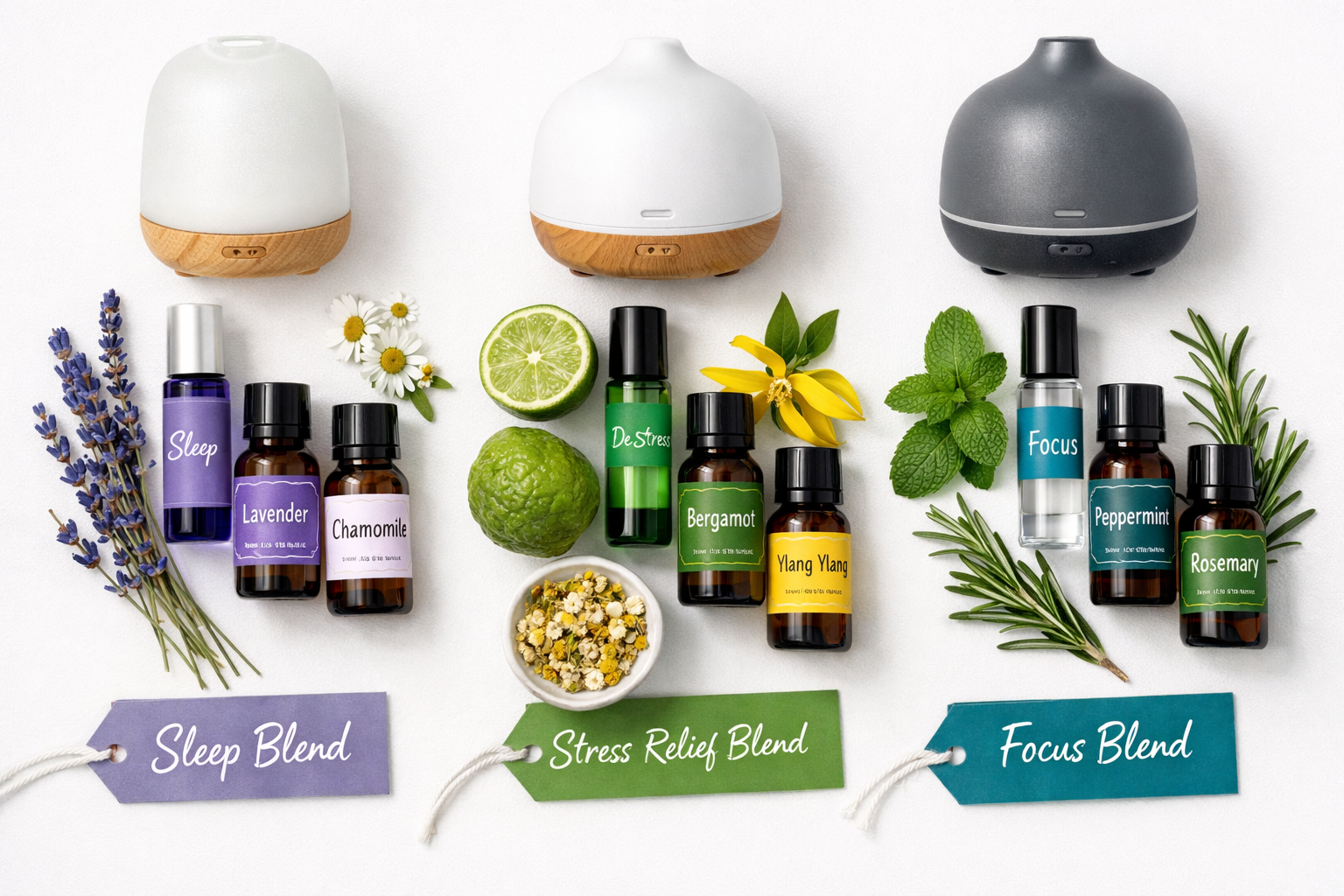
Creating effective DIY Essential Oil Blends for Sleep, Stress, and Focus requires understanding both the art and science of aromatherapy blending. Successful blends balance therapeutic properties with pleasing aromatic profiles.
The Golden Rules of Blending
Rule #1: Start Small
Always create test batches before making larger quantities. A 1ml sample allows for multiple trials without waste.
Rule #2: Document Everything 📝
Keep detailed records of:
- Exact oil quantities used
- Carrier oil type and amount
- Application method tested
- Effectiveness rating (1-10)
- Any skin reactions or sensitivities
Rule #3: Follow the Pyramid Principle
- 60% base/middle notes (lavender, geranium, chamomile)
- 30% top notes (citrus, mint, eucalyptus)
- 10% base notes (sandalwood, vetiver, patchouli)
Advanced Blending Techniques
Synergistic pairing involves combining oils that enhance each other’s therapeutic properties:
- Lavender + Bergamot = Enhanced stress relief
- Rosemary + Lemon = Improved memory and focus
- Chamomile + Sandalwood = Deeper sleep promotion
- Peppermint + Eucalyptus = Increased mental clarity
Seasonal adjustments keep blends feeling fresh and relevant:
- Spring blends: Add floral notes (geranium, ylang-ylang)
- Summer blends: Include cooling oils (peppermint, spearmint)
- Fall blends: Incorporate warming spices (cinnamon, clove)
- Winter blends: Feature grounding woods (cedarwood, pine)
Troubleshooting Common Blending Issues
Problem: Blend smells too strong
- Solution: Add more carrier oil or reduce essential oil concentration
Problem: Scent fades too quickly
- Solution: Add base notes (sandalwood, vetiver) to extend longevity
Problem: Blend causes headaches
- Solution: Reduce concentration or eliminate potential trigger oils (eucalyptus, peppermint)
Problem: Skin irritation occurs
- Solution: Increase dilution ratio and always patch test new blends
Storage, Labeling, and Safety Best Practices
Proper storage and handling ensure DIY Essential Oil Blends for Sleep, Stress, and Focus remain potent and safe for extended periods. Following professional aromatherapy standards protects both the investment in quality oils and the health of blend users.
Optimal Storage Conditions
Temperature control significantly impacts oil longevity:
- Store in cool, dark locations (60-70°F ideal)
- Avoid bathroom storage due to humidity fluctuations
- Never leave in cars or direct sunlight
- Consider refrigeration for citrus oils to extend shelf life
Container selection affects both preservation and safety:
- Dark amber or cobalt glass protects from UV degradation
- Tight-fitting caps prevent oxidation and evaporation
- Roller bottles for ready-to-use blends
- Dropper bottles for concentrated stock blends
Professional Labeling Systems
Create labels that include essential safety information:
Required label elements:
- Blend name and intended use
- Complete ingredient list with percentages
- Creation date and expiration estimate
- Dilution ratio and recommended applications
- Safety warnings (if applicable)
Sample label format:
"Dreamland Drift" Sleep Blend
Created: March 15, 2026
Expires: March 15, 2027

Ingredients:
- Lavender (40%) - Lavandula angustifolia
- Chamomile (20%) - Chamaemelum nobile
- Bergamot (20%) - Citrus bergamia
- Sandalwood (10%) - Santalum album
- Fractionated Coconut Oil (carrier)

Dilution: 3% in carrier oil
Use: Apply to pulse points before bed
Warning: For external use only
Safety Protocols for DIY Blenders
Pregnancy and nursing considerations:
Avoid these oils during pregnancy:
- Clary sage, rosemary, peppermint (first trimester)
- Always consult healthcare providers before use
Children’s safety guidelines:
- Ages 2-6: 0.5-1% dilution maximum
- Ages 6-12: 1-2% dilution maximum
- Avoid eucalyptus and peppermint near faces of children under 6
Pet safety awareness:
Many essential oils toxic to pets include:
- Tea tree, eucalyptus, peppermint (cats)
- Citrus oils (dogs with sensitivities)
- Always ensure adequate ventilation when diffusing
Customizing Blends for Individual Needs
The true power of DIY Essential Oil Blends for Sleep, Stress, and Focus lies in their adaptability to individual preferences, sensitivities, and lifestyle needs. Creating personalized aromatherapy solutions requires understanding how different factors influence blend effectiveness.
Identifying Personal Scent Preferences
Scent memory associations play a crucial role in blend effectiveness:
- Positive childhood memories enhance therapeutic benefits
- Negative associations can trigger stress responses
- Cultural background influences scent preferences
- Seasonal preferences may shift throughout the year
Testing methodology for discovering preferences:
- Single oil evaluation: Test individual oils before blending
- Intensity tolerance: Determine preferred concentration levels
- Application method preferences: Diffusion vs. topical vs. inhalation
- Timing sensitivity: Morning vs. evening effectiveness variations
Adapting Blends for Specific Conditions
Shift work sleep disorder requires modified approaches:
- Blackout essential oils (vetiver, sandalwood) for daytime sleep
- Energizing blends (citrus, mint) for night shift alertness
- Transition blends to help reset circadian rhythms
High-stress professions benefit from portable solutions:
- Healthcare workers: Antimicrobial blends (tea tree, eucalyptus)
- Teachers: Patience-promoting blends (lavender, bergamot)
- First responders: Grounding blends (frankincense, cedarwood)
Students and learners need cognitive support variations:
- Exam preparation: Memory-enhancing blends (rosemary, lemon)
- Creative writing: Inspiration blends (orange, frankincense)
- Mathematical tasks: Logic-supporting blends (basil, eucalyptus)
Creating Blend Families
Develop coordinated blend systems that work together throughout daily routines:
“Productive Day” Blend Family:
- Morning Activation: Energizing start (citrus, mint)
- Midday Focus: Sustained concentration (rosemary, basil)
- Afternoon Reset: Energy renewal (eucalyptus, lemon)
- Evening Transition: Gentle wind-down (lavender, bergamot)
“Stress Recovery” Blend Family:
- Immediate Relief: Crisis management (lavender, chamomile)
- Daily Maintenance: Ongoing support (geranium, ylang-ylang)
- Deep Restoration: Weekly intensive care (frankincense, sandalwood)
- Prevention Protocol: Building resilience (bergamot, sweet orange)
Troubleshooting and Advanced Tips
Even experienced aromatherapy enthusiasts encounter challenges when creating DIY Essential Oil Blends for Sleep, Stress, and Focus. Understanding common issues and their solutions helps ensure consistent success with homemade blends.
Common Blending Challenges and Solutions
Challenge: Blend effectiveness diminishes over time
- Cause: Olfactory adaptation (nose blindness)
- Solution: Rotate between 2-3 different blends weekly
- Prevention: Take “scent breaks” between applications
Challenge: Inconsistent results from same blend
- Cause: Hormonal fluctuations, stress levels, or health changes
- Solution: Adjust concentration or switch oil combinations
- Adaptation: Keep blend diary to track effectiveness patterns
Challenge: Skin sensitivity develops suddenly
- Cause: Overuse, seasonal allergies, or oil oxidation
- Solution: Reduce concentration, switch carrier oils, or eliminate suspect ingredients
- Prevention: Regular patch testing and proper storage
Professional-Level Blending Techniques
Maceration method for enhanced therapeutic properties:
- Combine essential oils 24-48 hours before adding carrier oil
- Allow molecular bonding to create synergistic effects
- Results in smoother, more balanced aromatic profiles
Seasonal rotation strategies:
- Spring detox blends: Support natural cleansing (lemon, grapefruit)
- Summer cooling blends: Beat heat and maintain energy (peppermint, spearmint)
- Fall grounding blends: Prepare for seasonal changes (cedarwood, vetiver)
- Winter warming blends: Combat seasonal mood changes (orange, cinnamon)
Therapeutic layering approach:
- Base layer: Long-lasting therapeutic foundation
- Active layer: Targeted symptom relief
- Aromatic layer: Pleasant scent profile enhancement
Building Your Essential Oil Library
Phase 1: Foundation oils (months 1-3)
Focus on versatile, beginner-friendly options that work across multiple blend categories.
Phase 2: Specialization oils (months 4-8)
Add oils specific to primary wellness goals (sleep, stress, or focus emphasis).
Phase 3: Advanced oils (months 9+)
Incorporate rare or expensive oils for sophisticated blend development.
Investment timeline strategy:
- Month 1: 5 essential oils + basic supplies ($50-75)
- Month 3: 10 oils + advanced tools ($100-150)
- Month 6: 15+ oils + storage solutions ($200-300)
- Month 12: Comprehensive collection ($400-600)
Conclusion
Creating effective DIY Essential Oil Blends for Sleep, Stress, and Focus represents both an art and a science that empowers individuals to take control of their wellness journey naturally. Throughout this comprehensive guide, we’ve explored the fundamental principles of aromatherapy blending, from understanding essential oil properties to mastering safety protocols and customization techniques.
The journey of creating personalized aromatherapy solutions offers benefits far beyond the final product. The mindful process of selecting, measuring, and blending oils becomes a meditative practice that enhances the therapeutic value of the finished blends. As confidence grows through experimentation and experience, the ability to create targeted solutions for specific wellness needs develops into a valuable life skill.
Key success factors for DIY essential oil blending include:
- Starting with quality ingredients and proper safety protocols
- Documenting blend recipes and effectiveness for future reference
- Remaining patient with the learning process and individual responses
- Adapting formulas based on changing needs and preferences
- Building knowledge gradually through consistent practice and education
Immediate action steps to begin the essential oil blending journey:
- Assess current wellness priorities – identify whether sleep, stress, or focus support takes precedence
- Invest in starter supplies – purchase 3-5 foundational oils plus basic blending equipment
- Create designated workspace – establish organized, well-lit area for safe blending practices
- Start simple – begin with single-oil applications before progressing to complex blends
- Join community resources – connect with local or online aromatherapy groups for ongoing support and learning
The world of DIY Essential Oil Blends for Sleep, Stress, and Focus offers endless possibilities for natural wellness support. Whether seeking better sleep quality, stress management tools, or cognitive enhancement solutions, the power to create personalized aromatherapy blends puts effective, natural support literally at fingertips.
Remember that aromatherapy works best as part of a holistic wellness approach that includes proper nutrition, regular exercise, adequate sleep, and stress management practices. Essential oil blends serve as powerful allies in this comprehensive approach to health and well-being, offering gentle yet effective support for life’s daily challenges.
As 2026 continues to bring new stressors and demands, having reliable, natural tools for maintaining balance becomes increasingly valuable. The investment in learning essential oil blending skills pays dividends in improved wellness, reduced dependence on synthetic solutions, and the satisfaction of creating personalized care products that truly meet individual needs.
Start small, stay consistent, and trust the process. The journey toward mastering DIY Essential Oil Blends for Sleep, Stress, and Focus begins with a single drop and grows into a lifetime of natural wellness empowerment.