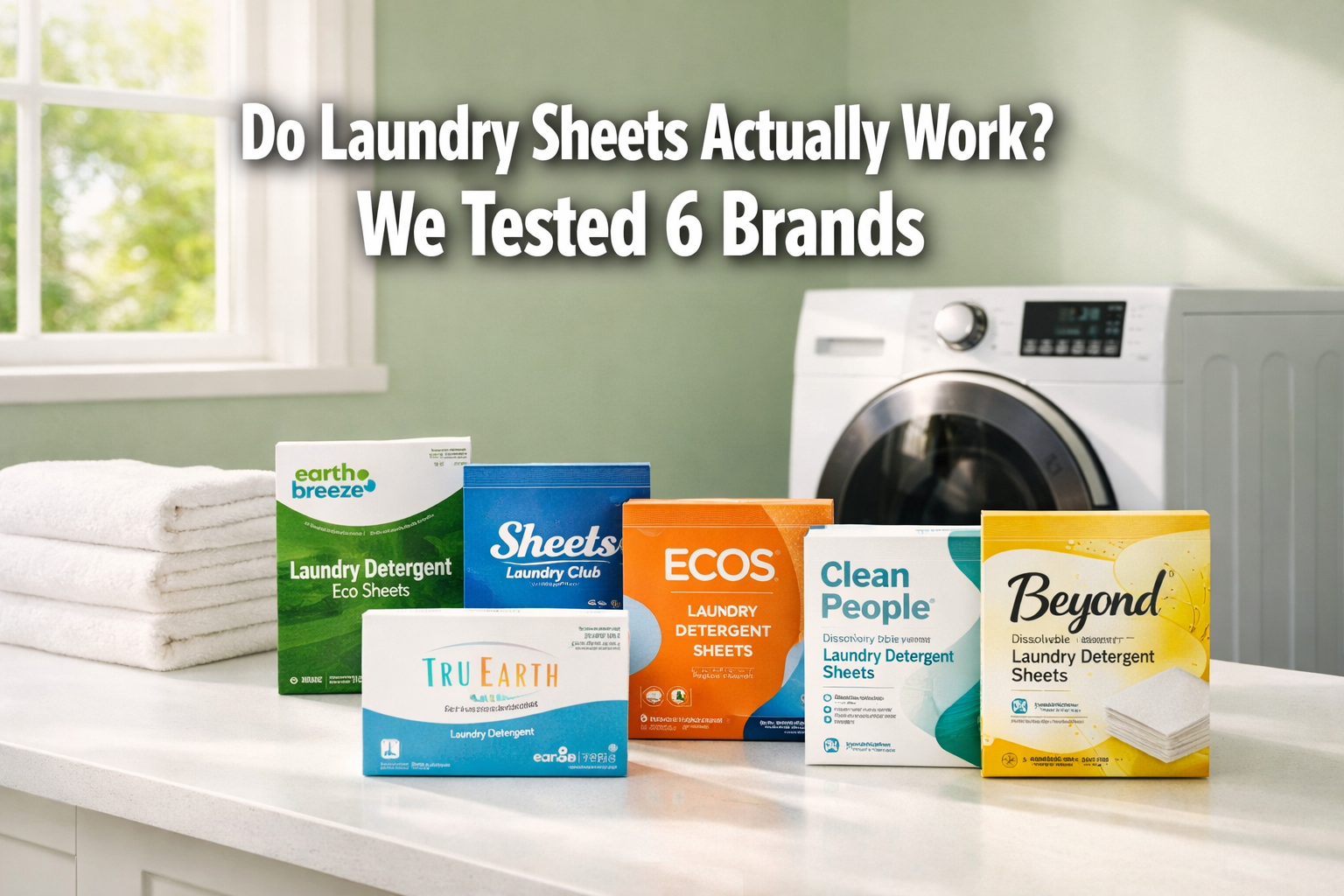
Do Laundry Sheets Actually Work? We Tested 6 Brands
Quick Answer: Laundry sheets do work, but most brands clean noticeably less effectively than liquid detergents — typically around 10–11% worse across common stains. A few standout brands close that gap significantly, making sheets a solid choice for everyday loads, travel, and anyone wanting a plastic-free laundry routine. If you have heavily soiled clothes or tough set-in stains, liquid detergent is still the stronger option.
Key Takeaways 🧺
Laundry sheets are real detergent — they dissolve in water and lift stains — but most underperform liquid detergents by about 10–11% on average
The biggest reason for weaker cleaning: sheets weigh only 3–5 grams versus roughly 37 grams for a standard liquid dose
Grove Collaborative Power Clean performed best overall in standardized testing, outperforming second-place sheets by about 1% and last-place products by roughly 3%
Consumer Reports does not recommend laundry sheets for general use, citing insufficient cleaning power in their lab tests
Arm & Hammer Power Sheetsand Earth Breeze Eco Sheets tied for top among thin-sheet formats — each excelling on different stain types
Sheets work in all machine types, including HE front-loaders, and are engineered to be low-sudsing
Some independent testing found certain brands — like Freddie Laundry Detergent Sheets — performing well across 20 common stains, including coffee, red wine, and grass
Brand quality varies widely, so the answer to “do laundry sheets actually work?” depends heavily on which brand you choose
What Are Laundry Sheets and How Do They Work?
Laundry sheets are thin, water-soluble pads made from cellulose and soaked in concentrated detergent. When they hit water in the wash cycle, they dissolve and release cleaning agents just like liquid or pod detergents do.
Here’s what makes them different from traditional detergents:
Form factor: A single sheet weighs 3–5 grams. A standard liquid detergent dose weighs around 37 grams
Ingredients: Concentrated surfactants, enzymes, and sometimes fragrance — packed into a thin film
Plastic-free: No plastic jug, no measuring cup — just a cardboard box or compostable pouch
Low-sudsing: Specifically formulated to work in HE machines with cold, low-water cycles
The science is sound. The limitation is volume — there’s simply less detergent per wash compared to liquid, which affects how well the product handles heavy soil loads.
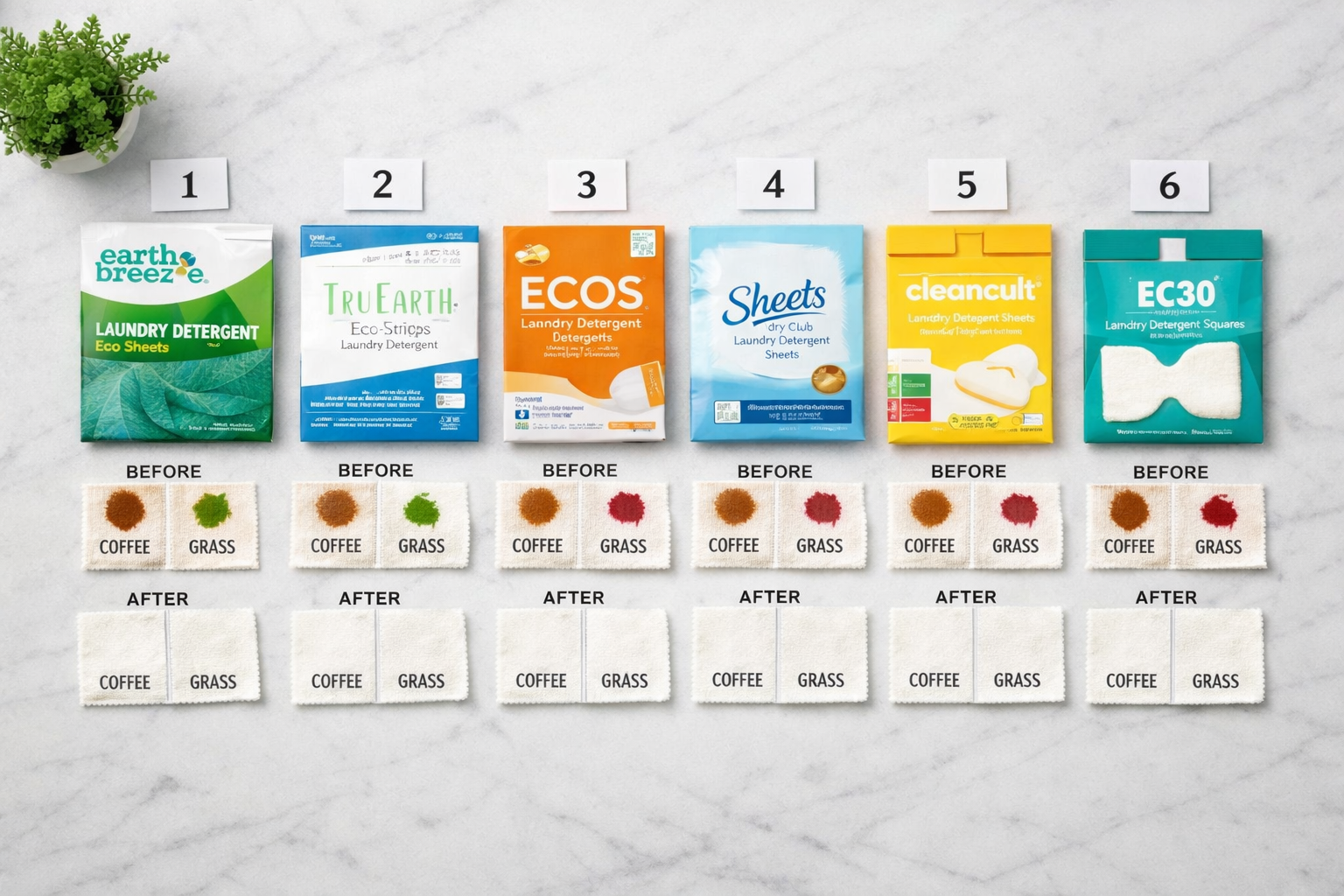
Do Laundry Sheets Actually Work? We Tested 6 Brands — Here’s What the Data Says
Yes, laundry sheets work. The more useful question is how well they work compared to what you’re used to.
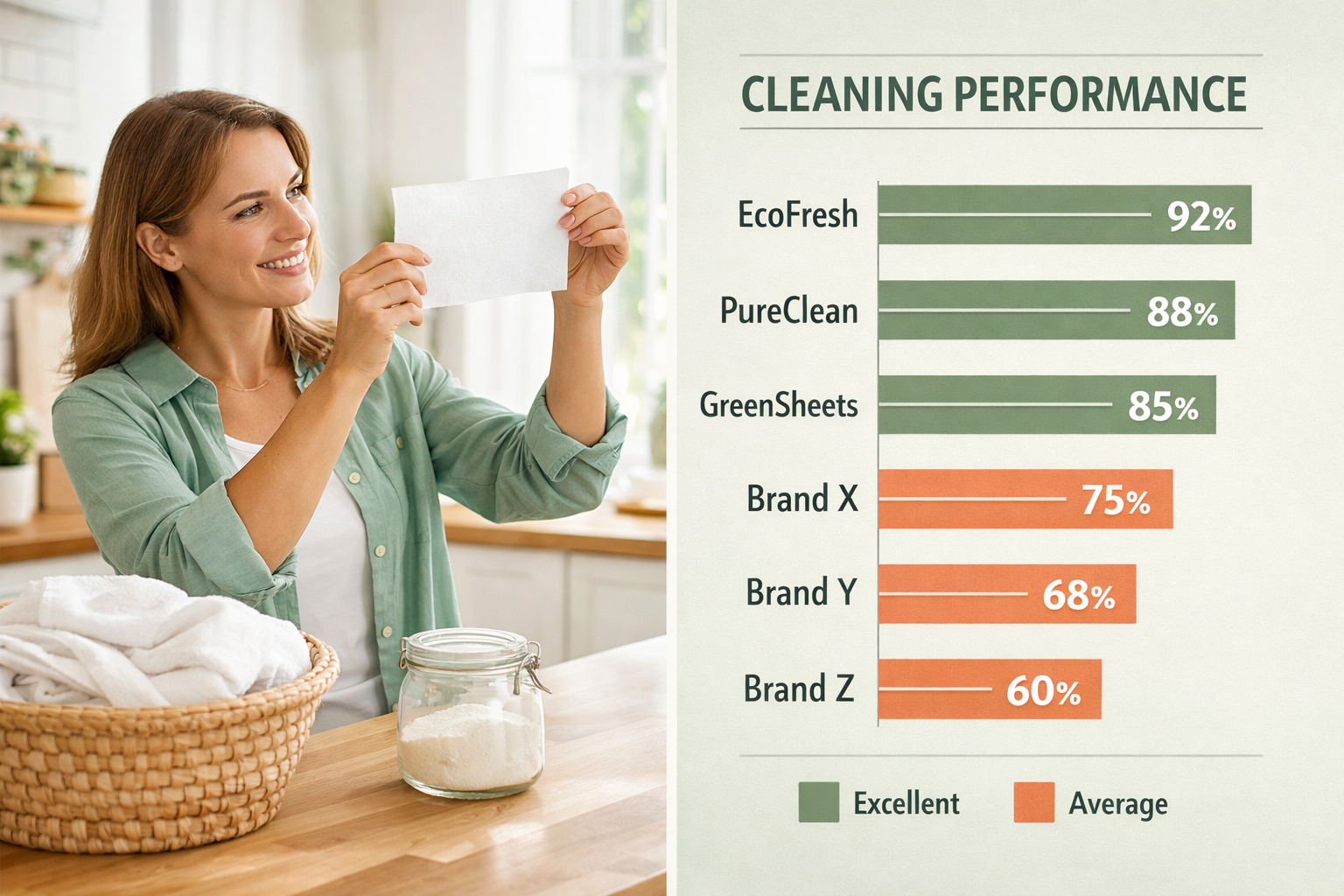
Testing across multiple independent sources paints a consistent picture: sheets clean adequately for everyday laundry but fall short on tough stains and heavily soiled loads.
Performance Breakdown by Brand
Brand
Strengths
Weaknesses
Overall Rating
Grove Collaborative Power Clean
Best overall soil removal
Higher price point
⭐⭐⭐⭐
Arm & Hammer Power Sheets
Chocolate, blood stains
Weaker on dirt/grass
⭐⭐⭐
Earth Breeze Eco Sheets
Dirt, grass stains
Weaker on protein stains
⭐⭐⭐
Freddie Laundry Sheets
Coffee, wine, grass
Less widely available
⭐⭐⭐⭐
Generic/budget sheets
Low cost
Poor dissolution, residue risk
⭐⭐
Good Housekeeping tested sheets
Food stains (ketchup, wine, mud)
Tea, lipstick stains
⭐⭐⭐
💡 Key finding from Good Housekeeping testing: Sheets dissolved in under one minute in cold water and showed strong results on food-based stains, but struggled with tea and lipstick.
Are Laundry Sheets Safe and Non-Toxic?
For health-conscious moms and anyone avoiding harsh chemicals, this is often the first question — and it’s a fair one.
Most laundry sheets on the market are formulated without phosphates, parabens, bleach, or artificial dyes. Many are fragrance-free or use essential oils. That said, “non-toxic” isn’t a regulated label, so it’s worth checking the ingredient list directly.
What to look for on the label:
Free from 1,4-dioxane (a common liquid detergent contaminant)
No optical brighteners (these can irritate sensitive skin)
Plant-derived surfactants rather than petroleum-based ones
Certified by third parties like EWG (Environmental Working Group) or EPA Safer Choice
Sheets tend to have shorter, more readable ingredient lists than many liquid detergents — which is part of why they’ve become popular in the non-toxic living community.
Why Do Some Laundry Sheets Underperform?
The core issue is concentration, not chemistry.
Fitting enough active cleaning ingredients into a 3–5 gram sheet is genuinely difficult. Liquid detergents have the advantage of volume — more surfactants, more enzymes, more stain-fighting power per wash.
Common reasons sheets underperform:
Not enough detergent mass to tackle heavily soiled loads
Poor dissolution in very cold water (below 60°F) with some brands
Using only one sheet when the load or soil level calls for two
Cheap formulations that skimp on enzymes, which are key for protein-based stains (blood, sweat, food)
Common mistake: Using a single sheet for an oversized or extra-dirty load. Most brands recommend two sheets for large or heavily soiled laundry — but that doubles the cost per wash.
Do Laundry Sheets Actually Work? We Tested 6 Brands — Who Should Use Them?
Sheets are a great fit for some people and a poor fit for others. Here’s a simple way to decide.
Choose laundry sheets if you:
Do mostly lightly to moderately soiled laundry (everyday clothes, kids’ school outfits, workout wear)
Want to reduce plastic waste and simplify your laundry routine
Travel frequently — sheets are TSA-friendly and lightweight
Have a small apartment with limited storage
Are sensitive to strong fragrances and prefer minimal-ingredient products
Deal with stubborn stains like grease, set-in blood, or heavy mud
Want the highest cleaning performance backed by Consumer Reports testing
Are washing for a large family with high-volume, high-soil laundry
How Do Laundry Sheets Compare to Pods and Liquid Detergent?
Sheets sit between pods and liquid in terms of convenience, and generally below both in raw cleaning power.
Feature
Liquid Detergent
Pods
Laundry Sheets
Cleaning power
Highest
High
Moderate
Plastic packaging
Usually yes
Usually yes
No (cardboard)
Ease of use
Measuring required
Very easy
Very easy
Travel-friendly
No
Somewhat
Yes
HE machine compatible
Yes
Yes
Yes
Cost per load
Low–moderate
Moderate
Moderate–high
Non-toxic options
Some
Some
Many
Some independent testing suggests the performance gap between top-performing sheets and liquid detergents is narrowing, but Consumer Reports’ lab results still show sheets falling short for general recommendation.
What’s the Best Laundry Sheet Brand in 2026?
Based on available testing data, Grove Collaborative Power Clean leads in standardized stain-removal testing. For budget-conscious shoppers, Arm & Hammer Power Sheets and Earth Breeze offer solid performance depending on your most common stain types.
Quick decision guide:
Best overall performance: Grove Collaborative Power Clean
Best for food and grass stains: Earth Breeze Eco Sheets
Best for protein stains (blood, chocolate): Arm & Hammer Power Sheets
Best for coffee, wine, and tough everyday stains: Freddie Laundry Detergent Sheets
Frequently Asked Questions
Do laundry sheets dissolve completely in cold water? Most quality brands dissolve in under one minute in cold water. Cheaper brands may leave residue — especially in very cold cycles below 60°F. Placing the sheet inside the drum before adding clothes helps.
Are laundry sheets better for the environment?
Generally yes. No plastic jug means less plastic waste. Sheets are also lighter, which reduces shipping emissions. Many brands use biodegradable packaging.
Can you use laundry sheets in an HE washing machine? Yes. Sheets are low-sudsing and work in all machine types, including front-loaders and HE top-loaders.
Why does Consumer Reports not recommend laundry sheets? Consumer Reports found sheets test poorly in their standardized labs, with insufficient cleaning power for general laundry needs. They don’t appear in the organization’s recommended product lists.
Can you use two sheets for a bigger load?
Yes, and most brands recommend it for large or heavily soiled loads. Just keep in mind it doubles the cost per wash.
Are laundry sheets safe for babies and sensitive skin?
Many brands are formulated without dyes, fragrances, and harsh chemicals, making them a popular choice for sensitive skin. Always check the ingredient list and look for third-party certifications like EWG Verified.
Do laundry sheets work on grease stains?
Grease is one of the harder stains for sheets to handle due to the lower detergent concentration. Pre-treating with a stain remover before washing gives much better results.
How much do laundry sheets cost per load?
Costs vary by brand, but most sheets run between $0.30 and $0.60 per load — comparable to or slightly more than mid-range liquid detergents.
Conclusion
So, do laundry sheets actually work? Yes — with an important caveat. They work well for everyday, lightly to moderately soiled laundry, and they bring real benefits: no plastic waste, easy storage, travel-friendly packaging, and often cleaner ingredient lists. For health-conscious moms and anyone building a non-toxic home routine, those benefits are meaningful.
The honest trade-off is cleaning power. Most brands underperform liquid detergents on tough stains, and Consumer Reports still doesn’t recommend them for general use. But top performers like Grove Collaborative Power Clean and Freddie Laundry Sheets close that gap considerably.
Actionable next steps:
Start with a trial pack of a top-rated brand (Grove Collaborative or Earth Breeze) before committing to a bulk purchase
Use two sheets for larger or dirtier loads
Pre-treat any tough stains before washing
Check the ingredient list against EWG’s database if non-toxic certification matters to you
Keep liquid detergent on hand for heavy-duty loads until you know how sheets perform for your household
The right laundry sheet can genuinely simplify your routine and reduce your environmental footprint — just choose the brand carefully.