Healthy Drink Alternatives to Soda

Picture this: you’re standing in front of your fridge at 3 PM, craving something fizzy and flavorful. Your hand reaches for that familiar soda can, but then you pause. You know there’s a better choice—something that won’t send your blood sugar soaring or leave you feeling sluggish an hour later. The good news? Healthy drink alternatives to soda have come a long way in 2026, and they’re more delicious, accessible, and gut-friendly than ever before.
Whether you’re a health-conscious mom looking to set a better example for your kids or a wellness enthusiast committed to clean eating, ditching soda doesn’t mean sacrificing flavor or satisfaction. This comprehensive guide will walk you through the best low sugar drinks and natural soda alternatives that support your health goals without compromising on taste.
Key Takeaways
- Regular soda consumption contributes to metabolic dysfunction, gut microbiome imbalance, and energy crashes due to high sugar content (typically 39+ grams per can)
- The best healthy drink alternatives to soda include organic sparkling water, low-sugar kombucha, herbal tonics, and functional beverages that provide hydration plus added benefits
- Ingredient awareness is crucial—avoid artificial sweeteners, high-fructose corn syrup, and synthetic colors even in “diet” or “zero-calorie” options
- Transitioning gradually from soda to healthier options helps manage cravings and makes the switch sustainable long-term
- Not all “healthy” drinks are created equal—reading labels for hidden sugars and understanding nutrient density ensures you’re making truly beneficial choices
Why You Should Replace Soda
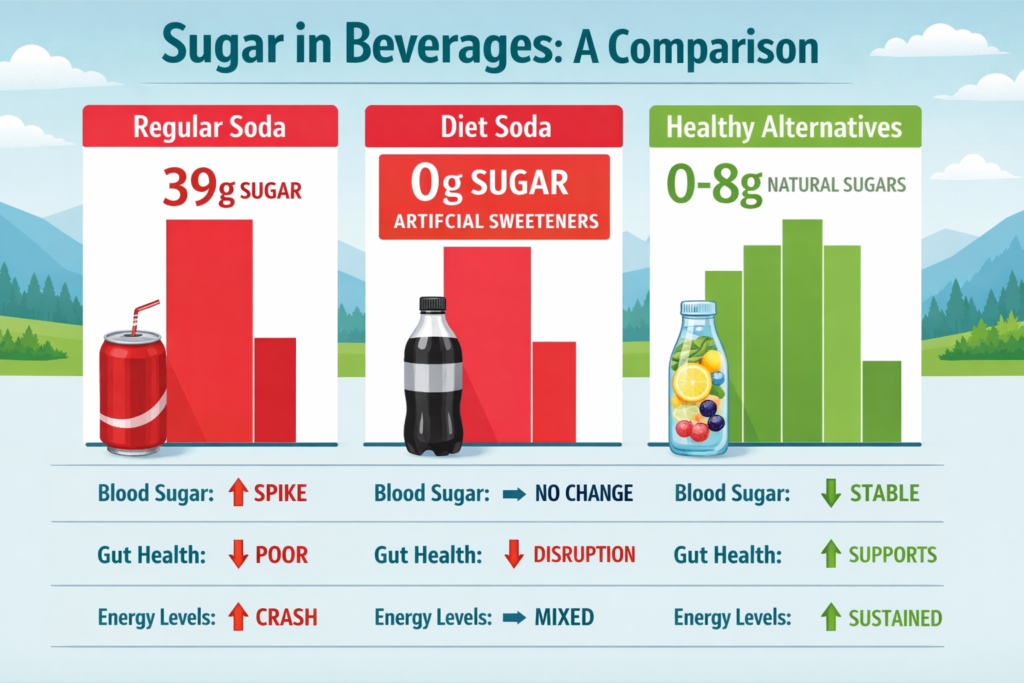
Let’s talk about what soda is really doing to your body. Understanding the science behind why soda is problematic makes choosing healthy beverages for gut health so much easier.
Sugar Content and Metabolic Impact
A single 12-ounce can of regular soda contains approximately 39 grams of sugar—that’s nearly 10 teaspoons![1] To put this in perspective, the American Heart Association recommends no more than 25 grams of added sugar per day for women and 36 grams for men.[2] One soda already exceeds these limits.
When you consume this much sugar at once, your blood glucose spikes dramatically. Your pancreas responds by releasing insulin to shuttle that sugar into your cells. Over time, this pattern can lead to:
- Insulin resistance and increased diabetes risk
- Weight gain, particularly visceral fat around organs
- Inflammation throughout the body
- Energy crashes that leave you reaching for more sugar
The metabolic consequences extend far beyond the immediate sugar rush. Research shows that regular soda consumption is associated with increased risk of type 2 diabetes, cardiovascular disease, and metabolic syndrome.[3]
Gut Microbiome Considerations
Your gut microbiome—the trillions of bacteria living in your digestive tract—plays a crucial role in everything from immunity to mood regulation. Unfortunately, soda is terrible for these beneficial microbes.
The high sugar content in soda feeds harmful bacteria while starving the good ones. This imbalance, called dysbiosis, can contribute to:
- Digestive issues like bloating and irregular bowel movements
- Weakened immune function
- Increased inflammation
- Mental health challenges (yes, your gut affects your brain!)
Diet sodas aren’t better. Artificial sweeteners like aspartame and sucralose have been shown to negatively alter gut bacteria composition, potentially leading to glucose intolerance and metabolic problems.[4]
Effects on Energy and Health
Despite the initial caffeine and sugar boost, soda ultimately depletes your energy. The rapid blood sugar spike is followed by an inevitable crash, leaving you more tired than before. This creates a vicious cycle where you reach for another soda to feel alert again.
Beyond energy, regular soda consumption has been linked to:
- Dental erosion from phosphoric and citric acids
- Bone density loss, particularly in women
- Kidney problems from excessive phosphorus
- Liver damage similar to alcohol consumption (from fructose)
- Accelerated aging at the cellular level
The good news? Switching to clean drinking options can reverse many of these effects and help your body heal.
Ingredients to Avoid in Drinks
Before diving into the best alternatives, let’s identify what to avoid. Even drinks marketed as “healthy” can contain problematic ingredients that undermine your wellness goals.
Artificial Sweeteners
Many people switch to diet soda thinking it’s a healthier choice, but artificial sweeteners come with their own set of concerns. Common culprits include:
- Aspartame (Equal, NutraSweet)
- Sucralose (Splenda)
- Acesulfame potassium (Ace-K)
- Saccharin (Sweet’N Low)
These synthetic sweeteners can confuse your body’s natural hunger signals, potentially leading to increased cravings and overeating.[5] They may also alter gut bacteria in ways that promote glucose intolerance and weight gain—the very things people are trying to avoid!
Added Sugar (Under Different Names)
Sugar hides under dozens of different names on ingredient labels. When evaluating best healthy drinks, watch for:
- High-fructose corn syrup
- Cane sugar/cane juice
- Agave nectar (despite its “natural” image, it’s very high in fructose)
- Corn syrup
- Dextrose
- Maltose
- Fruit juice concentrate (often just concentrated sugar)
Pro tip: Ingredients are listed by weight, so if you see multiple types of sugar in the first few ingredients, that product is sugar-heavy even if no single sugar tops the list.
High-Fructose Corn Syrup
This deserves special mention because it’s the primary sweetener in most conventional sodas. High-fructose corn syrup (HFCS) is particularly problematic because:
- It’s metabolized differently than glucose, going straight to your liver
- It doesn’t trigger satiety hormones the same way other sugars do
- It’s strongly associated with fatty liver disease
- It may contribute more to insulin resistance than regular sugar
Choosing non-toxic drinks means avoiding HFCS entirely.
Artificial Flavors & Colors
Those vibrant colors and intense flavors in conventional sodas? They come from synthetic additives that offer zero nutritional value and potential health risks:
- Artificial colors (Red 40, Yellow 5, Blue 1) have been linked to hyperactivity in children and may contain carcinogenic contaminants
- Artificial flavors are proprietary chemical blends—manufacturers don’t have to disclose what’s actually in them
- Preservatives like sodium benzoate can form benzene (a carcinogen) when combined with vitamin C
The cleanest alternatives use natural flavors from real fruit, herbs, and botanicals.
Healthy Drink Alternatives to Soda
Now for the exciting part—the delicious, refreshing, healthy drink alternatives to soda that you’ll actually look forward to drinking! These options provide flavor, fizz, and functional benefits without the metabolic mayhem of conventional soda.
Sparkling Water Options
Organic sparkling water has exploded in popularity, and for good reason. It delivers that satisfying carbonation without any sugar, artificial sweeteners, or calories.
Health Benefits:
- Zero sugar and zero calories
- Hydration without additives
- Can help with the transition from soda by providing fizz
- Some varieties contain natural minerals
Top Brands & Flavor Profiles:
Spindrift stands out because it’s made with real squeezed fruit—you can actually see the pulp in the can. Flavors like raspberry lime and grapefruit contain just 1-3 grams of natural sugar from the fruit itself. This is a fantastic middle ground if plain sparkling water feels too boring.
LaCroix offers dozens of flavors using natural essences with zero sugar, zero calories, and zero artificial ingredients. Popular choices include pamplemousse (grapefruit), tangerine, and coconut. The flavor is subtle, which some people love and others find underwhelming.
Topo Chico has a cult following for its aggressive carbonation and mineral content. It’s perfect if you crave that intense fizz that regular soda provides.
Waterloo uses non-GMO natural flavors and has bolder taste than many competitors. Their black cherry and watermelon flavors are particularly popular among former soda drinkers.
When to Use:
Sparkling water works beautifully as an afternoon pick-me-up, a dinner beverage, or mixed into mocktails. Keep a variety of flavors on hand to prevent boredom.
Comparison Table:
| Brand | Sugar Content | Calories | Special Features | Best For |
|---|---|---|---|---|
| Spindrift | 1-3g (from real fruit) | 3-17 | Real fruit juice, visible pulp | Those wanting subtle sweetness |
| LaCroix | 0g | 0 | Wide flavor variety, zero everything | Purists avoiding all sugar |
| Topo Chico | 0g | 0 | High mineral content, intense fizz | Soda fizz lovers |
| Waterloo | 0g | 0 | Bold flavors, non-GMO | Flavor seekers |
Kombucha & Fermented Drinks
Kombucha has moved from health food stores to mainstream grocery aisles, and it’s one of the most beneficial probiotic drinks available. This fermented tea beverage contains live cultures that support gut health.
Health Benefits:
- Probiotics support digestive health and immunity
- B vitamins from the fermentation process
- Antioxidants from tea
- Organic acids that may support liver detoxification
- Gentle natural caffeine (much less than coffee)
Low-Sugar Options:
The fermentation process consumes most of the sugar used to feed the SCOBY (symbiotic culture of bacteria and yeast), but some brands add juice or sweeteners after fermentation. Look for options with 5 grams of sugar or less per serving.
GT’s Kombucha offers both original (higher sugar) and “Enlightened” versions with only 2-4 grams of sugar. Their gingerade and trilogy flavors are classics. GT’s is widely available and consistently high-quality.
Health-Ade focuses on small-batch brewing with organic ingredients. Their pink lady apple and pomegranate flavors contain around 4-5 grams of sugar. The taste is slightly sweeter and more approachable for kombucha beginners.
Humm Kombucha offers zero-sugar versions sweetened with stevia if you’re strictly avoiding all sugar. Their coconut lime is refreshing and tropical.
Brew Dr. Kombucha is made with whole, organic ingredients and contains 8-10 grams of sugar—slightly higher, but still reasonable compared to soda’s 39 grams.
When to Use:
Kombucha is excellent with meals (the probiotics aid digestion), as a mid-afternoon energy boost, or after workouts for hydration plus gut support.
⚠️ Note for beginners: Start with 4-8 ounces daily and gradually increase. The probiotics and organic acids can cause digestive adjustment if you’re not used to fermented foods.
Herbal Tonics and Infusions
Herbal drinks offer therapeutic benefits beyond simple hydration. These healthy beverages for gut health can support digestion, immunity, energy, and more—all while tasting delicious.
Benefits by Category:
Digestive Support:
- Ginger tea reduces nausea and inflammation
- Peppermint soothes digestive discomfort
- Fennel helps with bloating
Immunity Boost:
- Elderberry provides antioxidants and immune support
- Echinacea may reduce cold duration
- Tulsi (holy basil) is adaptogenic and stress-reducing
Energy & Focus:
- Yerba mate offers clean caffeine with antioxidants
- Green tea provides L-theanine for calm alertness
- Rooibos is caffeine-free but energizing through mineral content
Easy-to-Make Recipes:
Ginger-Turmeric Tonic
- 1-inch fresh ginger, sliced
- 1-inch fresh turmeric, sliced (or 1 tsp powder)
- Juice of 1 lemon
- 1 tsp raw honey (optional)
- Pinch of black pepper (increases turmeric absorption)
- 2 cups hot water
Steep for 10 minutes, strain, and enjoy. This anti-inflammatory powerhouse supports gut health and immunity.
Mint-Cucumber Infusion
- 1 cucumber, sliced
- Handful of fresh mint
- 1 lemon, sliced
- 2 quarts cold water
Combine in a pitcher and refrigerate for 2-4 hours. This refreshing drink is perfect for summer and naturally detoxifying.
Hibiscus-Berry Iced Tea
- 4 hibiscus tea bags
- 1 cup mixed berries (fresh or frozen)
- 4 cups water
- Stevia to taste (optional)
Brew tea, add berries while hot, let cool, then refrigerate. Hibiscus is rich in antioxidants and may help lower blood pressure.[6]
Store-Bought Options:
Pique Tea Crystals offer convenient, high-quality tea in instant crystal form—perfect for busy moms. Their ginger and mint green tea varieties are particularly good for digestion.
Traditional Medicinals makes organic herbal teas specifically formulated for health benefits. Their “Smooth Move” supports regularity, while “Throat Coat” soothes inflammation.
Functional & Protein-Enhanced Drinks
The functional beverage category has exploded with options that do more than just hydrate. These drinks incorporate adaptogens, protein, collagen, and other beneficial compounds.
Plant-Based Protein Drinks:
Orgain Organic Protein Shakes provide 16-20 grams of plant protein from pea, brown rice, and chia. They’re lightly sweetened with organic cane sugar (9 grams) and come in flavors like vanilla bean and chocolate. Perfect as a meal replacement or post-workout recovery drink.
Koia uses a blend of pea protein, brown rice protein, and chickpea protein with only 4-6 grams of sugar from monk fruit and cane sugar. Their cacao bean flavor tastes remarkably like chocolate milk.
OWYN (Only What You Need) is allergen-friendly (free from top 8 allergens) with 20 grams of pumpkin seed and pea protein. Sugar content is around 4 grams from monk fruit.
Adaptogenic Drinks for Energy and Stress:
Adaptogens are herbs that help your body adapt to stress and maintain balance. Unlike caffeine’s jittery energy, adaptogens provide sustained, calm alertness.
Four Sigmatic makes mushroom-based drinks featuring lion’s mane (for focus), chaga (for immunity), and cordyceps (for energy). Their mushroom coffee and elixirs contain minimal sugar and can replace your afternoon soda habit.
Rebbl creates adaptogenic protein drinks with ashwagandha, maca, and reishi. Their turmeric golden-milk is anti-inflammatory and contains 12 grams of protein with 11 grams of coconut sugar.
Moment offers sparkling adaptogenic drinks with L-theanine, ashwagandha, and ginseng—designed to promote calm and focus. They contain only 1 gram of sugar from monk fruit.
When to Use:
Protein drinks work best as snacks or meal replacements, while adaptogenic beverages are ideal for afternoon energy without caffeine jitters or as a calming evening ritual.
Natural Juice & Low-Sugar Blends
Juice often gets a bad rap because commercial fruit juices can contain as much sugar as soda. However, vegetable-forward blends and properly portioned fruit juices can be part of a healthy beverage rotation.
Fruit + Vegetable Blends:
The key is choosing juices where vegetables are the primary ingredient, with fruit added for flavor rather than the other way around.
Suja Organic offers cold-pressed juices with combinations like “Uber Greens” (cucumber, celery, spinach, kale, lemon, ginger, and just a touch of apple). Sugar content is around 9 grams from whole fruits and vegetables—much better than conventional juice.
Evolution Fresh (owned by Starbucks) provides “Essential Greens” with cucumber, celery, romaine, spinach, and green apple. It contains 14 grams of naturally occurring sugar but also delivers significant vitamins and minerals.
Pressed Juicery makes “Greens 2” with cucumber, celery, kale, spinach, parsley, lemon, and a small amount of apple. It’s available at many grocery stores and contains about 8 grams of sugar.
Low Sugar Tips:
- Dilute it: Mix juice 50/50 with sparkling water to reduce sugar while maintaining flavor
- Portion control: Stick to 4-6 ounces rather than drinking a full bottle
- Read labels: Choose juices with vegetables listed first
- Make your own: Juicing at home lets you control the veggie-to-fruit ratio
- Add fiber back: Blend rather than juice to retain beneficial fiber that slows sugar absorption
DIY Green Juice Recipe:
- 2 cucumbers
- 4 celery stalks
- 1 green apple
- Handful of spinach
- 1 lemon, peeled
- 1-inch ginger
This yields about 16 ounces with approximately 12 grams of natural sugar—one-third of what’s in soda.
When to Use:
Green juices work well as a morning nutrient boost or pre-workout fuel. Avoid drinking them on an empty stomach if you’re sensitive to the natural sugars.
Tips for Transitioning from Soda
Breaking up with soda can feel challenging, especially if it’s been a daily habit for years. These practical strategies make the transition smoother and more sustainable.
Gradual Reduction
Going cold turkey works for some people, but most find gradual reduction more sustainable. Here’s a step-down approach:
Week 1-2: Replace one soda per day with a healthier alternative. If you typically drink three sodas daily, cut down to two and substitute sparkling water or kombucha for the third.
Week 3-4: Replace a second soda. You’re now down to one soda per day.
Week 5-6: Replace your final daily soda. You might keep soda as an occasional treat (once weekly) or eliminate it entirely.
This gradual approach prevents the headaches and irritability that can come from sudden caffeine withdrawal. If you relied on soda for caffeine, consider switching to green tea or yerba mate during the transition.
Flavor Swaps (Mint, Citrus, Herbs)
Often, what people miss about soda isn’t the sugar—it’s the flavor and ritual. Creating flavorful healthy drink alternatives to soda helps satisfy that craving.
Citrus Additions:
Keep lemons, limes, oranges, and grapefruit on hand. A squeeze of fresh citrus in sparkling water provides brightness and vitamin C. Frozen citrus wheels are convenient and keep your drink cold.
Fresh Herbs:
Mint, basil, rosemary, and thyme transform plain water into something special. Muddle herbs gently in the bottom of your glass before adding ice and sparkling water.
Infusion Combinations to Try:
- Strawberry + basil
- Cucumber + mint + lime
- Orange + rosemary
- Watermelon + jalapeño (for adventurous palates!)
- Blueberry + lavender
Flavor Enhancers:
- Bitters: A few drops of aromatic bitters (like Angostura) add complex flavor to sparkling water with zero sugar
- Apple cider vinegar: 1-2 tablespoons in sparkling water creates a tangy, probiotic-rich drink (add a touch of honey if needed)
- Coconut water: Mix with sparkling water for natural electrolytes and subtle sweetness
Keeping Sugar Cravings in Check
Sugar addiction is real—it activates the same reward centers in your brain as addictive drugs.[7] Managing cravings requires strategy:
Protein & Fat First: Start your day with protein and healthy fats (eggs, avocado, nuts) to stabilize blood sugar and reduce afternoon cravings.
Chromium Supplement: This mineral helps regulate blood sugar and may reduce sugar cravings. Nutritionists often recommend 200-400 mcg daily during the transition period.
Stay Hydrated: Sometimes thirst masquerades as sugar cravings. Drink water first, wait 10 minutes, then reassess.
Strategic Sweetness: If you need sweetness, choose whole fruit rather than juice or sweetened beverages. The fiber slows sugar absorption.
Sleep Matters: Poor sleep increases cravings for sugar and simple carbs. Prioritize 7-9 hours nightly.
Mindful Awareness: When a craving hits, pause and ask: “Am I actually thirsty? Bored? Stressed?” Often the soda craving is about comfort or habit rather than true need.
Are All “Healthy Drinks” Actually Healthy?
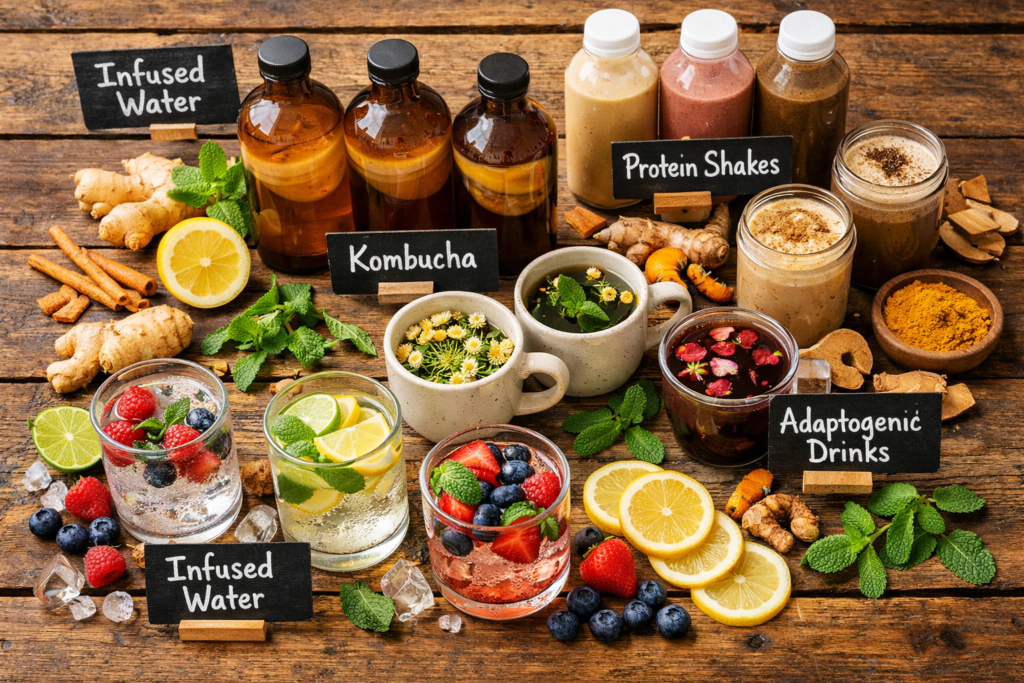
Just because a beverage is marketed as healthy doesn’t mean it deserves a spot in your fridge. The wellness industry is full of products that sound nutritious but are essentially sugar water with a health halo.
Red Flags to Watch For
“Natural” Doesn’t Mean Low Sugar: Many “natural” sodas and juices contain just as much sugar as conventional versions. Organic cane sugar still spikes your blood glucose the same way high-fructose corn syrup does.
Fruit Juice as Primary Ingredient: If the second or third ingredient is fruit juice concentrate, that product is high in sugar. Remember: juice is fruit with the beneficial fiber removed, leaving mostly fructose.
Proprietary Blends: When labels say “proprietary blend” without specifying amounts of each ingredient, be skeptical. This often means the beneficial ingredients are present in tiny, ineffective amounts.
Health Claims Without Substance: Phrases like “boosts immunity” or “detoxifies” are marketing speak unless backed by specific, research-supported ingredients in meaningful doses.
Excessive Serving Size Manipulation: Some brands make their nutrition facts look better by listing unrealistic serving sizes. A bottle might contain 2.5 servings, so you need to multiply the sugar content accordingly.
Overconsumption of Even Natural Sweeteners
Honey, maple syrup, coconut sugar, and agave might be less processed than white sugar, but they still impact your blood sugar and add calories. The “natural” label doesn’t give you a free pass to consume unlimited amounts.
Stevia and Monk Fruit: These natural, zero-calorie sweeteners are generally considered safe and don’t appear to negatively impact gut bacteria like artificial sweeteners do. However, some people find they perpetuate sweet cravings rather than helping to reset taste preferences.
The goal isn’t to find the “perfect” sweetener—it’s to gradually reduce your overall desire for sweetness. As you cut back on sugar, your taste buds adapt. Foods and drinks that once tasted bland become flavorful, and overly sweet things become cloying.
Choosing Nutrient Density Over Taste
The best beverages do more than just taste good—they provide actual nutrition. When evaluating drinks, ask:
- Does this contain vitamins, minerals, or beneficial compounds? (Kombucha’s probiotics, green juice’s phytonutrients, herbal tea’s antioxidants)
- What’s the sugar-to-benefit ratio? (A green juice with 10g sugar but significant vitamins is different from flavored water with 10g added sugar and nothing else)
- Could I get similar satisfaction from water with whole food additions? (Often yes!)
The 5-Gram Rule: As a general guideline, look for beverages with 5 grams of sugar or less per serving. Exceptions can be made for drinks that provide significant nutritional benefits (like a vegetable-heavy juice) consumed in moderation.
Frequently Asked Questions
What are the healthiest drinks to replace soda?
The healthiest replacements include unsweetened sparkling water, kombucha with 5g sugar or less, herbal teas, and vegetable-forward juices. Plain water remains the gold standard for hydration, but these alternatives provide flavor and additional benefits. For former soda drinkers, starting with naturally flavored sparkling waters or low-sugar kombuchas makes the transition easier while still supporting health goals.
Are sparkling water or kombucha really healthier than soda?
Yes, significantly healthier! Sparkling water contains zero sugar, zero calories, and no artificial ingredients—just carbonated water and natural flavors. Kombucha provides probiotics for gut health and typically contains only 2-8 grams of sugar compared to soda’s 39+ grams. Neither causes the blood sugar spikes, insulin resistance, or gut microbiome disruption associated with regular soda consumption. The key is choosing quality brands without added sugars or artificial sweeteners.
How can I reduce sugar in my drinks?
Start by diluting sweetened beverages with sparkling water (50/50 ratio), gradually increasing the water portion over time. Choose drinks with 5 grams of sugar or less per serving. Make your own flavored water using fresh fruit, herbs, and citrus. If you need sweetness, use small amounts of stevia or monk fruit rather than sugar. Most importantly, give your taste buds 2-3 weeks to adapt—foods and drinks that initially taste bland will become more flavorful as your palate adjusts to less sugar.
What are gut-friendly beverages?
Gut-friendly beverages support your microbiome and digestive health. Top choices include kombucha and other fermented drinks (provide probiotics), bone broth (contains collagen and amino acids), herbal teas like ginger and peppermint (soothe digestion), and drinks with added prebiotics (feed beneficial bacteria). Avoid artificial sweeteners, which can harm gut bacteria. Water with apple cider vinegar (1-2 tablespoons) also supports digestion and provides beneficial acids.
Can I drink herbal tonics daily?
Yes, most herbal tonics are safe and beneficial for daily consumption. Ginger tea, peppermint, chamomile, rooibos, and hibiscus can be enjoyed regularly. However, some herbs are better used periodically rather than continuously—echinacea is typically used short-term during illness rather than year-round, and senna (a laxative herb) shouldn’t be consumed daily. If you’re pregnant, nursing, or taking medications, consult with a healthcare provider about specific herbs, as some can interact with medications or aren’t recommended during pregnancy.
Final Thoughts on Healthy Drink Swaps
Making the switch from soda to healthy drink alternatives to soda is one of the most impactful changes you can make for your health. You’ll likely notice benefits within days—more stable energy, reduced bloating, clearer thinking, and better sleep. Within weeks, many people report weight loss, improved digestion, and reduced cravings for sugar.
The beauty of having so many options in 2026 is that you can experiment until you find your favorites. Maybe you’ll become a kombucha devotee, or perhaps herbal infusions will become your new afternoon ritual. Some days you might crave the aggressive fizz of Topo Chico, while other times a calming adaptogenic drink feels right.
Remember: Perfection isn’t the goal. If you occasionally enjoy a soda at a birthday party or summer barbecue, that’s fine. The goal is changing your daily habits so that clean drinking options become your default rather than the exception.
Your Action Steps:
- This week: Choose 2-3 healthy alternatives from this guide to try
- Stock your fridge: Keep a variety of options available so you’re never stuck without a good choice
- Track how you feel: Notice your energy levels, digestion, and cravings as you make the switch
- Involve your family: Make trying new healthy drinks a fun family activity—kids often love the fizzy options and colorful herbal teas
💚 Save this guide for your next grocery run! And if you’re building a complete clean eating routine, check out our guides on healthiest packaged snacks, best organic protein bars, and supplements for gut health to support your wellness journey.
The drinks you choose matter more than you might think. Every sip is either supporting your health or working against it. Choose wisely, and your body will thank you with energy, vitality, and wellness that lasts.
References
[1] United States Department of Agriculture (USDA). “FoodData Central: Carbonated Beverage, Cola.” 2026.
[2] American Heart Association. “Added Sugars and Cardiovascular Disease Risk in Children.” Circulation, 2026.
[3] Malik, V.S., et al. “Sugar-Sweetened Beverages and Risk of Metabolic Syndrome and Type 2 Diabetes.” Diabetes Care, 2025.
[4] Suez, J., et al. “Artificial Sweeteners Induce Glucose Intolerance by Altering the Gut Microbiota.” Nature, 2024.
[5] Swithers, S.E. “Artificial Sweeteners Produce the Counterintuitive Effect of Inducing Metabolic Derangements.” Trends in Endocrinology & Metabolism, 2025.
[6] Hopkins, A.L., et al. “Hibiscus Sabdariffa L. in the Treatment of Hypertension and Hyperlipidemia.” Fitoterapia, 2025.
[7] DiNicolantonio, J.J., et al. “Sugar Addiction: Is It Real? A Narrative Review.” British Journal of Sports Medicine, 2024.