Hidden Ingredients to Avoid in “Healthy” Packaged Foods
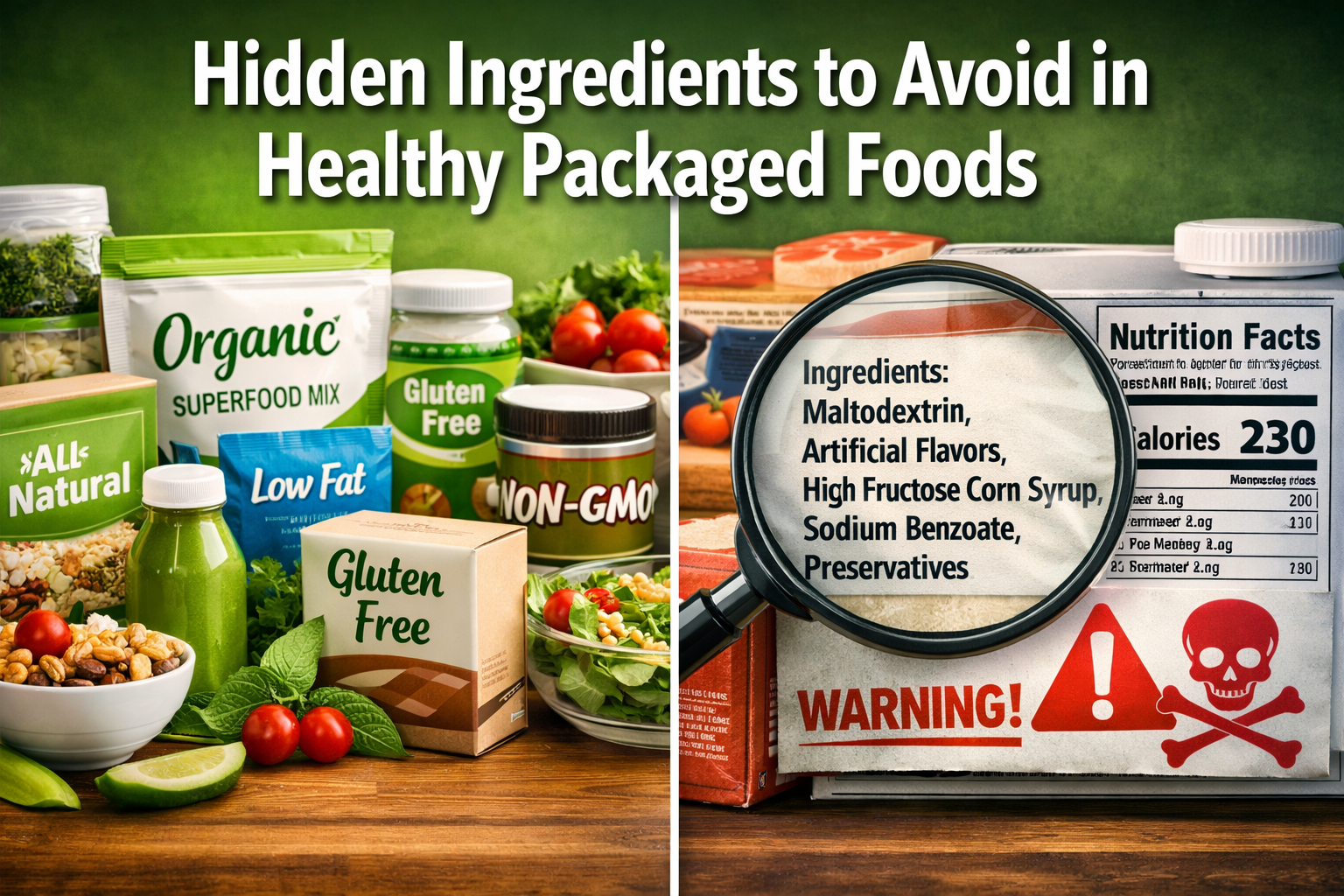
Walking down the health food aisle feels like stepping into a wellness wonderland. Bright packages scream “organic,” “natural,” and “superfood” from every shelf. But here’s the shocking truth: many of these seemingly nutritious products contain sneaky additives that could sabotage your health goals. Understanding the hidden ingredients to avoid in “healthy” packaged foods has become essential for anyone serious about clean eating.
Key Takeaways
• Marketing claims don’t tell the whole story – Products labeled “natural” or “organic” can still contain problematic additives and hidden sugars
• Artificial sweeteners and sugar alcohols often replace regular sugar but may cause digestive issues and cravings
• Preservatives and stabilizers extend shelf life but can trigger inflammation and allergic reactions in sensitive individuals
• Reading ingredient lists is more important than front-panel claims – the real story lies in the fine print
• Whole foods remain the gold standard – the fewer ingredients, the better for your health
The Deceptive World of Health Food Marketing 🎭
The global health food market reached $1 trillion in 2026, and food manufacturers know exactly what buzzwords grab attention. Terms like “superfood,” “clean,” and “plant-based” create powerful health halos that can blind consumers to what’s actually inside the package.
Common marketing tricks include:
- Using tiny fonts for ingredient lists
- Placing health claims prominently while hiding concerning additives
- Creating new product lines that look healthier but contain similar ingredients
- Emphasizing what’s NOT in the product while downplaying what IS
“The front of the package is marketing real estate. The ingredient list is where the truth lives.” – Nutrition researcher Dr. Sarah Chen
Top Hidden Ingredients to Avoid in “Healthy” Packaged Foods
Artificial Sweeteners Masquerading as Natural 🍯
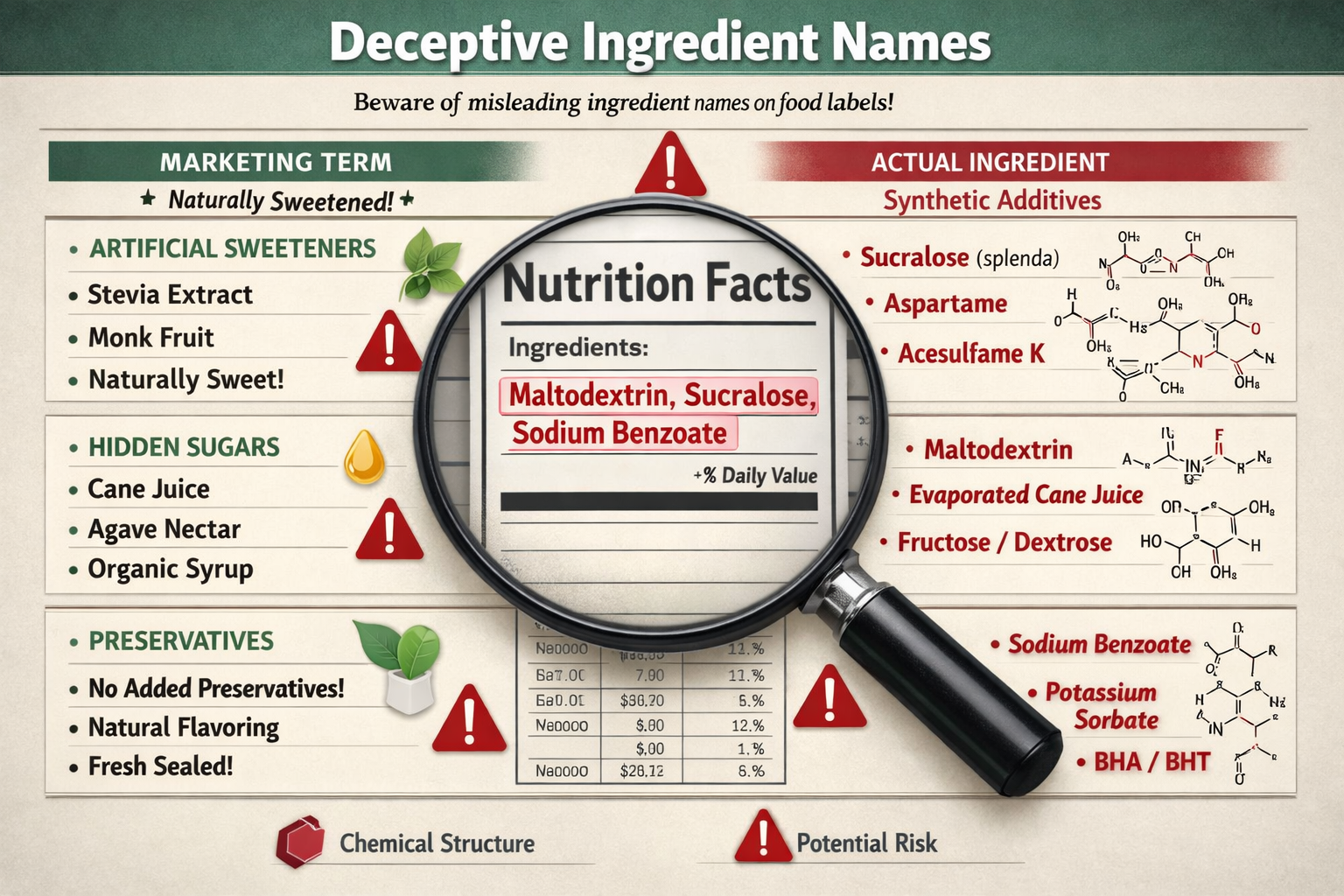
Many products marketed to health-conscious consumers contain artificial sweeteners disguised under scientific names. These sugar substitutes might help reduce calories, but they come with their own set of concerns.
Watch out for these common artificial sweeteners:
| Ingredient Name | Found In | Potential Issues |
|---|---|---|
| Sucralose (Splenda) | Protein powders, low-calorie snacks | May alter gut bacteria |
| Aspartame | Diet drinks, sugar-free gum | Headaches in sensitive individuals |
| Acesulfame potassium | Baked goods, beverages | Often paired with other artificial sweeteners |
| Stevia extract (highly processed) | “Natural” sweetened products | Processing removes beneficial compounds |
Sugar Alcohols: The Digestive Disruptors
Sugar alcohols sound harmless and often appear in products labeled “sugar-free” or “keto-friendly.” However, these ingredients can wreak havoc on digestive systems.
Common sugar alcohols to limit:
- Sorbitol – Can cause bloating and diarrhea
- Mannitol – May trigger digestive distress
- Xylitol – While beneficial for dental health, can cause stomach upset
- Erythritol – Generally better tolerated but still problematic for some
Sneaky Sources of Hidden Sugar 🍭
Even products that claim to be “no sugar added” or “naturally sweetened” often contain concentrated forms of sugar that spike blood glucose just like regular sugar.
Hidden sugar aliases include:
- Agave nectar (higher in fructose than corn syrup)
- Coconut sugar (still sugar, despite the health halo)
- Date syrup and fruit juice concentrates
- Brown rice syrup
- Tapioca syrup
Preservatives and Additives: The Shelf-Life Extenders
Chemical Preservatives in “Natural” Products
The hidden ingredients to avoid in “healthy” packaged foods often include preservatives that extend shelf life but may impact health over time.
Concerning preservatives to watch for:
- Sodium benzoate – Can form benzene when combined with vitamin C
- Potassium sorbate – May cause allergic reactions in sensitive individuals
- BHT and BHA – Potential endocrine disruptors
- Sodium nitrite – Found in “natural” deli meats, linked to cancer risk
Emulsifiers and Stabilizers
These ingredients help maintain texture and prevent separation, but emerging research suggests they may disrupt gut health.
Common emulsifiers to limit:
- Carrageenan (linked to digestive inflammation)
- Polysorbate 80 (may affect gut barrier function)
- Lecithin (often from GMO sources unless specified)
- Guar gum and xanthan gum (can cause bloating in large amounts)
Natural Flavors: Not So Natural After All 🧪
The term “natural flavors” appears innocent, but it’s one of the most misleading ingredients on food labels. These flavors can contain dozens of chemical compounds, and manufacturers aren’t required to disclose the specific ingredients.
What “natural flavors” really means:
- Derived from natural sources but heavily processed
- Can contain synthetic solvents and preservatives
- May include MSG or MSG-like compounds
- Often indistinguishable from artificial flavors chemically
Protein Powder Pitfalls
The protein powder industry exploded in 2026, with new “clean” brands launching monthly. However, many contain problematic ingredients despite healthy marketing.
Red flags in protein powders:
- Heavy metals (lead, arsenic, cadmium)
- Artificial thickeners that cause digestive issues
- Cheap protein fillers like glycine or taurine
- Undisclosed caffeine from natural sources
How to Identify Hidden Ingredients to Avoid in “Healthy” Packaged Foods

The 5-Second Ingredient Scan ⏰
Develop a quick scanning system to identify problematic ingredients:
- Count the ingredients – More than 10 is usually a red flag
- Look for unpronounceable chemicals – If you can’t say it, research it
- Check for multiple sugar sources – Manufacturers split sugars to hide total amounts
- Scan for artificial colors – Often listed as numbers (Red 40, Yellow 6)
- Identify preservatives – Anything ending in -ate or -ite needs scrutiny
Smart Shopping Strategies
Before you shop:
- Download ingredient-checking apps like Yuka or HowGood
- Research brands’ manufacturing practices
- Set up price alerts for truly clean products
In the store:
- Shop the perimeter first (whole foods)
- Compare similar products side-by-side
- Don’t be swayed by front-panel claims
- Choose products with the shortest ingredient lists
The Clean Alternatives Revolution 🌱
Fortunately, truly clean brands are emerging that prioritize transparency and minimal processing. These companies often:
- List every ingredient clearly
- Explain their sourcing practices
- Avoid unnecessary additives
- Use minimal, recognizable ingredients
Questions to ask brands:
- Where do you source your ingredients?
- What testing do you perform for contaminants?
- Why do you include specific additives?
- Can you provide third-party lab results?
Building Your Clean Eating Toolkit
Essential Apps and Resources
Ingredient databases:
- Environmental Working Group’s Food Scores
- Clean Label Project ratings
- Non-GMO Project verification database
Shopping aids:
- Grocery store apps with ingredient filters
- Barcode scanners for instant ingredient analysis
- Price comparison tools for clean products
Creating Your Personal “No” List
Develop a personalized list of ingredients to avoid based on your health goals and sensitivities:
Common categories to consider avoiding:
- All artificial sweeteners
- Synthetic preservatives
- Artificial colors and flavors
- Highly processed oils
- Unnecessary thickeners and stabilizers
The Future of Food Transparency
As consumers become more educated about hidden ingredients to avoid in “healthy” packaged foods, the industry is slowly responding. In 2026, we’re seeing:
- Cleaner reformulations of popular products
- Increased transparency in ingredient sourcing
- Third-party certifications becoming more common
- Blockchain technology for supply chain tracking
Making the Transition to Cleaner Eating
Week 1: Audit Your Pantry
Go through existing products and identify the worst offenders. Don’t throw everything away immediately – use this as a learning exercise.
Week 2: Research Alternatives
For each problematic product, research 2-3 cleaner alternatives. Compare ingredients, prices, and reviews.
Week 3: Gradual Replacement
Start replacing products as you run out. This approach is more sustainable financially and helps your taste buds adjust.
Week 4: Establish New Shopping Habits
Create a routine that includes ingredient checking and comparison shopping. This becomes faster with practice.
Conclusion
Navigating the world of “healthy” packaged foods requires detective skills and a healthy dose of skepticism. The hidden ingredients to avoid in “healthy” packaged foods are everywhere, disguised behind clever marketing and scientific-sounding names. But armed with knowledge and the right tools, anyone can make informed choices that truly support their health goals.
The key is remembering that real health comes from whole, minimally processed foods. When packaged products are necessary, choose those with transparent ingredient lists and companies that prioritize consumer health over profit margins.
Your next steps:
- Download an ingredient-checking app before your next grocery trip
- Audit three products in your pantry this week
- Research one clean alternative for your most-used packaged product
- Share this knowledge with friends and family who care about clean eating
Remember, every informed choice you make sends a message to food manufacturers that transparency and clean ingredients matter. Together, we can drive the industry toward better practices and truly healthy options.