
You’ve probably heard cortisol blamed for just about everything lately. The belly weight that won’t budge is one example. So are the 3 a.m. wake-ups and the wired-but-tired feeling that follows you through the day. Social media has also turned it into the villain of the moment. The fixes on offer range from a viral orange-juice drink to a shelf full of supplements.
Here’s the honest version before we get into the habits: cortisol is not the enemy. It’s the hormone that gets you out of bed in the morning. It keeps your blood sugar steady and helps you respond to stress. The problem is never that cortisol exists — it’s when the rhythm goes wrong. Cortisol stays high at the wrong hours, usually because sleep is short, stress never lets up, or both. And no single drink, supplement, or morning routine resets it overnight. What the research actually supports is quieter than the internet version. In fact, it is sleep, movement, food, and a daily stress habit, repeated for weeks. That’s what this guide covers. You’ll learn how to lower cortisol in ways that have real evidence behind them, and which popular fixes don’t.
What Cortisol Actually Does (and Why Lowering Cortisol Isn’t the Whole Story)
Your adrenal glands, two small glands on top of your kidneys, make cortisol. A feedback loop called the HPA axis — hypothalamus, pituitary, adrenal — controls it. When your brain senses a demand, the loop switches cortisol on. When the demand passes, it switches it back off.
It follows a daily rhythm that matters more than any single number. Cortisol starts rising in the early morning hours, then surges in the first 30 to 45 minutes after you wake. The cortisol awakening response is a rise of roughly 50 to 75 percent. Cortisol peaks in the morning and falls steadily through the day. It reaches its lowest point around midnight, when it should be near its quiet low so you can sleep. It also pulses in small waves every hour or two throughout the day.
That morning peak is a feature, not a flaw. It’s also what gives you energy and alertness to start the day. The trouble starts when the curve flattens or shifts. Cortisol stays high into the evening, or the morning peak barely shows up. Chronic stress, short sleep, and constant stimulation push the rhythm in that direction.
Before you try to fix anything: a single cortisol test tells you very little. Cortisol swings by the hour, by the day, and with the stress of the blood draw. A 2024 assessment in Endocrine Reviews put it plainly: single cortisol values don’t necessarily reflect overall glucocorticoid status. Measuring a reliable pattern takes multiple samples across several days, timed from waking. Home test kits and supplement brands may call your cortisol high based on one reading. Treat that as a sales pitch, not a diagnosis. The habits in this guide are still worth doing whether or not you’ve ever been tested.
How to Lower Cortisol: What the Research Actually Says
Here’s the whole picture in one place, habit by habit, before I get into the details.
| Habit | What the studies actually show | How strong is the evidence? |
|---|---|---|
| Sleeping 7 to 9 hours | Short sleep raises evening cortisol — one night of 4 hours raised it 37% the next evening | Moderate |
| Regular moderate movement | Yoga and moderate aerobic exercise lower resting cortisol over weeks | Moderate |
| Mindfulness and stress habits | MBSR and meditation lower cortisol in meta-analyses of dozens of trials | Moderate |
| Steady, magnesium-rich eating | No food directly lowers cortisol; stable blood sugar and adequate nutrients support the rhythm | Indirect |
| Ashwagandha | Several small RCTs found cortisol fell ~23–28% over 8 weeks | Weak to moderate |
| The viral cortisol drink | No study has tested it; no evidence it lowers cortisol | None |
Nothing here is a quick fix. The honest pattern is that the habits that help take weeks. The things that promise results in days don’t have evidence behind them.
Sleep and Cortisol: The Biggest Lever You Have
If you only change one thing, make it sleep. The link between short sleep and cortisol is one of the clearest findings in this whole field. It runs in both directions: short sleep raises evening cortisol, and high evening cortisol makes it harder to fall asleep. It’s a loop, but sleep is the easiest place to break it.
The classic study comes from the University of Chicago. In 1999, Spiegel, Leproult, and Van Cauter restricted 11 healthy young men to four hours in bed for six nights. Evening cortisol concentrations were higher during the sleep debt. The normal evening wind-down arrived late and fell far more slowly. Earlier work from the same group showed it too. One night of four hours in bed raised evening cortisol by 37 percent the next evening. A night with no sleep at all raised it 45 percent. That delayed the start of cortisol’s quiet overnight period by more than an hour.
Read that carefully: the effect isn’t a dramatic all-day surge. It’s a shift in timing. Cortisol should be near its lowest in the evening, and short sleep keeps it elevated exactly when it should be falling. That’s why a few short nights in a row leave you feeling wired at bedtime and groggy in the morning. In short, the rhythm is out of phase.
What helps is boring and free. Keep a consistent sleep and wake time and seven to nine hours in bed. Wind down without a bright screen. Morning light soon after waking anchors the daily rhythm, including the morning cortisol peak and the evening melatonin rise. If your sleep is consistently short, fixing that will do more for your cortisol than any supplement.
How Exercise Lowers Cortisol Over Time (and When It Doesn’t)
Exercise has a confusing relationship with cortisol, because the short-term and long-term effects point in opposite directions. A hard workout raises cortisol — that’s normal, and it’s part of how your body fuels the effort. Regular training, over weeks, lowers your resting baseline. Still, both things are true at once.
The cleanest demonstration of the acute effect comes from Hill and colleagues in 2008. Twelve active men exercised for 30 minutes at three intensities. At 40 percent of maximal aerobic capacity — an easy effort — cortisol barely moved, rising about 6 percent. At 60 percent, it rose about 40 percent, and at 80 percent, it rose 83 percent. Levels returned to baseline within one to two hours after the session.
The long-term picture comes from a 2025 network meta-analysis by Li and colleagues. It pooled 44 randomized controlled trials with 3,284 adults under psychological distress. Yoga produced the largest cortisol reduction, followed by qigong and multicomponent training. High-intensity interval training, by contrast, trended toward raising cortisol. A separate 12-month randomized trial in 130 adults tested 150 minutes a week of moderate-to-vigorous aerobic exercise. It lowered hair cortisol — a measure of average cortisol over months — compared with a control group.
So the practical version looks like this. Most of your movement should be moderate: brisk walking, easy cycling, swimming, a yoga class. Mix in harder sessions rather than stacking them on top of short sleep and a stressful week. If you’re already exhausted and sleeping badly, adding daily high-intensity workouts is pouring stress on top of stress. The gentler practices aren’t a cop-out here; in the trials, they’re the ones with the biggest cortisol effect.
Cortisol Reducing Foods: What to Eat and What the Evidence Actually Shows
This is the section where I have to be honest with you. No food has been shown in a clinical trial to directly lower cortisol. Search results will tell you that blueberries or dark chocolate or salmon “reduce cortisol.” Behind those claims is usually a nutrient that supports the systems around cortisol — or a small study measuring something else entirely. Eating a blueberry doesn’t turn the hormone down.
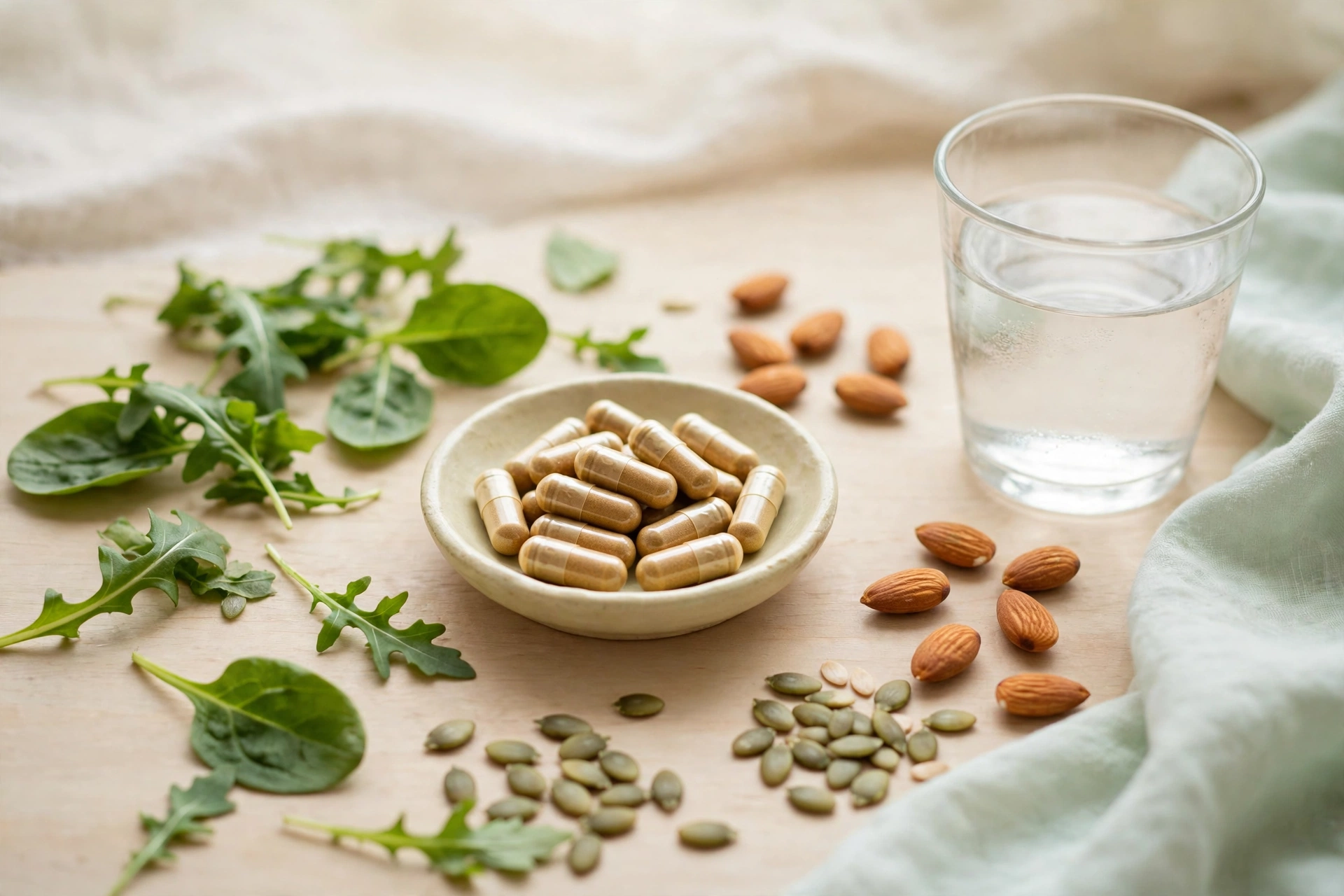
What does have a real, if indirect, case is the overall pattern of how you eat. Cortisol’s job includes keeping your blood sugar steady, so big swings in blood sugar keep calling on it. Eat meals built around protein, fiber, and healthy fats at roughly regular times. Skipping meals and then replacing them with a sugar crash gives the system more to react to. Magnesium-rich foods — leafy greens, nuts, seeds, beans — matter for sleep and nervous system regulation. Magnesium is involved in both, and short sleep is the biggest cortisol lever we have. Omega-3-rich fish and vitamin C-rich foods like citrus and bell peppers support the same general picture.
What to ease off: alcohol, which fragments sleep and pushes evening cortisol up through the sleep route. Heavy caffeine late in the day can also keep you wired when cortisol should be falling. Neither needs to be eliminated — a morning coffee is not the problem — but timing matters more than most people think.
Think of food here as supporting cast, not the star. If your sleep is short and your stress is unmanaged, no grocery list fixes your cortisol. If your sleep and stress habits are in place, steady eating helps them hold.
Stress Habits That Lower Cortisol: Mindfulness, Nature, and Connection
This is where the evidence is strongest for an actual, measurable cortisol change from a behavior. The effect sizes are modest, though, so it’s worth keeping expectations honest.
The best synthesis is a 2026 meta-analysis in Health Psychology by Johnson and colleagues. It covered 39 mindfulness-based stress reduction trials with 2,059 participants. Across the randomized controlled trials, MBSR lowered cortisol. The between-group effect was g = −0.38 — a real effect, not a huge one. An earlier meta-analysis by Rogerson and colleagues in 2024 pooled 58 studies with 3,508 people across stress-management interventions. It found the same pattern: mindfulness and meditation were among the most effective approaches for changing cortisol levels. And Pascoe and colleagues in 2017 pooled 45 randomized trials comparing meditation against an active control, not just against doing nothing. They still found meditation lowered cortisol, blood pressure, and heart rate.
The practical takeaway is small and repeatable. Ten to twenty minutes a day is enough. Try slow breathing, a guided meditation, or a quiet walk without your phone. Do it consistently for weeks. The trials that show an effect run for about eight weeks, not eight days. A single deep-breathing session feels nice; the cortisol change shows up with the habit.
Two other habits belong here with softer evidence. Time outdoors in daylight anchors the circadian rhythm that cortisol follows. Real social connection — a long conversation with a friend, a shared meal — tracks with lower stress markers in observational research. Nobody has run the perfect cortisol trial on friendship, though. And laughter, which is hard to study and easy to recommend. None of these is a treatment. Together, they’re the daily rhythm a healthy cortisol curve is built on.
The Cortisol Drink: Why the Viral Cocktail Won’t Lower Your Cortisol
You’ve probably seen it: a bright orange drink, orange juice and coconut water with a pinch of salt. Sometimes it has magnesium powder. It is filmed in a pretty glass with the caption “lower your cortisol.” The recipe gets millions of views. The claim doesn’t survive contact with the evidence.
First, no study has ever tested the drink itself. No evidence shows that this combination measurably changes cortisol output in healthy adults. The ingredients are a hydrating mix of electrolytes and vitamin C — closer to a sports drink than a hormone treatment.
Second, the idea behind it is that chronic stress exhausts the adrenal glands. This condition, called “adrenal fatigue,” is not a recognized medical diagnosis. A 2016 systematic review by Cadegiani and Kater screened 3,470 articles and analyzed the 58 that met its criteria. It concluded plainly that adrenal fatigue does not exist as a diagnosable condition. The Endocrine Society has issued the same verdict.
The individual ingredients do have small, real signals — just not at the doses in the glass. One randomized trial gave 3,000 mg a day of sustained-release vitamin C and found faster cortisol recovery after acute stress. A glass of orange juice carries a fraction of that. Magnesium genuinely supports sleep quality in a 2021 meta-analysis of randomized trials. But that was at supplement-level doses, not the trace amount in a mocktail.
So the drink is harmless for most people, and genuinely pleasant. The ritual of making it — pausing, hydrating, doing something kind for yourself in the morning — can help you feel calmer. Still, that feeling is real. The mechanism is hydration and a moment of calm, not cortisol suppression. Don’t let a drink stand in for the habits that actually move the needle.
Supplements and Cortisol: The Honest Word on Ashwagandha
If there’s one supplement with real cortisol data behind it, it’s ashwagandha. Even here, the honest framing is “promising, from small trials,” not “proven.”
The most-cited trial is Lopresti and colleagues, 2019, published in Medicine. Sixty stressed adults took 240 mg a day of a standardized ashwagandha extract for 60 days. Morning cortisol fell significantly compared with placebo (PMID 31517876). A 2024 meta-analysis pooled nine randomized controlled trials with 558 participants. It found an average cortisol reduction of 2.58 micrograms per deciliter. A 2025 meta-analysis of seven trials found a smaller average reduction of 1.16. The doses used across the trials run from 240 to 600 mg a day. Measurable change typically takes four to eight weeks, not days.
The caveats matter as much as the numbers. Every trial is small — under 100 people — and most run eight weeks or less, so long-term safety data is thin. Rare but documented cases of ashwagandha-associated liver injury mean anyone with a liver condition should not take it without medical supervision. The same goes if you’re pregnant, take thyroid medication, or take sedatives. And a 2025 meta-analysis found something telling. Cortisol fell on blood tests, but self-reported stress scores didn’t always fall with it. The marker and the feeling can move independently.
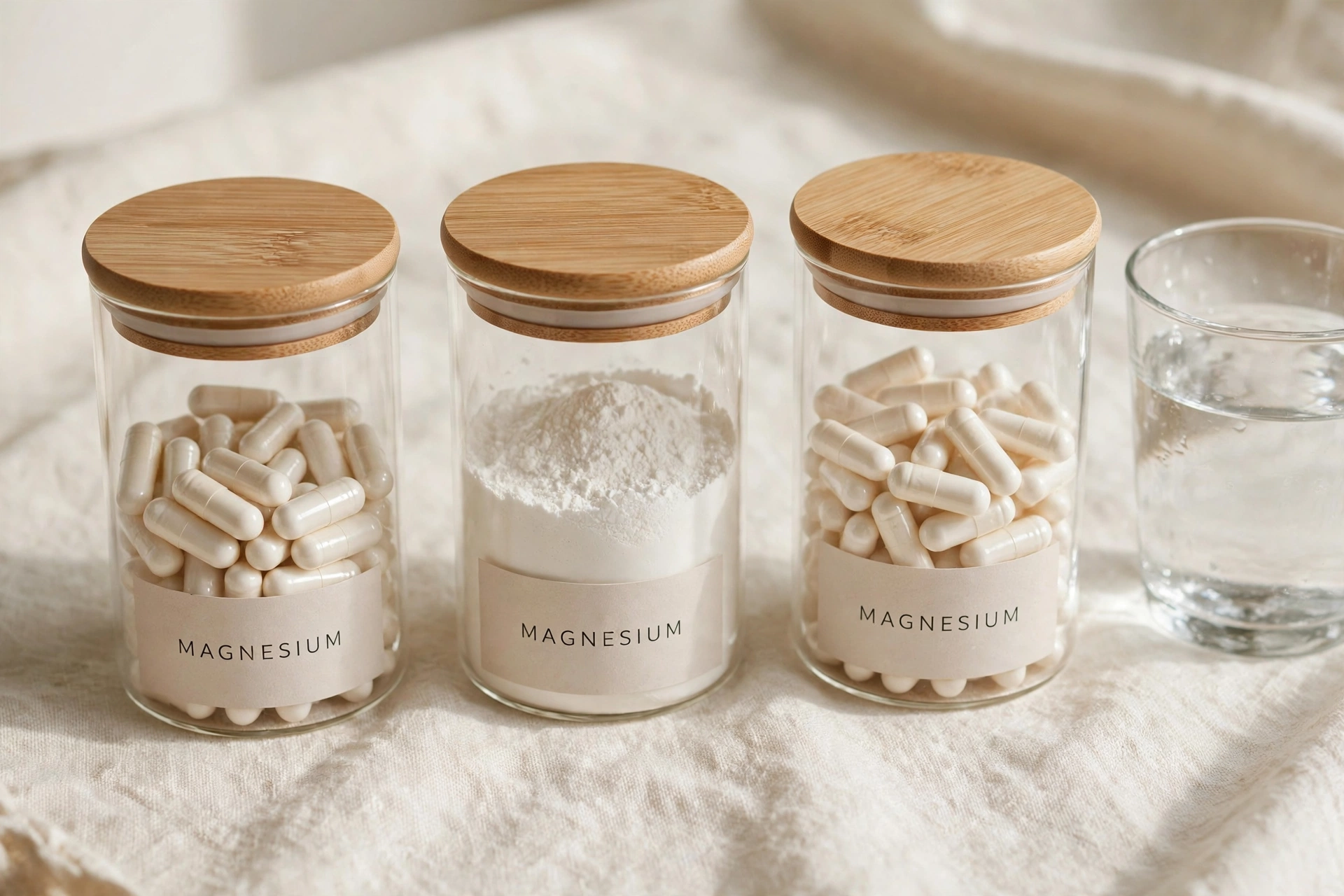
I’m not recommending a supplement here — this guide doesn’t recommend products, and no brand is named for a reason. If you’re curious about ashwagandha, that’s a conversation with your doctor, not a shopping decision. The habits above it in this guide have stronger evidence and no side effects to weigh.
When High Cortisol Needs a Doctor, Not a Habit Change
Most of the time, a feeling of being stressed and wired is a lifestyle problem. The habits in this guide are still the right response. But there is a real medical condition where the body makes far too much cortisol: Cushing’s syndrome. It doesn’t respond to sleep hygiene or a better breakfast.
The signs worth a doctor’s visit: rapid weight gain concentrated around the middle and face, purple stretch marks, muscle weakness, skin that bruises easily, high blood pressure or blood sugar that won’t come under control, and persistent fatigue or mood changes alongside those physical signs. Cushing’s is uncommon, and most people reading this guide don’t have it. But if several of those signs are present together, get checked rather than trying to manage it with habits.
The same applies the other way. If your stress, sleep, or mood feels unmanageable despite weeks of steady habits, talk to a doctor. It is not a failure of willpower. Cortisol is one hormone in a large system. A clinician can look at the whole picture in a way no guide can.
The Bottom Line on How to Lower Cortisol
Here’s where I land after reading the actual studies. How to lower cortisol comes down to a short list, and none of it is exciting. Sleep seven to nine hours on a consistent schedule. Move mostly at a moderate pace, with some yoga or walking in the mix. Eat steadily with real food. Keep one daily stress habit — breathing, meditation, a walk outside — for at least eight weeks. Skip the viral drink. Be skeptical of anyone selling you a cortisol test or a quick reset. Treat supplements as a doctor’s conversation, not a shortcut.
If you like the idea, start with sleep tonight. It’s the biggest lever, it’s free, and it’s the one the evidence keeps pointing back to. Give it a few weeks, then notice how you feel at bedtime. That’s the signal that matters, more than any number on a test.
This article is for general information only and is not medical advice. Cortisol is one part of a complex hormonal system, and this guide does not diagnose or treat any condition. If you have a health condition, take medication, are pregnant, or have symptoms that concern you, talk to your healthcare provider. Do that before changing your diet, exercise, or supplement routine.