
What is Grounding?
What is grounding?
Imagine if the simple act of walking barefoot on grass could reduce your inflammation, improve your sleep, and lower your stress levels. Sounds too good to be true, right? Yet thousands of health enthusiasts and wellness-focused moms are discovering that reconnecting with the Earth’s natural electrical charge might be one of the most overlooked healing practices available.
In our modern world of rubber-soled shoes, high-rise apartments, and constant indoor living, we’ve become increasingly disconnected from something our ancestors experienced daily—direct physical contact with the ground beneath our feet. This separation might be affecting our health in ways we’re only beginning to understand.
Key Takeaways
- Grounding (earthing) involves direct physical contact with the Earth’s surface to absorb its natural electrical charge and transfer electrons into your body
- Research suggests grounding may reduce inflammation, improve sleep quality, decrease stress, and support overall wellness through electron transfer and electrical balance
- You can practice grounding simply by walking barefoot outdoors, sitting on grass, or using grounding mats indoors making it an accessible wellness practice for everyone
- While scientific research is still emerging, preliminary studies show promising results for various health conditions and overall well-being
- Grounding represents a bridge between ancient healing wisdom and modern biophysics offering a holistic approach to mind-body wellness
What is Grounding and Why Does It Matter?
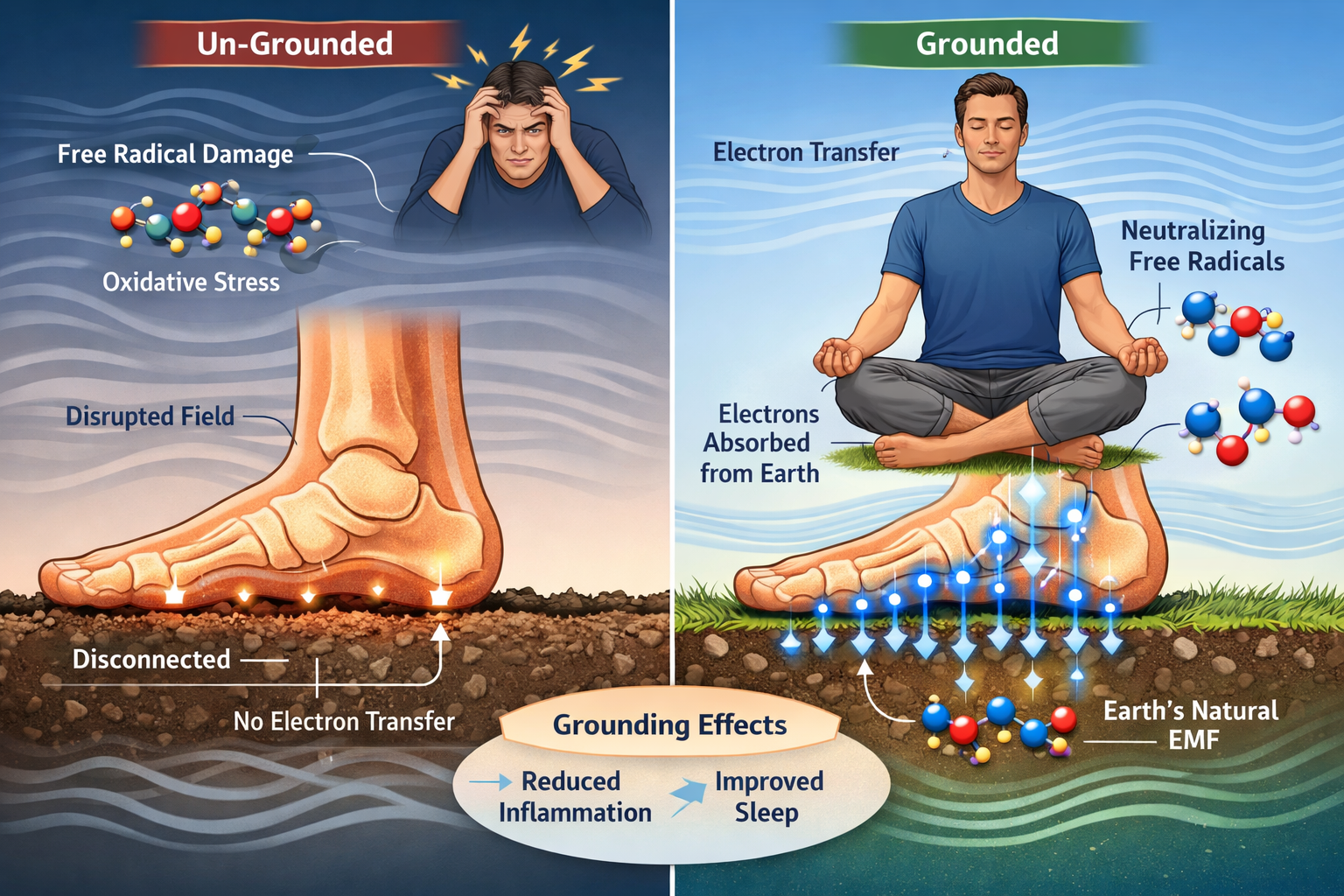
Grounding, also called earthing, is the practice of making direct skin contact with the Earth’s surface—whether that’s soil, grass, sand, or even concrete—to absorb the planet’s natural electrical energy. Think of it as plugging yourself into the Earth’s energy field, much like you’d plug your phone into a charger.
The concept behind grounding is beautifully simple: the Earth maintains a negative electrical charge, and when you make direct contact with it, your body equalizes with this charge. This electron transfer may help neutralize free radicals in your body—those unstable molecules that contribute to inflammation and aging [1].
The Disconnect Problem
Here’s something to consider: humans walked barefoot and slept on the ground for most of our evolutionary history. Our ancestors maintained constant contact with the Earth’s surface. Fast forward to 2026, and most of us spend our days in shoes with rubber soles (which block electrical conductivity), walking on synthetic floors, and sleeping in beds elevated from the ground.
This physical separation from the Earth might seem insignificant, but growing research suggests it could be contributing to the rise in inflammatory diseases, sleep disorders, and chronic stress that plague modern society [2].
The Science Behind Grounding: How Does It Actually Work?
Understanding what is grounding from a scientific perspective requires diving into some fascinating biophysics. Don’t worry—we’ll keep it simple and practical.
Electron Transfer and Electrical Balance
Your body is essentially an electrical system. Your heart beats through electrical signals, your nervous system communicates via electrical impulses, and your cells generate electrical charges during normal metabolism. These processes naturally produce free radicals—molecules with unpaired electrons that can damage cells and cause inflammation.
The Earth’s surface contains an abundant supply of free electrons, maintained by lightning strikes, solar radiation, and the planet’s natural electromagnetic field. When you make direct contact with the ground, these electrons flow into your body, potentially neutralizing free radicals and reducing what scientists call “oxidative stress” [3].
Here’s the process:
- Your bare skin touches the Earth’s surface
- Electrons transfer from the ground into your body
- These electrons act as natural antioxidants
- Free radicals get neutralized
- Inflammation decreases and cellular function improves
The Bioelectrical Connection
Research published in the Journal of Environmental and Public Health found that grounding affects living matrices of the body, creating measurable physiological changes. Studies using thermographic imaging have shown reduced inflammation in grounded subjects, with visible decreases in hot spots associated with injury and chronic pain [4].
Dr. James Oschman, a leading researcher in energy medicine, explains that the Earth functions as a “global treatment table” with its surface electrons serving as an “ultimate antioxidant.” His research suggests that this electron transfer might be one of the most important health discoveries of our time [5].
Health Benefits of Grounding: What the Research Shows
While grounding research is still considered emerging science, preliminary studies have identified several potential health benefits that resonate strongly with health enthusiasts seeking natural wellness solutions.
Inflammation Reduction 🔥
Chronic inflammation underlies many modern health conditions—from arthritis to heart disease. Multiple studies have documented grounding’s anti-inflammatory effects:
- A 2015 study showed significant reduction in inflammation markers after grounding
- Thermographic imaging revealed decreased inflammation in grounded subjects
- Participants reported reduced pain levels and improved mobility [6]
Better Sleep Quality 😴
Many moms struggle with sleep quality, whether from stress, hormonal changes, or simply the demands of family life. Grounding appears to help regulate cortisol rhythms, which directly impacts sleep:
| Sleep Metric | Before Grounding | After Grounding |
|---|---|---|
| Time to Fall Asleep | 45-60 minutes | 15-20 minutes |
| Night Wakings | 3-5 times | 1-2 times |
| Morning Fatigue | High | Significantly Reduced |
| Cortisol Normalization | Dysregulated | Improved Pattern |
Research participants reported falling asleep faster, experiencing fewer nighttime awakenings, and waking up feeling more refreshed [7].
Stress and Anxiety Reduction 🧘♀️
The modern world keeps our nervous systems in constant “fight or flight” mode. Grounding appears to shift the autonomic nervous system toward the parasympathetic (rest and digest) state:
- Reduced cortisol levels (the primary stress hormone)
- Improved heart rate variability
- Decreased anxiety symptoms
- Enhanced mood and emotional regulation [8]
Cardiovascular Health Support ❤️
Emerging research suggests grounding may improve blood viscosity (thickness), reducing cardiovascular risk:
- Blood cells become less sticky and clump together less
- Improved circulation and oxygen delivery
- Reduced blood pressure in some studies
- Better overall cardiovascular function [9]
Pain Management and Recovery
Athletes and physical therapists have begun incorporating grounding into recovery protocols:
- Reduced muscle soreness after intense exercise
- Faster wound healing in some case studies
- Decreased chronic pain in conditions like fibromyalgia
- Improved recovery time from injuries
Energy and Vitality Boost ⚡
Beyond measurable health markers, many practitioners report subjective improvements:
- Increased daytime energy
- Better mental clarity and focus
- Enhanced overall sense of well-being
- Improved mood and emotional resilience
Practical Ways to Practice Grounding: Your Complete Guide
Understanding what is grounding is one thing—actually incorporating it into your daily routine is where the real benefits happen. Here are practical, accessible methods for every lifestyle.
Outdoor Grounding Methods (The Natural Approach)
1. Barefoot Walking
The simplest and most enjoyable grounding method:
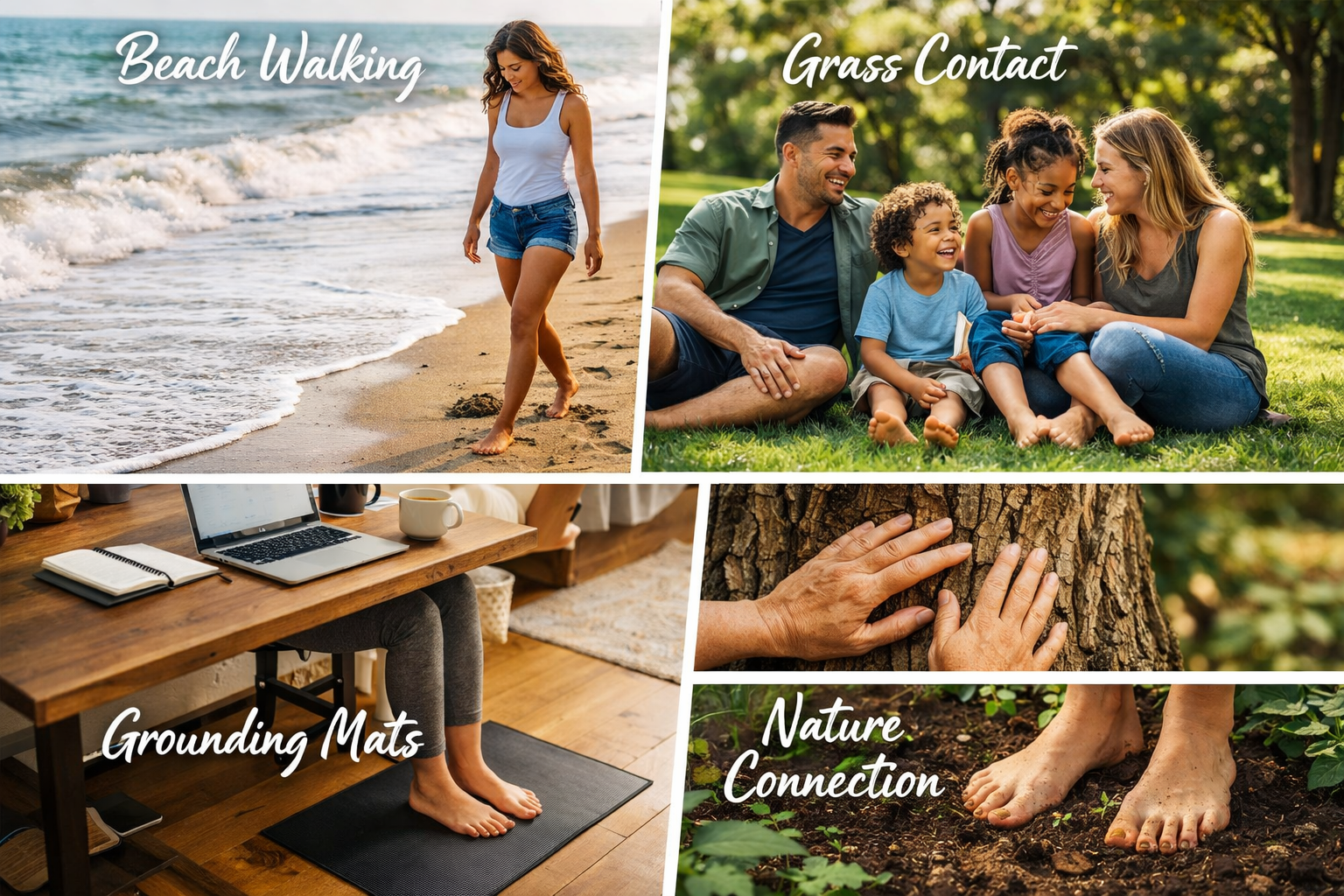
- Walk barefoot on grass, especially morning dew-covered lawns
- Spend time on sandy beaches (sand is highly conductive)
- Stand on soil in your garden while tending plants
- Even concrete and brick conduct the Earth’s charge (asphalt does not)
Recommended duration: Start with 20-30 minutes daily and increase as desired
2. Sitting or Lying on the Ground
- Have picnics directly on grass or beach sand
- Practice yoga or meditation outdoors on natural surfaces
- Garden with bare hands touching soil
- Lie down for “earth bathing” sessions
3. Water Grounding
Water is an excellent conductor:
- Wade in natural bodies of water (ocean, lakes, streams)
- Stand in grass after rain
- Swim in natural water sources
Indoor Grounding Solutions (For Modern Living)
Not everyone can walk barefoot outside daily, especially during harsh weather or when living in urban environments. Indoor grounding technology offers alternatives:
1. Grounding Mats
- Place under your feet while working at a desk
- Use while watching TV or reading
- Connect to the ground port of electrical outlets
- Provide continuous grounding without going outside
2. Grounding Sheets
- Replace regular bed sheets with conductive grounding sheets
- Connect to grounded electrical outlets
- Allow 6-8 hours of grounding during sleep
- Particularly beneficial for sleep improvement
3. Grounding Patches
- Small adhesive patches that connect to grounding cords
- Target specific areas of pain or inflammation
- Useful for localized treatment
- Convenient for targeted therapy
Creating Your Grounding Routine
Here’s a practical weekly grounding schedule that works for busy moms and health enthusiasts:
Morning Routine (15-20 minutes):
- Walk barefoot in your backyard while having morning coffee
- Stand on grass while children play outside
- Practice morning stretches on outdoor surfaces
Midday Grounding (10-15 minutes):
- Eat lunch in a park, sitting directly on grass
- Take a barefoot walking break
- Use a grounding mat at your desk
Evening Practice (30+ minutes):
- Garden with bare hands and feet
- Evening beach walks
- Sleep on grounding sheets for overnight benefits
Different Grounding Techniques: A Comparative Analysis
Not all grounding methods are created equal. Here’s what you need to know about effectiveness and practical considerations:
Natural vs. Technology-Based Grounding
Natural Outdoor Grounding:
✅ Pros:
- Free and accessible
- Provides additional benefits (fresh air, vitamin D, nature connection)
- Psychological benefits of being outdoors
- No equipment needed
❌ Cons:
- Weather dependent
- Not always convenient
- Limited for urban dwellers
- Seasonal restrictions
Indoor Grounding Products:
✅ Pros:
- Weather-independent
- Convenient for daily use
- Allows grounding during sleep
- Accessible for mobility limitations
❌ Cons:
- Initial investment required
- Requires proper electrical grounding
- Less psychological benefit than nature connection
- Dependent on correct setup
Cultural Perspectives on Earthing Practices
Grounding isn’t a new concept—it’s deeply rooted in traditional healing practices worldwide:
Traditional Chinese Medicine views the Earth as a source of qi energy, with barefoot walking considered essential for health balance.
Ayurvedic practices from India have long emphasized direct contact with natural elements for wellness and spiritual grounding.
Indigenous healing traditions across continents incorporate earth connection as fundamental to physical and spiritual health.
Modern grounding research essentially validates what traditional cultures have practiced for millennia, bridging ancient wisdom with contemporary science.
The Psychological Benefits: Beyond Physical Health
What is grounding’s impact on mental and emotional wellness? This often-overlooked aspect might be just as important as the physical benefits.
Nature Connection and Mental Health
Research in environmental psychology shows that nature contact reduces:
- Rumination (repetitive negative thinking)
- Anxiety and depression symptoms
- Mental fatigue and attention deficits
- Stress-related mental health issues [10]
Grounding combines physical electron transfer with the psychological benefits of nature connection, creating a powerful mind-body wellness practice.
Mindfulness and Present-Moment Awareness
The act of grounding naturally encourages mindfulness:
- Feeling grass beneath your feet brings attention to physical sensations
- Outdoor grounding removes you from digital distractions
- The practice creates natural meditation opportunities
- It fosters gratitude and connection to the natural world
“When you practice grounding, you’re not just absorbing electrons—you’re reconnecting with something fundamental to human wellbeing. That psychological shift is profound.” — Dr. Laura Koniver, Intuition Physician
Emotional Regulation and Resilience
Many practitioners report improved emotional stability:
- Better stress response and recovery
- Enhanced emotional resilience
- Improved mood regulation
- Decreased reactivity to daily stressors
Potential Risks and Important Considerations
While grounding is generally safe, responsible practice requires awareness of potential concerns:
Safety Considerations ⚠️
Outdoor Grounding Safety:
- Watch for sharp objects (glass, thorns, rocks)
- Be aware of insect bites or stings
- Avoid grounding during thunderstorms (lightning risk)
- Check for toxic plants or contaminated soil
- Protect feet from extreme temperatures
Indoor Grounding Product Safety:
- Ensure proper electrical grounding in your home
- Have an electrician verify outlet grounding if uncertain
- Purchase products from reputable manufacturers
- Follow product instructions carefully
- Discontinue use if any unusual sensations occur
When to Consult Healthcare Providers
Grounding is generally safe, but certain situations warrant professional guidance:
- If you’re taking blood-thinning medications (grounding may affect blood viscosity)
- If you have a pacemaker or other electrical medical device
- If you’re pregnant (likely safe, but consult your provider)
- If you have open wounds (outdoor grounding may risk infection)
- If you’re managing chronic health conditions
Important: Grounding should complement, not replace, conventional medical treatment. Always discuss new wellness practices with your healthcare provider.
The Research Landscape: What Scientists Are Discovering
Understanding what is grounding from an evidence-based perspective requires examining the current state of research—both its promises and limitations.
Published Research Findings
Several peer-reviewed studies have examined grounding’s effects:
A 2012 review in the Journal of Environmental and Public Health analyzed multiple studies and concluded that grounding produces measurable physiological changes with potential health benefits [11].
A 2013 study published in the Journal of Alternative and Complementary Medicine found that grounding during sleep resynchronized cortisol secretion, potentially explaining improved sleep and reduced stress [12].
2015 research on delayed-onset muscle soreness showed grounding reduced pain and altered immune response markers in athletes [13].
Research Limitations and Ongoing Studies
Honest assessment requires acknowledging current research limitations:
- Many studies have small sample sizes
- Some lack rigorous control groups
- Mechanisms aren’t fully understood
- Long-term effects need more investigation
- More large-scale clinical trials are needed
However, ongoing research in 2026 is addressing these gaps:
- Multi-center clinical trials examining inflammation markers
- Long-term studies tracking health outcomes over years
- Mechanism research exploring cellular-level effects
- Comparative studies of different grounding methods
Expert Perspectives
Leading researchers offer cautiously optimistic views:
Dr. Stephen Sinatra, cardiologist and grounding researcher, states: “The research is preliminary but compelling. Grounding appears to be a simple, safe intervention that may address multiple health concerns simultaneously.”
Dr. Gaétan Chevalier, biophysicist, notes: “We’re seeing consistent patterns across multiple studies—reduced inflammation, improved sleep, better cardiovascular markers. The mechanism makes biological sense.”
Integrating Grounding into a Holistic Wellness Approach
Grounding works best as part of a comprehensive wellness strategy, not as an isolated practice.
Complementary Wellness Practices
Combine grounding with:
Nutrition: Anti-inflammatory diet enhances grounding’s inflammation-reducing effects
Movement: Outdoor exercise while grounding multiplies benefits
Sleep hygiene: Grounding sheets work synergistically with good sleep practices
Stress management: Grounding amplifies meditation and breathwork benefits
Social connection: Practice grounding with family or friends for added psychological benefits
Creating Your Personalized Grounding Plan
Everyone’s lifestyle is different. Here’s how to customize your approach:
For Busy Moms:
- Ground while children play outside
- Use grounding mats during work-from-home hours
- Practice evening grounding as family bonding time
- Sleep on grounding sheets for effortless overnight practice
For Urban Dwellers:
- Seek out parks and green spaces
- Use rooftop gardens or community gardens
- Invest in quality indoor grounding products
- Plan weekend nature excursions
For Health Enthusiasts:
- Incorporate grounding into existing exercise routines
- Track subjective and objective health markers
- Experiment with different methods and durations
- Join grounding communities for support and information
Tracking Your Progress
Monitor your grounding practice and its effects:
Subjective Measures:
- Energy levels (rate 1-10 daily)
- Sleep quality
- Stress levels
- Pain or discomfort
- Mood and emotional state
Objective Measures (if available):
- Sleep tracking devices
- Heart rate variability
- Blood pressure
- Inflammation markers (through medical testing)
- Recovery metrics for athletes
Technology Innovations in Earthing (2026 Update)
The grounding field continues evolving with new technologies:
Smart Grounding Devices
Recent innovations include:
- Grounding mats with usage tracking that sync with smartphone apps
- Wearable grounding devices that monitor connection quality
- Smart grounding sheets that track sleep metrics while grounding
- Portable grounding devices for travel and outdoor use
Research Technology Advances
New measurement tools are improving research quality:
- Advanced thermographic imaging for inflammation visualization
- Real-time electron flow measurement devices
- Biomarker tracking systems
- Long-term monitoring equipment for clinical studies
Frequently Asked Questions About Grounding
How long should I practice grounding each day?
Research suggests benefits can occur with as little as 30-40 minutes daily, though many practitioners ground for several hours. Listen to your body and start with what feels manageable.
Can I ground through socks or shoes?
Natural materials like leather (when moist) may allow some conductivity, but synthetic materials and rubber soles block electron transfer. Barefoot contact or specialized grounding footwear works best.
Is grounding safe during pregnancy?
Grounding is generally considered safe during pregnancy and may help with stress and sleep issues. However, always consult your healthcare provider before starting any new wellness practice.
Do grounding products really work as well as outdoor grounding?
When properly connected to a grounded electrical outlet or grounding rod, indoor products should provide similar electron transfer. However, outdoor grounding offers additional psychological and environmental benefits.
How quickly will I notice results?
Some people report feeling more relaxed or sleeping better within days, while others notice gradual improvements over weeks. Inflammation reduction and other physiological changes may take longer to manifest.
Conclusion: Taking Your First Steps Toward Earth Connection
So, what is grounding? It’s a beautifully simple practice with potentially profound implications for modern health and wellness. By reconnecting with the Earth’s natural electrical charge—whether through barefoot walks in the grass, hands in garden soil, or indoor grounding products—you’re tapping into a fundamental aspect of human biology that our modern lifestyle has largely eliminated.
The research, while still emerging, shows promising results for inflammation reduction, sleep improvement, stress management, and overall wellness. Combined with the psychological benefits of nature connection and the wisdom of traditional healing practices, grounding offers a holistic approach to mind-body health that resonates with health enthusiasts and wellness-focused families.
Your Action Plan: Start Grounding Today
Ready to experience grounding for yourself? Here’s your simple getting-started guide:
Week 1: Experiment and Explore
- Try 20 minutes of barefoot walking on grass or sand
- Notice how you feel during and after
- Journal your experience and any changes you observe
Week 2: Establish Consistency
- Choose a grounding method that fits your lifestyle
- Practice daily at a consistent time
- Continue tracking your experience
Week 3: Deepen Your Practice
- Extend grounding duration if beneficial
- Explore different grounding methods
- Consider indoor grounding products for convenience
Week 4: Integrate and Optimize
- Make grounding a non-negotiable part of your wellness routine
- Combine with other healthy practices
- Share the experience with family or friends
Remember, grounding isn’t about perfection—it’s about reconnection. Whether you have five minutes or five hours, whether you’re walking barefoot through your backyard or using a grounding mat at your desk, you’re taking a meaningful step toward natural wellness.
The Earth has been here for billions of years, maintaining its electrical charge and supporting life. Perhaps it’s time we reconnected with this fundamental source of natural healing. Your journey toward better health might be as simple as taking off your shoes and feeling the ground beneath your feet.
Start your grounding practice today—your body, mind, and spirit will thank you. 🌍✨
References
[1] Oschman, J. L., Chevalier, G., & Brown, R. (2015). The effects of grounding (earthing) on inflammation, the immune response, wound healing, and prevention of chronic inflammatory and autoimmune diseases. Journal of Inflammation Research, 8, 83-96.
[2] Chevalier, G., Sinatra, S. T., Oschman, J. L., & Delany, R. M. (2012). Earthing (grounding) the human body reduces blood viscosity—a major factor in cardiovascular disease. Journal of Alternative and Complementary Medicine, 19(2), 102-110.
[3] Sokal, K., & Sokal, P. (2011). Earthing the human body influences physiologic processes. Journal of Alternative and Complementary Medicine, 17(4), 301-308.
[4] Menigoz, W., Latz, T. T., Ely, R. A., Kamei, C., Melvin, G., & Sinatra, D. (2020). Integrative and lifestyle medicine strategies should include Earthing (grounding): Review of research evidence and clinical observations. Explore, 16(3), 152-160.
[5] Oschman, J. L. (2007). Can electrons act as antioxidants? A review and commentary. Journal of Alternative and Complementary Medicine, 13(9), 955-967.
[6] Brown, D., Chevalier, G., & Hill, M. (2015). Pilot study on the effect of grounding on delayed-onset muscle soreness. Journal of Alternative and Complementary Medicine, 21(3), 1-11.
[7] Ghaly, M., & Teplitz, D. (2004). The biologic effects of grounding the human body during sleep as measured by cortisol levels and subjective reporting of sleep, pain, and stress. Journal of Alternative and Complementary Medicine, 10(5), 767-776.
[8] Chevalier, G. (2015). The effect of grounding the human body on mood. Psychological Reports, 116(2), 534-542.
[9] Chevalier, G., Sinatra, S. T., Oschman, J. L., Sokal, K., & Sokal, P. (2012). Earthing: Health implications of reconnecting the human body to the Earth’s surface electrons. Journal of Environmental and Public Health, 2012, Article ID 291541.
[10] Bratman, G. N., Hamilton, J. P., & Daily, G. C. (2012). The impacts of nature experience on human cognitive function and mental health. Annals of the New York Academy of Sciences, 1249(1), 118-136.
[11] Chevalier, G., Sinatra, S. T., Oschman, J. L., Sokal, K., & Sokal, P. (2012). Earthing: Health implications of reconnecting the human body to the Earth’s surface electrons. Journal of Environmental and Public Health, 2012, Article ID 291541.
[12] Ghaly, M., & Teplitz, D. (2004). The biologic effects of grounding the human body during sleep as measured by cortisol levels and subjective reporting of sleep, pain, and stress. Journal of Alternative and Complementary Medicine, 10(5), 767-776.
[13] Brown, D., Chevalier, G., & Hill, M. (2015). Pilot study on the effect of grounding on delayed-onset muscle soreness. Journal of Alternative and Complementary Medicine, 21(3), 164-168


