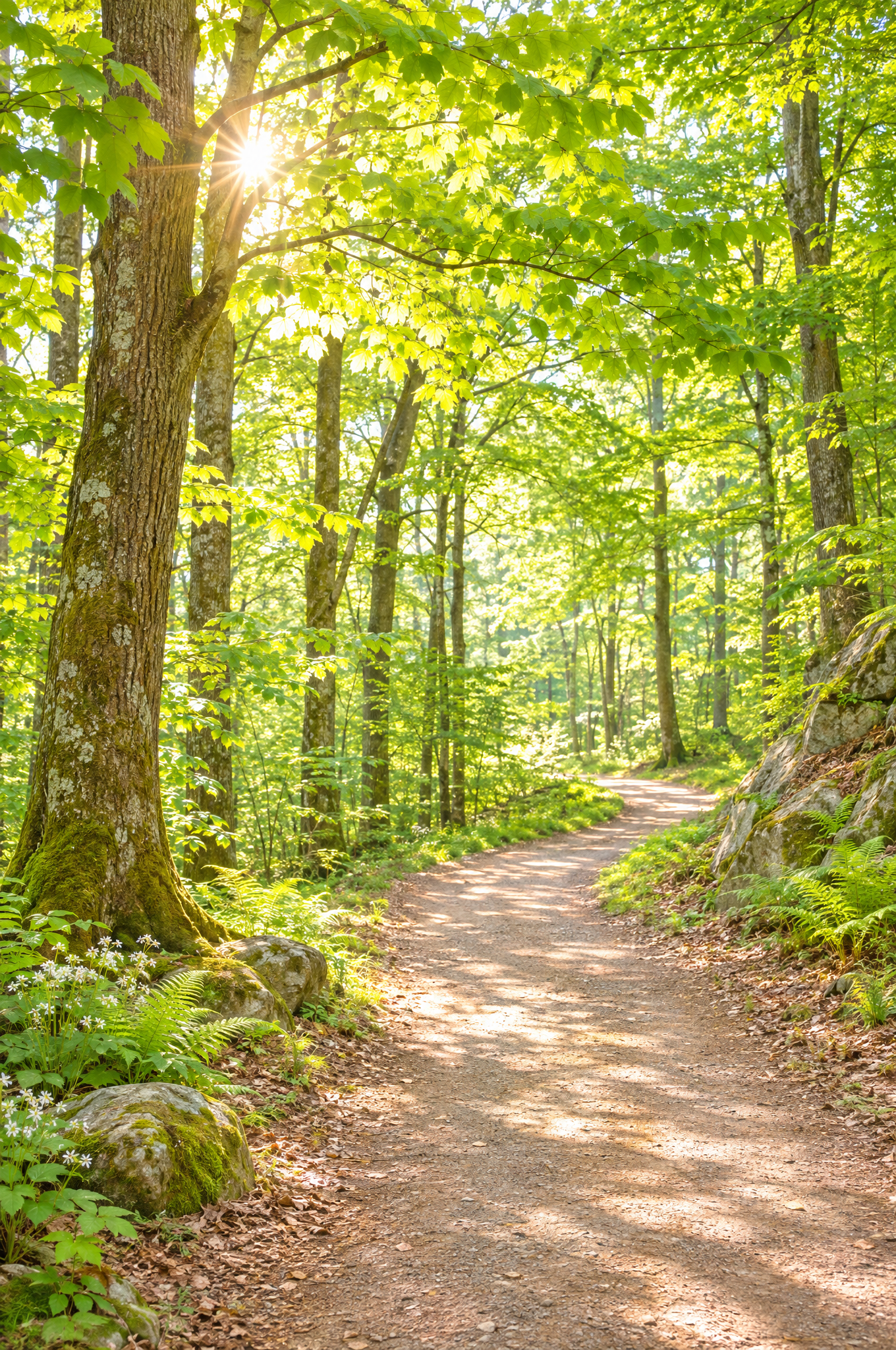
If you have ever stepped into a forest and felt your shoulders drop within the first minute — the air cooler, the sound softer, your breathing slower — you have already felt what this guide is about. You do not need to hike, or exercise, or do anything at all. You just need to be among the trees.
Forest bathing benefits for stress, sleep, mood, and immunity are why this gentle Japanese practice has traveled around the world. This guide shares what forest bathing is, what it is good for, and how to practice it — even if the nearest forest is a city park.
On This Page
- What Forest Bathing Is
- Forest Bathing Benefits for Stress and Calm
- Forest Bathing Benefits for Sleep
- Forest Bathing Benefits for Mood and Focus
- Forest Bathing Benefits for Immune Support
- How to Forest Bathe
- Forest Bathing Safety
- Forest Bathing: Good If You
- The Bottom Line on Forest Bathing Benefits
What Forest Bathing Is
Forest bathing — shinrin-yoku in Japanese — means taking in the forest atmosphere with all five senses. The term was coined in 1982 by Japan’s Forest Agency, which wanted a name for the simple act of spending unhurried time among trees, and it has since become a beloved part of Japanese preventive health care, with doctors able to prescribe forest time and forest therapy trails marked across the country.
It is not hiking, and it is not exercise. There is no destination and no distance goal. You walk slowly, or sit, or stand still, and you notice: the light through the leaves, the smell of the earth after rain, the sound of birds and wind, the rough bark under your hand, the cool air on your face. The forest does the work — your job is simply to be there and pay attention.
The science behind it is lovely: trees release airborne compounds called phytoncides — their own natural essential oils — which protect them from insects and disease, and breathing them in has been linked with calmer stress hormones and stronger immune activity in small studies. A park full of trees counts, and even a single large tree in a garden counts. What matters is the trees, the time, and your attention.
If you love slow, grounding time outdoors, my Benefits of Grounding guide walks through another nature practice — barefoot contact with the earth — that pairs beautifully with a forest walk.
Forest Bathing Benefits for Stress and Calm
Forest bathing benefits for stress and calm are the reason most people try it first. The forest slows you down in a way a room rarely does: the light is softer, the sounds are gentler, and there is nothing asking for your attention except the trees themselves.
Small studies, including the work of Dr. Qing Li at Nippon Medical School in Tokyo, have found that time in the forest was linked with lower levels of the stress hormone cortisol, lower blood pressure, and a slower heart rate — the body’s signs of shifting from alert mode into rest mode. I feel it within minutes: my breathing deepens, my jaw unclenches, and the mental noise of the day gets quieter.
I love it as a reset after a hard week, and mine is simple: an hour among the trees, phone left in the car or on silent in my pocket, walking slowly enough to notice things.
Forest Bathing Benefits for Sleep
Forest bathing benefits for sleep follow naturally from the calm. A nervous system that has spent an afternoon among trees is a nervous system that is ready for rest: the day’s stress has somewhere to go, the body has moved gently, and the mind has had a long stretch without screens.
I notice the sleep benefit most on forest days themselves — I fall asleep faster and wake up feeling more rested, like my body has been reminded what tired actually feels like. The daylight matters too: morning or midday time under a leafy canopy is bright natural light, which helps set the body’s clock, and a settled body clock is one of the kindest things you can give your sleep.
If sleep is the thing you most want help with, try a forest walk in the morning or early afternoon rather than the evening — daylight plus gentle movement plus calm is a combination that works with your body clock, not against it.
Forest Bathing Benefits for Mood and Focus
Forest bathing benefits for mood and focus are quieter than the stress ones, but they are part of why I keep going back. Time among trees lifts my mood in a way that feels different from other happy things — steadier, less buzzy, more like contentment than excitement.
Small studies have linked forest walks with brighter mood and less rumination — that loop of going over the same worry again and again — and I recognize the feeling: after an hour in the trees, the problem I carried in is usually smaller, or at least clearer. The forest does not solve anything, but it gives the mind room to breathe, and that room is often where the answer appears.
For focus, the same room helps. A tired, overstimulated mind sharpens after a stretch of soft, natural attention — watching light move through leaves, listening to a stream — and I come back to my desk able to think more clearly. If your afternoons feel foggy, a twenty-minute walk among trees is one of the simplest resets I know.
Forest Bathing Benefits for Immune Support
Forest bathing benefits for immune support come from the phytoncides — the trees’ own aromatic compounds. Dr. Qing Li’s research found that forest walks were linked with higher activity of natural killer cells, the immune cells that help the body deal with everyday threats, and that the effect lasted for days after a forest trip, not just hours.
I love this angle because it makes the forest feel like a partner rather than a backdrop: the trees are breathing out compounds that have been part of human health for as long as people have lived near forests, and simply breathing them in is enough. No supplement, no special product — just time among trees, breathing the air they make.
How to Forest Bathe
How to forest bathe could not be simpler, and there is no wrong way to do it:
Find your trees. A forest is ideal, but a leafy park, a wooded trail, or a garden with big trees all count. The more trees, the better the air — but one large tree and a bench is a genuine start.
Leave the phone behind. Put it on silent in your pocket, or leave it in the car. Forest bathing is about your senses, not your screen, and the practice begins when the notifications stop.
Walk slowly, or sit still. There is no pace and no distance. Wander along a path, pause when something catches your eye, sit on a rock or a bench. Two hours is the classic length in the Japanese research, but twenty minutes already helps — start with what you have.
Use all five senses. Feel the bark of a tree. Breathe in the smell of damp earth and leaves. Listen for birds, wind, and water. Watch the light move. Taste the clean air. The senses are the practice — each one you wake up pulls you a little further out of your head and into the forest.
Go regularly. Once a week is a lovely rhythm, and a short daily walk among trees is even better. Forest bathing works best as a habit, not a one-off trip — the calm and the clarity build with repetition.
Forest Bathing Safety
Forest bathing is a gentle practice, and a few simple habits keep it that way:
Wear sturdy shoes and dress for the weather — forests are cooler and damper than open ground, and a light layer is usually welcome even on a warm day. Bring water, and tell someone where you are going if you are walking alone on a quiet trail.
Check for ticks after your walk, especially in tall grass or brush, and learn what poison ivy looks like in your area before you go. Stay on marked paths where they exist, and be careful on wet rocks and roots. If you have allergies, note that forests are full of pollen — a breezy day after rain is often the kindest time to go. And as always, if you are managing a health condition, a quick word with your doctor before starting a new outdoor routine is sensible.
Forest Bathing: Good If You
Forest bathing is a lovely fit if you want the simplest reset there is — trees, time, and your own attention. It suits you if you feel overstimulated by screens and noise, if your stress lives in your shoulders and jaw, or if you want a gentle outdoor habit that asks nothing of you except showing up.
Try it first with twenty minutes: find the nearest leafy spot, leave the phone in your pocket, and walk slowly enough to notice five things — a sound, a smell, a color, a texture, and the feeling of the air. If you come back calmer, it earns a weekly place in your life — and if the nearest forest is a city park, that counts completely.
The Bottom Line on Forest Bathing Benefits
Forest bathing benefits come down to something beautifully simple: time among trees, taken slowly, with your senses open — calmer stress, deeper sleep, a brighter mood, and a little immune support from the very air the trees make.
Start small, twenty minutes among the trees, and let the forest do its quiet work. Sometimes the simplest practices are the ones that stick.
This article is for general information only and is not medical advice. Talk to your doctor before starting a new outdoor routine if you are pregnant, nursing, taking medication, or managing a health condition.