You’ve probably seen castor oil all over your feed lately. Someone rubs it on their skin, someone else swears by it for hair growth, and then there’s the belly-button routine that promises everything from better sleep to a flatter stomach. It’s a lot of claims for one thick, golden oil.
I get why it’s popular. Castor oil is cheap, it’s been around forever, and unlike a lot of trendy ingredients, it actually does a few things really well. But not everything you’ve heard about it holds up. Here’s the honest version: what castor oil benefits are real, which ones are exaggerated, and how to use it without wasting your time (or irritating your skin).
What Castor Oil Actually Is
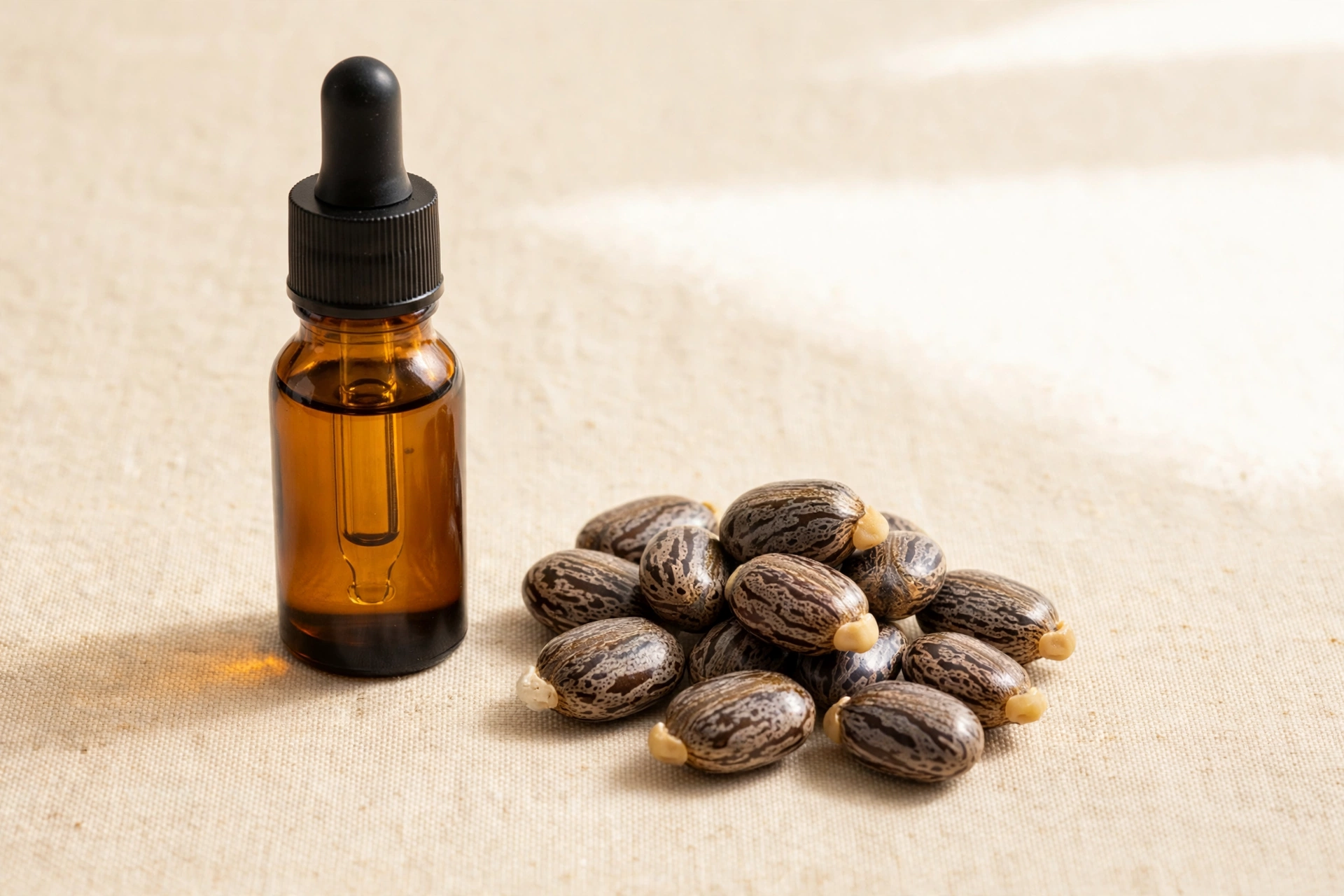
Castor oil is pressed from the seeds of the castor plant, Ricinus communis. It’s unusually thick compared to other plant oils, and that thickness comes from ricinoleic acid, a fatty acid that makes up about 90% of the oil. That one compound is responsible for most of what castor oil does.
There are two main types you’ll see on shelves. Cold-pressed castor oil is extracted without heat and keeps its pale golden color. Jamaican black castor oil is made from roasted seeds, so it’s darker and has a slightly smoky scent. For most everyday uses, cold-pressed is the one I reach for — it’s the least processed version.
One important note: the seeds themselves are toxic, but properly processed castor oil is not. The pressing process removes the harmful compounds. This is one of those cases where the source plant being dangerous doesn’t make the finished oil dangerous, as long as you’re buying real, food-grade or cosmetic-grade castor oil from a reputable brand.
Castor Oil Benefits for Skin
This is where castor oil genuinely earns its reputation. It’s a humectant, which means it draws moisture toward the skin, and it’s also occlusive, meaning it seals that moisture in. That combination makes it a strong moisturizer, especially for dry patches, rough elbows, cracked heels, and winter skin in general.
I find it works best as a spot treatment rather than an all-over face oil. It’s heavy, and if your skin leans oily or breakout-prone, a thick layer of it on your whole face can feel like too much. A drop or two patted onto dry areas, or mixed with a lighter oil like jojoba, is usually the sweet spot.
There’s also some evidence behind its soothing properties. Ricinoleic acid has been studied for its anti-inflammatory effects, and people have used castor oil on minor skin irritation for generations. That doesn’t make it a treatment for eczema or psoriasis — it isn’t — but for everyday dry, irritated skin, it’s a reasonable, simple option.
What About Hair?
Castor oil for hair is one of its oldest uses, and it’s also one of the most oversold. Here’s what’s fair to say: castor oil can make hair look shinier and feel softer, because it coats the hair shaft and locks in moisture. If your ends are dry or frizzy, it can genuinely help with that.
What it doesn’t do is regrow hair. There’s no solid evidence that castor oil stimulates new hair growth or reverses thinning, despite what a thousand videos claim. If your hair is shedding, castor oil won’t fix the underlying cause, and rubbing it on your scalp won’t create follicles that aren’t there.
That said, a healthy scalp matters for the hair you do have, and a gentle scalp massage with a little castor oil (diluted — it’s very thick on its own) can feel good and may help with dryness and flaking. Just keep expectations honest: softer, shinier hair, yes. New hair, no.
The Belly-Button Trend: What’s Actually Known
You’ve probably seen this one: rub castor oil into your belly button before bed, and supposedly it helps with digestion, bloating, sleep, and more. It’s everywhere right now, which is exactly why it deserves a closer look.
The idea comes from Ayurvedic tradition, where the navel area is treated as a central point in the body. The modern version of the claim goes further, suggesting the oil absorbs through the belly button and travels to your organs. There’s no scientific evidence for that mechanism. Your belly button isn’t a delivery system to your liver or gut.
What might actually be happening is simpler and less dramatic. Massaging oil into your stomach is relaxing, and relaxation helps digestion and sleep. Some people also use castor oil packs — cloth soaked in castor oil placed on the abdomen with gentle heat — which is a traditional practice that many people find soothing, particularly for menstrual discomfort or general abdominal tension. The warmth and the ritual probably do more than the oil itself.
So if you enjoy the routine and it helps you wind down at night, there’s nothing wrong with it. Just don’t buy it as a detox or a cure for anything. And never put castor oil inside your belly button if the skin there is broken or irritated.
Castor Oil Uses at a Glance
| Use | What it actually does | What to know |
|---|---|---|
| Dry skin | Deeply moisturizes and seals in hydration | Best as a spot treatment or mixed with a lighter oil |
| Hair and ends | Adds shine and softness, tames frizz | Won’t regrow hair or reverse thinning |
| Scalp massage | Can ease dryness and flaking | Dilute it — it’s very thick on its own |
| Belly-button routine | Relaxing ritual; may ease tension | No evidence it detoxes or reaches your organs |
| Castor oil packs | Warm, soothing abdominal compress | Traditional practice; comfort, not a cure |
| Eyelashes and brows | Conditions hairs so they look fuller | No evidence it grows new hairs; keep it out of your eyes |
How to Use It Without the Mess
Castor oil’s biggest downside is practical: it’s sticky and thick, and it gets on everything. A few habits make it much easier to live with.
Start with a small amount. A little goes a long way, and you can always add more. For skin, warm a drop or two between your palms first — it spreads much more easily warm. For hair, focus on the ends rather than the roots, unless you’re specifically doing a scalp massage, and wash it out thoroughly; it can take two shampoos to fully remove.
Patch test before you go all in, especially on your face. Put a small amount on your inner arm and wait 24 hours. Most people tolerate castor oil fine, but anyone can react to any ingredient, and it’s better to find out on your arm than on your face.
Store it somewhere cool and dark, and check the smell before you use it. Fresh castor oil smells mild and slightly nutty. If it smells sharp or rancid, it’s gone off and it’s time for a new bottle.
What to Look For When You Buy It
Not all castor oil is equal, and the label tells you most of what you need to know. Look for cold-pressed and hexane-free on the label — that means it was extracted without harsh chemical solvents. A dark amber glass bottle is a good sign too, since light degrades oils over time.
You don’t need the most expensive bottle on the shelf. Castor oil is a simple, single-ingredient product, and a mid-range cold-pressed bottle does the same job as a luxury one. Skip anything with added fragrance or a long ingredient list — for this oil, shorter is better.
The Bottom Line
Castor oil is one of those rare trendy ingredients that actually deserves some of the attention. It’s a genuinely good moisturizer, it makes hair softer and shinier, and the rituals around it — the scalp massage, the warm pack, the wind-down routine — can be genuinely pleasant. Where it goes wrong is when it’s sold as a cure-all: a detox, a hair-growth miracle, or a fix for anything happening inside your body.
Use it for what it’s good at, skip the miracle claims, and you’ll get your money’s worth out of a very inexpensive bottle.
This post is for general information only and is not medical advice. If you have a health condition, check with your clinician before changing supplements or routines.