Best Essential Oils for Digestive Health

Imagine transforming your digestive discomfort with the power of nature’s most potent plant extracts. 🌿 While millions reach for over-the-counter medications for bloating, gas, and stomach upset, a growing number of health enthusiasts are discovering the gentle yet effective world of aromatherapy for gut wellness. The best essential oils for digestive health offer a natural, non-toxic approach to supporting your body’s digestive processes without harsh chemicals or unwanted side effects.
Essential oils have been used for thousands of years to support digestive wellness, and modern research continues to validate what traditional healers have long known. These concentrated plant essences work by stimulating digestive enzymes, reducing inflammation, calming spasms, and promoting healthy gut function through their unique therapeutic compounds.
Key Takeaways
• Peppermint and ginger oils are the most researched and effective essential oils for digestive support, particularly for nausea, bloating, and stomach discomfort
• Proper dilution is crucial – always mix essential oils with carrier oils before topical application to avoid skin irritation
• Multiple application methods exist including aromatherapy diffusion, topical massage, and carefully supervised internal use with food-grade oils
• Quality matters significantly – choose organic, therapeutic-grade oils from reputable suppliers for safety and effectiveness
• Individual responses vary – start with small amounts and monitor your body’s reaction to find the best oils for your specific digestive needs
Understanding How Essential Oils Support Digestive Wellness

Essential oils work through multiple pathways to support healthy digestion. When inhaled, their aromatic compounds travel through the olfactory system to the brain, where they can influence the nervous system’s control over digestive functions. The vagus nerve, which connects the brain to the digestive tract, responds to certain aromatic compounds by promoting relaxation and optimal digestive function.
Topically applied oils (when properly diluted) can be absorbed through the skin and may help reduce inflammation, ease muscle tension in the digestive tract, and stimulate circulation to digestive organs. Some oils contain compounds that naturally support the production of digestive enzymes and bile, which are essential for breaking down food efficiently.
The Science Behind Digestive Essential Oils
Research shows that many essential oils contain antispasmodic compounds that help relax smooth muscle tissue in the digestive tract. Others possess carminative properties, meaning they help reduce gas formation and promote its elimination. Anti-inflammatory compounds found in certain oils may help soothe irritated digestive tissues and support overall gut health.
The enteric nervous system – often called the “second brain” – contains more neurons than the spinal cord and plays a crucial role in digestive function. Essential oils can influence this system through both direct application and aromatherapy, helping to restore balance and promote comfortable digestion.
Top 5 Best Essential Oils for Digestive Health
1. Peppermint Oil (Mentha piperita) 🌱
Peppermint oil stands as the gold standard among digestive essential oils, backed by extensive research and centuries of traditional use. Its primary active compound, menthol, provides powerful antispasmodic effects that help relax the muscles of the digestive tract.
Key Benefits:
- Reduces bloating and gas
- Eases stomach cramps and spasms
- Supports healthy bowel movements
- Provides cooling, soothing sensation
- May help with nausea
How to Use:
- Aromatherapy: Add 3-4 drops to a diffuser
- Topical: Dilute 2-3 drops in 1 tablespoon carrier oil for abdominal massage
- Steam inhalation: Add 1-2 drops to hot water and inhale gently
2. Ginger Oil (Zingiber officinale) 🫚
Ginger essential oil contains potent compounds like gingerol and zingiberene that make it exceptionally effective for digestive support. This warming oil has been used for thousands of years to combat nausea and support healthy digestion.
Key Benefits:
- Powerful anti-nausea properties
- Stimulates digestive enzymes
- Reduces inflammation in the gut
- Supports healthy circulation
- Eases motion sickness
How to Use:
- Aromatherapy: Diffuse 2-3 drops for nausea relief
- Topical: Mix 2 drops with carrier oil and massage onto abdomen
- Inhalation: Place 1 drop on a tissue and inhale when feeling nauseous
3. Fennel Oil (Foeniculum vulgare) 🌾
Fennel essential oil offers gentle yet effective digestive support, making it particularly suitable for sensitive individuals. Its sweet, licorice-like aroma comes from compounds like anethole, which provides excellent carminative properties.
Key Benefits:
- Reduces gas and bloating
- Supports healthy appetite
- Eases digestive cramping
- Promotes regular bowel movements
- Gentle enough for sensitive stomachs
How to Use:
- Aromatherapy: Add 3-4 drops to diffuser after meals
- Topical: Dilute well and massage in circular motions on abdomen
- Bath: Add 4-5 drops to carrier oil before adding to bathwater
4. Lemon Oil (Citrus limon) 🍋
Lemon essential oil brings bright, uplifting energy while providing significant digestive benefits. Its high limonene content supports liver function and bile production, which are essential for proper fat digestion.
Key Benefits:
- Supports liver detoxification
- Stimulates bile production
- Reduces bloating after fatty meals
- Provides energizing aromatherapy benefits
- May help with acid reflux
How to Use:
- Aromatherapy: Diffuse 4-5 drops for energizing digestive support
- Topical: Dilute heavily due to photosensitivity and massage gently
- Note: Avoid sun exposure for 12 hours after topical application
5. Chamomile Oil (Matricaria chamomilla) 🌼
Roman or German chamomile oil offers gentle, soothing support for stressed digestive systems. Its anti-inflammatory and calming properties make it ideal for those whose digestive issues are stress-related.
Key Benefits:
- Calms digestive inflammation
- Reduces stress-related digestive upset
- Soothes stomach lining
- Promotes relaxation
- Supports restful sleep for better digestion
How to Use:
- Aromatherapy: Diffuse 3-4 drops in evening for calming effects
- Topical: Mix with carrier oil for gentle abdominal massage
- Bath: Add to carrier oil for relaxing digestive support
How to Safely Use the Best Essential Oils for Digestive Health
Safety should always be the top priority when using essential oils for digestive support. These concentrated plant extracts are powerful substances that require proper handling and application methods to ensure both effectiveness and safety.
Dilution Guidelines
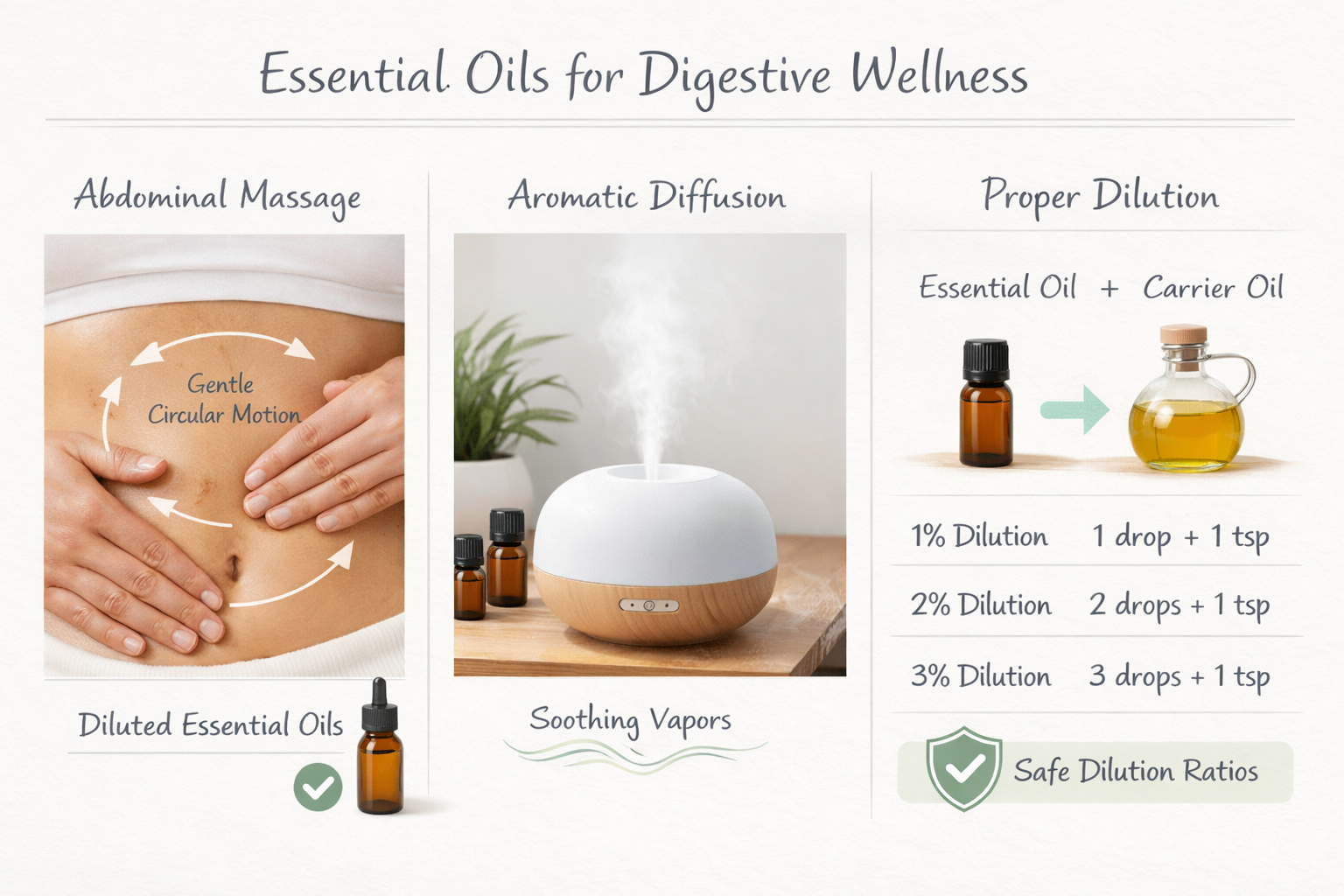
Never apply undiluted essential oils directly to skin. Always use appropriate dilution ratios:
| Application Type | Dilution Ratio | Example |
|---|---|---|
| Sensitive skin | 0.5-1% | 3-6 drops per 2 tablespoons carrier oil |
| Normal skin | 2-3% | 12-18 drops per 2 tablespoons carrier oil |
| Short-term use | Up to 5% | 30 drops per 2 tablespoons carrier oil |
Best Carrier Oils for Digestive Massage:
- Sweet almond oil – light, easily absorbed
- Jojoba oil – technically a wax, very stable
- Fractionated coconut oil – liquid at room temperature
- Grapeseed oil – light texture, good for sensitive skin
Application Methods
Aromatherapy Diffusion
This method is often the safest and most effective for beginners. Add 3-5 drops of your chosen oil to a high-quality diffuser and run for 15-30 minutes at a time. This allows you to benefit from the aromatic compounds without direct skin contact.
Topical Application
When properly diluted, topical application can provide targeted relief. Focus on these areas:
- Abdomen: Use gentle, clockwise circular motions
- Pulse points: Wrists and temples for aromatherapy benefits
- Feet: Reflexology points related to digestive organs
Steam Inhalation
Add 1-2 drops to a bowl of hot (not boiling) water. Lean over the bowl with a towel over your head and inhale gently for 2-3 minutes. This method is particularly effective for nausea relief.
Safety Precautions and Contraindications
Important Safety Guidelines:
⚠️ Pregnancy and Nursing: Many essential oils are not recommended during pregnancy or while breastfeeding. Consult healthcare providers before use.
⚠️ Children: Use extreme caution with children. Many oils should not be used on children under 2 years old.
⚠️ Medications: Essential oils can interact with medications. Consult healthcare providers if taking prescription drugs.
⚠️ Allergies: Always perform a patch test before first use of any new oil.
⚠️ Internal Use: Only use oils specifically labeled as food-grade and follow manufacturer guidelines carefully.
Oils Requiring Special Caution:
- Peppermint: Can be too strong for young children and may interact with certain medications
- Citrus oils: Can cause photosensitivity – avoid sun exposure after topical use
- Fennel: Contains compounds that may affect hormone levels
Creating Your Personal Digestive Wellness Routine
Building a consistent routine with the best essential oils for digestive health can provide ongoing support for your gut wellness journey. The key is finding the right combination of oils and application methods that work for your unique needs and lifestyle.
Morning Digestive Support Routine
Start your day with gentle digestive preparation:
🌅 Upon Waking:
- Diffuse lemon oil (4-5 drops) to support liver function and energy
- Practice deep breathing while enjoying the uplifting aroma
🍽️ Before Breakfast:
- Apply diluted ginger oil blend to abdomen with gentle massage
- This can help stimulate digestive enzymes before eating
Post-Meal Comfort Protocol
After eating, especially larger meals:
15-30 Minutes After Eating:
- Diffuse peppermint oil (3-4 drops) to support comfortable digestion
- Take a gentle walk while breathing in the aromatic benefits
If Experiencing Discomfort:
- Apply diluted fennel oil blend to abdomen in clockwise circular motions
- Practice relaxation breathing to support the vagus nerve
Evening Wind-Down Routine
Support overnight digestive rest and repair:
🌙 Before Bed:
- Diffuse chamomile oil (3-4 drops) for calming effects
- Apply diluted chamomile blend to abdomen and pulse points
- Practice gratitude or gentle meditation to reduce stress
Weekly Digestive Reset
Once weekly, consider a more intensive approach:
🛁 Relaxing Digestive Bath:
- Combine 2 drops each of chamomile and fennel oils
- Mix with 1 tablespoon carrier oil before adding to warm bath
- Soak for 15-20 minutes while practicing deep breathing
Blending the Best Essential Oils for Digestive Health
Creating custom blends allows you to target specific digestive concerns while enjoying complex, pleasing aromas. Here are some tried-and-tested combinations that work synergistically:
“Comfort Belly” Blend
For general digestive discomfort:
- 3 drops peppermint oil
- 2 drops fennel oil
- 2 drops chamomile oil
- 2 tablespoons carrier oil
Mix well and store in dark glass bottle. Use for abdominal massage or add to diffuser (oil-free version with just the essential oils).
“Nausea Relief” Blend
For motion sickness and morning nausea:
- 4 drops ginger oil
- 2 drops lemon oil
- 1 drop peppermint oil
Use in diffuser or apply 1 drop of blend to tissue for inhalation.
“After-Dinner Ease” Blend
For post-meal bloating and gas:
- 3 drops peppermint oil
- 3 drops fennel oil
- 1 drop lemon oil
- 2 tablespoons carrier oil
Apply to abdomen 20-30 minutes after eating.
“Stress-Free Digestion” Blend
For stress-related digestive issues:
- 4 drops chamomile oil
- 2 drops fennel oil
- 1 drop lemon oil
Perfect for evening diffusion or relaxing bath addition.
Quality Matters: Choosing the Right Essential Oils
Not all essential oils are created equal, and when it comes to digestive health, quality is paramount. Poor-quality oils may contain synthetic additives, pesticide residues, or adulterants that can actually harm rather than help your digestive system.
What to Look For
✅ Organic Certification: Choose oils from organically grown plants to avoid pesticide residues
✅ Third-Party Testing: Look for companies that provide GC/MS (Gas Chromatography/Mass Spectrometry) testing results
✅ Proper Botanical Names: Labels should include the complete Latin botanical name (e.g., Mentha piperita for peppermint)
✅ Dark Glass Bottles: Essential oils degrade in light, so quality suppliers use dark amber or cobalt blue bottles
✅ Extraction Method: Look for steam distilled or cold-pressed oils rather than solvent-extracted
✅ Country of Origin: Reputable suppliers list where the plants were grown and oils were produced
Red Flags to Avoid
❌ Extremely Low Prices: Quality essential oils require significant plant material and proper processing
❌ Claims of “Therapeutic Grade”: This is a marketing term, not a regulated standard
❌ Plastic Bottles: Essential oils can dissolve plastic, affecting quality and safety
❌ Missing Safety Information: Reputable suppliers provide proper safety guidelines and contraindications
❌ “One Size Fits All” Pricing: Different oils have vastly different production costs
Complementary Natural Approaches
While the best essential oils for digestive health can provide significant support, they work best as part of a holistic approach to gut wellness. Consider incorporating these complementary strategies:
Dietary Considerations
🥗 Digestive-Friendly Foods:
- Fermented foods like sauerkraut, kimchi, and kefir
- Prebiotic-rich foods such as garlic, onions, and asparagus
- Anti-inflammatory spices like turmeric and ginger root
- Plenty of fiber from vegetables and fruits
🚫 Foods to Limit:
- Highly processed foods with artificial additives
- Excessive sugar and refined carbohydrates
- Foods you know trigger digestive discomfort
- Excessive caffeine and alcohol
Lifestyle Factors
💧 Proper Hydration: Drink adequate water throughout the day, but limit large amounts with meals
🧘 Stress Management: Practice meditation, yoga, or other stress-reduction techniques
😴 Quality Sleep: Aim for 7-9 hours of quality sleep to support digestive repair
🚶 Regular Movement: Gentle exercise supports healthy digestion and gut motility
🍽️ Mindful Eating: Eat slowly, chew thoroughly, and avoid eating when stressed
When to Seek Professional Support
While essential oils and natural approaches can provide excellent digestive support, certain symptoms warrant professional medical attention:
- Persistent or severe abdominal pain
- Blood in stool or vomit
- Sudden changes in bowel habits
- Unexplained weight loss
- Severe or persistent nausea and vomiting
- Signs of dehydration
Always consult healthcare providers before using essential oils if you have diagnosed digestive conditions, take medications, or are pregnant or nursing.
Conclusion
The best essential oils for digestive health offer a natural, effective way to support your gut wellness journey without relying on harsh chemicals or synthetic medications. From peppermint’s powerful antispasmodic properties to ginger’s renowned anti-nausea effects, these concentrated plant essences provide time-tested solutions for common digestive concerns.
Remember that consistency and quality are key to success with essential oils. Start slowly, always prioritize safety through proper dilution and application methods, and choose high-quality, organic oils from reputable suppliers. By incorporating these natural solutions into a holistic approach that includes healthy eating, stress management, and lifestyle factors, you can support your digestive system’s natural ability to function optimally.
Your Next Steps:
- Start simple – Choose one or two oils that address your primary digestive concerns
- Invest in quality – Purchase organic, third-party tested oils from reputable suppliers
- Create a routine – Establish consistent daily practices using your chosen oils
- Track your progress – Keep a journal of how different oils and methods affect your digestive comfort
- Stay patient – Natural approaches often take time to show full benefits, so give your new routine at least 2-4 weeks
- Consult professionals – Work with healthcare providers, especially if you have existing digestive conditions
The path to better digestive health through essential oils is a journey of discovery. Each person’s digestive system is unique, so what works best for others may need adjustment for your specific needs. Embrace the process of finding your perfect combination of oils and methods, and enjoy the natural support these powerful plant essences can provide for your overall wellness journey. 🌿