How to Read Nutrition Labels Like a Dietitian
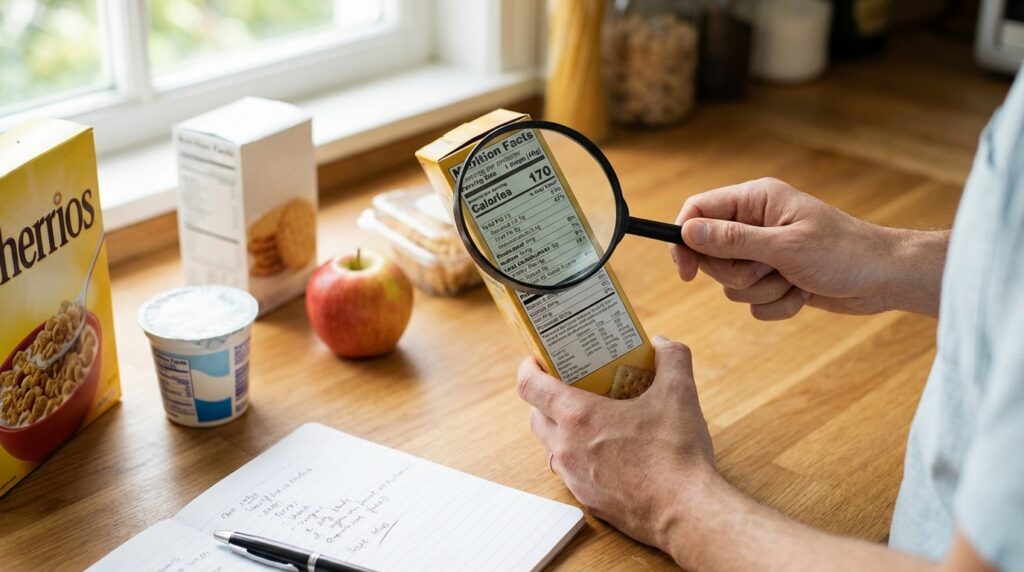
Picture this: You’re standing in the grocery store aisle, holding two seemingly identical products, but one has a nutrition label that looks like it was written in a foreign language. Sound familiar? Learning how to read nutrition labels like a dietitian can transform your shopping experience from confusing guesswork into confident, informed decision-making that supports your health goals.
Nutrition labels hold the secrets to making better food choices, but most people only glance at calories before tossing items into their cart. Dietitians, however, have trained eyes that can spot hidden sugars, identify quality protein sources, and calculate whether a product truly fits into a balanced eating plan—all within seconds of scanning a label.
Key Takeaways
• Serving size is the foundation of all nutrition label reading—everything else is calculated per serving, not per package
• The ingredient list tells the real story—items are listed by weight, with the first few ingredients making up most of the product
• Percent Daily Values (%DV) provide context—5% or less is low, 20% or more is high for most nutrients
• Focus on fiber, protein, and healthy fats while limiting added sugars, sodium, and trans fats
• Compare similar products using the same serving size to make truly informed choices
Understanding the Nutrition Label Layout: The Dietitian’s Roadmap
The Anatomy of a Nutrition Facts Panel
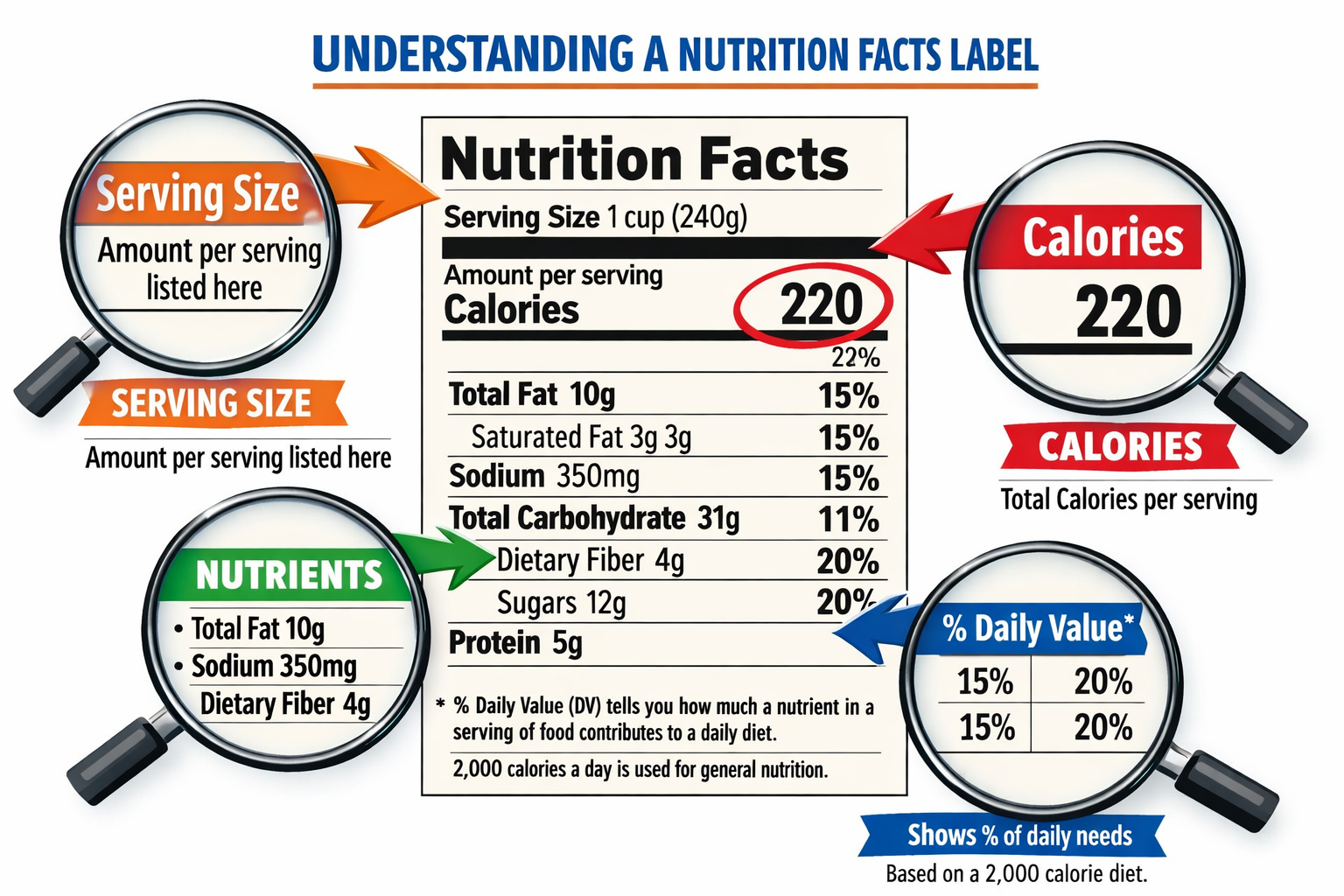
When dietitians examine a nutrition label, they follow a systematic approach that starts with understanding the layout and legal requirements. The FDA mandates specific formatting that makes labels consistent across all packaged foods.
The nutrition facts panel contains several key sections:
📊 Top Section: Serving Information
- Serving size
- Servings per container
🔥 Calories Section
- Total calories per serving
- Sometimes calories from fat (on older labels)
📈 Nutrients Section
- Macronutrients (fat, carbohydrates, protein)
- Micronutrients (vitamins and minerals)
- Percent Daily Values (%DV)
📝 Bottom Section: Daily Value Reference
- Footnote explaining %DV calculations
How to Read Nutrition Labels Like a Dietitian: Start with Serving Size
The serving size is where dietitians always begin because it’s the foundation for every other number on the label. This isn’t a recommendation for how much to eat—it’s simply the amount that all other nutritional information is based on.
Here’s what dietitians check:
| What to Look For | Why It Matters | Example |
|---|---|---|
| Realistic serving size | Some companies use tiny servings to make calories look lower | 1 cookie vs. realistic 3-4 cookies |
| Servings per container | Shows if package contains multiple servings | “About 2.5 servings” means you might eat the whole thing |
| Weight in grams | More accurate than volume measurements | 30g vs. “1 cup” which can vary |
Pro tip: If the serving size seems unrealistically small, multiply all the nutrition numbers by how much you’d actually eat.
Decoding Calories and Macronutrients: The Energy Story
Calories: More Than Just a Number
Dietitians don’t just look at total calories—they evaluate calorie quality and how those calories are distributed among macronutrients. A 200-calorie snack from nuts provides vastly different nutrition than 200 calories from candy.
The 40-40-20 Rule for Calorie Distribution:
- 40% from carbohydrates (preferably complex carbs)
- 40% from healthy fats
- 20% from protein
This isn’t rigid, but it helps dietitians quickly assess whether a food provides balanced nutrition.
Fat: The Good, The Bad, and The Essential
When examining fat content, dietitians focus on fat quality rather than just quantity:
✅ Prioritize These Fats:
- Monounsaturated fats
- Polyunsaturated fats
- Omega-3 fatty acids
⚠️ Limit These Fats:
- Saturated fats (less than 10% of daily calories)
- Trans fats (avoid completely)
Reading Between the Lines:
If a product claims “0g trans fat” but lists “partially hydrogenated oil” in ingredients, it may contain up to 0.5g trans fat per serving—which adds up quickly.
Carbohydrates: Beyond the Total Count
Dietitians break down the carbohydrate section into three critical components:
- Total Carbohydrates – The big picture
- Dietary Fiber – The hero nutrient
- Added Sugars – The one to watch
The Fiber Formula:
Look for products where fiber makes up at least 10-15% of total carbohydrates. High-fiber foods (5g+ per serving) help with satiety, blood sugar control, and digestive health.
Added Sugar Alert:
The American Heart Association recommends limiting added sugars to 25g daily for women and 36g for men. Dietitians often use this as a benchmark when evaluating products.
Protein: Quality and Completeness
Protein content varies dramatically in quality. Dietitians consider:
- Amount per serving (aim for 10-20g for snacks, 25-30g for meals)
- Protein source (complete vs. incomplete proteins)
- Digestibility (animal vs. plant proteins)
How to Read Nutrition Labels Like a Dietitian: Advanced Strategies
The Ingredient List Detective Work
While the nutrition facts panel shows quantities, the ingredient list reveals quality. Dietitians read ingredients like a story, understanding that:
🥇 First Five Ingredients Rule:
The first five ingredients typically make up 80-90% of the product. If these aren’t foods you’d cook with at home, consider alternatives.
🔍 Hidden Sugar Spotting:
Sugar hides under 50+ different names. Dietitians watch for:
- Anything ending in “-ose” (glucose, fructose, dextrose)
- Syrups (corn syrup, rice syrup, agave)
- Concentrated fruit juices
- Natural sweeteners (honey, maple syrup, coconut sugar)
⚡ Preservative Awareness:
While not inherently harmful, long lists of preservatives often indicate highly processed foods with minimal nutritional value.
Percent Daily Value (%DV): Your Nutritional GPS
The %DV helps dietitians quickly categorize nutrients:
📊 The 5-20 Rule:
- 5% or less = LOW (good for sodium, saturated fat, added sugar)
- 20% or more = HIGH (good for fiber, protein, vitamins, minerals)
Strategic %DV Usage:
Dietitians use %DV to balance daily intake. If breakfast provides 40% DV for sodium, they’ll choose lower-sodium options for other meals.
Label Claims: Marketing vs. Reality
Dietitians know that front-of-package claims can be misleading. Here’s how they decode common marketing terms:
| Claim | What It Really Means | What to Check |
|---|---|---|
| “Natural” | Minimal processing (no legal definition) | Ingredient list for actual whole foods |
| “Organic” | Meets USDA organic standards | Still check sugar and sodium content |
| “Low Fat” | 3g or less fat per serving | Often higher in sugar or sodium |
| “High Protein” | 10g+ protein per serving | Compare to similar products |
| “No Added Sugar” | No sugar added during processing | May contain natural sugars or artificial sweeteners |
Practical Application: Shopping Like a Nutrition Professional
The Dietitian’s Shopping Strategy
🛒 Pre-Shopping Preparation:
- Review your eating goals (weight management, heart health, etc.)
- Plan meals around whole foods first
- Identify 2-3 key nutrients to focus on during this trip
🔄 The Comparison Method:
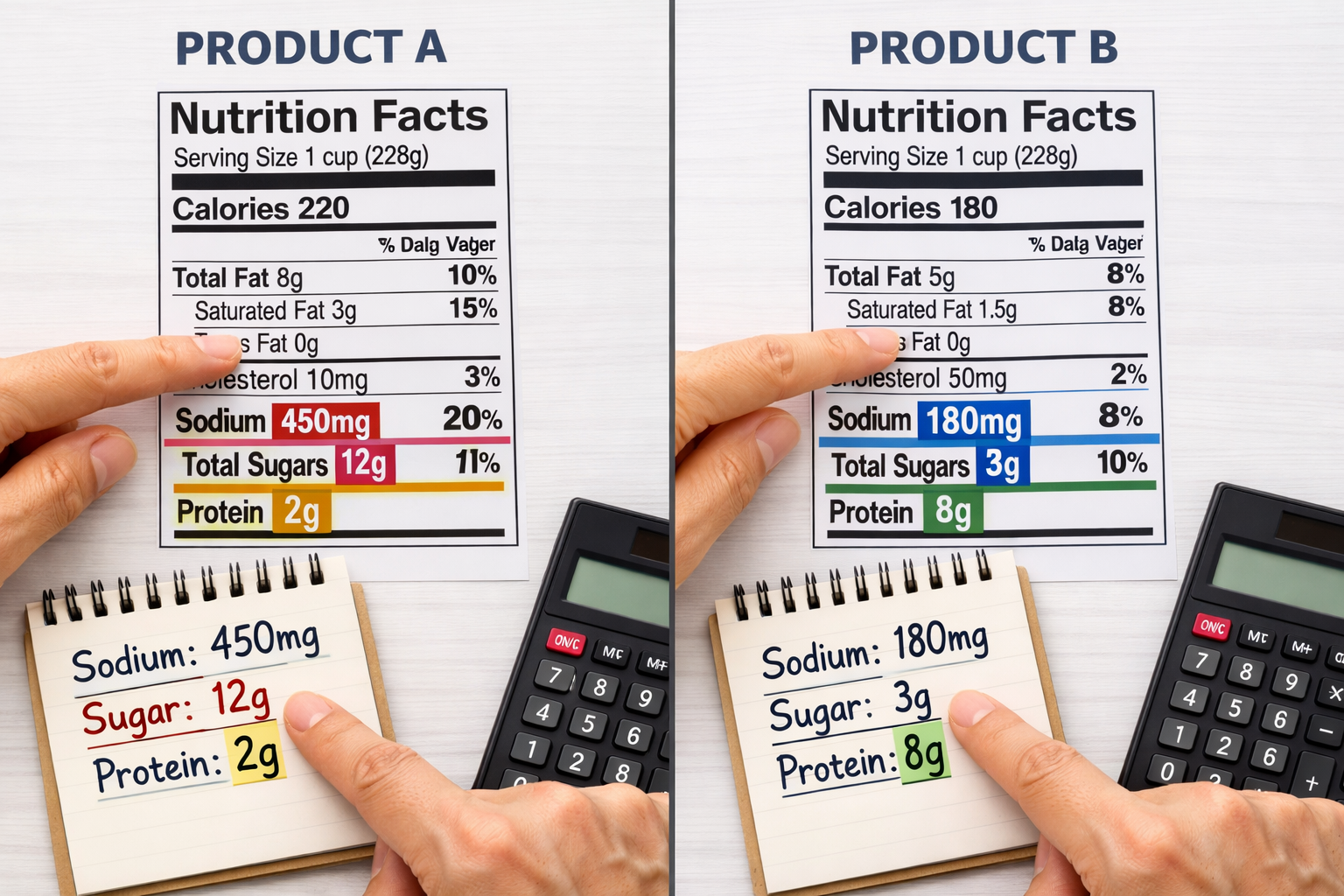
When choosing between similar products, dietitians use a side-by-side comparison focusing on:
- Serving size normalization (compare equal amounts)
- Key nutrient priorities (fiber, protein, healthy fats)
- Ingredients quality (whole foods vs. processed components)
- Overall nutritional value per calorie
Real-World Examples: How to Read Nutrition Labels Like a Dietitian
Example 1: Breakfast Cereals
Product A: 110 calories, 1g fiber, 12g sugar, first ingredient: corn
Product B: 120 calories, 5g fiber, 4g sugar, first ingredient: whole grain oats
Dietitian’s Choice: Product B
Reasoning: Higher fiber, lower sugar, whole grain first ingredient provides better satiety and blood sugar control.
Example 2: Yogurt Selection
Greek Yogurt A: 100 calories, 15g protein, 6g added sugar
Greek Yogurt B: 80 calories, 12g protein, 0g added sugar
Dietitian’s Choice: Product B
Reasoning: No added sugar allows for natural fruit additions, still provides substantial protein.
Special Considerations for Different Health Goals
🏃♀️ For Athletic Performance:
- Prioritize protein (20-25g per serving for post-workout)
- Look for complex carbohydrates
- Check electrolyte content (sodium, potassium)
❤️ For Heart Health:
- Limit sodium (less than 140mg = low sodium)
- Choose unsaturated fats over saturated
- Prioritize fiber and potassium
🩺 For Blood Sugar Management:
- Focus on fiber-to-carb ratios
- Avoid added sugars
- Look for protein to slow glucose absorption
Advanced Label Reading: Beyond the Basics
Understanding Nutrient Timing and Bioavailability
Experienced dietitians consider when and how nutrients are absorbed:
🕐 Timing Considerations:
- Iron absorption improves with vitamin C
- Calcium competes with iron for absorption
- Fat-soluble vitamins (A, D, E, K) need dietary fat
🧬 Bioavailability Factors:
- Whole food sources often provide better absorption
- Processing methods can affect nutrient availability
- Combination foods may enhance or inhibit nutrient uptake
Reading Labels for Food Sensitivities
Dietitians help clients navigate allergen information and sensitivity triggers:
🚨 Allergen Alerts:
- Bold allergen statements are required by law
- “May contain” warnings indicate cross-contamination risk
- Hidden allergens in natural flavors or processing aids
🔍 Sensitivity Sleuthing:
- Gluten sources: wheat, barley, rye, malt
- Dairy derivatives: casein, whey, lactose
- FODMAPs: certain fibers and sugar alcohols
Evaluating Fortification and Supplementation
Many processed foods are fortified with vitamins and minerals. Dietitians evaluate:
✅ Beneficial Fortification:
- B vitamins in grain products
- Vitamin D in dairy alternatives
- Iron in breakfast cereals
⚠️ Over-Fortification Concerns:
- Exceeding upper limits for fat-soluble vitamins
- Synthetic vs. natural vitamin forms
- Nutrient interactions and competition
Making It Practical: Your Action Plan
The 30-Second Label Scan
Dietitians develop efficient scanning techniques for busy shopping:
- Check serving size (3 seconds)
- Scan fiber and protein (5 seconds)
- Check added sugar and sodium (5 seconds)
- Glance at first 3 ingredients (10 seconds)
- Make decision (7 seconds)
Building Your Nutrition Label Toolkit
📱 Helpful Apps:
- Fooducate: Grades products A-D based on nutrition
- MyFitnessPal: Tracks nutrients and compares products
- Think Dirty: Focuses on ingredient safety
🧠 Mental Shortcuts:
- 5g fiber = good source
- 10g protein = meaningful amount
- 140mg sodium = low sodium
- 5g added sugar = about 1 teaspoon
Creating Your Personal Standards
Develop personal nutrition criteria based on your goals:
Sample Criteria for Snacks:
- ✅ At least 3g fiber OR 5g protein
- ✅ Less than 200mg sodium
- ✅ No more than 5g added sugar
- ✅ Recognizable first ingredient
Sample Criteria for Meals:
- ✅ At least 15g protein
- ✅ At least 5g fiber
- ✅ Less than 600mg sodium
- ✅ Balanced macronutrients
Conclusion
Learning how to read nutrition labels like a dietitian transforms grocery shopping from a guessing game into an empowering skill that supports your health goals every day. By focusing on serving sizes, prioritizing quality nutrients like fiber and protein, understanding ingredient lists, and using Percent Daily Values strategically, anyone can make informed food choices with confidence.
The key is starting simple—master the basics of serving size and the 5-20 rule for %DV, then gradually add more sophisticated analysis techniques. Remember that nutrition labels are tools, not rules. They provide information to help you make choices that align with your personal health goals and preferences.
Your Next Steps:
- Practice the 30-second scan on 5 products during your next grocery trip
- Compare two similar products using the side-by-side method
- Identify your top 3 nutrition priorities (fiber, protein, low sodium, etc.)
- Create personal standards for snacks and meals based on your goals
- Focus on progress, not perfection—small improvements in label reading lead to significant health benefits over time
Start implementing these dietitian-approved strategies today, and watch how reading nutrition labels becomes second nature, leading to better food choices and improved overall health.
SEO Meta Information
Meta Title: How to Read Nutrition Labels Like a Dietitian | 2026 Guide
Meta Description: Master nutrition label reading with expert dietitian strategies. Learn serving sizes, %DV, ingredients analysis, and smart shopping tips for healthier food choices.