This article may contain affiliate links.
You have probably seen the promises online: a kitchen ingredient that will whiten your teeth in days, a rinse that pulls stains right out, a paste that gives you a brighter smile without a dentist visit. If your teeth have picked up stains from coffee, tea, or red wine, those claims are tempting. I understand the appeal — a brighter smile feels like a simple fix, and the natural options sound gentler than a professional treatment.
The problem is that “natural” does not automatically mean safe for your teeth. Your enamel, the hard outer layer that protects your teeth, does not grow back once it is worn away. Some popular home methods remove surface stains, some do very little at all, and a few can damage enamel if they are used too often or too aggressively. This guide separates those categories, so you can tell the difference before you try anything.
Natural Teeth Whitening: First, What Kind of Stain Are You Dealing With?
Not all discoloration is the same, and that matters because home methods can only address some of it.
Surface stains sit on the outside of the tooth. Coffee, tea, red wine, berries, and tobacco are common causes. These are the stains that brushing, polishing, and mild abrasives are meant to address, and they are also the stains most likely to improve with careful home care.
Deeper discoloration sits inside the tooth. It can come from aging, certain medications taken while teeth were developing, injury to a tooth, or heavy, long-term staining that has worked its way in. Home remedies generally do not reach this kind of discoloration. If a tooth has changed color suddenly, or only one tooth looks darker than the rest, that is worth a dental check rather than a home experiment.
That distinction is the key to realistic expectations: home methods may help with surface stains, but they are not a fix for deeper discoloration or for a tooth that has changed color for another reason.
Natural Teeth Whitening Basics: What Actually Helps First
Before any whitening method, I think the everyday habits matter more than people expect. Brushing twice a day with a fluoride toothpaste, cleaning between your teeth daily, and rinsing with water after coffee, tea, or red wine all reduce the buildup that makes stains look worse over time. None of that sounds exciting, but it is the foundation everything else sits on.
Baking Soda for Natural Teeth Whitening: Mild Abrasive, Real Limits
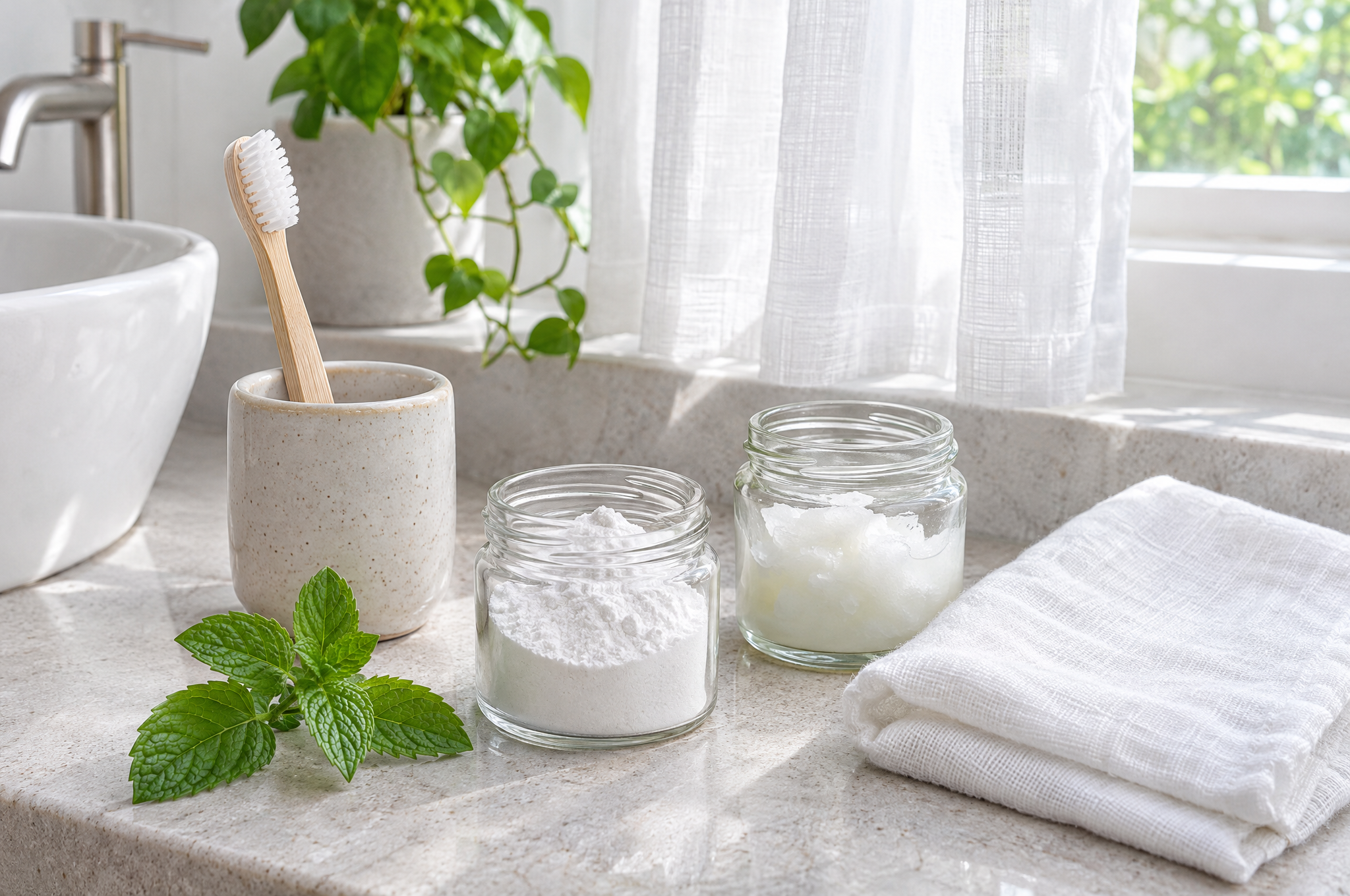
Baking soda is the home ingredient with the most straightforward explanation. It is a mild abrasive, which means it can help polish away surface stains when it is used gently. Many commercial toothpastes contain baking soda for exactly this reason, in a controlled amount, alongside fluoride and other ingredients.
Used occasionally, as part of a normal brushing routine, baking soda is generally considered low-risk for most people. The problems start with frequency and force. Scrubbing hard with a baking soda paste every day, or using a coarse homemade mix, increases wear on enamel over time. Enamel wear is cumulative — you do not notice it day by day, but once it is gone, the underlying dentin, which is naturally more yellow, can show through more. That can make teeth look darker, the opposite of the intended result.
If you use baking soda at home, keep it gentle and infrequent: a small amount, a soft-bristled brush, light pressure, and not as a daily scrub. More scrubbing is not more whitening — with abrasives, the dose and the pressure are what turn a mild polish into enamel wear.
Baking soda also does not contain fluoride, so it should not replace a fluoride toothpaste entirely. Fluoride helps strengthen enamel and protect against decay, and giving that up for a whitening experiment is a poor trade.
Oil Pulling for Natural Teeth Whitening: What It Can and Cannot Do
Oil pulling comes from Ayurvedic practice and involves swishing oil, usually coconut or sesame oil, around your mouth for several minutes, then spitting it out. Supporters say it removes bacteria and improves oral health, and some people report that their teeth look a little brighter after doing it regularly.
Here is where I would be careful with expectations. I love oil pulling as a gentle, natural ritual that supports a cleaner mouth — swishing coconut or sesame oil can help freshen your mouth and support healthy oral hygiene habits, and some people notice their teeth look a little brighter when they do it regularly as part of a good routine.
Hydrogen Peroxide for Natural Teeth Whitening: Effective, but Not a Casual Home Remedy
Hydrogen peroxide is the active whitening ingredient in many professional and over-the-counter whitening products. It works differently from an abrasive: it penetrates the tooth and breaks down stain compounds chemically. That is why it can lighten teeth more noticeably than baking soda or oil pulling.
That effectiveness is also why caution matters. Professional whitening products use controlled concentrations, with gum protection and clear instructions. Household hydrogen peroxide, the brown bottle from the pharmacy, is a different product, and using it as a mouth rinse or in a homemade paste is not the same as using a dental whitening product.
Undiluted or frequent use of household hydrogen peroxide can irritate gums and the soft tissues in your mouth. It can cause sensitivity, and repeated exposure can damage enamel and gum tissue over time. Swallowing it is also a risk, especially for children, and it should never be used on children’s teeth at home.
My view is simple: if you want a peroxide-based whitening result, use a product made for that purpose, follow its instructions exactly, and talk with your dentist first if you have sensitive teeth, gum recession, fillings, crowns, or any dental work. Do not improvise with household peroxide, and do not use it more often or for longer than a product directs in the hope of faster results. Faster, with peroxide, usually means more irritation, not a better outcome.
Natural Teeth Whitening Methods to Avoid: What Damages Enamel
Some popular online methods carry a clear risk that outweighs any short-term brightening. I would put these firmly in the avoid category.
| Method | What it claims | The enamel risk |
|---|---|---|
| Baking soda, used gently and occasionally | Polishes away surface stains | Low when gentle; wear increases with daily hard scrubbing |
| Oil pulling | Removes bacteria and brightens teeth | Low direct risk; a gentle, natural ritual that supports oral hygiene, not a substitute for brushing |
| Hydrogen peroxide products made for teeth | Chemically lightens stains | Moderate: sensitivity and gum irritation if overused or misused |
| Household hydrogen peroxide as a rinse | Cheap whitening at home | Higher: gum irritation and enamel damage, and not formulated for teeth |
| Lemon, vinegar, or other acidic rinses | Dissolves stains with acid | High: acid softens and wears enamel directly |
| Charcoal powder or abrasive scrubs | Absorbs stains and polishes teeth | High: charcoal is abrasive and can wear enamel and irritate gums |
Acid deserves special attention because it shows up in so many viral recipes. Lemon juice, apple cider vinegar, and other acidic mixtures can make teeth look briefly brighter by dissolving the stained outer layer — and that is exactly the problem. They are dissolving enamel, not just stain. Once that layer is gone, it does not come back, and teeth can become more sensitive and more prone to decay and further staining.
Activated charcoal is another one to be wary of. It is abrasive, and its dark particles can get caught along the gumline and in cracks, leaving a grayish tint rather than a whiter smile. Charcoal toothpastes also often lack fluoride, which means you are trading enamel protection for an abrasive scrub.
The pattern to watch for is this: if a method promises fast, dramatic whitening from a kitchen ingredient, ask what it is removing to get that result. If the answer is enamel, the cost is permanent.
Natural Teeth Whitening, Sensitivity, Gum Recession, and Dental Work
Whitening is not one-size-fits-all, and certain situations call for a dental conversation before any home method.
If your teeth are already sensitive to hot, cold, or sweet foods, whitening methods — especially abrasives and peroxide — can make that sensitivity worse. If your gums have receded, the exposed root surfaces are softer than enamel and wear more easily. Fillings, crowns, and veneers do not whiten the same way natural tooth enamel does, so home whitening can leave you with uneven color: natural teeth lighten while dental work stays the same shade.
Children and teenagers should not use home whitening methods without dental guidance. Their enamel and developing teeth are more vulnerable, and products designed for adults are not automatically safe for them.
If you notice bleeding gums, persistent sensitivity, a cracked tooth, or a sore that does not heal, stop any whitening experiment and get it checked. Those are not cosmetic issues, and no whitening method addresses them.
A Safer Approach to Natural Teeth Whitening for a Brighter Smile
If I were summarizing a sensible home approach, it would look like this. Start with consistent brushing with fluoride toothpaste, daily cleaning between teeth, and rinsing after staining foods and drinks. Get a regular dental cleaning to remove tartar and surface buildup. If you want to go further, choose one mild method — such as an occasional gentle baking soda use or a dental product made for whitening — and use it exactly as directed, not more often.
Watch for warning signs. Increased sensitivity, gum soreness, or teeth that look more translucent at the edges can all signal enamel wear. Those signs mean stop, not push through.
Your enamel is the one part of this equation you cannot replace, so protect it first and let whitening be secondary. A brighter smile that costs you enamel is not a good trade, and the gentlest methods, used patiently, are usually the ones worth keeping.
Natural Teeth Whitening Options: Best For
If you have surface stains from coffee, tea, or red wine, want a gentle, all-natural approach, and are happy to be patient, I think natural teeth whitening suits you best. Try first: start with consistent brushing with fluoride toothpaste, daily cleaning between your teeth, and rinsing with water after staining drinks — then, if you want a little extra, try one gentle method, such as occasional baking soda or oil pulling, and give it time before judging the result. If you have sensitivity, gum recession, or dental work, or you want a fast, dramatic change, I would talk with your dentist first instead.
This post is for general information only and is not medical advice. Talk to your doctor or dentist before trying any natural teeth whitening method, especially if you have sensitive teeth, gum issues, or dental work. Stop use if you notice irritation or sensitivity.