This article may contain affiliate links.
If you have ever stared at a jar of sauerkraut in the grocery store and wondered whether it is actually good for you, or what the difference is between that jar and the one bubbling away on someone’s kitchen counter, you are in the right place. Fermented foods show up everywhere right now, from health food aisles to farmers markets, and it can be hard to tell what is worth your attention and what is just a trend.
I want to clear up the basics for you here. I will walk through what fermentation actually is, why these foods are linked to gut health, and how four common options — sauerkraut, kefir, kombucha, and kvass — compare. I will also cover how to start safely, whether you are buying your first jar or thinking about making a batch at home.
What Fermented Foods Are: How Fermentation Works
Fermentation is one of the oldest ways humans have preserved food. Before refrigeration, people relied on microbes — mainly bacteria and yeast — to keep food from spoiling. Those microbes eat sugars and starches in food and turn them into acids, gases, or alcohol. That process changes the flavor, the texture, and the shelf life of the food.
Think of it this way: fresh cabbage wilts in days, but cabbage mixed with salt and left to ferment becomes sauerkraut that can last for weeks or months. Milk sours quickly on its own, but milk cultured with specific bacteria becomes kefir, with a tangy flavor and a much longer life in the fridge.
The key idea is simple: fermentation is controlled spoilage. The right microbes are encouraged to grow, and their byproducts make the environment too acidic for many harmful microbes to thrive. That is why salt, clean jars, and the right temperature matter so much when people ferment at home.
Not every food labeled as fermented is alive in the same way. Some products are pasteurized after fermenting, which stops the microbes. Others are flavored with vinegar to taste tangy without ever being fermented at all. If live cultures matter to you, the label is worth a close read. Look for words like “live cultures,” “unpasteurized,” or “naturally fermented,” and keep those products refrigerated.
Why Fermented Foods Are Linked to Gut Health
Your gut is home to trillions of microbes, and researchers are still learning how diet shapes that community. Fermented foods are interesting because they can add live microbes to your diet, along with compounds created during fermentation.
Here is what I think is helpful to keep in perspective. Fermented foods are not a cure for digestive problems, and they do not replace a varied diet rich in fiber, vegetables, and whole foods. What they can do is add diversity. Different fermented foods carry different microbes, and eating a variety of them gives your gut a wider range of inputs than eating the same one every day.
Fermentation also changes food in other useful ways. It can break down some compounds that are hard to digest, and it can create organic acids and other byproducts that researchers are studying for their role in gut health. Some people find fermented foods easier to tolerate than the raw ingredient they started from. For example, some people who struggle with plain milk find kefir easier on digestion, though that varies a lot from person to person.
The most honest summary is this: fermented foods are a flavorful way to support a gut-friendly eating pattern, not a shortcut around one. They work best as one part of a broader diet, alongside fiber-rich foods that feed the microbes already living in your gut.
Fermented Foods Compared: Sauerkraut, Kefir, Kombucha, and Kvass
These four show up often for beginners, but they are quite different in flavor, base ingredient, and how they are made. The table below gives you a quick side-by-side look.
| Fermented food | Made from | Typical flavor | How it is fermented | What to know first |
|---|---|---|---|---|
| Sauerkraut | Cabbage and salt | Salty, tangy, crunchy | Lactic acid bacteria ferment the cabbage in its own brine | Start with a small serving; the salt and acidity can be strong at first |
| Kefir | Milk or water, plus kefir grains | Tangy, creamy, lightly fizzy for milk kefir | Bacteria and yeast in kefir grains culture the liquid | Milk kefir contains dairy; water kefir is a dairy-free alternative |
| Kombucha | Sweetened tea | Tart, lightly sweet, fizzy | Yeast and bacteria form a SCOBY that ferments the tea | Contains a small amount of alcohol and varies in sugar by brand |
| Kvass | Usually rye bread, beets, or other vegetables | Earthy, sour, lightly fizzy | Bacteria and yeast ferment the base in salted water or brine | Beet kvass tastes very different from bread kvass; both are salty and sour |
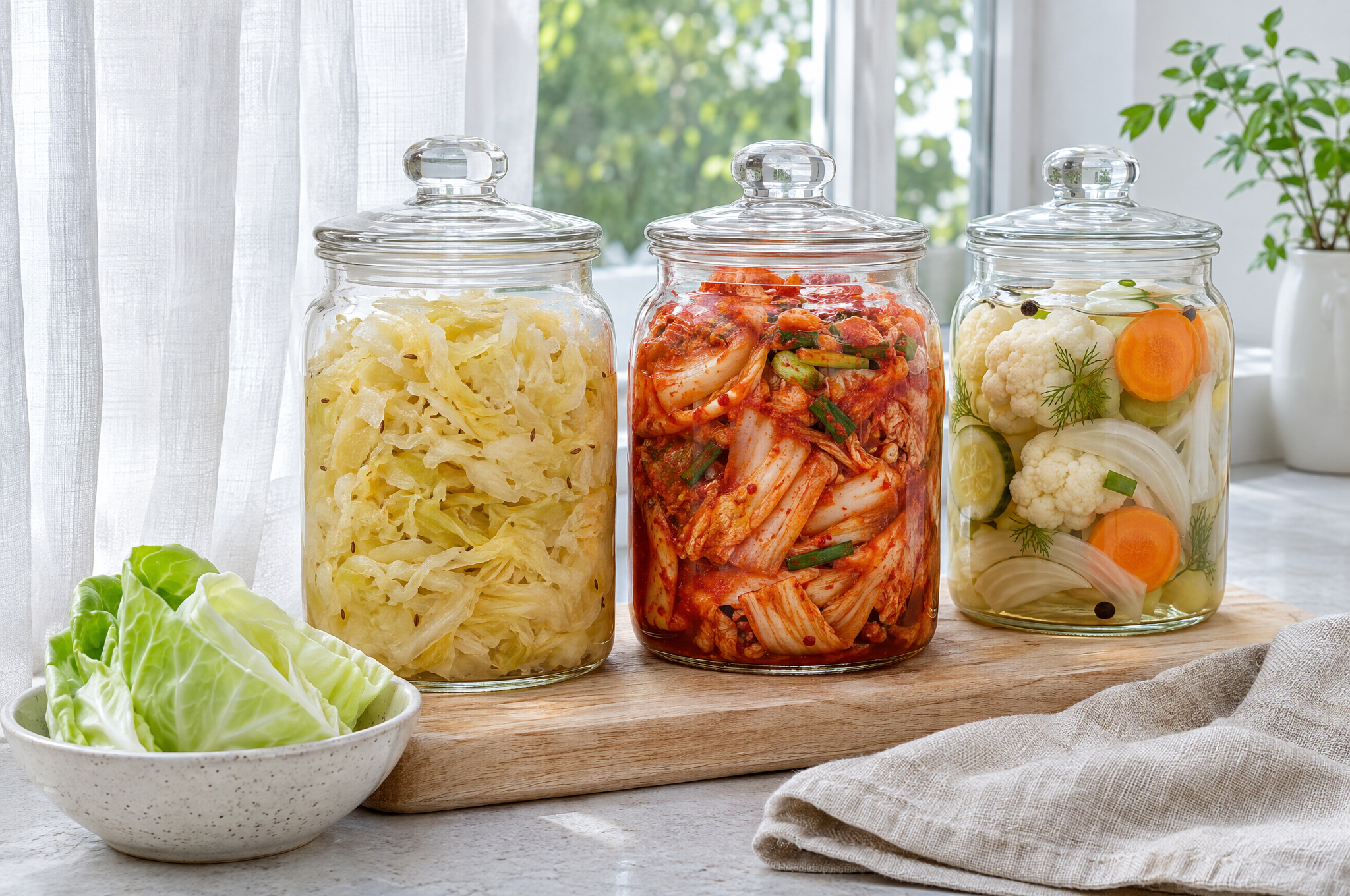
Sauerkraut is often the easiest entry point. It has only two main ingredients, it does not need a starter culture you have to buy and maintain, and it is easy to taste in small amounts alongside a meal. A forkful with eggs, sausage, or a grain bowl is enough to get a sense of whether you like it.
Kefir is a good next step if you like tangy dairy or want a drinkable option. Milk kefir is thicker than milk and thinner than yogurt, with a sour note that pairs well with fruit or a smoothie. Water kefir is lighter and fruitier, and it is often flavored after the first ferment with juice or herbs.
Kombucha is the fizziest of the group and the one most people meet first in a bottle. It is made by fermenting sweetened tea with a SCOBY, a rubbery culture of bacteria and yeast. The result is tart and bubbly, and brands vary widely in sweetness and flavor. Because it is a drink, it is easy to overdo, so portion awareness matters more here than with a spoonful of sauerkraut.
Kvass is less familiar in the United States, but it has a long tradition in Eastern Europe. Bread kvass tastes malty and sour, a bit like a light, tangy beer without the same alcohol level. Beet kvass is earthier and saltier, and it is usually sipped in small amounts rather than drunk by the glass. If you like beets and salty, briny flavors, it is worth trying. If you do not, bread kvass or sauerkraut may be a better starting point.
How to Start Fermented Foods Safely
Starting slowly is the most useful advice I can give you. Fermented foods are acidic, salty, or fizzy, and your digestive system may need time to adjust. A small daily serving — a forkful of sauerkraut, a few spoonfuls of kefir, or a small glass of kombucha — is a sensible way to begin. You can increase from there if it feels good, and there is no need to rush.
When you buy fermented foods, a few label checks help. First, check whether the product is refrigerated. Shelf-stable sauerkraut or pickles are often pasteurized or vinegar-brined, which means they may not contain live cultures. Second, read the ingredient list. Short lists are a good sign: cabbage and salt for sauerkraut, milk and cultures for kefir, tea and sugar for kombucha. Long lists of flavorings, preservatives, and added sweeteners are worth noticing, especially with kombucha, where sugar content can climb quickly.
When you make fermented foods at home, cleanliness and patience matter more than fancy equipment. Use clean jars, fresh produce, and the right amount of salt for the recipe you are following. Keep the vegetables submerged under the brine, since food exposed to air is more likely to grow mold. Ferment at room temperature away from direct sunlight, and taste as you go. Fermentation times vary with temperature and taste preference, so a recipe’s timing is a guide, not a guarantee.
If you see mold, sliminess, or a rotten smell, do not taste it — throw it out. A little white yeast on the surface of a brine, sometimes called kahm yeast, is different from fuzzy mold, but if you are unsure, it is safer to discard the batch and start fresh. This is one area where caution beats curiosity.
Fermented Foods: Common Beginner Mistakes to Avoid
The first mistake is starting too big. A large glass of kombucha or a heaping bowl of sauerkraut on day one can leave you bloated or uncomfortable, and that first impression can put you off the whole category. Small servings let you learn what you actually enjoy.
The second mistake is confusing pickled with fermented. Cucumbers in vinegar taste sour, but they were not fermented by microbes, so they do not offer the same live cultures.
The third mistake is storing fermented foods the wrong way. Live fermented foods belong in the fridge once they reach the flavor you like. Left at room temperature, they keep fermenting, getting more sour and more fizzy, and jars or bottles can build pressure. Open them slowly.
The fourth mistake is expecting one food to fix everything. Fermented foods are one tool in a larger pattern. Sleep, stress, fiber, movement, and overall diet all shape gut health too. Adding kimchi to a diet that is otherwise low in fiber and vegetables will only take you so far.
Building Fermented Foods Into Your Routine
The easiest way to stick with fermented foods is to attach them to meals you already eat. Sauerkraut works as a condiment, much like pickles or mustard. Kefir works in smoothies, overnight oats, or salad dressings. Kombucha works as an afternoon drink when you want something fizzy without soda. Kvass works as a small, savory sip alongside a meal.
Pick the one whose flavor appeals to you most, start small, and pay attention to how you feel. Taste matters here, because the best fermented food for you is the one you will actually eat.
Fermented foods connect you to a very old way of eating, and that is part of their appeal. Start small, choose products with short ingredient lists, and let your taste guide you from there.
Fermented Foods at Home: Best For
This guide suits you best if you are curious about fermented foods, want a simple way to add more variety to your meals, and like tangy, crunchy, or fizzy flavors. It is also a good fit if you enjoy cooking at home and want to try one small batch, like sauerkraut, before branching out.
Try first: I recommend starting with sauerkraut. It needs only cabbage and salt, no starter culture to buy or maintain, and a forkful alongside a meal is enough to tell whether you like it. If you prefer a drink, try a small glass of kefir or kombucha next, and keep servings small while you learn what suits you.
This post is for general information only and is not medical advice. Talk to your doctor before changing your diet, especially if you are pregnant, immunocompromised, or managing a health condition. Use clean jars, watch for mold or off smells, and discard any batch you are unsure about. If a fermented food causes irritation or discomfort, stop using it and talk to your doctor.