If you have ever grated a carrot into a bowl, added a splash of vinegar and a drizzle of oil, and eaten it in about two minutes, you have already made the salad this guide is about. It is the simplest recipe I know — one carrot, a few pantry staples — and it has quietly become one of my favorite daily habits.
Raw carrot salad benefits for digestion, hormones, and skin are why this little bowl traveled from old-fashioned kitchen wisdom into the wellness world, where it is now a beloved daily ritual. This guide shares what it is, what it is good for, how I make it, and how to fit it into your day.
On This Page
- What Raw Carrot Salad Is
- Raw Carrot Salad Benefits for Digestion
- Raw Carrot Salad Benefits for Hormones
- Raw Carrot Salad Benefits for Skin and Eyes
- How to Make Raw Carrot Salad
- Raw Carrot Salad Safety
- Raw Carrot Salad: Good If You
- The Bottom Line on Raw Carrot Salad Benefits
What Raw Carrot Salad Is
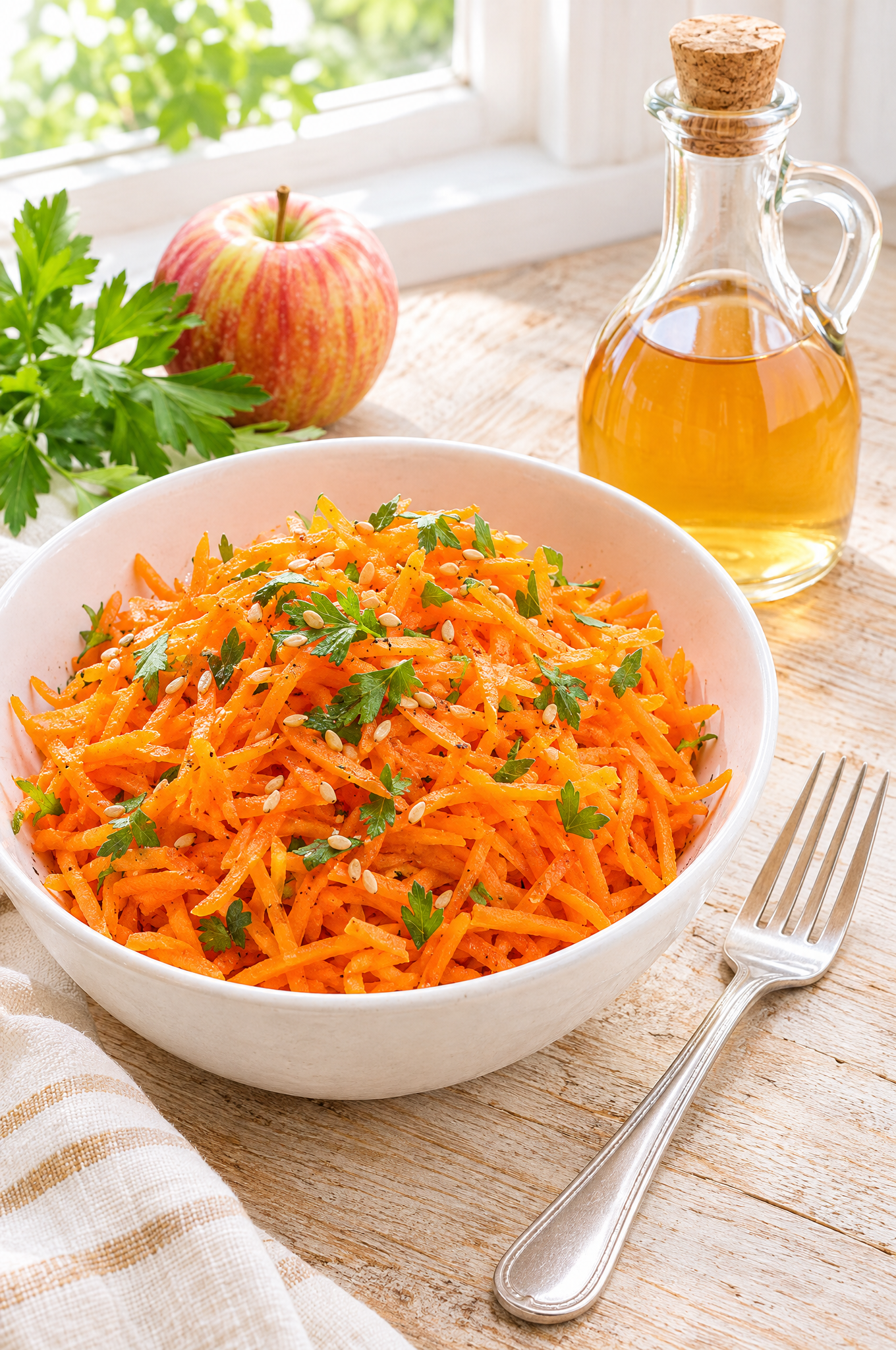
Raw carrot salad is exactly what it sounds like: a raw carrot, shredded or grated, dressed simply and eaten fresh. The classic version is one medium carrot, shredded lengthwise into long ribbons, tossed with a teaspoon of coconut oil or olive oil, a splash of apple cider vinegar, and a pinch of salt. Some versions add grated ginger or a squeeze of lemon; mine stays simple.
The salad became widely known through the work of biologist Ray Peat, who wrote about the raw carrot’s unusual fiber: it is largely indigestible, so it travels through the gut mostly intact, and along the way it binds to things the body is trying to clear out — including excess estrogen and bacterial endotoxins — and carries them away. That is the idea behind the daily-carrot habit: a small, crunchy broom for the gut, eaten once a day.
A carrot is also simply a wonderful food on its own. One medium carrot brings beta-carotene, the plant form of vitamin A, plus fiber, vitamin K, and potassium, for about 25 calories. The oil in the dressing matters too: a little healthy fat helps your body absorb the beta-carotene, which is fat-soluble, so the dressing is doing real work, not just adding flavor.
Raw Carrot Salad Benefits for Digestion
Raw carrot salad benefits for digestion are the reason most people start eating it. The long shreds of raw carrot are mostly fiber, and that fiber gives the gut something gentle to work with: it adds bulk, keeps things moving, and feeds the friendly bacteria that live in the colon.
I love it as a mid-morning or pre-lunch snack, eaten on its own before the rest of the meal. It feels light and crunchy rather than heavy, and because it is raw, it keeps all the crispness and freshness that cooking takes away. The vinegar in the dressing adds a little tang that wakes up digestion, and the salt brings out the carrot’s natural sweetness.
If your digestion feels sluggish or heavy after meals, this is one of the gentlest places to start — a small bowl, once a day, and a habit that costs almost nothing.
Raw Carrot Salad Benefits for Hormones
Raw carrot salad benefits for hormones are the reason this salad has a devoted following. The idea, from Ray Peat’s writing, is that the carrot’s indigestible fiber binds to estrogen in the intestine — estrogen the liver has already processed and sent to the gut for removal — and keeps it from being reabsorbed into the bloodstream. In that picture, the daily carrot helps the body finish clearing out estrogen it has already decided to let go of.
I love this angle because it is so practical: no supplement, no special product, just a carrot and a grater. Women in wellness circles eat it daily as part of a hormone-friendly routine, often alongside enough protein and good sleep, and it fits neatly into a morning or lunchtime rhythm.
This is a traditional, food-first idea, and it works best as part of an overall routine — plenty of whole foods, regular meals, and rest — rather than as a single fix. The salad is the easy daily piece, and it is a pleasant one to keep.
Raw Carrot Salad Benefits for Skin and Eyes
Raw carrot salad benefits for skin and eyes come from the carrot itself. Beta-carotene is the pigment that makes carrots orange, and your body converts it into vitamin A, which supports healthy skin, healthy eyes, and a strong immune system. Vitamin A is one of the classic skin nutrients — it supports normal skin cell turnover, which is why carrots have been a beauty food for generations.
I notice the skin benefit most as a steady glow rather than anything dramatic: a daily carrot, eaten with a little fat so the beta-carotene absorbs well, is a quiet way to feed your skin from the inside. The fiber helps here too, since a settled gut often shows up as calmer, clearer skin.
For eyes, the vitamin A connection is the old one everyone knows — carrots for eyesight — and while no single food changes your vision, a diet rich in beta-carotene is a genuinely good way to look after your eyes over the long term.
How to Make Raw Carrot Salad
How to make raw carrot salad could not be simpler, and the classic version is my favorite:
The classic. Shred one medium carrot lengthwise on a box grater or with a vegetable peeler into long, thin ribbons. Toss with a teaspoon of coconut oil or olive oil, a teaspoon or two of apple cider vinegar, and a pinch of sea salt. Eat it fresh, within an hour or so of making it.
Variations I love. Add a little grated fresh ginger for warmth, a squeeze of lemon instead of vinegar, or a few raisins if you like it sweeter. In summer I sometimes add thinly sliced cucumber; in winter, a pinch of cinnamon. Keep the carrot as the star — the dressing is there to help it absorb and to make it taste bright.
When to eat it. I eat mine once a day, usually mid-morning or just before lunch, on its own. One carrot a day is the sweet spot — more is not better, and the habit works best when it is small and easy to repeat. Make it fresh each day; a grated carrot left overnight goes limp and loses its crunch.
If you want to know more about the vinegar in the dressing, my Apple Cider Vinegar Benefits guide walks through what apple cider vinegar is good for and how I use it.
Raw Carrot Salad Safety
Raw carrot salad is a gentle food, and one small salad a day is fine for most people:
The one thing to know is carotenemia: if you eat a lot of carrots every day for a long time, the extra beta-carotene can give the skin — especially the palms and soles — a slightly orange tint. It is harmless and fades when you cut back on carrots, but it is a sign to keep the habit at one carrot a day rather than five.
Wash your carrots well, and peel them if they are not organic. If you have a sensitive stomach, chew the shreds well — raw fiber is the point of the salad, but eating it slowly makes it easier on digestion. And as with any daily food habit, if you are managing a health condition or taking medication, a quick word with your doctor is always sensible.
Raw Carrot Salad: Good If You
Raw carrot salad is a lovely fit if you want the simplest daily habit there is — one carrot, a grater, and two minutes. It suits you if you love crunchy, fresh foods, if your digestion feels better with a little fiber, or if you are building a hormone-friendly routine and want one easy food-first step.
Try it first for a week: one medium carrot, shredded, with a teaspoon of coconut oil, a splash of apple cider vinegar, and a pinch of salt, eaten before lunch. If you love the crunch and the ritual, it earns a permanent place on the counter — and if raw carrot is too much fiber at once, try half a carrot and build up.
The Bottom Line on Raw Carrot Salad Benefits
Raw carrot salad benefits come down to something beautifully simple: one of the world’s most ordinary vegetables, shredded and dressed, eaten once a day — fiber for digestion, a gentle hand with hormones, and beta-carotene for skin and eyes, all from a carrot and a grater.
Start small, one salad a day, and let the habit do its quiet work. Sometimes the simplest foods are the ones that stick.
This article is for general information only and is not medical advice. Talk to your doctor before making raw carrot salad a daily habit if you are pregnant, nursing, taking medication, or managing a health condition.