
Please read this first, before anything else in this guide: do not stare directly at the sun. Not at sunrise, not at sunset, not for a few seconds, not through sunglasses, and not because someone online said the light is gentler at those hours. Staring at the sun can damage the retina and cause permanent vision loss, and it can happen without any pain to warn you. Sun gazing has no proven eye-health benefits, and the risk to your eyesight is real and serious. If you have ever stared at the sun, even briefly, and noticed a blurry spot or a change in your vision, please see an eye doctor right away.
With that warning in place, I want to explain what sun gazing is, what people claim it does, and what I actually think about it — because this is a practice with a growing following online, and I believe you deserve a clear-eyed look at it before you ever consider trying it. My answer, in short, is that I do not do it, I do not recommend it, and I get the morning light my body loves in a much safer way.
What Is Sun Gazing?
What is sun gazing? It is the practice of looking directly at the sun, usually at sunrise or sunset when the light feels softer, for a set period of time. People who practice it say they start with a few seconds and build up to longer sessions over weeks or months. Some describe it as a spiritual practice, others as a way to absorb energy from the sun, and many say it helps them feel calmer, more energized, or more connected to nature.
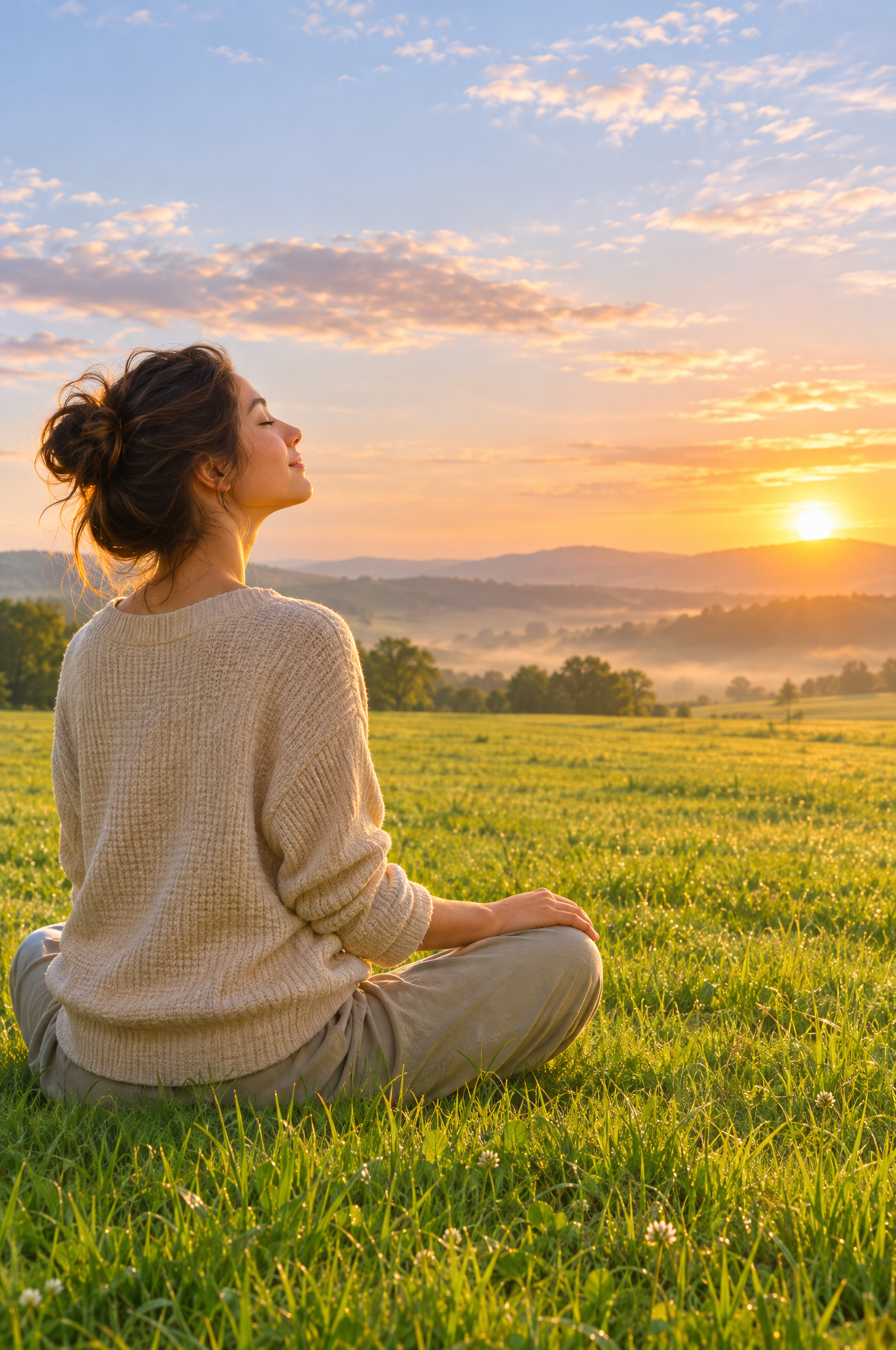
The idea has roots in older traditions — sun worship and sungazing rituals appear in several cultures — and it has found a new audience on social media, where short videos make it look peaceful and simple. A person standing barefoot on the grass, face lifted toward a golden sunrise, does look serene. But the serenity of the image hides the risk: the retina has no pain receptors, so damage can happen silently, and by the time you notice a blind spot or distorted vision, the harm may already be done.
Sun Gazing Benefits People Claim
The sun gazing benefits people talk about online are appealing, and I understand why they draw people in. The most common claims are better eyesight, more energy, improved mood, deeper sleep, and a stronger connection to the natural world. Some practitioners say it balances their hormones or boosts their pineal gland. Others describe it as a meditation that brings clarity and calm.
I want to be honest with you about these claims. The eyesight claim is the one that worries me most, because it is the opposite of what eye doctors say: staring at the sun does not improve vision, it threatens it. Solar retinopathy — damage to the retina from looking at the sun — is a well-documented injury, and it can leave a permanent blind spot in the center of your vision. The energy, mood, and sleep claims are easier to understand, because morning light genuinely does affect how we feel — but you do not need to look at the sun to get those effects, and I will explain the safer way below.
Is Sun Gazing Safe?
Is sun gazing safe? My answer is no, and eye doctors agree. The sun’s ultraviolet and visible light can burn the retina, the delicate tissue at the back of your eye, in the same way strong light can damage a camera sensor. Sunglasses do not make it safe. Doing it at sunrise or sunset does not make it safe. Doing it for only a few seconds does not make it safe — and the fact that it does not hurt is exactly what makes it dangerous, because there is no warning signal to tell you to stop.
People sometimes point out that our ancestors spent their lives outdoors, and that is true — but they were not standing still and staring into the sun. Natural outdoor life means light reaches your eyes indirectly, from the sky and from surfaces around you, and your eyes blink, squint, and look away on their own. That is how our eyes are built to take in daylight. Holding your gaze on the sun overrides every one of those protections.
If you love the idea of a sunrise ritual, keep the ritual and drop the staring. Sit outside, face the sunrise with your eyes closed, feel the warmth on your face, and let the light reach you without looking directly at it. You get the calm, the fresh air, and the morning stillness — and your eyes stay safe.
How I Get Morning Light Instead
If the reason sun gazing appeals to you is that you want more morning light in your life, I have good news: morning light works beautifully without ever looking at the sun. I step outside within an hour of waking, and I spend ten to twenty minutes on the porch or in the yard, looking toward the horizon or the trees — never at the sun itself. On cloudy days I still go out, because even a grey sky gives your eyes far more light than indoor lighting.
This is the habit I actually keep, and it is the one I notice most in my sleep and my mood. I fall asleep more easily on the nights after a bright morning outside, and I wake up feeling more rested. The light tells my body clock that the day has started, and everything else — my energy, my appetite, my evening sleepiness — seems to fall into place more easily. It costs nothing, it takes twenty minutes, and it carries none of the risk. If you take one idea from this guide, let it be this one: get outside in the morning, and let the daylight find your eyes on its own terms.
For another slow, outdoor practice I love, my guide to Forest Bathing Benefits shares how time among trees helps me reset, no staring required.
Sun Gazing: Good If You
Sun gazing is not a practice I recommend to anyone, so I will not dress that up. But the longing behind it — for morning light, for a quiet outdoor ritual, for a way to feel more awake and more connected — is something I understand completely, and it is a good instinct. If you are drawn to sun gazing, what you are really looking for is probably a morning ritual that gets you outside, and you can have all of that safely: a sunrise walk, breakfast on the porch, ten minutes in the garden with your coffee, or a slow wander among the trees.
If you have already tried sun gazing, please do not panic — but do pay attention to your vision. If you notice a blurry or blank spot in the center of your sight, wavy lines, or colors that look faded, see an eye doctor promptly and tell them what happened. And if someone you love is talking about starting, share this guide with them. The sunrise will still be there tomorrow, and it is just as beautiful with your eyes closed.
The Bottom Line on Sun Gazing
The bottom line on sun gazing is simple, and I will not soften it: the claimed benefits are not proven, and the risk to your eyes is real. Staring at the sun can cause permanent retinal damage without any pain, and no version of the practice — sunrise, sunset, sunglasses, or a few seconds — makes it safe. What is real, and what I practice myself, is the morning light habit: get outside early, let daylight reach your eyes indirectly, and enjoy the sunrise with your face turned toward it and your eyes closed. You get the calm, the energy, and the better sleep people are looking for, and you keep your vision. That is the trade I choose every morning, and it is the one I recommend to you.
This article is for general information only and is not medical advice. Do not stare at the sun. If you notice any change in your vision, see an eye doctor promptly, and talk to your doctor before starting any new wellness practice.