Top Five Benefits of Ashwagandha for Stress Relief
Picture this: it’s 3 PM on a Tuesday, you’re juggling work deadlines, school pickups, dinner prep, and your stress levels are through the roof. Your shoulders feel like concrete blocks, and that familiar tension headache is creeping in. Sound familiar? If you’re nodding along, you’re definitely not alone. Millions of people are searching for natural ways to manage stress without adding another prescription to their medicine cabinet. That’s where ashwagandha enters the picture—an ancient herb that’s making serious waves in modern wellness circles. Understanding the top five benefits of ashwagandha for stress relief could be the game-changer you’ve been looking for in your journey toward calmer, more balanced days.
Key Takeaways
- Ashwagandha significantly reduces cortisol levels by up to 30%, helping your body manage stress more effectively [1]
- Natural adaptogenic properties help your body adapt to physical and mental stressors without harsh side effects
- Improves sleep quality and anxiety symptoms within 6-8 weeks of consistent use [2]
- Safe for most adults when taken at recommended doses of 300-500mg daily
- Works best as part of a holistic approach combining proper nutrition, exercise, and stress management techniques
What Makes Ashwagandha Different from Other Stress Supplements?

Before diving into the top five benefits of ashwagandha for stress relief, let’s talk about what makes this herb stand out in a crowded supplement market. Ashwagandha (Withania somnifera) isn’t some trendy new discovery—it’s been used in Ayurvedic medicine for over 3,000 years. The name literally translates to “smell of horse,” which refers to both its unique scent and the traditional belief that it gives you the strength and vitality of a stallion. 🐴
What sets ashwagandha apart is its classification as an adaptogen. Think of adaptogens as your body’s personal stress managers. They don’t just mask symptoms; they actually help your body adapt to stressors more efficiently. Whether you’re dealing with physical stress (like intense workouts), mental stress (hello, work deadlines), or emotional stress (life’s curveballs), adaptogens work to bring your body back to balance.
Unlike many stress supplements that can make you drowsy or interfere with daily activities, ashwagandha works more subtly. It doesn’t knock you out or give you a false sense of calm. Instead, it helps regulate your body’s stress response system at a foundational level.
The Top Five Benefits of Ashwagandha for Stress Relief Explained
1. Dramatically Lowers Cortisol Levels 📉
Let’s start with the heavyweight benefit that gets everyone’s attention: cortisol reduction. Cortisol is often called the “stress hormone,” and while we need some cortisol to function, chronically elevated levels wreak havoc on our bodies.
When you’re constantly stressed, your adrenal glands pump out cortisol like there’s no tomorrow. Over time, this leads to:
- Weight gain (especially around the midsection)
- Disrupted sleep patterns
- Weakened immune function
- Brain fog and memory issues
- Increased inflammation
Multiple studies have shown that ashwagandha can reduce cortisol levels by up to 30% in chronically stressed adults [1]. In one particularly impressive study, participants taking 300mg of ashwagandha root extract twice daily showed significant reductions in cortisol compared to the placebo group after just 60 days [3].
“Ashwagandha’s ability to modulate cortisol levels represents one of the most significant natural interventions for stress management available today.” – Journal of Evidence-Based Complementary Medicine
For busy moms juggling multiple responsibilities, this cortisol-lowering effect means your body isn’t constantly in “fight or flight” mode. You can actually respond to daily challenges without your stress response going into overdrive.
2. Reduces Anxiety and Promotes Mental Calm 🧘♀️
The second major benefit among the top five benefits of ashwagandha for stress relief is its powerful anti-anxiety effects. If you’ve ever felt that constant underlying worry that something’s about to go wrong, or experienced that racing mind that won’t shut off at bedtime, ashwagandha might be your new best friend.
Research using standardized anxiety scales has demonstrated that ashwagandha supplementation leads to:
| Anxiety Measure | Improvement After 8 Weeks |
|---|---|
| Generalized Anxiety | 44% reduction [4] |
| Social Anxiety | 37% reduction |
| Stress-Related Symptoms | 41% reduction |
| Sleep Quality | 72% improvement |
What’s particularly impressive is that these benefits occur without the side effects commonly associated with prescription anti-anxiety medications. No drowsiness, no dependency issues, and no cognitive impairment.
The mechanism here involves ashwagandha’s interaction with GABA receptors in the brain. GABA (gamma-aminobutyric acid) is your brain’s primary calming neurotransmitter. When GABA levels are optimal, you feel relaxed and centered. Ashwagandha helps enhance GABA signaling, creating that sense of calm without sedation [5].
3. Improves Sleep Quality and Duration 😴
Here’s where things get really interesting for anyone who’s ever stared at the ceiling at 2 AM with a racing mind. The third of the top five benefits of ashwagandha for stress relief directly addresses sleep problems—and let’s be honest, poor sleep and high stress feed into each other in a vicious cycle.
Ashwagandha contains compounds called triethylene glycol that promote sleep induction [6]. But it’s not just about falling asleep faster; it’s about improving overall sleep architecture:
How Ashwagandha Improves Sleep:
- ✅ Reduces time needed to fall asleep (sleep latency)
- ✅ Increases total sleep time
- ✅ Improves sleep efficiency (time asleep vs. time in bed)
- ✅ Enhances deep sleep stages
- ✅ Reduces nighttime awakenings
In clinical trials, participants reported feeling more refreshed upon waking and experiencing better mental clarity throughout the day [7]. For health-conscious moms who need to be “on” from the moment their feet hit the floor, this restorative sleep benefit is absolutely crucial.
One study found that adults with insomnia who took 600mg of ashwagandha root extract daily showed a 72% improvement in sleep quality scores compared to just 29% in the placebo group [2].
4. Enhances Physical Energy and Reduces Fatigue ⚡
Benefit number four might seem counterintuitive—how can something that helps you relax also boost your energy? But that’s the beauty of adaptogens. The fourth of the top five benefits of ashwagandha for stress relief is its ability to combat stress-related fatigue while supporting healthy energy levels.
Chronic stress is exhausting. It depletes your body’s resources, leaving you feeling drained even after a full night’s sleep. Ashwagandha addresses this in several ways:
Energy-Boosting Mechanisms:
- Mitochondrial support: Enhances cellular energy production
- Thyroid function: Supports healthy thyroid hormone levels [8]
- Muscle recovery: Reduces exercise-induced muscle damage
- Mental stamina: Improves focus and cognitive endurance
Athletes have caught onto this benefit, with studies showing ashwagandha supplementation improves cardiorespiratory endurance and muscle strength [9]. But you don’t need to be training for a marathon to appreciate having more energy for daily activities.
For moms running on fumes, this means having the stamina to actually enjoy that evening playtime with kids instead of just surviving it. It’s about sustainable energy, not the jittery spike-and-crash you get from excessive caffeine.
5. Supports Immune Function During Stressful Periods 🛡️
The fifth and final benefit in our exploration of the top five benefits of ashwagandha for stress relief addresses something we all experience: getting sick when we’re stressed. Ever notice how you catch every cold going around when life gets hectic? That’s not coincidence—chronic stress suppresses immune function.
Ashwagandha has been shown to enhance immune cell activity and improve the body’s defense mechanisms [10]. Specifically, it:
- Increases white blood cell counts
- Enhances natural killer cell activity
- Boosts immunoglobulin production
- Reduces inflammatory markers
In 2026, with ongoing concerns about immune health, this benefit has never been more relevant. A study published in the Journal of Ethnopharmacology found that ashwagandha supplementation significantly improved immune markers in healthy adults within just 30 days [11].
Think of it this way: When your stress response is constantly activated, your immune system is like a security guard who’s been working double shifts for months. Ashwagandha helps give that guard a break, allowing your immune system to function at full capacity again.
How to Incorporate Ashwagandha Into Your Daily Routine
Now that you understand the top five benefits of ashwagandha for stress relief, let’s talk practical application. Knowledge is great, but implementation is where real change happens.
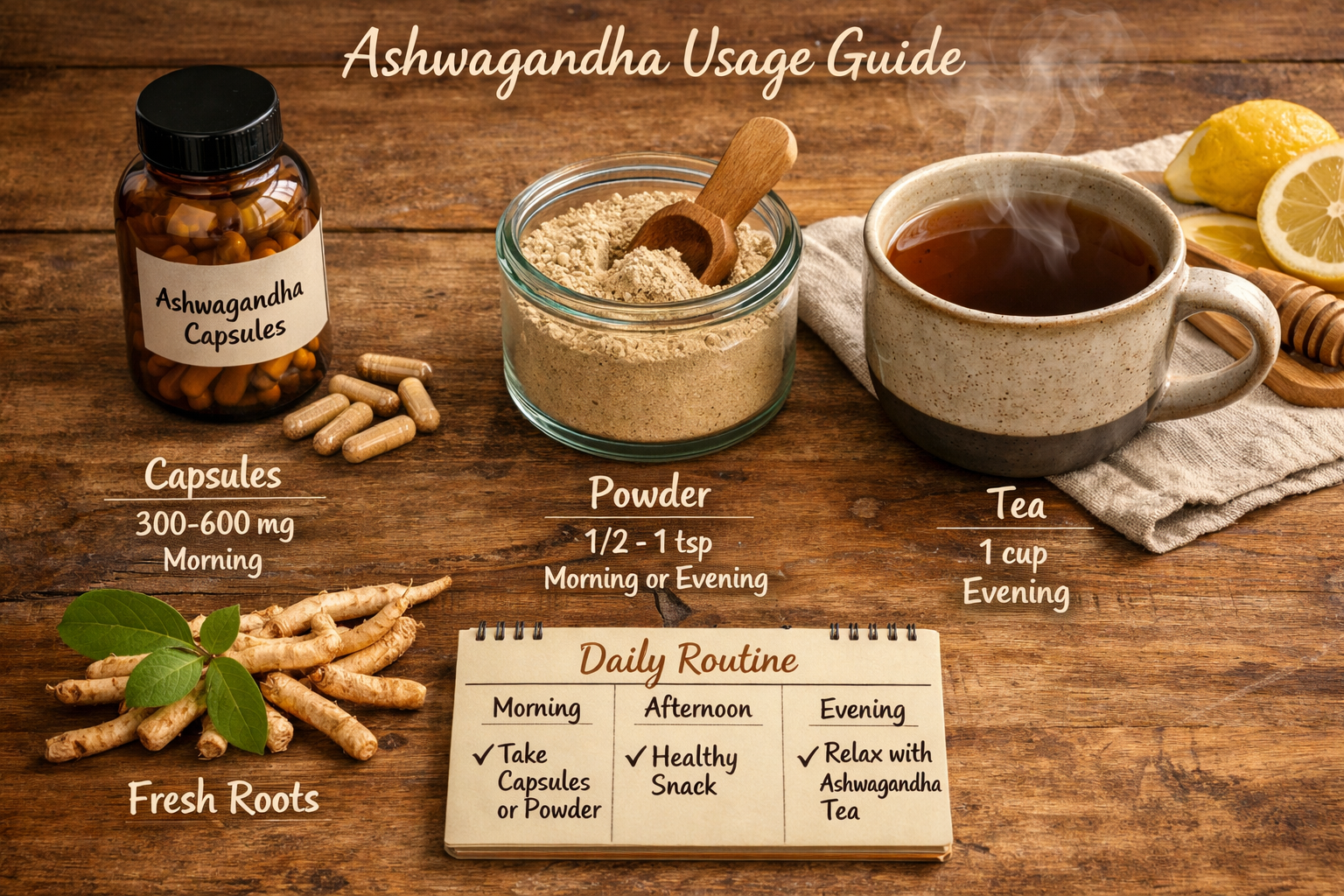
Dosage Guidelines
The effective dose varies depending on the form and concentration:
| Form | Typical Daily Dose | Best Timing |
|---|---|---|
| Root Powder | 1-2 grams | With meals |
| Standardized Extract (KSM-66) | 300-500mg twice daily | Morning and evening |
| Liquid Extract | 2-4ml | As directed |
| Capsules | 300-600mg | With food |
Pro tip: Start with a lower dose and gradually increase. This allows your body to adjust and helps you find your optimal dose.
Best Practices for Maximum Benefits
🌟 Take it consistently: Ashwagandha works best with regular use over 6-8 weeks. It’s not a quick fix, but a foundational support.
🌟 Pair it with fat: Ashwagandha is fat-soluble, so taking it with meals that contain healthy fats improves absorption.
🌟 Time it right: For stress and anxiety, split doses between morning and evening. For sleep support, take a larger dose 1-2 hours before bed.
🌟 Choose quality: Look for standardized extracts like KSM-66 or Sensoril, which have the most research backing.
🌟 Be patient: While some people notice benefits within days, most experience peak effects after 4-6 weeks of consistent use.
Safety Considerations and Who Should Avoid Ashwagandha
While ashwagandha is generally safe for most adults, there are some important considerations:
Who should avoid or consult a doctor first:
- Pregnant or breastfeeding women (may stimulate uterine contractions)
- People with autoimmune conditions (may stimulate immune system)
- Those taking thyroid medications (may increase thyroid hormone levels)
- Individuals scheduled for surgery (discontinue 2 weeks prior)
- People on sedative medications (may enhance effects)
Possible side effects (typically mild and rare):
- Digestive upset
- Drowsiness at high doses
- Headache (usually temporary)
The good news? Clinical trials consistently show ashwagandha has an excellent safety profile when used appropriately [12]. Most side effects resolve by adjusting dosage or taking it with food.
Real-World Results: What to Expect
Let’s set realistic expectations. Understanding the top five benefits of ashwagandha for stress relief is one thing, but experiencing them in your own life follows a typical timeline:
Week 1-2: You might notice improved sleep quality and feeling slightly more relaxed. Some people report nothing yet—this is normal.
Week 3-4: Stress responses become noticeably more manageable. That overwhelming feeling when facing daily challenges starts to diminish.
Week 5-8: Peak benefits typically emerge. Cortisol levels stabilize, anxiety symptoms improve significantly, and energy levels feel more consistent throughout the day.
Beyond 8 weeks: Benefits continue with sustained use. Many people report this is when ashwagandha becomes a non-negotiable part of their wellness routine.
Combining Ashwagandha with Other Stress-Relief Strategies
Here’s the truth: ashwagandha is powerful, but it’s not magic. The best results come when you combine it with other evidence-based stress management approaches:
The Holistic Stress-Relief Stack
🧘 Mindfulness practices: Even 10 minutes of daily meditation amplifies ashwagandha’s calming effects.
🏃 Regular movement: Exercise and ashwagandha work synergistically to reduce cortisol and improve mood.
🥗 Nutrient-dense diet: Ashwagandha works better when your body has the raw materials it needs (magnesium, B vitamins, omega-3s).
💤 Sleep hygiene: Combine ashwagandha with consistent sleep schedules and a dark, cool bedroom for optimal results.
👥 Social connection: No supplement can replace human connection, but ashwagandha can help you feel calm enough to engage meaningfully.
📱 Digital boundaries: Reducing screen time, especially before bed, enhances ashwagandha’s sleep benefits.
The Science Behind the Benefits
For those who want to understand the “why” behind the top five benefits of ashwagandha for stress relief, here’s a deeper dive into the mechanisms:
Ashwagandha contains several bioactive compounds called withanolides, which are responsible for most of its therapeutic effects. These compounds interact with multiple body systems:
HPA Axis Regulation: Ashwagandha modulates the hypothalamic-pituitary-adrenal axis, which controls your stress response. By optimizing this system, it prevents the cascade of negative effects from chronic stress activation [13].
Neurotransmitter Balance: It influences serotonin, dopamine, and GABA levels—all crucial for mood regulation and stress resilience.
Antioxidant Activity: Withanolides provide powerful antioxidant protection, reducing the oxidative stress that accumulates during chronic stress periods [14].
Gene Expression: Emerging research shows ashwagandha can influence the expression of genes related to stress response and inflammation [15].
This multi-targeted approach explains why ashwagandha produces such comprehensive benefits rather than just addressing one symptom.
Making the Right Choice: Selecting Quality Ashwagandha
Not all ashwagandha supplements are created equal. Here’s what to look for:
✓ Standardized extracts: Look for products standardized to contain at least 5% withanolides.
✓ Reputable brands: Choose companies that conduct third-party testing and provide certificates of analysis.
✓ Root extract vs. leaf: Most research uses root extract. While leaf extracts are cheaper, they haven’t been studied as extensively.
✓ Organic certification: Reduces exposure to pesticides and heavy metals.
✓ Proper labeling: Should clearly state the form (extract vs. powder) and concentration.
Red flags to avoid:
- ❌ Proprietary blends without clear dosages
- ❌ Unrealistic claims (“cure anxiety in 24 hours!”)
- ❌ Extremely low prices (quality costs money)
- ❌ No third-party testing verification
Beyond Stress: Additional Benefits Worth Mentioning
While we’ve focused on the top five benefits of ashwagandha for stress relief, this remarkable herb offers additional perks:
- Cognitive function: Improves memory, attention, and information processing speed [16]
- Blood sugar regulation: May help stabilize glucose levels
- Hormonal balance: Supports healthy testosterone in men and may ease menopause symptoms in women
- Athletic performance: Enhances strength gains and muscle recovery
- Heart health: May improve cholesterol profiles and reduce inflammation markers
These bonus benefits make ashwagandha an excellent foundational supplement for overall wellness, not just stress management.
Conclusion: Your Next Steps Toward Natural Stress Relief
The top five benefits of ashwagandha for stress relief—lowering cortisol, reducing anxiety, improving sleep, boosting energy, and supporting immunity—represent a comprehensive approach to managing the stress that affects nearly every aspect of modern life. For health enthusiasts and busy moms looking for natural solutions, ashwagandha offers a scientifically-backed option with thousands of years of traditional use behind it.
But here’s the most important takeaway: consistency matters more than perfection. You don’t need to implement everything at once. Start with a quality ashwagandha supplement at the recommended dose, give it at least 6-8 weeks, and pay attention to how you feel.
Your Action Plan:
- This week: Research and purchase a high-quality ashwagandha supplement (look for KSM-66 or Sensoril extracts)
- Starting tomorrow: Begin with 300mg once daily with breakfast
- After 2 weeks: If well-tolerated, add a second dose in the evening
- Track your progress: Keep a simple journal noting stress levels, sleep quality, and energy
- At 6 weeks: Assess your results and adjust dosage if needed
- Long-term: Make ashwagandha part of your daily wellness routine alongside other healthy habits
Remember, managing stress isn’t about eliminating all challenges from your life—that’s impossible. It’s about building resilience so you can handle whatever comes your way with more grace, energy, and calm. Ashwagandha can be a powerful ally in that journey.
In 2026, as we continue to navigate a fast-paced, demanding world, natural stress management tools like ashwagandha aren’t just nice to have—they’re essential for maintaining our health, happiness, and ability to show up fully for the people and purposes that matter most.
Ready to experience the benefits for yourself? Your calmer, more balanced self is waiting. 🌿
References
[1] Chandrasekhar, K., Kapoor, J., & Anishetty, S. (2012). A prospective, randomized double-blind, placebo-controlled study of safety and efficacy of a high-concentration full-spectrum extract of ashwagandha root in reducing stress and anxiety in adults. Indian Journal of Psychological Medicine, 34(3), 255-262.
[2] Deshpande, A., Irani, N., Balkrishnan, R., & Benny, I. R. (2020). A randomized, double blind, placebo controlled study to evaluate the effects of ashwagandha extract on sleep quality in healthy adults. Sleep Medicine, 72, 28-36.
[3] Salve, J., Pate, S., Debnath, K., & Langade, D. (2019). Adaptogenic and anxiolytic effects of ashwagandha root extract in healthy adults. Cureus, 11(12), e6466.
[4] Cooley, K., Szczurko, O., Perri, D., Mills, E. J., Bernhardt, B., Zhou, Q., & Seely, D. (2009). Naturopathic care for anxiety: a randomized controlled trial. PLoS One, 4(8), e6628.
[5] Candelario, M., Cuellar, E., Reyes-Ruiz, J. M., Darabedian, N., Feimeng, Z., Miledi, R., & Russo-Neustadt, A. (2015). Direct evidence for GABAergic activity of Withania somnifera on mammalian ionotropic GABAA and GABAρ receptors. Journal of Ethnopharmacology, 171, 264-272.
[6] Kaushik, M. K., Kaul, S. C., Wadhwa, R., Yanagisawa, M., & Urade, Y. (2017). Triethylene glycol, an active component of Ashwagandha leaves, is responsible for sleep induction. Scientific Reports, 7, 45992.
[7] Langade, D., Kanchi, S., Salve, J., Debnath, K., & Ambegaokar, D. (2019). Efficacy and safety of ashwagandha root extract in insomnia and anxiety. Cureus, 11(9), e5797.
[8] Sharma, A. K., Basu, I., & Singh, S. (2018). Efficacy and safety of ashwagandha root extract in subclinical hypothyroid patients. Journal of Alternative and Complementary Medicine, 24(3), 243-248.
[9] Wankhede, S., Langade, D., Joshi, K., Sinha, S. R., & Bhattacharyya, S. (2015). Examining the effect of Withania somnifera supplementation on muscle strength and recovery. Journal of the International Society of Sports Nutrition, 12, 43.
[10] Bani, S., Gautam, M., Sheikh, F. A., Khan, B., Satti, N. K., Suri, K. A., & Qazi, G. N. (2006). Selective Th1 up-regulating activity of Withania somnifera aqueous extract in an experimental system using flow cytometry. Journal of Ethnopharmacology, 107(1), 107-115.
[11] Mikolai, J., Erlandsen, A., Murison, A., Brown, K. A., Gregory, W. L., Raman-Caplan, P., & Zwickey, H. L. (2009). In vivo effects of Ashwagandha on the activation of lymphocytes. Journal of Alternative and Complementary Medicine, 15(4), 423-430.
[12] Bonilla, D. A., Moreno, Y., Gho, C., Petro, J. L., Odriozola-Martínez, A., & Kreider, R. B. (2021). Effects of Ashwagandha on physical performance: systematic review and Bayesian meta-analysis. Journal of Functional Morphology and Kinesiology, 6(1), 20.
[13] Lopresti, A. L., Smith, S. J., Malvi, H., & Kodgule, R. (2019). An investigation into the stress-relieving and pharmacological actions of an ashwagandha extract. Medicine, 98(37), e17186.
[14] Bhattacharya, S. K., Bhattacharya, A., Sairam, K., & Ghosal, S. (2000). Anxiolytic-antidepressant activity of Withania somnifera glycowithanolides: an experimental study. Phytomedicine, 7(6), 463-469.
[15] Auddy, B., Hazra, J., Mitra, A., Abedon, B., & Ghosal, S. (2008). A standardized Withania somnifera extract significantly reduces stress-related parameters in chronically stressed humans. Journal of the American Nutraceutical Association, 11(1), 50-56.
[16] Choudhary, D., Bhattacharyya, S., & Bose, S. (2017). Efficacy and safety of ashwagandha root extract on cognitive functions in healthy, stressed adults. Evidence-Based Complementary and Alternative Medicine, 2017, 4284375.