You’ve probably seen “aluminum free” on a deodorant label and wondered what it actually promises — and whether the aluminum in your regular antiperspirant is something to worry about. I have stood in that aisle doing the same math, so here is the plain-English version: what aluminum does in a product, what aluminum-free really means, and how to read the label without the hype.
First, the distinction that matters: deodorant vs. antiperspirant
These two words get used interchangeably, but they do different jobs — and aluminum is only part of one of them.
An antiperspirant reduces sweating. Its active ingredients are aluminum compounds, most commonly aluminum chlorohydrate or aluminum zirconium tetrachlorohydrex. When you apply them, they form a temporary gel-like plug in the sweat ducts near the surface of your skin, which reduces how much sweat reaches the surface.
A deodorant, on the other hand, does not stop sweat. It targets odor — usually with antimicrobial ingredients that reduce the bacteria that break sweat down into smelly compounds, plus fragrance to mask what remains. A product can be a deodorant only, an antiperspirant only, or both in one stick.
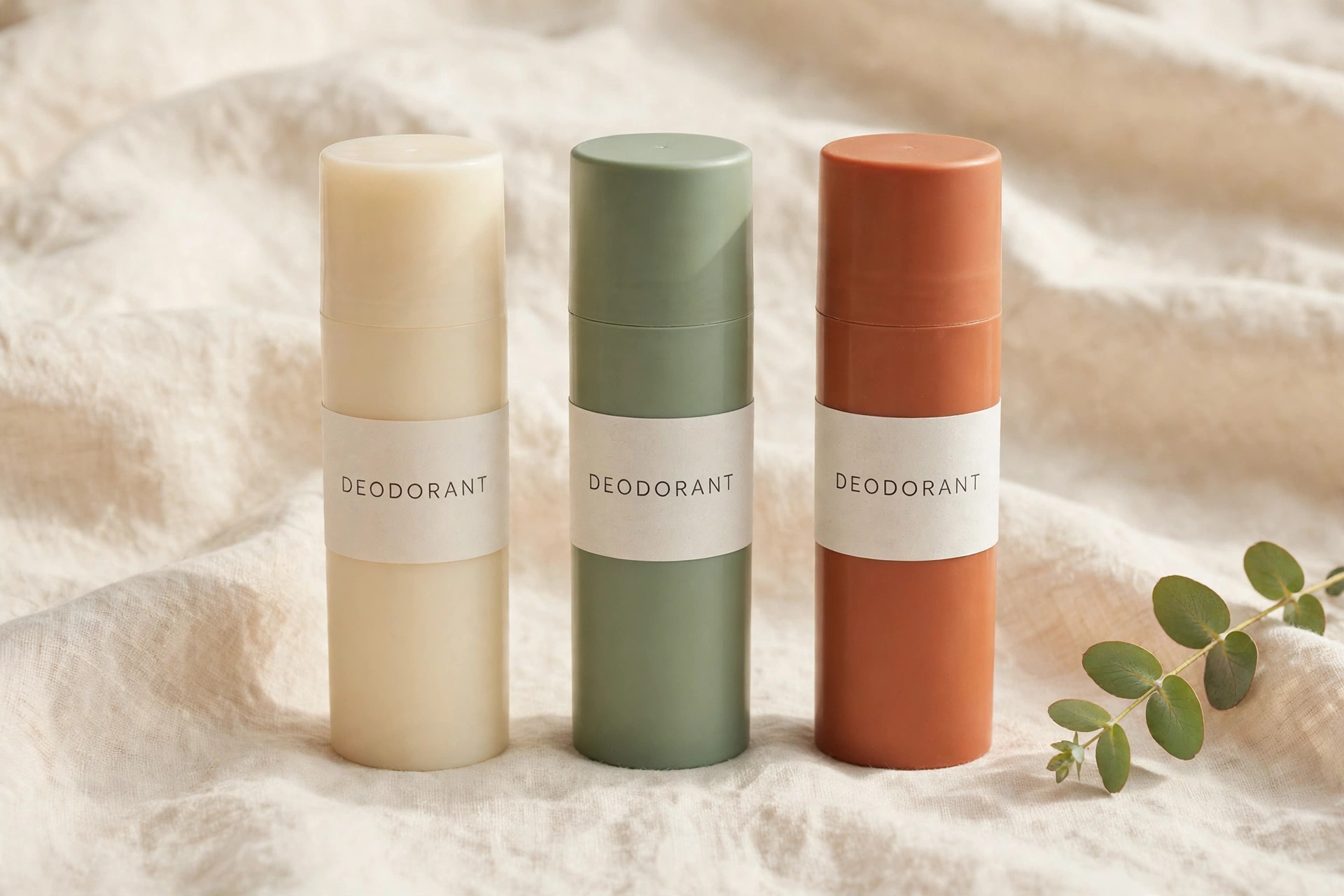
This is why “aluminum free” appears on deodorants: a true aluminum-free product is a deodorant, not an antiperspirant, because aluminum is the ingredient that does the sweat-blocking. If a product claims to stop sweat and contains no aluminum compound, that claim deserves a skeptical look.
| Antiperspirant | Deodorant (aluminum free) | |
|---|---|---|
| Main job | Reduces sweat | Reduces odor |
| How it works | Aluminum compounds temporarily plug sweat ducts | Antimicrobials limit odor-causing bacteria; fragrance masks odor |
| Sweat | Less of it reaches the surface | Sweat continues normally |
| Odor | Reduced, partly because less sweat means less for bacteria to feed on | Reduced directly |
| Label clue | “Antiperspirant” plus an aluminum active ingredient | “Deodorant” only, no aluminum compound in the actives |
What aluminum actually does — and does not do — in your body
The aluminum in antiperspirants stays mostly where you put it. The plugs form in the upper sweat ducts, they are temporary, and they wash and wear away, which is why you reapply daily. The amount of aluminum absorbed through intact skin from antiperspirant use is small compared with what you take in from food and water every day — aluminum is one of the most common elements on earth, and it shows up in food, cookware, and drinking water.
That context matters, because the scary claims tend to skip it. The two big worries you will see online are breast cancer and Alzheimer’s disease. Major reviews by cancer and health agencies have not established a causal link between aluminum in antiperspirants and either condition. The studies that raised questions were mostly small, or involved aluminum exposure in very different forms and amounts than a daily swipe of antiperspirant. That is not the same as proof of safety forever — research continues — but the current evidence does not support the claim that your antiperspirant causes breast cancer or Alzheimer’s.
The more grounded, everyday concerns are simpler: skin irritation, especially right after shaving, and staining on light clothing, which aluminum compounds can contribute to. If your underarms are red, itchy, or bumpy, the culprit is more often fragrance, baking soda, or applying product to freshly shaved or broken skin than aluminum itself — but any ingredient can irritate any person.
What “aluminum-free” really means on a label
“Aluminum free” means exactly one thing: the product contains no aluminum compounds. It does not mean the product is chemical-free, all-natural, or gentler — a deodorant can be aluminum-free and still contain fragrance, baking soda, or other ingredients your skin dislikes. The badge tells you what is absent, not what is present.
Here is how I read a deodorant label now:
- Check whether it says antiperspirant or deodorant. Only antiperspirants block sweat, and only antiperspirants contain aluminum actives.
- Scan the active ingredients. Aluminum chlorohydrate, aluminum zirconium, and aluminum sesquichlorohydrate are the usual aluminum compounds. If none appear, it is aluminum-free.
- Read past the badge. Flip to the full ingredient list and look for what is actually doing the odor work — and for ingredients you personally react to, like baking soda or heavy fragrance.
- Note the base. Many aluminum-free deodorants use baking soda, magnesium hydroxide, or plant-derived antimicrobials. Baking soda works well for odor but irritates some people’s skin; magnesium-based formulas tend to be gentler.
- Ignore the rest of the front-of-pack promises. “Detox,” “clean,” and “natural” are marketing words with no regulated definition on deodorant labels. The ingredient list is the real label.
The adjustment period is real — but it is not a detox
If you switch from an antiperspirant to an aluminum-free deodorant, expect a few weeks of feeling sweatier. That is not your body “purging toxins” — it is simply your sweat glands working at full volume again after being partially plugged, plus your nose adjusting to your natural scent. Your body does not need to detox from antiperspirant; your sweat glands just resume normal function.
A few things that genuinely help the transition: apply to clean, dry skin; give the product a few minutes to dry before dressing; wear breathable fabrics while you adjust; and reapply on long or warm days, since deodorants wear off faster than antiperspirants. If irritation shows up, stop and check whether baking soda or fragrance is the trigger before blaming the switch itself.
Who might actually want to skip aluminum
For most people, this is a preference, not a medical necessity. But skipping aluminum makes sense if you want to sweat normally, if you have reacted to an antiperspirant, if you prefer a simpler ingredient list, or if you are simply more comfortable without it. What it will not do is detox your body or eliminate health risks that the evidence has not established.
One group worth a specific note: people with kidney disease process aluminum differently, and clinicians sometimes advise them to limit aluminum exposure from all sources. If that applies to you, this is a conversation for your clinician, not a label decision in the aisle.
The bottom line
Aluminum in deodorant is not a mystery ingredient and not a villain — it is a sweat-blocker, full stop, and it is the line between an antiperspirant and a deodorant. Aluminum-free means a product manages odor without blocking sweat, nothing more and nothing less. If you like your antiperspirant and it does not irritate your skin, the evidence gives you no strong reason to quit it. If you want to sweat naturally and manage odor instead, an aluminum-free deodorant does that job honestly — just read the full ingredient list, not only the badge on the front.
This post is for general information only and is not medical advice. If you have a health condition, check with your clinician before changing personal care or health routines.