You have probably seen them by now: solid little bars, sitting in a tin or wrapped in paper, promising the same clean hair as your bottled shampoo without the plastic. Maybe you've wondered whether they actually work, or whether they're just a soap bar with better marketing. It's a fair question, because the answer is: yes, they clean hair, but they don't all clean it the same way, and they don't suit everyone.
I think of shampoo bars in two groups, and that distinction clears up most of the confusion. Some bars are true shampoos in solid form, made with the same kinds of cleansers you'd find in a bottle, just without the water. Others are essentially soap bars, made by saponifying oils, and they behave very differently on hair. The label rarely spells this out in plain language, so you have to look at the ingredients to know which kind you're holding.
What a shampoo bar actually is
A solid shampoo bar is usually made with gentle surfactants pressed into a bar shape. Common ones include sodium cocoyl isethionate, often called SCI, and coco-glucoside. These are the same mild cleansers used in many liquid shampoos. They lift oil and dirt, rinse away cleanly, and work in most water types. If a bar lists SCI or a similar surfactant near the top, it's behaving like a shampoo that happens to be solid.
A soap-based bar is different. It's made the way bar soap has been made for centuries: oils mixed with an alkaline solution until they turn into soap. That soap is alkaline, and hair is slightly acidic, so soap-based bars can leave hair feeling rough, coated, or tangled, especially in hard water. Soap also reacts with minerals in hard water to form a waxy residue, which is where much of the "shampoo bar" horror story comes from. People try a soap bar, hate the result, and conclude that all shampoo bars are terrible. They aren't. They just tried the wrong kind for their water and hair.
The ingredient list, not the shape, tells you what kind of bar you're holding.
The transition period: myth vs. reality
Ask about shampoo bars online and someone will warn you about the transition period, usually described as weeks of greasy, waxy, unhappy hair while your scalp "detoxes" or "adjusts." I want to be honest about this, because it's half true and half folklore.
Your scalp does not detox. Hair doesn't go through withdrawal from shampoo. What actually happens, when it happens, is far more boring. If you've been using silicone-heavy products, a bar without silicones won't coat your hair the same way, so your hair may feel different, less slippery, less smooth, for a while. That's not damage. That's the absence of a coating you were used to. Similarly, if you switch to a soap-based bar in hard water, residue builds up gradually, and hair feels worse over days, not better. That's not an adjustment period. That's a mismatch, and waiting it out won't fix it.
Here is how I sort the common experiences:
| What you notice | What it usually means | What to do |
|---|---|---|
| Hair feels less slippery, a bit rougher | No silicone coating, or a mild cleanser doing its job | Give it a few washes; condition the ends if needed |
| Hair feels waxy or coated, getting worse | Soap-based bar plus hard water residue | This is a mismatch, not a transition; try a surfactant-based bar instead |
| Scalp feels itchy or tight | A fragrance, essential oil, or cleanser that doesn't agree with you | Stop using that bar; irritation is not part of adjusting |
| Hair looks greasy faster than before | Bar isn't cleansing enough for your oil level, or you're not rinsing fully | Rinse longer, lather twice on wash day if needed |
| Hair feels fine from wash one | The bar suits your hair and water | No transition needed; not everyone gets one |
A real adjustment lasts a few washes. A problem that gets worse week after week is not an adjustment. I don't believe in pushing through weeks of miserable hair on the promise that it will eventually turn a corner. If a bar makes your hair worse over time, it's the wrong bar, not a rite of passage.
Hair types: who tends to do well, and who should be careful
Shampoo bars aren't one-size-fits-all, and hair type matters more than marketing suggests.
Straight, fine hair often does well with surfactant-based bars, because a light formula cleans without weighing hair down. The risk for fine hair is buildup from heavy butters in some bars, which can make hair look flat. If your hair is fine, look for a bar that feels light and rinses clean, not one loaded with oils.
Wavy and curly hair is where bars get mixed reviews. Curly hair tends to be drier, and it benefits from moisture, so a bar with conditioning ingredients can work nicely. But curly hair also tangles more easily, and a bar that leaves hair feeling rough will make detangling harder. If you have curls, the conditioner you pair with the bar matters as much as the bar itself. Some people use a shampoo bar plus a separate conditioner bar, and that combination works well. Others find the whole routine too fiddly, and that's a fair reason to stick with liquid.
Thick, coarse, or very long hair can be the hardest to wash with a bar, simply because of logistics. Rubbing a bar over a lot of hair takes longer than squeezing shampoo from a bottle, and it's easy to miss spots or under-lather. Lathering the bar in your hands first, then working the lather through, helps. So does a second, quick lather on wash day.
Color-treated hair deserves a note. Surfactant-based bars are generally fine for color, similar to a mild liquid shampoo. Soap-based bars, with their higher alkalinity, can rough up the hair cuticle and fade color faster. If you've invested in color, a soap-based bar is a risky choice.
Oily scalps can do well with bars, since many bars clean thoroughly without added silicones. Dry or sensitive scalps need more care: skip strong fragrances and essential oils, and watch for tightness or flaking after washing. A bar that leaves your scalp calm is worth more than one that promises volume or shine.
Storage: the unglamorous part that decides everything
This is the least exciting section of the guide, and possibly the most useful. A shampoo bar lives or dies by how you store it.
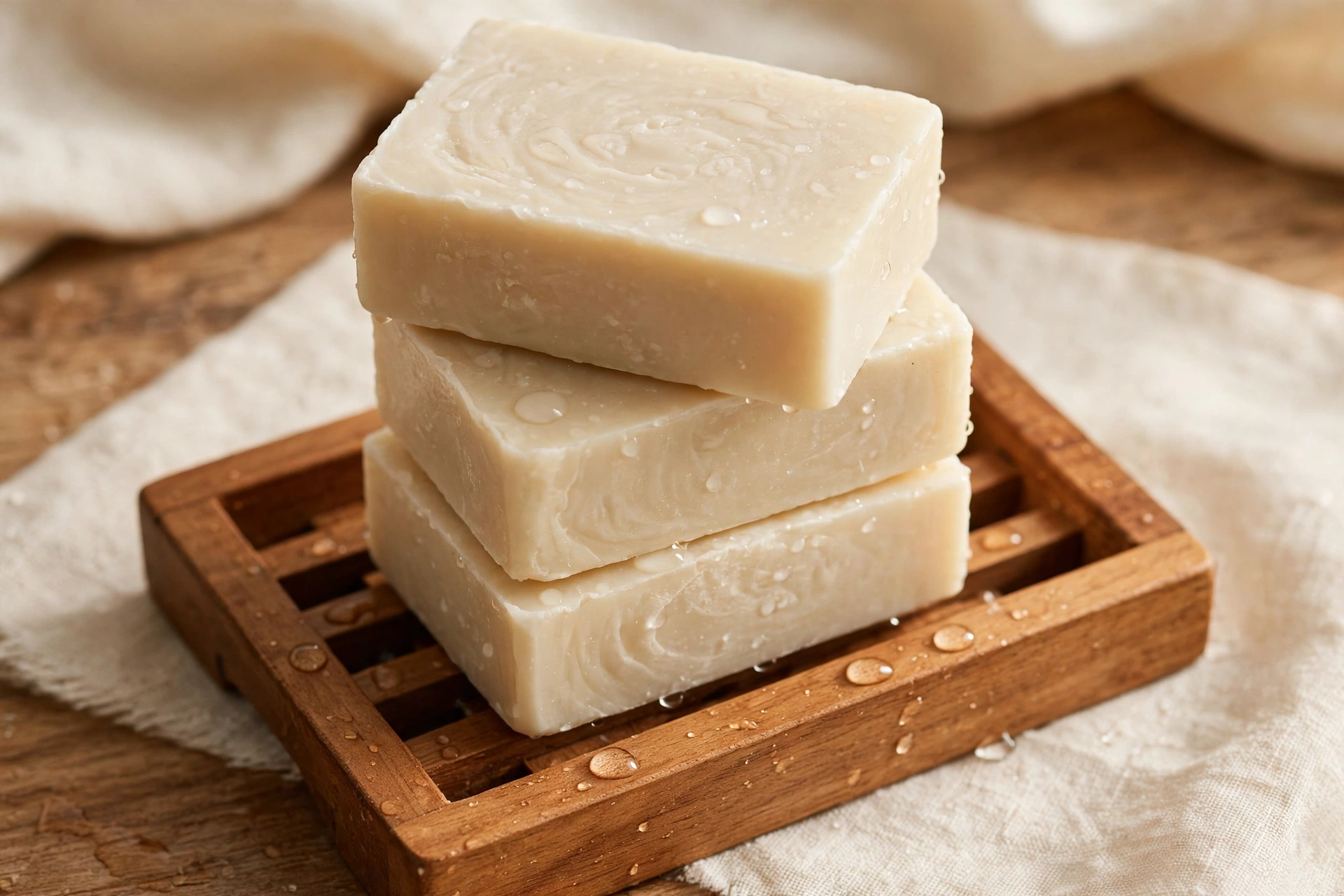
A bar left sitting in a puddle in the shower will turn to mush. It will dissolve faster, get slimy, and become unpleasant to use, and you'll conclude bars are wasteful. They aren't, if you store them right. The rule is simple: keep the bar dry between uses. A draining soap dish, a slatted tray, or a spot outside the direct stream of the shower all work. Let air reach it. A bar that dries fully between washes lasts far longer than one that stays wet.
For travel, a tin keeps the bar contained, but don't seal a wet bar in a tin for days. Let it dry first, or you'll open the tin to a soft mess.
Dry bar, long life. Wet bar, short life. That's the whole storage philosophy.
Who they suit, honestly
Shampoo bars suit people who want less plastic, who travel light, who like a simple routine, and whose hair and water cooperate with the bar they pick. They suit gym bags and carry-on luggage beautifully, since there's nothing to leak and no liquid limit to worry about. They suit people who are happy to lather in their hands and take an extra minute in the shower.
They suit less well if you have very hard water and only want a soap-based bar, if you have a scalp condition that needs a specific medicated wash, if you hate the feel of a bar in your hands, or if you want a highly specific result, like intense color protection or heavy smoothing, that a specialized liquid does better. None of those are failures. They're just fit questions.
Safety and caution notes
Shampoo bars are low-risk for most people, but a few cautions apply. If you have eczema, psoriasis, seborrheic dermatitis, or another scalp condition, talk with your clinician or dermatologist before switching away from a wash they recommended. A bar is not a treatment, and it shouldn't replace a medicated product without that conversation.
Essential oils deserve the same caution here as in any personal care product. Natural scent doesn't mean mild, and oils like tea tree, peppermint, and citrus can irritate sensitive scalps. If a bar makes your scalp itchy, red, or flaky, stop using it rather than waiting for an adjustment that isn't coming. For children, stick to gentle, fragrance-free options made for their age group, and keep bars away from eyes, where even a mild formula stings.
Hard water users should know one more thing: if your hair starts feeling coated, a clarifying wash from time to time can remove buildup, but check with a hair professional if you're unsure what's building up, especially on color-treated hair.
The bottom line
Do shampoo bars actually work? The surfactant-based ones, yes, in the same way a mild liquid shampoo works, just in solid form. The soap-based ones work as soap, which is fine for skin but often rough on hair, especially in hard water. The transition period is mostly a story about silicone withdrawal and water mismatch, not a detox your scalp has to endure. And storage is not a footnote: a dry bar lasts, a soggy bar doesn't.
If you try one, pick a surfactant-based bar with a full ingredient list, give it a few washes, store it dry, and judge it by how your hair feels after a week, not by whether the first wash felt familiar. If it works, you've cut plastic and simplified your shelf. If it doesn't, you've learned something about your hair and water, and a bottle of shampoo is still there waiting. No guilt either way.
This post is for general information only and is not medical advice. If you have a health condition, check with your clinician before changing supplements or routines.