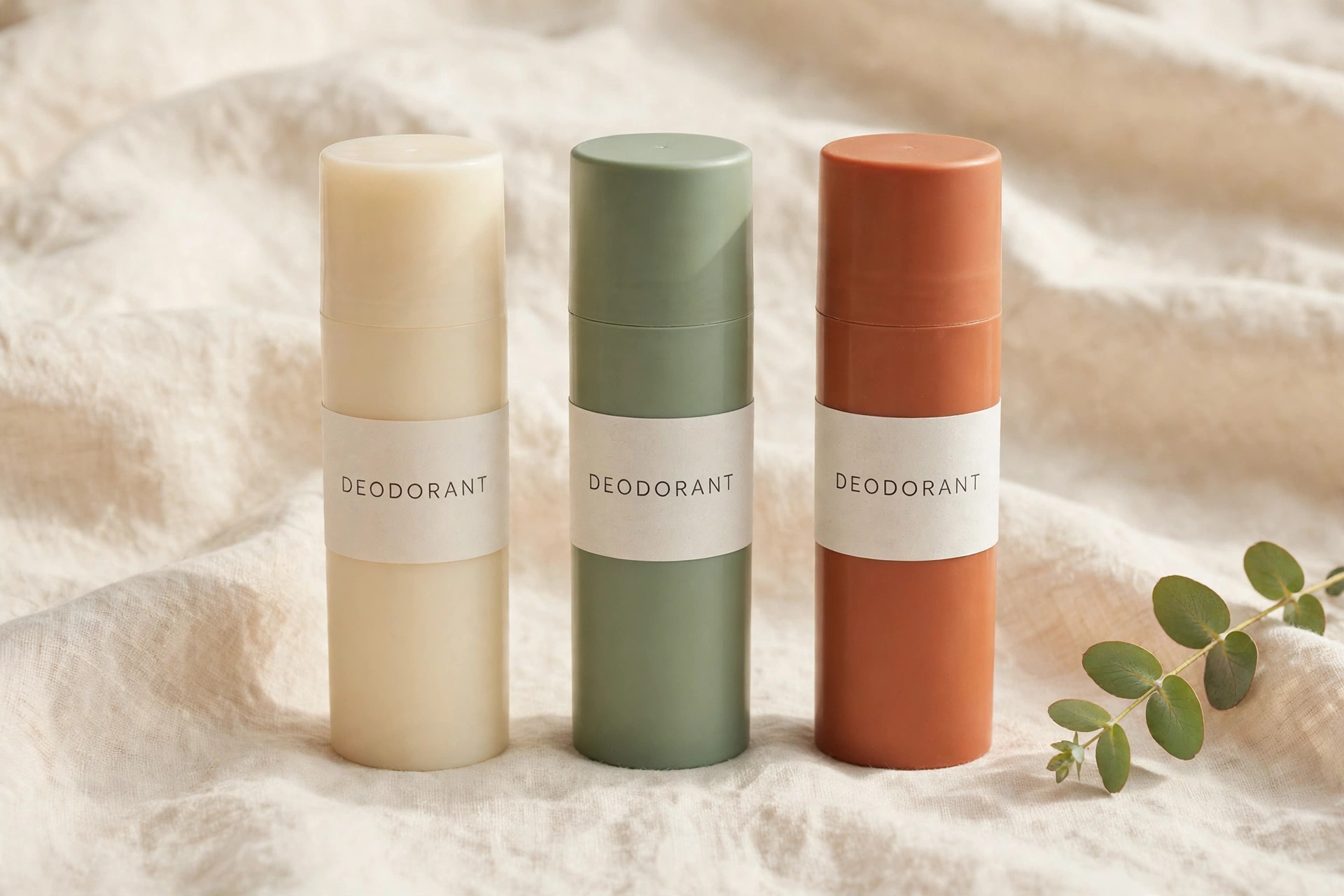
You know that moment in the deodorant aisle, holding two sticks, sniffing one, putting it back, sniffing the other, and somehow feeling more confused than when you walked in? One promises 72-hour protection. The other promises “clean” in big letters and has an ingredient list you can barely pronounce. Neither label tells you what you actually want to know: will this irritate your skin, and does it do the job you need it to do?
That trip is why I started flipping sticks over. Not because I wanted a perfect product — spoiler, there isn’t one — but because a handful of ingredients kept showing up in the ones that bothered my skin. Once I knew what to skip, shopping got a lot faster.
First, let’s untangle deodorant vs. antiperspirant
This clears up so much confusion, so bear with me for thirty seconds.
A deodorant controls odor. An antiperspirant reduces wetness. Different jobs, different ingredients. A product can do one, both, or claim to do both while really only doing one well.
Antiperspirants use aluminum compounds to temporarily plug sweat ducts. Less sweat reaching the surface usually means less odor, because odor mostly comes from bacteria breaking down sweat, not sweat itself.
If you switch to an aluminum-free deodorant and suddenly notice more wetness, that doesn’t mean it failed. It means you switched jobs. Keep that in mind and you’ll save yourself a lot of “this doesn’t work” frustration.
The quick version: skip this, look for that
| Skip or limit | Why it bugs me | Look for instead |
|---|---|---|
| Aluminum compounds | Blocks sweat, which you may not want | Aluminum-free deodorant for odor only |
| Parabens | Preservatives you don’t need here | Paraben-free formulas |
| “Fragrance” with no detail | Can hide phthalates | Named scent ingredients, or unscented |
| Triclosan | Antibacterial overkill for odor | Simple odor fighters like magnesium |
| Talc | Moisture absorber with baggage | Arrowroot or cornstarch |
| Drying alcohols | Strips skin, especially after shaving | Cream or roll-on bases |
| Baking soda (if it irritates you) | Alkaline, can cause rashes | Magnesium-based, baking-soda-free |
Keep that table in your back pocket. Now, the details that actually matter.
The aluminum question
Aluminum chlorohydrate and aluminum zirconium are the giveaway words. See them, and you’re holding an antiperspirant, full stop.
Some people use antiperspirants for decades and love them. Others would rather not block sweat, or their skin just doesn’t like it. Both are completely reasonable.
My only rule here: buy the job you actually want. If wetness is the problem, an antiperspirant makes sense. If odor is the problem and you don’t mind sweating, aluminum-free is the way. Don’t pay antiperspirant prices for a deodorant in disguise, and don’t blame a deodorant for not stopping sweat it was never designed to stop.
Three I skip without thinking twice
- Parabens — methylparaben, propylparaben, butylparaben. They preserve the product, sure. But lab studies have raised questions about weak estrogen-like activity, and deodorant works fine without them. Easy skip, plenty of alternatives.
- Triclosan — an antibacterial agent that used to be everywhere. For underarms, it’s overkill. You don’t need a drug to manage odor, and research has raised questions about hormone disruption and antibacterial resistance. If I see it, the stick goes back on the shelf.
- Talc — a mineral powder for absorbing moisture. The long-running concern is possible asbestos contamination in some talc deposits, plus inhaling fine powders. Arrowroot powder and cornstarch absorb moisture just fine. Why not use those?
None of this is about panicking over something you used last year. It’s about the next stick you buy being a simpler one.
“Fragrance” — the word that tells you nothing
This one genuinely annoyed me once I learned it. “Fragrance” or “parfum” can cover dozens of chemicals, and brands usually don’t have to spell them out. Phthalates, sometimes used to make scent last longer, can hide inside that one word.
Does every fragranced product contain phthalates? No. But if you’re scent-sensitive, or you’re trying to cut down on phthalates, that word gives you nothing to work with.
What I do now:
- Pick products that name their scent ingredients, or use essential oils and actually list them.
- Go unscented when I’m layering perfume or body oil anyway.
- Treat a brand that’s open about its scent as a good sign overall. Transparency in one place usually means transparency elsewhere.
The sneaky irritants: drying alcohol and baking soda
Two more, because these are the ones that cause the “why is my skin angry?” mystery.
Drying alcohols are not all alcohols. Cetyl and stearyl alcohol are fatty, moisturizing, and totally fine — they give creams their texture. The drying ones are alcohol denat and isopropyl alcohol. They help a product dry fast, but they strip moisture, especially right after shaving when skin is already raw. If your underarms feel tight or itchy after switching, check for these near the top of the list.
Baking soda is the great divider in natural deodorant. Sodium bicarbonate is brilliant at neutralizing odor, which is why so many aluminum-free formulas use it. It’s also alkaline, and your skin is slightly acidic. For some people, that mismatch means redness or a rash a few days in.
If that’s happened to you, please don’t write off aluminum-free entirely. You probably just need a baking-soda-free version. That’s a formula problem, not a you problem.
What I actually look for now
My aisle routine is pretty short these days:
- Decide the job first. Odor? Aluminum-free deodorant. Wetness? Antiperspirant. Don’t mix them up.
- Look for gentle odor fighters. Magnesium hydroxide is my go-to in baking-soda-free formulas. A magnesium-based deodorant [affiliate link placeholder] is worth a look if baking soda has ever irritated you.
- Check the base. Creams and roll-ons tend to be kinder than sprays loaded with drying alcohol, and they’re easier to apply evenly.
- Keep the list short. If I can pronounce most of it and understand what each thing does, I’m already in good shape.
- Give it a fair week or two. Skin adjusts when you switch, especially from antiperspirant to deodorant. A little extra odor at first isn’t failure. A rash, though? That’s your sign to switch formulas.
My aisle checklist
- ☐ Deodorant or antiperspirant — which job do I need?
- ☐ No parabens, triclosan, or talc if I can help it
- ☐ Scent ingredients named, or unscented
- ☐ No alcohol denat if my skin is sensitive
- ☐ Baking-soda-free if baking soda has ever irritated me
- ☐ Short, readable ingredient list
That’s it. No perfect product, no fear spiral — just a stick whose label you understand, doing the job you asked it to do, without irritating your skin. That’s a pretty good bar for something you use every single day.
Want the shortlist?
If you’d rather skip the label-reading and just see my picks, here are the best non-toxic deodorants I found.
This post is for general information only and is not medical advice. If you have a health condition, check with your clinician before changing supplements or routines.