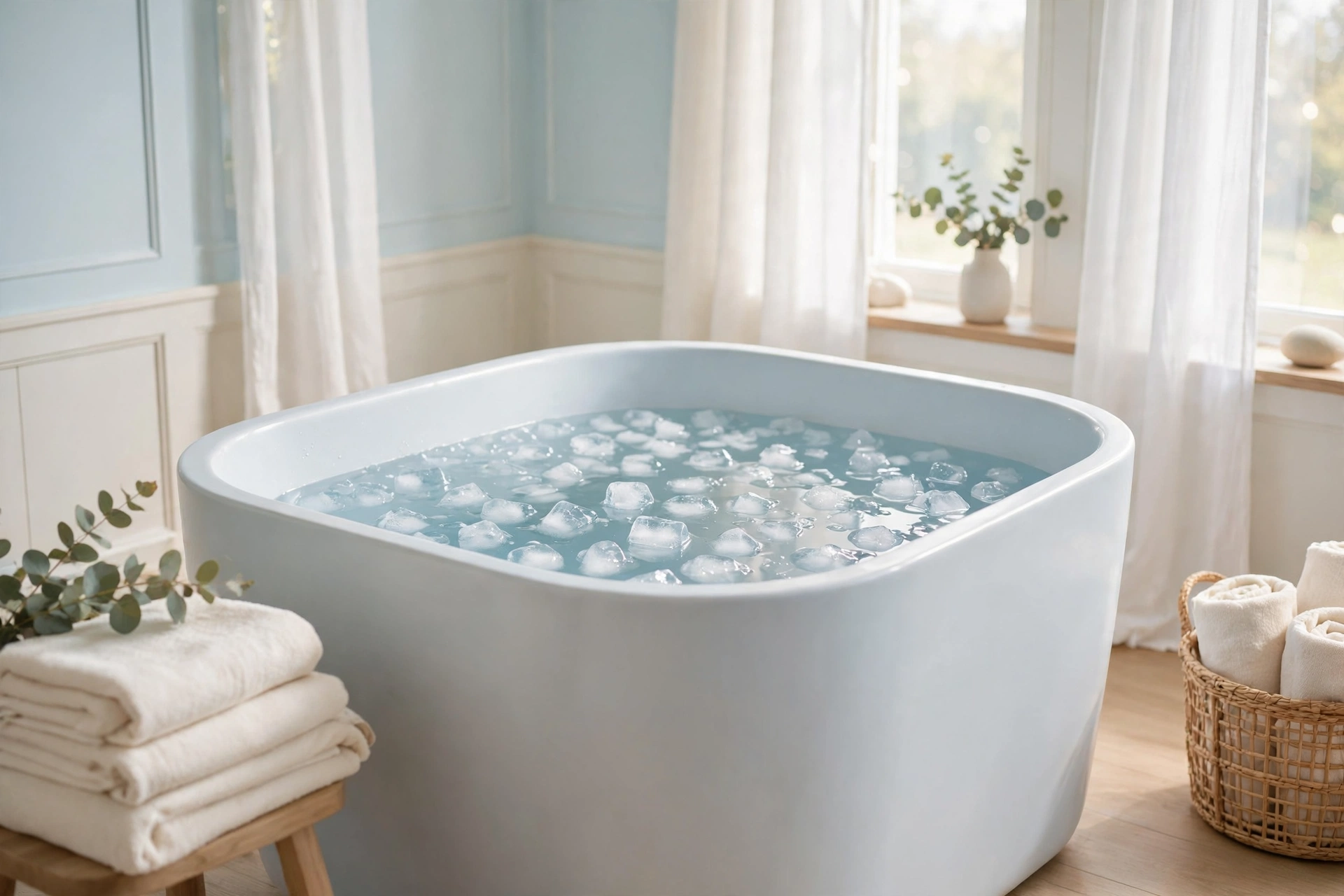
You’ve seen the videos: someone climbs into a tub of ice water, gasps, and emerges claiming they feel reborn. Cold plunging went from an athlete recovery tool to a full-blown wellness movement in a few years, and the claims grew with it — better immunity, faster fat loss, sharper focus, a reset for your entire nervous system. Some of that holds up. A fair amount of it doesn’t.
Here’s what the cold actually does, what it doesn’t, and how to do it without hurting yourself.
What happens to your body in cold water
The moment you get in, your body reacts fast — and that reaction is most of the story.
First comes the cold shock response: your breathing speeds up involuntarily, your heart rate jumps, and your blood vessels constrict to protect your core. That’s your nervous system doing its job — and the reason cold plunging can be dangerous if you go in unprepared (more on that below). After a minute or two, if you stay calm and breathe slowly, the panic settles, and your body releases norepinephrine and dopamine — part of why people climb out feeling clear-headed and oddly good.
That post-plunge clarity is real, and it’s also temporary. The mood lift after cold exposure is well documented in the short term. It’s not a cure for anything, but it’s not imaginary either — it’s your nervous system shifting gears, and people who plunge regularly say that shift is the main reason they keep doing it.
The benefits, ranked honestly
Mood and alertness. This is the strongest, most consistent benefit. Cold exposure reliably triggers norepinephrine and dopamine release, and people report feeling more awake, focused, and calm afterward. The effect lasts hours, not days. It’s not a cure for anything, but it’s not imaginary either.
Muscle soreness. Cold water does reduce perceived soreness after hard workouts — that’s why athletes have used ice baths for decades. The honest caveat: if your goal is building muscle, plunging immediately after lifting may blunt some of the growth signal. Cold tells your body to calm inflammation, and inflammation is part of how muscles rebuild stronger. So if you’re lifting for size, wait a few hours after training before you plunge, or plunge on rest days instead. Recovery and muscle-building are both real goals — they just compete a little here.
Immune function. There’s some evidence here, but it’s thinner than the headlines suggest. The best-known study found that people who finished showers with cold water took fewer sick days — but they weren’t less sick, they just felt well enough to go to work. That’s a meaningful distinction. Cold exposure seems to support immune resilience modestly; it does not make you bulletproof, and it certainly doesn’t replace sleep, food, and basic health habits.
Brown fat and metabolism. Your body has brown fat, which burns energy to generate heat, and cold exposure activates it. That’s real physiology. What’s not real is the leap to “cold plunging melts fat.” The calorie burn from brown fat activation is small — nowhere near enough to drive weight loss on its own. Treat it as an interesting mechanism, not a weight-loss strategy. Anyone selling a cold plunge as a fat-loss device is selling you a tub, not a result.
Inflammation. Cold reduces inflammation locally — that’s why you ice a swollen ankle. Whole-body effects are plausible, but the evidence is still early and mixed; it shouldn’t be framed as treatment for any inflammatory condition.
Sleep. Some plungers report sleeping better, possibly because the post-plunge temperature drop mimics the natural cooling before sleep. The evidence is mostly anecdotal so far. If you plunge at night, keep it earlier in the evening — the initial adrenaline surge can wake you up before the calm kicks in.
The pattern: cold plunging’s real benefits are a mood and alertness lift, soreness relief, and modest immune support — not detox, not fat loss, not a hormonal reset. The hype is bigger than the evidence, but the evidence is still good enough to be worth doing if you enjoy it.
What it won’t do
- Detox you. Cold water doesn’t flush toxins. Your liver and kidneys do that, and they don’t need ice to do it.
- Melt fat. Brown fat activation burns a small number of calories. It is not a weight-loss method.
- Boost testosterone. There’s no solid evidence that cold plunging raises testosterone in any meaningful way. The “cold exposure for hormones” story is mostly extrapolation, not data.
- Supercharge your immune system. Modest support, maybe. Supercharging, no.
- Fix your hormones, full stop. The evidence for women specifically is thin — most studies were done on men. If your cycle is irregular or you’re dealing with a hormonal condition, talk to your clinician rather than taking advice from plunge influencers.
How to actually do it
You don’t need a fancy tub to start. You need cold water, a timer, and respect for the cold shock response.
- Start with 2 to 3 minutes. That’s plenty at first. Build up slowly; most protocols top out around 10 to 11 minutes total per week, spread across sessions.
- Aim for 2 to 4 sessions a week. Daily is fine if you enjoy it, but the benefits don’t require daily plunging. Consistency beats heroics.
- Water temperature: cold, not extreme. Most guidance lands around 50 to 59°F (10 to 15°C). Colder isn’t better — it’s just harder, and harder isn’t the goal.
- Get in slowly and breathe out. Ease in, don’t jump. When the gasp reflex hits, focus on slow exhales — long out-breaths calm the nervous system faster than anything else you can do in the tub.
- Warm up gradually afterward. Dry off, put on warm clothes, move around. Don’t jump straight into a hot shower — let your body rewarm on its own for a few minutes first.
- Never plunge alone. This is the rule that matters most. Cold shock can cause an involuntary gasp, and a gasp underwater is a drowning risk. Always have someone nearby, especially in open water.
The routine that works is the boring one: a few minutes, a few times a week, same temperature, same calm breathing. Cold plunging rewards consistency, not intensity.
Ways to plunge, in plain English
| Method | How cold | Best for | Watch out for |
|---|---|---|---|
| Dedicated tub with chiller | Steady, coldest, most consistent | Regular plungers who want set-and-forget cold | Needs space and upkeep |
| DIY ice bath in a regular tub | Cold, but the temperature drifts | Trying it out before committing | Messy, and the cold fades fast |
| Cold shower | Milder, but easy | Beginners and daily habit-building | Not full immersion — a gentler effect |
| Face plunge in a bowl of ice water | Face only, surprisingly intense | A gentle entry point, or a quick reset | Still triggers a strong cold response — breathe |
| Lake or river | Unpredictable | Experienced plungers who love open water | Currents, depth, and cold shock — never alone |
A cold shower counts as a starting point, not a lesser version. Start there if full immersion feels like too much — you’ll learn how your body reacts without committing to a tub.
Sauna and cold plunge: which goes first?
This is one of the most-searched questions about cold plunging, and the answer is refreshingly undramatic: both orders work, and the classic pairing is sauna first, then cold.
Sauna first, then plunge, is the traditional contrast-therapy sequence — heat opens you up, cold snaps you back, and the swing between the two is part of the appeal. Cold first, then sauna, works too, and some people prefer warming up after the plunge rather than cooling down after the heat. If you want the full picture on the heat side, my sauna guide covers what the evidence actually says there.
What matters more than order: don’t plunge while overheated and dizzy from a long sauna session, or straight after intense exercise without catching your breath. The sequence is a preference. The safety rules are not.
Who should be careful — read this before your first plunge
Cold plunging is safe for most healthy adults, but the cold shock response makes it riskier than it looks, and a few conditions turn it from uncomfortable to genuinely dangerous.
- Heart conditions or high blood pressure. Cold shock spikes heart rate and blood pressure suddenly. If you have a heart condition, talk to your clinician first — this one is non-negotiable.
- Raynaud’s disease. Cold triggers blood vessel spasms in your fingers and toes. Plunging can make it worse.
- Pregnancy. Your body is already working hard on temperature regulation, and cold shock adds stress. Check with your clinician.
- Diabetes or nerve damage. Reduced sensation means you might not notice you’re getting too cold. Hypothermia risk goes up when you can’t feel it coming.
- Open wounds or skin infections. Cold water — especially shared or natural water — is not where healing skin belongs.
- Alcohol. Never plunge after drinking. Alcohol impairs your judgment and your body’s temperature regulation at the same time.
- Kids. Supervise closely, keep sessions short, and keep the water milder. A child’s cold shock response is not a smaller version of an adult’s.
- Hypothermia signs. Shivering that stops, confusion, slurred speech, clumsiness — get out and warm up immediately. Shivering is your body working; shivering stopping is your body failing.
If anything on this list applies to you, the right move is a conversation with your clinician, not a colder tub. Cold plunging is a wellness habit, not a test of toughness, and the people who get hurt are usually the ones who treated it like one.
The bottom line
Cold plunging’s honest story is a good one, just a smaller one than the hype: a real mood and alertness lift, genuine soreness relief (with a caveat if you’re lifting for size), and modest immune support. It won’t detox you, melt fat, or reset your hormones, and the safety rules — never alone, ease in, breathe out, warm up slowly — matter more than any protocol.
If you like the feeling and you do it carefully, a few minutes of cold a few times a week is a habit worth keeping. If you hate it, you’re not missing a miracle.
This post is for general information only and is not medical advice. If you have a health condition, check with your clinician before changing supplements or routines.