You grab a protein bar at the checkout because you’re hungry, in a rush, and the wrapper says “20g protein” in huge letters. It’s not until you get home and actually read the back that you realize you’ve basically bought a candy bar with a gym membership. Knowing protein bar ingredients to avoid is the fastest way to spot that trap.
That’s the protein bar trap in a nutshell. The front of the wrapper is marketing. The back is the truth. And once you know how to read that back panel in about twenty seconds, you stop getting fooled. Once you know protein bar ingredients to avoid, that label read gets much faster.
The 20-second label read for protein bar ingredients to avoid
Forget reading every ingredient like it’s a novel. Scan these four things, in this order:
| Check this | What you want to see | Red flag |
|---|---|---|
| Sugar | Under ~5g, ideally from real food | 15g+ of added sugar — that’s dessert |
| Sugar alcohols | Small amounts, or none | 15–20g (hello, stomach cramps) |
| Protein source | Whey, egg white, nuts, pea | Soy protein isolate as the only protein |
| Ingredient list length | Short enough to actually read | A paragraph of syrups, isolates, and preservatives |
If a bar fails two or more of those checks, put it back. That’s my whole system. Simple, fast, and it works in a checkout line.
Sugar vs. sugar alcohols: both can bite
Here’s where bars get sneaky. A bar can say “only 1g sugar!” on the front and still be sweet enough to make your teeth hurt, because it’s loaded with sugar alcohols like maltitol, erythritol, sorbitol, or xylitol.
Sugar alcohols aren’t inherently terrible. In small amounts, most people handle them fine, and they let a bar taste sweet without spiking blood sugar the way regular sugar does. But in large amounts — and protein bars love large amounts — they can cause bloating, gas, and that urgent “where’s the bathroom” feeling. Maltitol is the worst offender for most people; erythritol tends to be gentler, but even that adds up.
My rule of thumb:
- A little sugar alcohol is fine. A few grams, no big deal.
- A lot is a warning sign. If sugar alcohols are the second or third ingredient, or the total is pushing 15–20g, expect your stomach to notice.
- Real sugar isn’t automatically worse. A bar with 5g of sugar from dates or honey is often a better choice than a bar with 0g sugar and 20g of sugar alcohols. Context beats the headline number every time.
The protein source matters more than the protein number
“20g protein” sounds impressive until you see where it comes from. Not all protein sources are equal in a bar.
The good ones read like actual food:
- Whey protein (concentrate or isolate)
- Egg white protein
- Pea protein, especially paired with rice protein
- Nuts and nut butters as a meaningful part of the bar, not just a flavor
The one I side-eye is soy protein isolate as the sole protein source. It’s cheap, it’s highly processed, and bars built entirely on it tend to have a chalky texture and a long list of other stuff to make them taste good. Soy in general isn’t the enemy — tofu and tempeh are great foods — but a bar where soy isolate does all the heavy lifting, with nothing else real in sight, is usually a sign the whole bar is built for cost, not quality.
Also watch for “protein blend” without any detail. A blend can be great, or it can be mostly the cheapest protein in the blend with a sprinkle of the good stuff. If the brand won’t say what’s actually in the blend, that’s information too.
Other protein bar ingredients to avoid
Beyond sugar and protein, here are more protein bar ingredients to avoid:
- Sucralose and acesulfame K (Ace-K). Artificial sweeteners that show up together constantly. Some people tolerate them fine; others get headaches or stomach issues. I prefer bars sweetened with dates, honey, or monk fruit, or just lightly sweetened.
- Palm kernel oil. Cheap fat that makes bars shelf-stable and waxy. Not the worst thing in the world, but it usually signals a bar built for shelf life over quality.
- Endless “natural flavors” plus preservatives. A little natural flavor is normal. A bar with natural flavors, plus three preservatives, plus two colors, plus an emulsifier list longer than my grocery list? That’s a chemistry project, not a snack.
- Candy-bar-level sugar, full stop. If the first ingredient is brown rice syrup, cane syrup, or glucose syrup, and sugar is over 15g, you’re holding a candy bar that lifts weights. Enjoy it as candy if you want — just don’t pretend it’s a health food.
So what does a better bar actually look like?
I know, I know — after all that skipping, what’s left? Plenty, actually. A better bar usually looks like this:
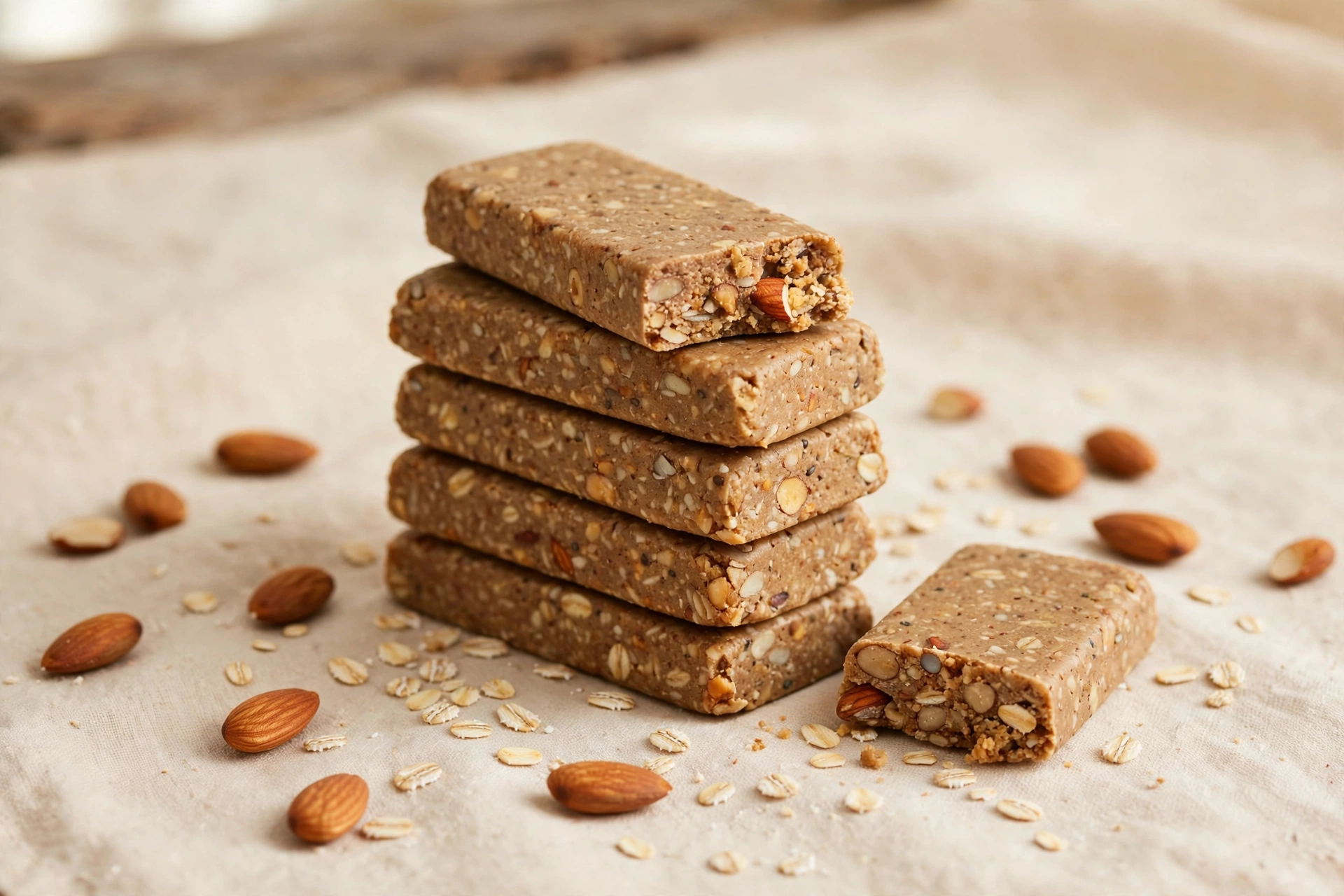
- A short list you can read out loud. Dates, nuts, egg whites, whey, maybe some cocoa. Done.
- Protein from real food sources, not just isolates and syrups.
- Decent fiber, around 3g or more, which usually comes naturally when the bar has actual nuts and dates in it.
- Sugar in single digits, ideally from the food itself rather than added syrups.
- A texture you recognize. Chewy from dates and nuts, not waxy from palm oil or chalky from pure isolate.
A nut-and-date bar [affiliate link placeholder] is a good example of that style — simple ingredients, real protein from nuts and egg whites, and nothing you need a chemistry degree to decode.
One more thing worth saying: a better bar doesn’t have to taste like punishment. The bars I actually finish — the ones I buy again — taste like food, not like a science experiment. Dates and nuts taste good. Cocoa tastes good. If a bar tastes chalky or waxy, that’s not you being picky, that’s the bar telling on itself. The best bar for you is the one with a clean label that you genuinely enjoy eating, because the “healthiest” bar in the world does nothing sitting uneaten in your bag.
My checkout-line checklist for protein bar ingredients to avoid
- ☐ Sugar under ~5g, or from real food like dates
- ☐ Sugar alcohols small, not the main event
- ☐ Protein from whey, egg white, nuts, or pea — not soy isolate alone
- ☐ No sucralose or Ace-K if I can avoid it
- ☐ Ingredient list I can read without squinting
- ☐ Fiber present, not just protein and sweetener
That’s it. Twenty seconds, four checks, and you walk out with a snack instead of a candy bar in gym clothes. Your stomach will thank you, your wallet might not notice the difference, and you’ll stop falling for the giant “20g protein” on the front of the wrapper.
Which, honestly, is the whole point. The front of the package is advertising. The back is the product. Read the back.
This post is for general information only and is not medical advice. If you have a health condition, check with your clinician before changing supplements or routines.