Flip over a bottle of salad dressing — one of those “light” ones you feel very good about buying — and the first ingredient is soybean oil. Not olive oil. Not something fancy. Soybean oil, followed by a bunch of things you can’t pronounce.
I stood there in the aisle thinking, wait, when did soybean oil get into everything? Turns out, a long time ago. And once you start noticing seed oils, you see them everywhere: crackers, chips, granola bars, restaurant fries, that “healthy” veggie dip. It’s not a conspiracy. It’s just cheap, neutral-tasting oil, and food companies love cheap and neutral.
So let’s talk about what seed oils actually are, where they hide, and what to do about them — without the panic spiral, because one bag of chips has never ruined anyone’s health.
Okay, what counts as a seed oil?
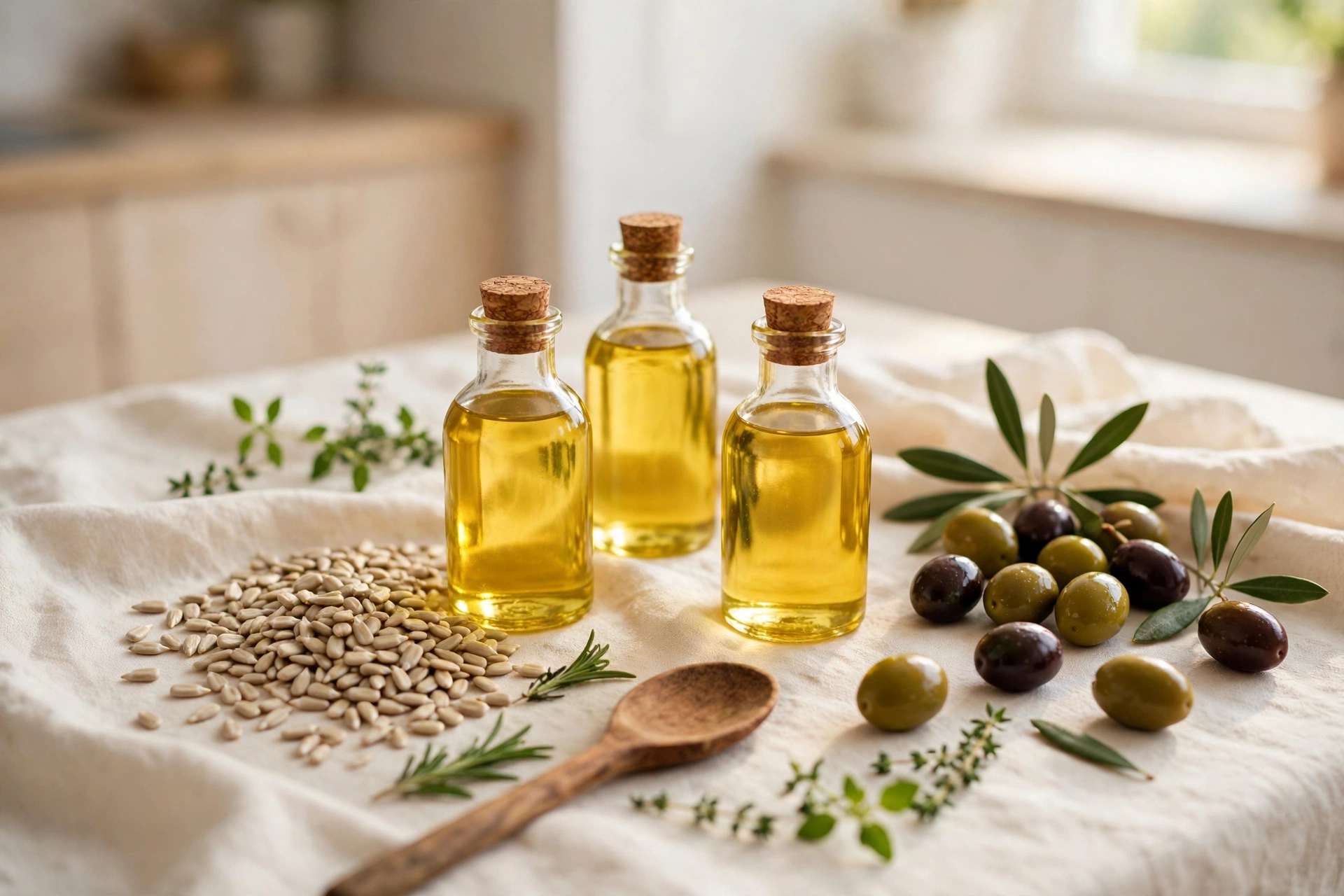
Seed oils are oils pressed from seeds, as opposed to fruits (like olives or avocados) or animal fats (like butter). The usual suspects:
- Canola (from rapeseed)
- Soybean
- Sunflower
- Safflower
- Grapeseed
- Corn
You’ll also see “vegetable oil” on a label, which is usually soybean or a blend of seed oils. It’s the generic-brand version of the same idea.
Most of these are highly refined. That means the seeds are pressed, then heated, bleached, and deodorized to make a clear, flavorless oil with a long shelf life. Refining isn’t automatically evil — it makes oil cheap and stable — but it does strip out a lot of the character and nutrients you’d get from a cold-pressed oil. And because these oils are so cheap, they end up in a huge share of processed food.
Where they actually hide
This is the part that surprised me. It’s not just the obvious fried stuff.
- Salad dressings and mayo — soybean and canola are the base of most bottled dressings, even the “olive oil” ones (check: olive oil is often the third ingredient, not the first).
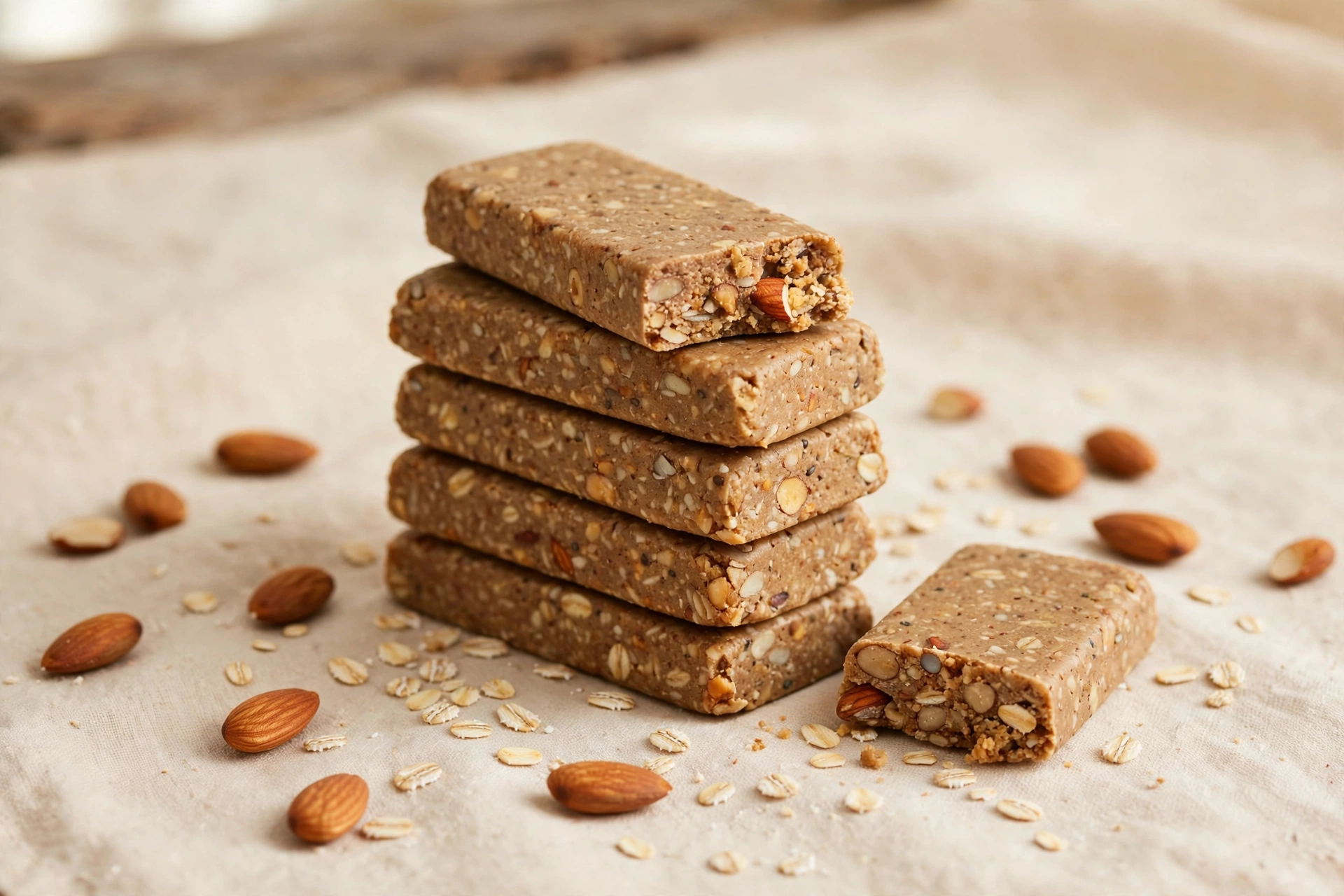
- Chips, crackers, and snack bars — fried or baked in sunflower, safflower, or soybean oil.
- Frozen meals and breaded things — nuggets, fries, mozzarella sticks, most of the freezer aisle.
- Restaurant frying — most restaurants fry in soybean or canola because it’s cheap and handles heat well.
- Baked goods — cookies, muffins, and pastries made at scale almost always use a seed oil.
You don’t need to memorize this list. Just know that if a food is processed, shelf-stable, or fried, there’s a good chance a seed oil is in there somewhere.
The omega-6 thing, without the fear
Here’s where the internet gets loud, so let me keep it calm. Seed oils are high in omega-6 fats. Omega-6 isn’t poison — your body needs some. The issue researchers talk about is proportion: the typical modern diet has a lot more omega-6 than omega-3, and that imbalance is associated with more inflammation over time.
The problem isn’t one meal. It’s the pattern. A restaurant lunch fried in soybean oil won’t undo your health. Eating mostly processed, fried, and packaged foods every day, where seed oils are the default fat, is a different story. That’s the distinction I try to keep in my head, because it keeps me from spiraling over a single snack.
Also, quick reality check: some seed oils are less refined than others. Cold-pressed sunflower oil in a small-batch dressing is not the same product as bulk refined soybean oil in a factory. Processing matters, and so does the overall food it’s in.
Smoke points, in plain English
Smoke point is just the temperature where oil starts smoking and breaking down. Past that point, it tastes bitter and forms compounds you don’t want. You don’t need a chart tattooed on your arm, but this table saves a lot of guessing:
| Oil | Rough smoke point | Best for | My swap note |
|---|---|---|---|
| Extra virgin olive oil | Around 375°F | Dressings, low to medium heat | My everyday default |
| Avocado oil | Around 500°F | Searing, roasting, higher heat | Pricier, so I save it for high heat |
| Butter / ghee | Around 300–450°F | Eggs, veggies, finishing | Ghee handles heat better than butter |
| Refined canola / soybean | Around 400°F | Frying at scale | Fine occasionally, not my home default |
| Unrefined flaxseed oil | Very low | Dressings only, never heat | Great for omega-3s, terrible for cooking |
See the pattern? Match the oil to the heat, and you don’t need to overthink it.
Simple swaps that actually stick
I didn’t overhaul my kitchen overnight. I just changed a few defaults, and those stuck:
- Dressings: I make a quick one with olive oil, lemon, mustard, and salt. It takes two minutes, and suddenly my salads aren’t soybean-oil delivery systems. An everyday olive oil [affiliate link placeholder] is worth keeping by the stove for this alone.
- Roasting veggies: Avocado oil when I’m going hot, olive oil when I’m going moderate. Both work; avocado just handles the higher oven temps without smoking.
- Eggs and finishing: Butter or ghee. They taste better, and a little goes a long way.
- Eating out: I don’t interrogate the waiter about fryer oil. I just don’t make fried restaurant food an everyday thing. That’s the proportion part again.
- Packaged snacks: I check the first oil on the label now. If it’s soybean or canola and the food is something I eat daily, I look for a version made with olive or avocado oil instead. If it’s an occasional treat, I just enjoy it.
The one habit I dropped
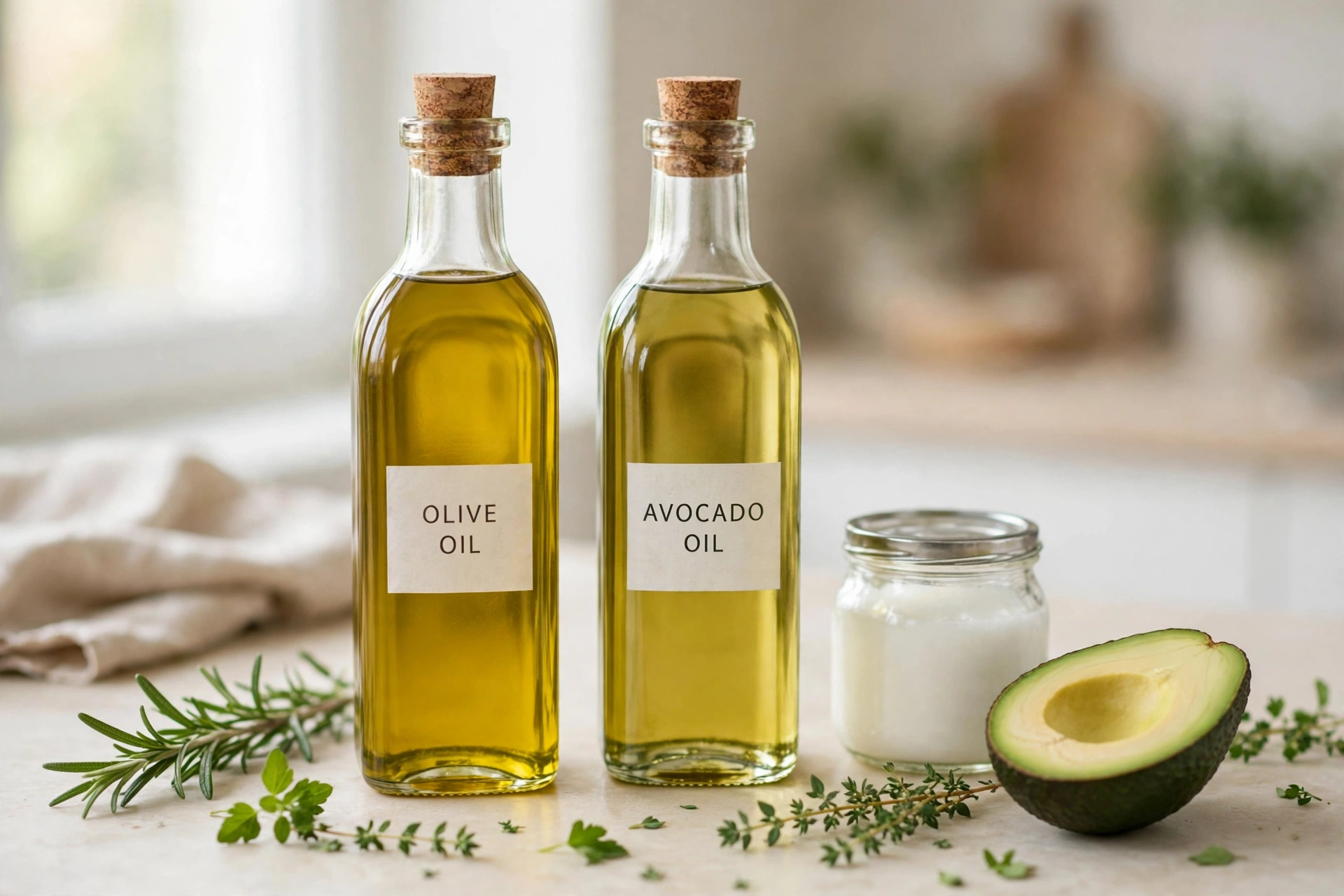
I used to buy the giant jug of “vegetable oil” because it was cheap and lasted forever. I don’t anymore. Not because one jug would hurt me, but because it was my default for everything — eggs, roasting, dressings — and defaults add up. Swapping that one jug for a bottle of olive oil and a smaller bottle of avocado oil changed my everyday cooking fat without changing a single recipe I actually like. That’s the kind of swap that sticks, because it doesn’t ask you to cook differently. It just changes what’s in the pan.
My kitchen checklist
- ☐ Olive oil for dressings and low-to-medium cooking
- ☐ Avocado oil for high-heat roasting and searing
- ☐ Butter or ghee for eggs and finishing
- ☐ Read the first oil on packaged foods I buy often
- ☐ Don’t stress about the occasional fried meal out
That’s the whole philosophy, really. Seed oils aren’t a villain hiding in your pantry, and cutting them out completely isn’t realistic or necessary. But once you know where they hide and you swap your everyday defaults — dressing, cooking oil, the snacks you buy on repeat — your overall pattern shifts a lot, without feeling like a diet.
And that dressing? I still buy bottled dressing sometimes. I just buy one where olive oil is actually first on the list. Small win. I’ll take it.
Want the shortlist?
Check out my Best Cooking Oils shortlist for the five oils I actually use.
This post is for general information only and is not medical advice. If you have a health condition, check with your clinician before changing supplements or routines.