If your gut has been giving you trouble – that burning, bloated, never-quite-right feeling – you have probably heard the name H. pylori, a spiral-shaped bacterium that lives in the stomach and sits behind a surprising share of ulcers, acid reflux, and stubborn discomfort. And if you have gone looking for a natural way to deal with it, you have probably met matula tea.
I know this one personally. I was diagnosed with H. pylori a few years ago, and I tried everything – and nothing worked until matula tea. Here is what matula tea is, what is in it, how the thirty-day course works, and how I drink it.
On This Page
- What Matula Tea Is
- Matula Tea Ingredients
- Matula Tea for H. Pylori
- Matula Tea Benefits Beyond H. Pylori
- How to Drink Matula Tea
- Matula Tea Side Effects and Safety
- Where I Get My Matula Tea
- Matula Tea: Good If You
- The Bottom Line on Matula Tea
What Matula Tea Is
Matula tea is an herbal tea from South Africa, made from wild-crafted herbs gathered in the wild, not farmed. It is a blend of seven herbs, each chosen for its antibacterial and gut-soothing properties — and the combination is what makes it special.
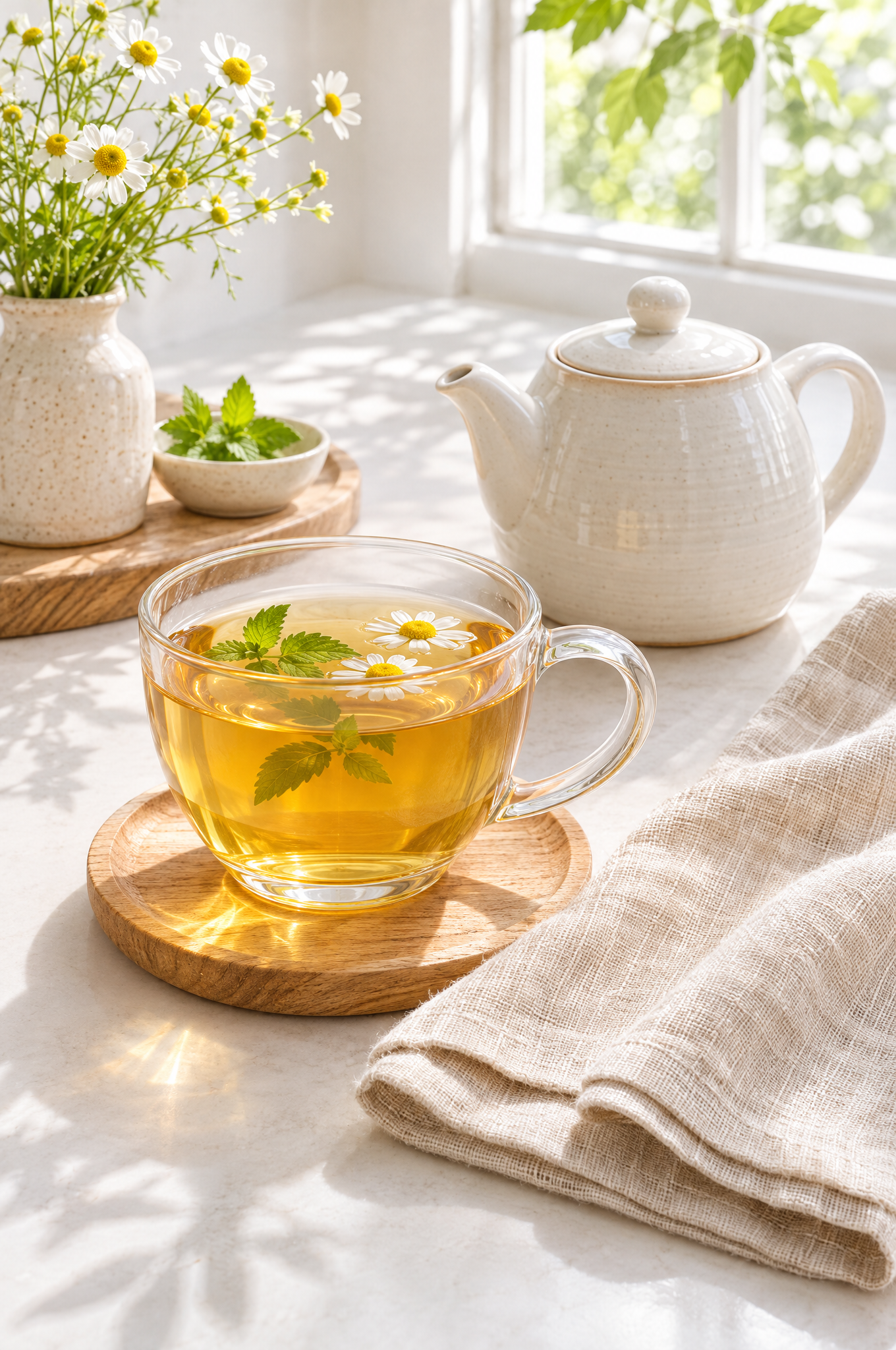
The tea is dark — a deep brown-green, dense and a little murky, because the herbs are not strained out. That darkness is the point: the fine herb particles stay in the cup, and you drink them. It has a gentle, earthy taste with a hint of sweetness, and it is caffeine-free, so it works morning and evening. It comes in sachets, one per cup, and a box holds exactly one thirty-day course: sixty sachets, two cups a day. I love how straightforward it is: no pills, no complicated protocol, just two cups of tea a day for a month.
People usually find matula tea when they are looking for a natural approach to H. pylori, and that is its best-known use — but the blend was put together as a whole-gut tea, and its fans use it for much more than one bacterium.
If gut health is on your mind, my Prebiotics vs Probiotics guide is a lovely companion read — it walks through how to feed the good bacteria once you have dealt with the troublesome ones.
Matula Tea Ingredients
The matula tea ingredients are what make this blend work. The formula centers on seven wild-crafted South African herbs:
Olive leaf is the star of the blend. Olive leaves contain oleuropein, an antibacterial and antioxidant compound used in traditional medicine for generations — the ingredient most tied to matula tea’s action against H. pylori.
Licorice root and leaf (deglycyrrhizinated) soothe digestive inflammation. The blend contains only a tiny share of the safe daily limit of licorice, so it stays gentle.
Honeybush leaf is a South African cousin of rooibos, rich in polyphenols and traditionally used for soothing coughs and supporting immunity. It brings a gentle sweetness and its own antibacterial strength.
Rooibos leaf is the familiar red bush tea, full of antioxidants and loved in South Africa for calming upset stomachs. It makes the blend taste lovely and adds gentle antibacterial activity.
Wild guava fruit and leaf bring a bright, fruity note and traditional digestive support for stomach troubles.
African water berry leaf comes from an evergreen tree known in Africa for easing stomach ailments.
Wild garlic root and rhizome bring natural antibacterial strength to the blend.
Every ingredient is wild-grown and non-GMO, with no additives. The tea contains no wheat, caffeine, gluten, corn, soy, milk, egg, sugar, colourants, or preservatives — it is 100% natural.
Matula Tea for H. Pylori
Matula tea for H. pylori is the reason most people order it, and it is the reason I did. I was diagnosed with H. pylori a few years ago. I tried everything — the antibiotics, the prescriptions, all of it — and nothing worked. Matula tea was the thing that finally worked for me.
H. pylori is a spiral-shaped bacterium that burrows into the stomach lining — very common, often carried without knowing — and when it overgrows it can drive ulcers, gastritis, acid reflux, and constant bloated discomfort.
Immunologist Professor Patrick Bouic tested the blend in a laboratory against H. pylori strains, and the testing showed strong antibacterial activity. What I love is that the testing was done on the whole blend, not on a single isolated compound — the herbs work together. The tea was developed to target all strains of H. pylori.
The usual course is two cups a day for thirty days — one before breakfast, one a couple of hours after dinner — steady, daily exposure to the antibacterial herbs for a full month. Many people retest after the course, and the brand offers a money-back guarantee: confirm your H. pylori levels first with a GI-Map test or an H. pylori stool antigen test, finish the thirty-day course, wait thirty to forty-five days, then test again. If your follow-up test is still positive, you can choose a refund or a complimentary box of tea. Only a tiny share of customers need a second course. I love that this is a food-first approach — you are drinking tea, not swallowing a handful of capsules, and the herbs are the same ones South African herbalists have used for generations.
Matula Tea Benefits Beyond H. Pylori
The matula tea benefits go further than one bacterium — the same antibacterial and soothing herbs support the gut in several ways:
| Benefit | Why I love it |
|---|---|
| H. pylori support | Lab-tested activity against H. pylori strains |
| Acid reflux comfort | Soothing herbs that calm the stomach lining |
| Candida support | Activity against Candida albicans with continued use |
| Gut lining support | Herbs that help rebuild the stomach’s mucosal barrier |
| Whole-gut calm | Traditionally used for IBS, dysbiosis, and digestive discomfort |
The acid reflux angle is a big one for me. H. pylori can raise stomach acidity, and as the bacteria are dealt with, many people find their reflux eases too. The blend has also been used traditionally for ulcerative colitis, non-ulcer dyspepsia, and diverticulitis inflammation. The herbs are also traditionally loved for helping the stomach lining heal and rebuild — which is why people describe the tea as soothing, not just antibacterial.
How to Drink Matula Tea
Drinking matula tea is simple, and the routine is part of what makes it easy to stick with for thirty days:
Place one sachet in a cup and pour 150-200ml (about 4-7 fluid ounces) of boiling water over it. Let it steep for fifteen to twenty minutes — the longer it steeps, the stronger the tea. Do not use a microwave to boil the water or reheat the tea.
Drink one cup in the morning, about an hour before breakfast, and the second in the evening, at least two hours after dinner and before bed. Two cups a day, every day, for thirty days — one box of tea, sixty cups in total.
A few things the brand is specific about, and I follow them all: do not take any liquids, probiotics, supplements, vitamins, or food for an hour either side of taking the tea. With each sip, swirl the tea around your mouth a bit before swallowing — a large share of H. pylori can live in the mouth and dental spaces. Start taking a probiotic at the beginning of week two of your course. Use a new toothbrush. Do not take any antibiotics or vaccines while you are on the course, as they affect how well the tea works. And do not add sugar or milk — half a teaspoon of honey is fine if you want a little sweetness. If you like, two used tea bags can make a third, slightly weaker cup in the middle of the day.
Keep the sachets in a cool, dry place and drink the tea warm rather than iced. The taste is dark and earthy with a soft sweetness, which makes a thirty-day course much easier than it sounds.
Matula Tea Side Effects and Safety
Matula tea is described by the brand as completely non-toxic, and it has been drunk by thousands of people over many years with no serious side effects reported. A few things are worth knowing before you start:
Some people notice mild die-off symptoms as the bacteria are dealt with — bloating, nausea, headaches, fatigue, constipation, diarrhoea, or a little stomach discomfort. Only a tiny share of customers report bloating or nausea, and it usually passes. If the symptoms feel overwhelming, stop the tea for three to four days, then start again — a short pause is kinder than pushing through.
Talk with your doctor before starting matula tea if you are pregnant or nursing, take prescription medicines, or manage a health condition. The tea is generally recommended for adults and children twelve and older. And if you have Candida overgrowth alongside H. pylori, the symptoms can feel very similar — a good test before you start helps you know what you are working with. Up to 70% of people with H. pylori also have Candida overgrowth, and the two are often overlooked together.
Where I Get My Matula Tea
I buy mine from Matula Tea — one box is the full thirty-day course, sixty sachets, two cups a day. They offer free support before, during, and after your course, and a money-back guarantee if your follow-up test is still positive after the thirty days.
If you buy through my link, I may earn a commission at no extra cost to you — and it is the same tea that worked for me when nothing else did.
Matula Tea: Good If You
Matula tea is a lovely fit if you have tested positive for H. pylori and want a natural, tea-based approach, or if stubborn acid reflux and gut discomfort have not responded to simpler changes. It suits you if you like a thirty-day ritual with a clear beginning and end, and are happy to retest afterwards to see what changed.
Try it first with a test in hand — a stool test or GI-MAP before you start for your baseline, and another thirty to forty-five days after you finish, so you are not guessing. If the idea of a month of tea appeals to you, this is one of the simplest gut protocols I know.
The Bottom Line on Matula Tea
Matula tea is a gentle, food-first way to support your gut: seven wild South African herbs, two cups a day, thirty days, and real laboratory testing behind it. I love that it is a tea, not a pill bottle, and that it treats the whole gut — not just one bacterium.
Start with a test, drink your two cups a day, and give your gut a month of something kind. Sometimes the simplest rituals are the ones that work best.
This article is for general information only and is not medical advice. Talk to your doctor before starting matula tea, especially if you are pregnant, nursing, taking medication, or managing a health condition. Testing before and after a course is the way to know what changed.