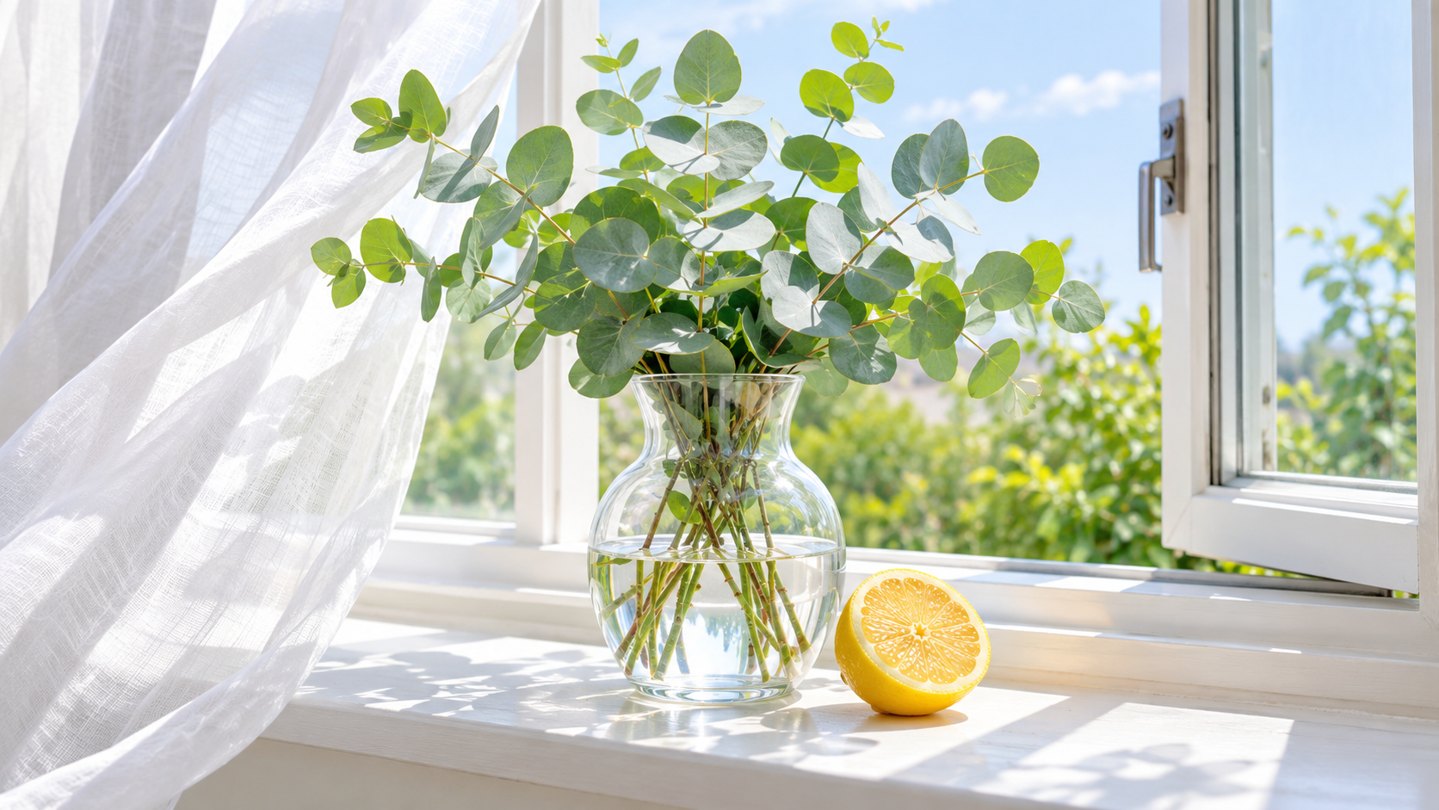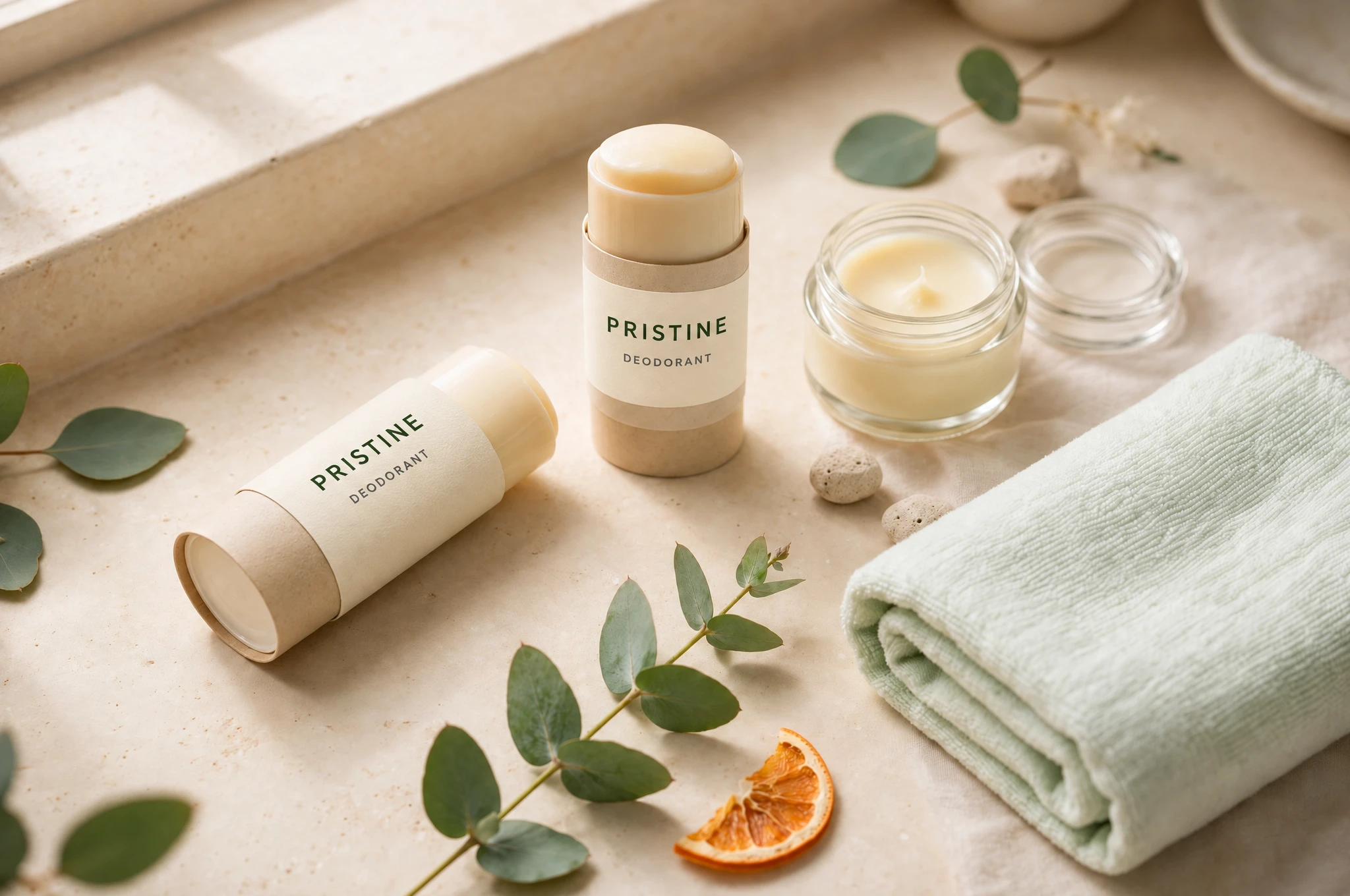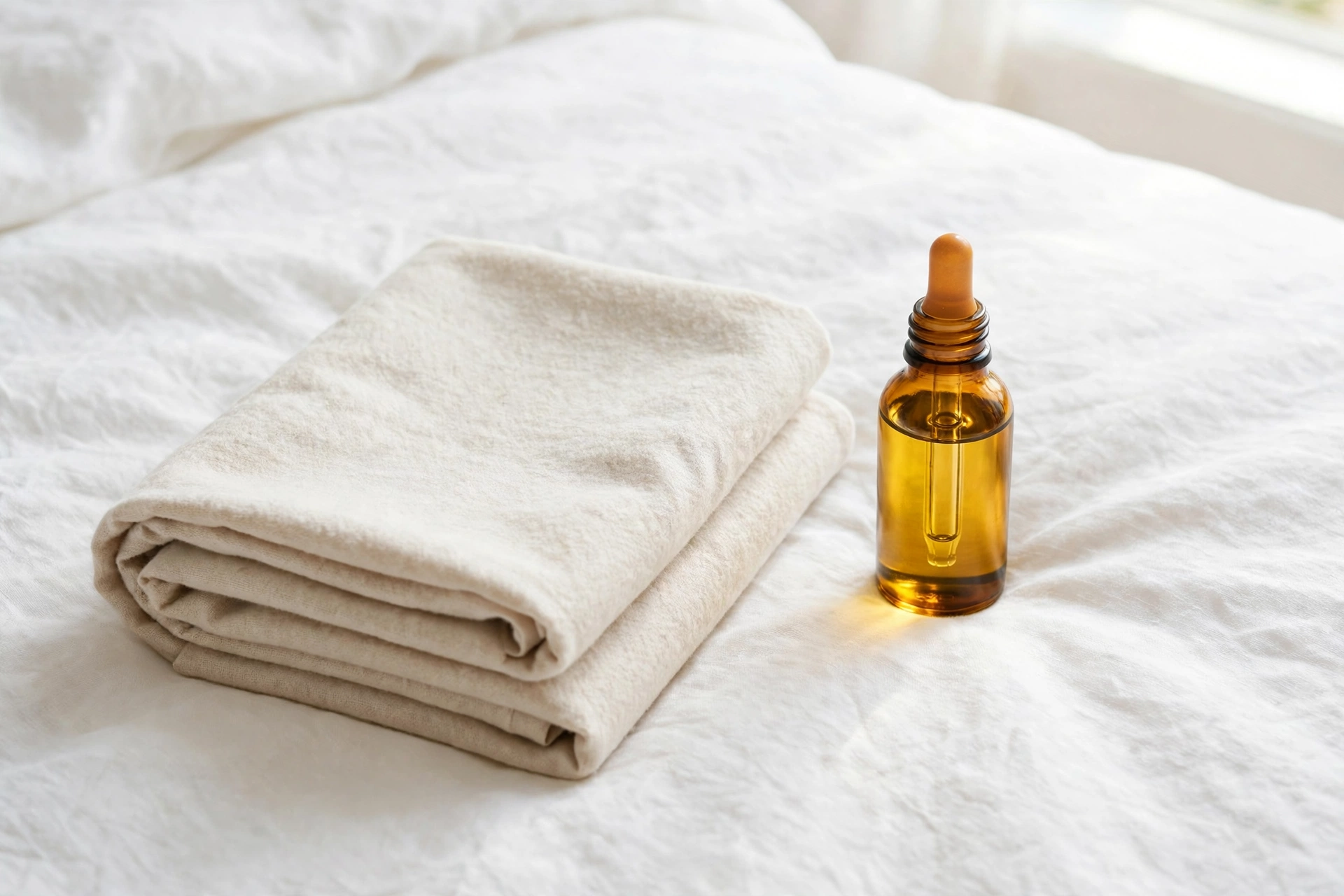
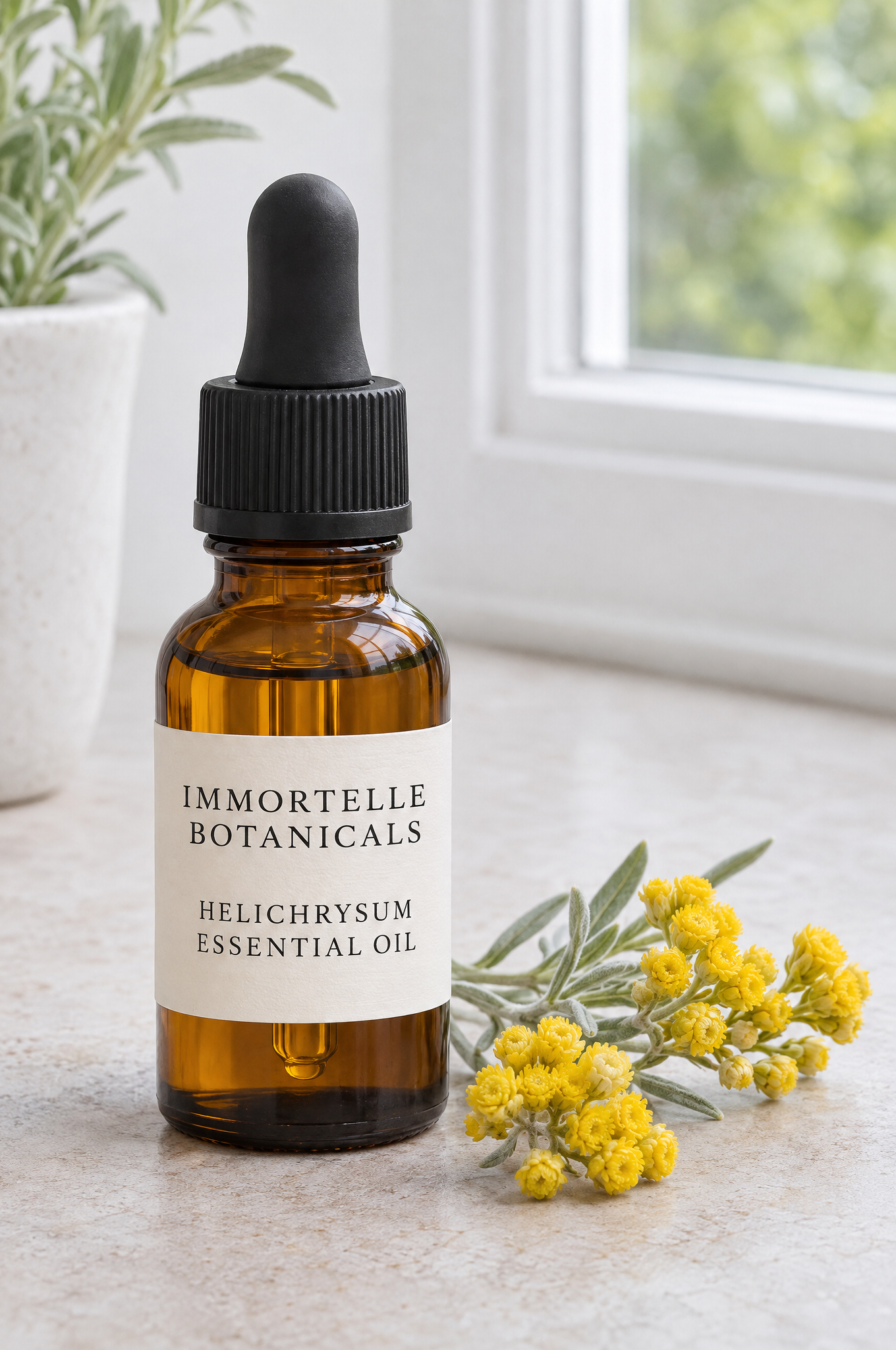
You have probably never heard of helichrysum, and that is exactly why I love it. It is the quiet overachiever of my oil shelf — the bottle I reach for when my skin looks tired, when I have a bruise blooming, or when I want my face oil to feel a little more special. Helichrysum essential oil is not the cheapest bottle you will buy, and it is not the easiest to pronounce, but once you smell its warm, honeyed, herbaceous scent, you will understand why people who know oils keep it close.
What Is Helichrysum Essential Oil?
Helichrysum essential oil comes from Helichrysum italicum, a small Mediterranean shrub with silvery leaves and clusters of tiny golden flowers that never wilt — which is why it is also called immortelle, or everlasting. The oil is steam-distilled from the flowering tops, and it takes a lot of plant material to make a little oil, which is why a small bottle costs more than most oils on the shelf.
Its scent is unlike anything else I own: warm and honey-like, with a herbaceous, almost curry-like depth underneath. The main compounds are neryl acetate, alpha-pinene, and gamma-curcumene, plus a group called italidiones that are unique to helichrysum. I think of it as a skin oil first and everything else second, and that is how I use it most days.
Helichrysum Essential Oil Benefits for Skin
Skin is where helichrysum earns its place. It is traditionally used for mature skin, for skin that looks tired or uneven, and for the small marks life leaves behind — bruises, bumps, and the occasional scrape. I use it in my evening face oil: one drop of helichrysum in a teaspoon of jojoba or rosehip oil, smoothed over clean skin at night. It feels rich without being heavy, and my skin looks calmer and more even by morning.
For bruises, helichrysum is the oil I reach for first. A drop diluted in a little carrier oil, gently massaged over the area a couple of times a day, is my routine whenever I bang an elbow or a knee. It is also the oil I add to a simple scar balm — a spoonful of shea butter with a few drops of helichrysum and lavender, kept in a small jar by the bathroom sink. I am not promising miracles, but it is the blend I trust most for skin that needs a little extra care.
If you like skin oils in general, my Frankincense Essential Oil Benefits guide covers its close cousin — another resinous, skin-loving bottle with its own personality, and the two blend beautifully together in a face oil.
Helichrysum Essential Oil Uses
Beyond skin, helichrysum has a few uses I come back to again and again. In the diffuser, two or three drops with a drop of lavender makes a grounding evening blend — warm, calm, and a little bit honeyed, the scent I run when the day has been long and I want the house to feel settled. For tired muscles after a long walk or a workout, I add a drop or two to a spoonful of carrier oil and massage it where I feel tight. It is gentle enough for regular use and smells wonderful doing it.
I also use helichrysum in a simple scalp oil. A few drops in a tablespoon of jojoba, massaged into the scalp and left for half an hour before washing, is a small ritual that leaves my hair feeling soft and my scalp comfortable. And a drop on a cotton ball tucked into a drawer keeps linens smelling warm and herbal, a quieter alternative to lavender sachets.
What Is Helichrysum Essential Oil Good For?
If you are wondering what helichrysum essential oil is good for in one sentence, my answer is this: it is good for skin that needs comfort, for bruises and bumps, and for evenings when you want a warm, grounding scent in the room. It is a specialist, not a generalist — it does a few things beautifully rather than everything adequately.
That is also why I suggest buying a small bottle first. A little goes a long way — one or two drops per use is plenty — so even a 5 ml bottle lasts me months. Store it upright in a cool, dark cupboard with the cap on tight, and write the opening date on the label. Like most oils, it keeps best away from heat and light, and I replace mine about once a year.
How to Use Helichrysum Essential Oil
There are three simple ways I use helichrysum oil, and they cover almost everything. On skin, one to two drops per teaspoon of carrier oil — that is about a one to two percent dilution — massaged gently where needed, with a patch test on my inner arm first whenever I try a new blend. In the diffuser, two to three drops in water, run for thirty to sixty minutes. For muscles or scalp, a few drops in a tablespoon of carrier oil, massaged in and left to absorb.
A few habits keep it simple and safe. I never use helichrysum oil undiluted on skin, and I never take it internally — it is for scent and skin use only. I keep the bottle out of reach of children, and I never diffuse in a small closed room with a cat in it, always leaving a door open so they can leave. And because it is a precious oil, I measure drops carefully rather than pouring freely — the bottle stays useful far longer that way.
Helichrysum Essential Oil Safety: What to Know
Helichrysum is gentle as oils go, but it still deserves respect. Dilution is the big rule: one to two percent in a carrier oil for skin, never undiluted. If you are pregnant, nursing, taking medication, or managing a health condition, check with your clinician before using it — there is limited safety data for pregnancy, so I err on the side of asking first. Keep it away from your eyes and from broken skin, and if you notice redness, itching, or irritation, stop use and wash the area with plain carrier oil or soap and water.
One more note: helichrysum is sometimes sold as a blend or diluted in a carrier oil already, so read the label before you buy. A bottle that says “helichrysum in jojoba” is a different product from a bottle of pure helichrysum essential oil, and the price should reflect that. I buy the pure oil and dilute it myself, so I know exactly what I am getting.
Helichrysum Essential Oil: Best For
Helichrysum essential oil is best for you if your skin feels tired or uneven, if you want one bottle that covers bruises, bumps, and mature skin, or if you love warm, honeyed scents and want a grounding evening oil. Try it first in a simple face oil — one drop in a teaspoon of jojoba at night — and then try it on a bruise, where you will see what it does fastest. If you are building a small oil collection and want one bottle that feels like a treat, this is the one I would add.
The Bottom Line on Helichrysum Essential Oil Benefits
Helichrysum essential oil is the quiet star of my collection: a warm, honeyed oil that cares for skin, comforts bruises and bumps, and settles a room in the evening. The rules are simple — dilute it, use a drop or two at a time, store it cool and dark — and in return one little bottle does the work of a whole shelf of skin products. If your oil shelf has room for one more special bottle, this is the one I would add.
This article is for general information only and is not medical advice. Talk to your doctor before using essential oils if you are pregnant, nursing, taking medication, or managing a health condition, and stop use if you notice irritation. Never take helichrysum essential oil internally.