You watch a video with a very dramatic caption about mold in coffee, and for about ten minutes you’re convinced your morning cup is secretly poisoning you. Then you do the sensible thing: look past the video and ask, okay, but what does this actually mean?
Turns out, the coffee-and-mold story is real — but it’s a lot less dramatic than the internet makes it sound. There’s a real thing here, and there’s also a lot of marketing riding on top of it. Let’s separate the two, because you deserve a calm cup of coffee, not a fear spiral before 8 a.m.
How mold even gets into coffee
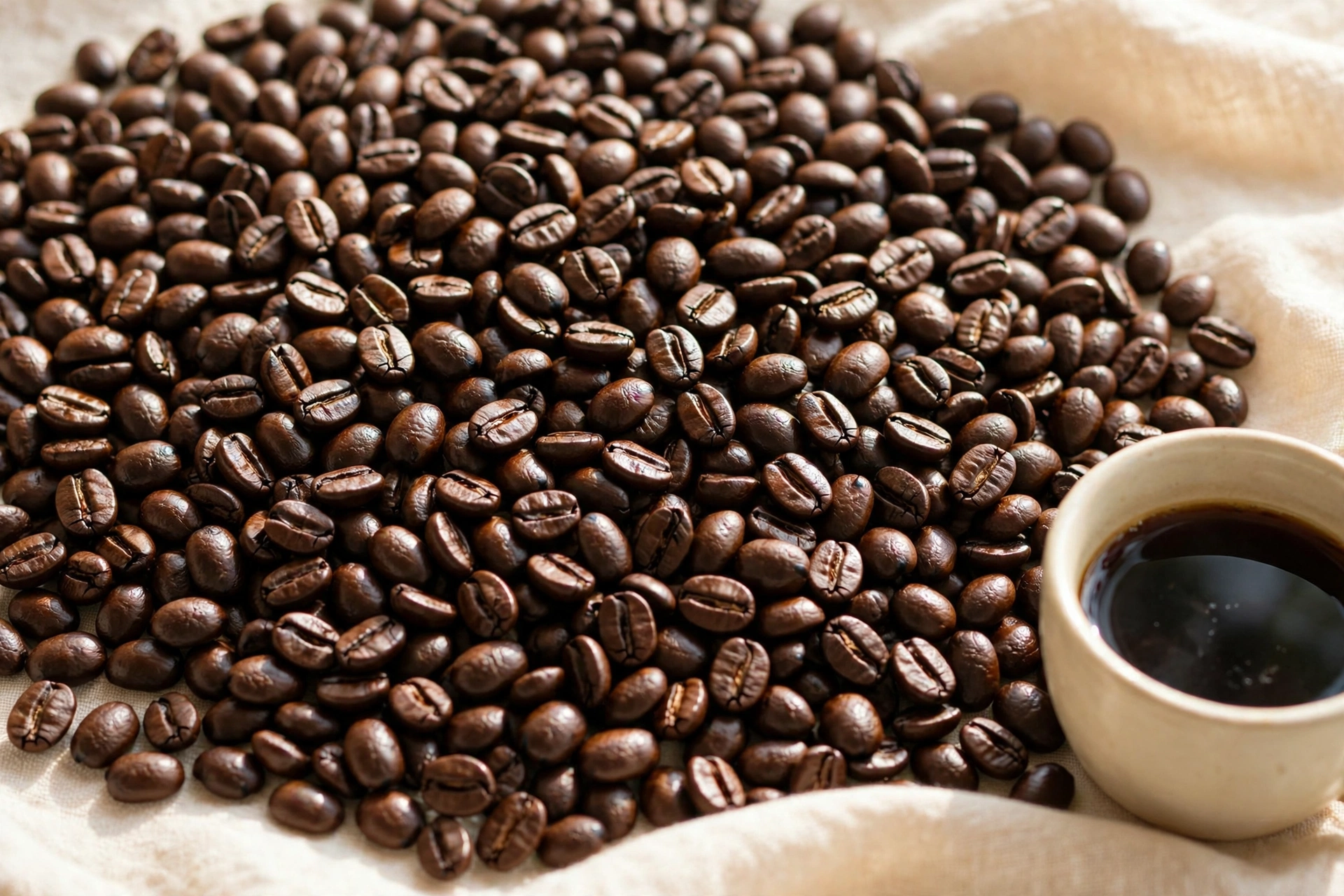
Coffee starts as a cherry on a plant, and inside that cherry are the green beans that eventually get roasted. Between harvest and roasting, those green beans can sit around for weeks or months. If they’re stored damp, or if the beans are damaged, mold can grow on them. Warm, humid storage is basically a welcome mat for mold.
This isn’t unique to coffee, by the way. Grains, nuts, and dried fruit all face the same issue. It’s a storage problem, not a coffee-is-evil problem. Beans from careful farms with good drying and dry storage are far less likely to have an issue than beans that sat in a damp warehouse.
So yes, mold can grow on green coffee. No, that doesn’t mean your brewed cup is full of mold.
Mycotoxins, in plain English
When certain molds grow on food, they can produce compounds called mycotoxins. The one that comes up most with coffee is ochratoxin A. Think of mycotoxins as the mold’s leftovers — chemical compounds the mold leaves behind while it’s growing.
Here’s the part most scary videos skip: mycotoxins are not the mold itself, and they’re not alive. They’re chemicals. And like most chemicals, the dose matters enormously. A tiny trace amount is a very different situation from a large amount, which is why regulators set limits for ochratoxin A in coffee in places like the European Union, and why commercial coffee is generally tested.
Research on commercial coffee consistently finds that mycotoxin levels are usually low, and well within those limits. That’s not a guarantee about every single bag on earth, but it does mean the average cup from a reputable roaster is not the health crisis some videos suggest.
What roasting does — and doesn’t do
This is where people get confused, so let’s be precise:
- Roasting kills mold. The high heat of roasting destroys the living mold organisms on green beans. Your brewed coffee does not contain live mold from the green bean stage.
- Roasting does not remove all mycotoxins. Mycotoxins are more heat-stable than the mold itself, so roasting reduces them but doesn’t eliminate them completely. Lighter roasts and darker roasts differ a bit here, but neither one is a magic eraser.
So roasting solves the mold problem, but only partly addresses the mycotoxin question. That’s exactly why sourcing and testing matter more than roast level, and why “dark roast kills everything” is a myth worth retiring.
What “third-party tested” actually means
You’ve probably seen coffee bags shouting “mycotoxin-free!” or “lab tested!” Here’s how to read those claims like a skeptic with a coffee in hand:
| What the bag claims | What it usually means | What to ask or check |
|---|---|---|
| “Mycotoxin-free” | Tested below detection limits for certain mycotoxins | Which mycotoxins, and tested when? |
| “Third-party tested” | An outside lab did the testing, not the brand itself | Is there a report or batch number you can see? |
| “Lab tested” (no detail) | Some testing happened somewhere, at some point | One-time test, or every batch? |
| “Mold-free coffee” | Marketing shorthand, not a regulated term | Treat it as a claim to verify, not a fact |
| No claim at all | Most coffee, including good coffee | Doesn’t mean it’s bad — reputable roasters test quietly |
Batch testing beats one-time testing. A brand that tests every batch and can show you a recent report is giving you something real. A brand that tested once three years ago and still uses the badge is giving you marketing. If a brand’s claim matters to you, look for specifics: which lab, which mycotoxins, how often, and whether results are published. Vague claims deserve vague trust.
A coffee brand that publishes its test results [affiliate link placeholder] is worth a look if this is something you care about — not because other coffee is dangerous, but because transparency is a good habit to reward.
How to store coffee so mold doesn’t get a second chance
Once coffee is roasted and in your kitchen, your job is simple: keep it dry, cool, and airtight. Mold needs moisture, so don’t give it any.
- Buy whole bean when you can. Ground coffee goes stale faster and has more surface area exposed to air and moisture. Grind what you need, when you need it.
- Use an airtight container. A sealed canister or a bag with a good closure, kept in a cool, dark cupboard. Not next to the stove, not on top of the fridge where it’s warm.
- Don’t store it in the fridge. This surprises people, but the fridge is humid, and coffee absorbs moisture and odors like a sponge. Every time you take it in and out, condensation forms. Cool and dry beats cold and damp.
- Buy amounts you’ll use in a few weeks. Coffee is freshest in the first weeks after roasting. A giant bag that sits around for three months is stale coffee, and stale coffee is a worse problem than theoretical mold.
- Check the roast date if it’s printed. Fresher is better, and a roaster that prints a date is usually a roaster that cares about the details.
My honest take
Here’s where I land after all of this: I still drink coffee every morning, happily. I buy from roasters I trust, I store it in an airtight container in a cool cupboard, and I don’t lose sleep over mycotoxins.
If you love coffee and you want extra peace of mind, buying from a brand that batch-tests and publishes results is a reasonable, easy step. If you buy regular coffee from a reputable roaster and store it well, the evidence suggests you’re already in good shape. Neither choice makes you careless, and neither makes you a hero.
The scary video my friend sent? It took a real, narrow issue — mold can grow on poorly stored green beans, and mycotoxins survive roasting partly — and stretched it into “your coffee is toxic.” That’s not how risk works. Risk is about dose, sourcing, and storage, and all three of those are things you can actually control, calmly, without giving up your morning cup.
So keep the cup. Store the beans well. And if a claim sounds dramatic, check whether it’s batch-tested or just a badge. That’s the whole trick.
Want the shortlist?
See Best Mold-Free Coffee: 5 Picks Worth Trying for five coffees that emphasize clean sourcing and testing.
This post is for general information only and is not medical advice. If you have a health condition, check with your clinician before changing supplements or routines.