
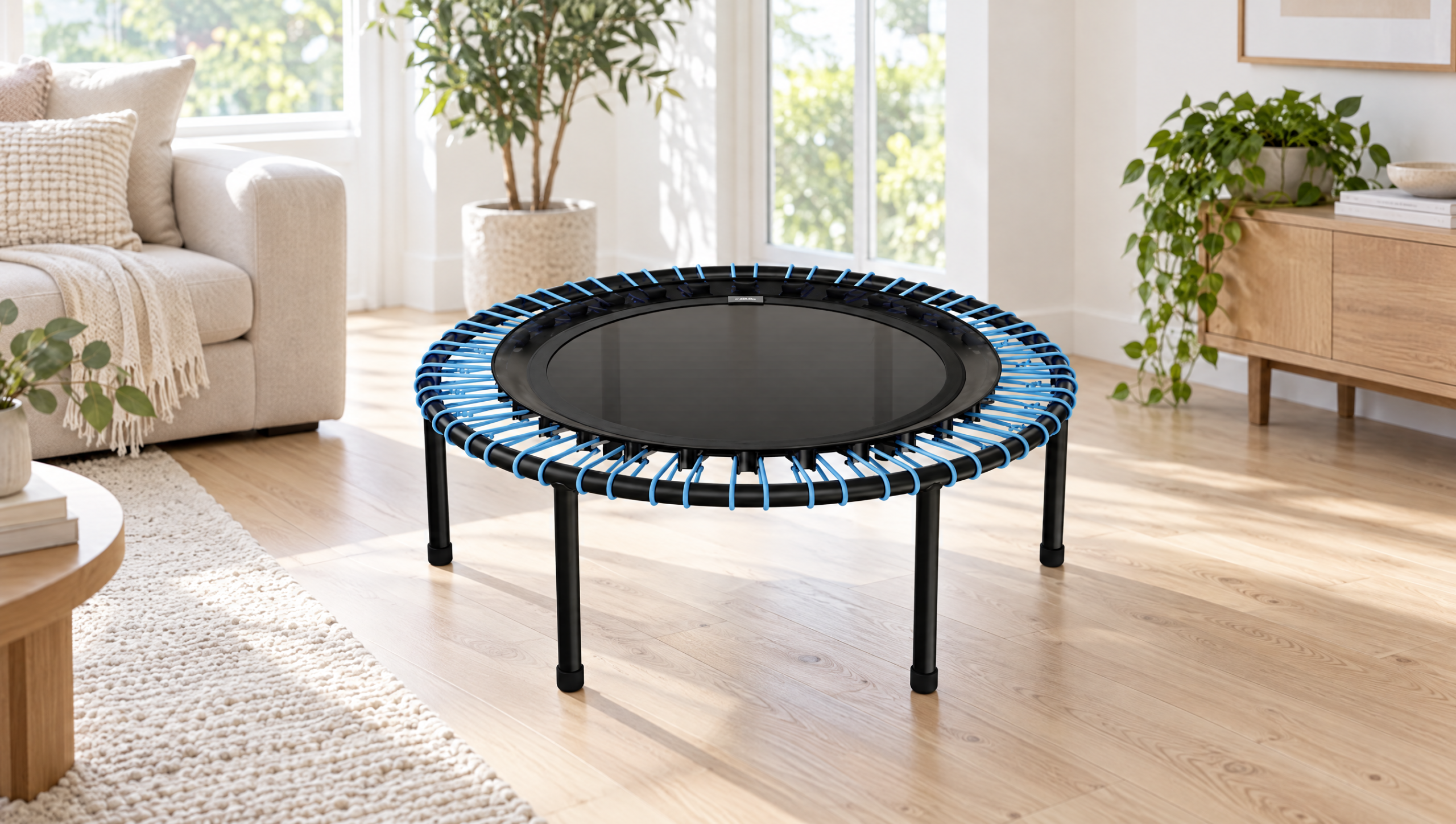
If you’ve looked into rebounding at all, you’ve seen the name Bellicon rebounder. It’s the rebounder other rebounders get compared to — the premium, bungee-based mini trampoline from Germany that promises a smoother, quieter bounce than anything with steel springs. But it’s also a premium-tier purchase, so the real question is whether the bounce is worth it. Here’s what Bellicon actually offers, where it shines, and where it falls short.
What Makes the Bellicon Rebounder Different
Most mini trampolines use steel springs. Bellicon uses bungees — thick elastic cords arranged in a ring around the mat. That single design choice drives almost everything people love about it:
- The bounce is softer and quieter. Bungees stretch progressively, so the landing feels cushioned rather than jarring, and there’s no metal-on-metal noise. Reviewers consistently call it the quietest rebounder they’ve used — not silent, but far quieter than spring models.
- The bounce feels even. Because the bungees distribute force around the whole mat, the surface stays stable no matter where you land on it.
- You can change the feel. Bellicon sells bungees in different strengths (soft, medium, strong, extra-strong), so you can tune the bounce to your weight and workout style, and replace them as they wear.
The frame comes in two main sizes, 39 inches and 44 inches, and Bellicon is made in Germany with a reputation for solid build quality — reviewers often describe it arriving mostly assembled, unlike budget rebounders that take an hour to put together.
Sizes, Bungees, and Accessories
Sizes. The 39-inch model suits smaller spaces and shorter users; the 44-inch gives more jumping room for taller users or wider movements. Both are meant for indoor use on a flat, stable surface.
Bungee strengths. This is the part most buyers overlook. The right bungee strength depends on your body weight and how hard you bounce — too soft and the mat bottoms out, too firm and the bounce feels dead. Bellicon’s own guidance matches bungee strength to weight, so it’s worth getting this right at purchase rather than discovering it later.
Legs. You choose between screw-on legs and folding legs. Screw-on legs are simpler and sturdier; folding legs let you slide the rebounder under a bed, but some users find them fiddly to fold, especially with limited grip strength.
Stability bar. Bellicon sells an add-on T-bar handle for balance support. If you’re new to rebounding, rehabbing, or unsteady getting on and off, this is worth considering — several reviewers mention it as the fix for the uncovered-bungee edge feeling less secure.
bellicon+ workouts. Purchase includes a trial of bellicon+, the brand’s workout platform with hundreds of guided videos — cardio, lymphatic-focused routines, balance work, and gentle sessions. It’s a genuine plus for beginners who don’t know what to do on a rebounder beyond bouncing.
What the Reviews Actually Say
The praise is consistent: smooth, quiet bounce; sturdy German build; joint-friendly feel; fun enough that people actually use it daily. The criticisms are consistent too:
- Premium price tier. This is the most expensive end of the rebounder market, and the most common complaint is whether the price is justified — especially when budget bungee rebounders exist.
- Smaller jump space than expected. Some buyers find the usable mat area tighter than the frame size suggests.
- Uncovered bungees. The bungee ring is exposed around the mat edge, which some users find visually unfinished or slightly insecure underfoot — the stability bar helps here.
- Storage trade-offs. Even with folding legs, it’s a large, round object to store, and the folding mechanism isn’t effortless.
- Warranty split. Reported coverage is generous on the frame (seven years) and mat (three years) but much shorter on the bungees themselves (one year) — bungees are a wear item, so factor in eventual replacement.
Bellicon Rebounder vs. Spring Rebounders
The honest comparison: spring rebounders are cheaper, widely available, and perfectly fine for casual bouncing. What they give up is quietness and joint softness — springs are noisier, firmer, and can feel jarring on knees and ankles over time. The Bellicon rebounder’s bungee system is the reason to pay more; if quiet operation and a soft bounce matter to you (apartment living, early-morning workouts, sensitive joints), that’s the case for it. If budget matters most and you just want to bounce, a spring model or a budget bungee model will do the job.
Who It’s For
The Bellicon rebounder makes the most sense if you rebound regularly (or plan to), you want the quietest, softest bounce available, you value build quality and a real workout library, and the premium tier fits your budget. It’s less suited to anyone testing whether they’ll even like rebounding — for that, a budget model is the smarter first step — or anyone short on storage space.
The Bottom Line
I think the Bellicon rebounder earns its reputation. The bungee bounce really is smoother and quieter than spring rebounders, the build quality is a step above the budget tier, and the workout library removes the “what do I actually do on this thing” problem. The price is the real objection, and it’s a fair one — you’re paying for refinement, not a different exercise. If rebounding is already a habit you want to upgrade, Bellicon is the obvious pick. If you’re just curious about rebounding, start cheaper and upgrade later.
This post is for general information only and is not medical advice. If you have a health condition, check with your clinician before changing supplements or routines.