If you get seasonal allergies, you know the pattern. The trees bloom, the grass grows, or the ragweed starts, and suddenly you're sneezing, your eyes itch, your nose is either blocked or running, and you're tired in a way sleep doesn't quite fix. You want relief, and you'd rather not reach for a pill every day if something simpler works.
Some natural options do help, and this guide covers them honestly — what each one can do, what it can't, and where the evidence is thin. Natural doesn't mean weak, but it also doesn't mean proven, and none of these options cures allergies. Managing allergies is about reducing exposure and calming symptoms, not eliminating the underlying sensitivity.
What seasonal allergies actually are
Seasonal allergies happen when your immune system treats harmless pollen as a threat. Trees in spring, grasses in late spring and summer, and ragweed in late summer and fall are the usual triggers. When pollen lands on your nose and eyes, your immune system releases histamine and other chemicals, which cause the sneezing, itching, congestion, and watery eyes you know too well.
Understanding that mechanism helps you sort real options from wishful ones: anything that reduces pollen exposure, rinses pollen away, or calms that immune response has a plausible path to helping.
The natural options, and what each one can honestly do
| Option | What it may help with | Honest limits |
|---|---|---|
| Saline nasal rinse | Congestion and rinsing pollen from nasal passages | Helps symptoms, doesn't stop the allergic response; must use safe water |
| Showering and changing clothes after being outdoors | Pollen carried indoors on skin, hair, and clothes | Simple and free, but only reduces exposure, doesn't treat symptoms already present |
| HEPA air filter and closed windows | Indoor pollen levels during high-pollen days | Helps indoors only; outdoor exposure still happens |
| Sunglasses outdoors | Pollen reaching the eyes | Reduces eye symptoms, does nothing for nose or congestion |
| Local honey | No reliable evidence for allergy relief | A pleasant food, not a treatment; not for children under one year |
| Butterbur supplements | Some evidence for nasal symptoms in studies | Quality varies, safety concerns with unprocessed forms, interacts with some medications |
| Quercetin and vitamin C supplements | Early, limited evidence; mostly lab and small studies | Not proven for seasonal allergies; supplements aren't risk-free |
Start here: reduce the pollen that reaches you
Before supplements, before anything you swallow, the most effective natural step is reducing exposure. Less pollen in your nose and eyes means fewer symptoms. It's not a complete solution, but it's the foundation everything else builds on.
- Check pollen counts and plan around them. Pollen is usually highest in the morning and on dry, windy days, and lower after rain. Shift outdoor exercise to later in the day or to lower-pollen days when you can.
- Shower and change clothes after time outdoors. Pollen sticks to hair, skin, and clothing, and keeps irritating you indoors long after you've come inside.
- Keep windows closed on high-pollen days. Use air conditioning or a fan with a filter instead, and save open windows for low-pollen days or after rain.
- Wash bedding and pillowcases more often during allergy season. Pollen settles on bedding, and you spend hours with your face in it. A weekly hot wash during peak season is a small habit with a real payoff.
- Wear sunglasses outdoors. Wraparound styles help most, blocking pollen from the sides as well as the front. They won't help your nose, but for itchy, watery eyes, they're a genuine, simple fix.
- Dry laundry indoors during peak season. Clothes on an outdoor line collect pollen efficiently, which defeats the purpose of washing them.
Saline rinses: the natural option with the best support
A saline nasal rinse — salt water flushed gently through the nasal passages with a squeeze bottle or neti pot — is the natural allergy option with the most consistent support behind it. It works mechanically: it washes pollen, mucus, and irritants out of your nose and thins mucus. Many people find it reduces congestion, especially when used once or twice daily during allergy season.
The safety rule here is non-negotiable: use only distilled water, water that has been boiled and then cooled, or sterile saline from a pharmacy — never plain tap water in a nasal rinse. Tap water can carry organisms that are harmless to drink but dangerous in the nose, and there have been rare but serious infections from this mistake.
Also clean the rinse device after each use and let it air dry, and replace it according to the manufacturer's instructions.
Indoor air: filters, cleaning, and realistic expectations
A HEPA air filter in the bedroom can reduce indoor pollen levels, especially if you keep the door closed and run it consistently during allergy season. It's most useful where you sleep, because that's where you spend the most uninterrupted hours breathing the same air. A filter won't help outdoors, and it won't eliminate symptoms on its own.
Regular cleaning helps too, with a caveat: vacuuming and dusting stir up particles before they settle, so wear a mask while cleaning if you're the allergy sufferer, and use a vacuum with a HEPA filter. Damp dusting — wiping surfaces with a damp cloth rather than a dry one — traps pollen instead of spreading it.
Honey, herbs, and supplements: what the evidence actually says
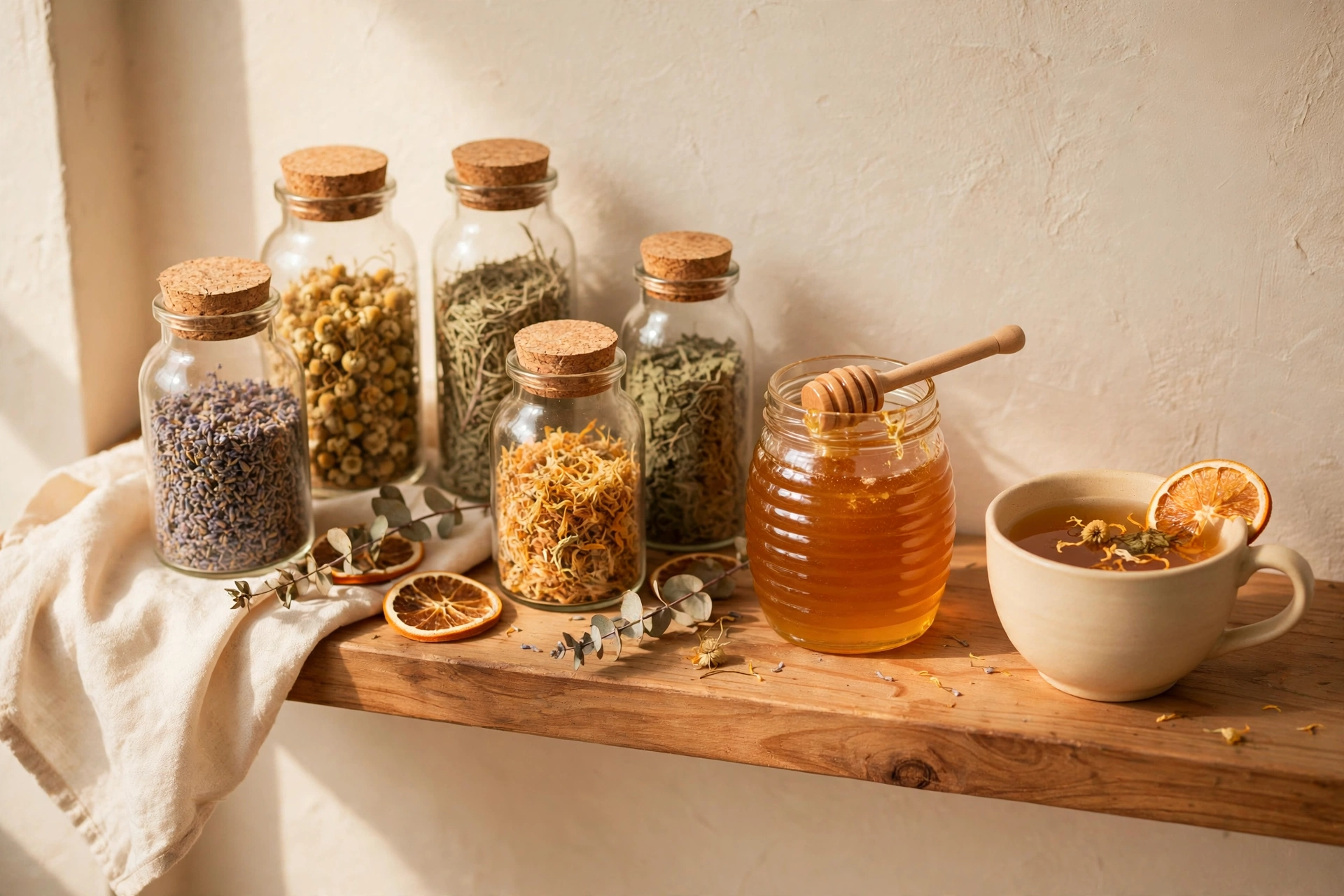
Local honey is the classic natural allergy remedy, and the idea behind it sounds plausible: small amounts of local pollen in honey might desensitize you, like a gentle version of allergy shots. The evidence doesn't support it. The pollen in honey is mostly from flowers bees visit, while allergy-causing pollen comes mostly from wind-pollinated trees, grasses, and ragweed — different pollens entirely. Studies have found little to no benefit. Honey is a lovely food, and if you enjoy it in tea, that's a fine reason to use it — but it's not an allergy treatment. And one firm safety note: never give honey to a child under one year old, because of the risk of infant botulism.
Butterbur is the herbal option with the most research behind it for nasal allergy symptoms, with some studies showing it helps comparably to certain antihistamines. But the safety picture is complicated: raw, unprocessed butterbur contains compounds that can harm the liver, so only products specifically processed to remove those compounds should ever be considered, and even those can interact with medications. This is a "talk with your clinician or pharmacist first" supplement, not a casual purchase.
Quercetin, a plant compound found in onions, apples, and berries, has lab evidence for calming histamine release, but human studies for seasonal allergies are small and early. Vitamin C has a similar story: interesting mechanisms, limited human proof. Eating foods rich in both is good nutrition regardless, but taking high-dose supplements for allergies is getting ahead of the evidence.
Probiotics are sometimes marketed for allergies, but the evidence for seasonal allergy relief in humans is not strong enough to recommend them for that purpose. If you take them for other reasons, that's fine — just don't count on them for pollen season.
The pattern across all of these: the more specific and dramatic the claim, the weaker the evidence tends to be. Food sources of these compounds are safe and nutritious. Concentrated supplements are where the claims outrun the proof, and where a conversation with a clinician matters most.
What about steam and essential oils?
Steam inhalation can temporarily ease congestion by moistening nasal passages. It's comfort, not treatment, and it doesn't reduce the allergic response. Be careful with very hot water, especially around children.
Essential oils like eucalyptus or peppermint can make breathing feel clearer because of their strong scent, but they don't treat allergies, and they can irritate airways, especially for people with asthma. If you use them, keep the room ventilated and stop if they worsen coughing or breathing.
Safety notes: kids, pregnancy, asthma, and medications
Natural options still need safety thinking, because "natural" doesn't mean risk-free.
For children, saline rinses can help older kids who can cooperate with them, but use age-appropriate devices and supervision, and check with a pediatrician first for young children. Never give honey to infants under one year. Be cautious with herbal supplements and essential oils around children.
During pregnancy, saline rinses and exposure-reduction habits are generally considered low-risk, but check with your clinician before starting any herbal supplement, including butterbur, which is not recommended in pregnancy.
If you have asthma, take seasonal allergies especially seriously, because allergies can trigger asthma flare-ups. Uncontrolled allergies plus asthma deserves a clinician's attention, not just home measures. The same applies if you take medications that could interact with supplements — blood thinners and immune-suppressing medications are reasons to check before adding an herbal product.
When to see a clinician
See a clinician if your symptoms don't improve with exposure reduction and saline rinses, if they interfere with sleep, work, or daily life, or if they last well beyond the expected pollen season. Persistent symptoms may mean something else is going on — a sinus infection, a different trigger like dust mites or pet dander, or allergies needing stronger treatment.
Seek care sooner if you have trouble breathing, wheezing, chest tightness, or asthma symptoms that worsen during allergy season. Those need evaluation, not just home measures.
A clinician can also offer options beyond the natural ones. Allergy testing can identify exactly which pollens trigger you, making exposure reduction far more targeted. Nasal sprays, antihistamines, and eye drops treat symptoms more directly than natural options. And allergy immunotherapy — shots or tablets that gradually desensitize your immune system to specific pollens — addresses the underlying sensitivity rather than just the symptoms, with strong evidence behind it for appropriate candidates.
The bottom line
Seasonal allergy relief, naturally, starts with the unglamorous work: checking pollen counts, showering after being outdoors, keeping windows closed on high-pollen days, washing bedding, and rinsing your nose with safe saline. Those habits lower your pollen load, and a lower load means milder symptoms. Honey is food, not treatment. Herbal supplements have thinner evidence and real safety questions, so they deserve a clinician conversation first.
Reduce exposure first, rinse what gets in, and get medical help when symptoms persist, disrupt your life, or affect your breathing. That's the natural approach most likely to get you through pollen season feeling human.
This post is for general information only and is not medical advice. If you have a health condition, check with your clinician before changing supplements or routines.