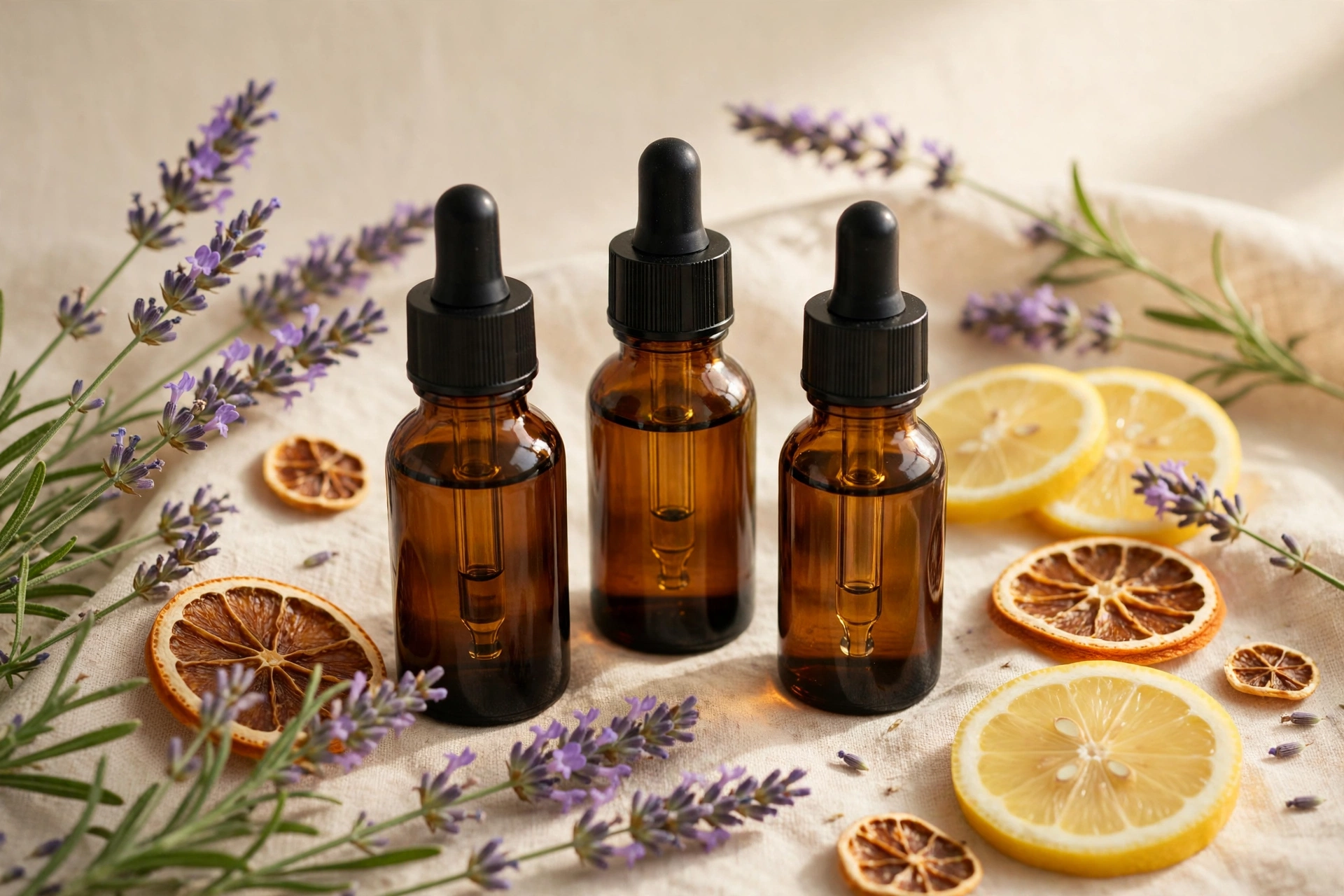
You probably have a bottle or two — peppermint for a headache, lavender for sleep, eucalyptus for a cold. Essential oils smell wonderful, they have real uses, and they are sold with claims that go far past what the evidence supports. Some of that marketing comes from multi-level marketing brands, where the person selling you the oil also earns from recruiting you. Read those claims twice.
Here is the plain version, sorted by use, plus the safety rules that matter more than any benefit.
What essential oils actually are
An essential oil is a concentrated plant extract, usually made by steam-distilling leaves, flowers, bark, or peel. That concentration is the whole story. A bottle of peppermint oil is far stronger than a cup of peppermint tea, and that strength is why it can irritate skin, trigger breathing problems, or harm a pet even though the plant itself is harmless in normal amounts.
Concentrated is not the same as powerful medicine, and natural is not the same as safe. The question with any essential oil is always the same: what is the evidence for this specific use, and what are the risks of using it this way?
Quality varies a lot, too. Essential oils are not tightly regulated, so labels like “therapeutic grade” are marketing phrases invented by sellers, not standards set by a regulator. I look for a botanical name on the label (Lavandula angustifolia, not just “lavender”) and a brand that publishes third-party test results.
Pain: the most believable use
If there is one area where essential oils have decent support, it is short-term, mild pain relief — used on the skin, diluted, as a complement to other care, not a replacement for it.
Peppermint oil is the best-studied here. Its menthol content creates a cooling sensation, and small trials have found it helps with tension-type headaches when applied to the temples and forehead, and with mild muscle soreness in a massage blend. Lavender has modest evidence for easing headache and tension, mostly through relaxation. Eucalyptus shows up in studies of muscle and joint discomfort, again as part of a topical blend rather than a standalone cure.
The honest framing: essential oils may take the edge off mild, everyday pain. They do not fix chronic pain or replace care for a real injury, and the studies are small and short. New, severe, or spreading pain, or pain with weakness or numbness, is a clinician visit.
Hair growth: hopeful, not proven
Rosemary oil gets the most attention for hair, thanks to one small trial that compared it to a standard hair-loss treatment and found similar results after several months. That study gets quoted everywhere, and it deserves a closer look: it was small, and “similar to the comparison treatment” is a long way from “grows hair back.”
Peppermint oil has some early lab and animal research suggesting it may support hair follicle activity, but that is not evidence in people. Cedarwood, lavender, and thyme appear in older, tiny studies, often blended together, so no one can say which oil did what.
If you try rosemary oil for hair, think months, not weeks, and modest help at best. Massage a diluted blend into the scalp a few times a week. Hair loss has many causes — hormones, genetics, stress, nutrition, medication — and no oil addresses all of them. Sudden or patchy loss, or loss with scalp pain, needs a clinician before a bottle.
Coughs and congestion: steam helps, oils may help a little
This is the use most of us grew up with: eucalyptus in a steamy shower, a chest rub with menthol and camphor. Here the evidence is mixed but not imaginary. Eucalyptus oil contains cineole, studied for bronchitis symptoms, and menthol creates a sensation of clearer breathing even when it does not actually open the airways much. Feeling like you can breathe is real comfort, even if the measurement barely moves.
The steam is doing a lot of the work, and that is fine. A hot shower or a humidifier can ease congestion on its own. Adding eucalyptus to the steam may add comfort, but it does not shorten a cold, treat an infection, or replace care for asthma, pneumonia, or a cough lasting more than a couple of weeks.
Room sprays and diffusers: scent, mood, and honest limits
Diffusing oils makes a room smell good, and smell genuinely affects mood. Lavender has modest evidence for easing anxiety and supporting sleep, and citrus scents tend to lift mood briefly. If a diffuser helps you wind down, that is a real benefit — just a small, personal one, not a health treatment. What diffusers do not do is clean your air or kill germs in any meaningful way; “purifying” claims are marketing, not science.
Run a diffuser in a ventilated room, for limited stretches, not all day with the doors closed. Constant exposure raises the odds of headaches and breathing trouble, especially for kids, pets, and anyone with asthma. If anyone starts coughing or getting a headache when the diffuser runs, turn it off.
Oils by use, at a glance
| Use | Oils people reach for | What the evidence actually says | Watch out for |
|---|---|---|---|
| Headache and tension | Peppermint, lavender | Best small-trial support for peppermint; lavender helps via relaxation | Never near the eyes; stop if skin reddens |
| Muscle soreness | Peppermint, eucalyptus, rosemary | Modest help in a massage blend, short-term only | Not on broken skin or with heating pads |
| Hair growth | Rosemary, peppermint, cedarwood | One small rosemary trial; the rest is early evidence | Months to judge; sudden loss needs a clinician |
| Cough and congestion | Eucalyptus, menthol blends | Comfort and a sense of clearer breathing; does not shorten a cold | Can trigger asthma; never for young children |
| Sleep and mood | Lavender, cedarwood, citrus | Small studies support mild relaxation effects | Diffuse briefly, in ventilated rooms |
| Room scent | Citrus, pine, lavender | Smells good; mood lift is small and short-lived | No air-cleaning claims hold up |
The skin rule: never undiluted
This is the safety rule I would tattoo on every bottle if I could. Essential oils go on skin only diluted in a carrier oil, like jojoba or sweet almond oil. Undiluted oils can cause burns, rashes, and allergic reactions, and the reaction can show up after days of trouble-free use — sensitization builds quietly, then arrives all at once.
Patch-test first: a small amount of the diluted blend on the inside of your forearm, then wait a day. If there is redness or itching, that oil is not for your skin. Citrus oils like bergamot and lemon can make skin burn badly in sunlight, a reaction called phototoxicity, so never apply them before going outdoors.
Store bottles out of reach of children and pets, with caps on tight. A swallowed mouthful can be seriously harmful, and children have been hospitalized from drinking oils that smell like candy or fruit.
Who should be extra careful
- Pregnancy and breastfeeding. Many oils have no safety data in pregnancy, and some — including clary sage, rosemary, and juniper — are traditionally avoided over contraction concerns. Skip essential oils in pregnancy unless your clinician or midwife has cleared a specific oil and use. Do not take advice on this from a seller.
- Babies and young children. Never use essential oils on or near babies under three months, and be very cautious with toddlers. Eucalyptus and peppermint contain compounds that can irritate a small child’s breathing and, in rare cases, cause serious breathing problems. Diffusion in a baby’s room is not a gentle option — it is an exposure their small airways did not ask for. For older children, use only kid-appropriate oils, well diluted, and never on the face.
- Pets. Cats are the big concern: they lack a liver enzyme that processes many plant compounds, so oils fine for you can build up to harmful levels in a cat. Tea tree oil is especially risky for cats, and diffusers in a closed room with a cat are a bad idea. Dogs are more tolerant but still sensitive — never apply oils to a pet, and if a pet leaves the room, paws at its face, or seems lethargic after diffusing, stop and air the room out. If you suspect exposure, call your veterinarian.
- Asthma and allergies. Strong scents are a common trigger. If you have asthma, test any new oil briefly in a ventilated space, and keep your reliever inhaler handy.
- Ingestion. Do not swallow essential oils because a seller or a social post says to. A few drops in water is not a wellness tonic — it is a concentrated extract hitting your stomach, liver, and kidneys, with no reliable safety data and real poisoning risk. Food-grade flavorings used in tiny amounts in cooking are a different product from a bottle of essential oil.
- Medication interactions. Some oils can interact with medications or conditions — wintergreen with blood thinners is one example. If you take regular medication, check with your clinician or pharmacist before using oils regularly.
If any of this list applies to your household, the default is caution, not curiosity. The oils will still be there later; a bad reaction in a child or a cat is not something you undo.
What essential oils will not do
- Cure infections, anxiety disorders, or chronic disease. Oils may ease a symptom for a while. They do not treat the underlying condition, and delaying real treatment while trying oils is the actual risk.
- Replace medication. A headache oil is not a migraine treatment. A calming scent is not anxiety therapy.
- Detox your body, home, or air. Your liver does the detoxing, and no diffuser changes that.
- Work better the more you use. Stronger is not better here — it is more likely to irritate or trigger a reaction. The smallest amount that gives you the effect you want is the right amount.
The bottom line
Essential oils earn their place in a home, honestly used: peppermint may ease a tension headache, eucalyptus steam may make a cold more bearable, lavender may help you wind down, rosemary may modestly support hair over months. Those are small, real benefits, without the miracle claims layered on top. The rules are simple: dilute before skin contact, patch-test, keep them away from babies, be careful with cats and asthma, and never swallow them.
If you buy oils, buy them like an ingredient, not a cure: botanical name on the label, a seller who publishes test results, and claims you can check.
This post is for general information only and is not medical advice. If you have a health condition, check with your clinician before changing supplements or routines.