This article may contain affiliate links.
You know the moment when you catch your hair in the mirror and it looks thinner than it used to — a wider part, a ponytail that feels lighter, a few too many strands in the shower drain? That is the moment a hair growth serum starts to sound worth trying. A hair growth serum is a leave-in treatment for the scalp, and the good ones are less about magic and more about consistency: the right ingredients, massaged into the scalp, used patiently for months.
I think of a hair growth serum the way I think of a good face serum — it is a small daily habit that supports the skin underneath, and the results come slowly, quietly, and only if you keep showing up. Here is what actually helps, what to look for on a label, and how I use one.
What Is a Hair Growth Serum?
A hair growth serum is a lightweight, leave-in liquid made to be applied to the scalp, not the hair itself. It is different from a hair oil, which coats and conditions the lengths, and different from a shampoo, which washes away in a minute. A serum stays on the scalp for hours, which is the whole point — the ingredients sit where the hair actually grows.
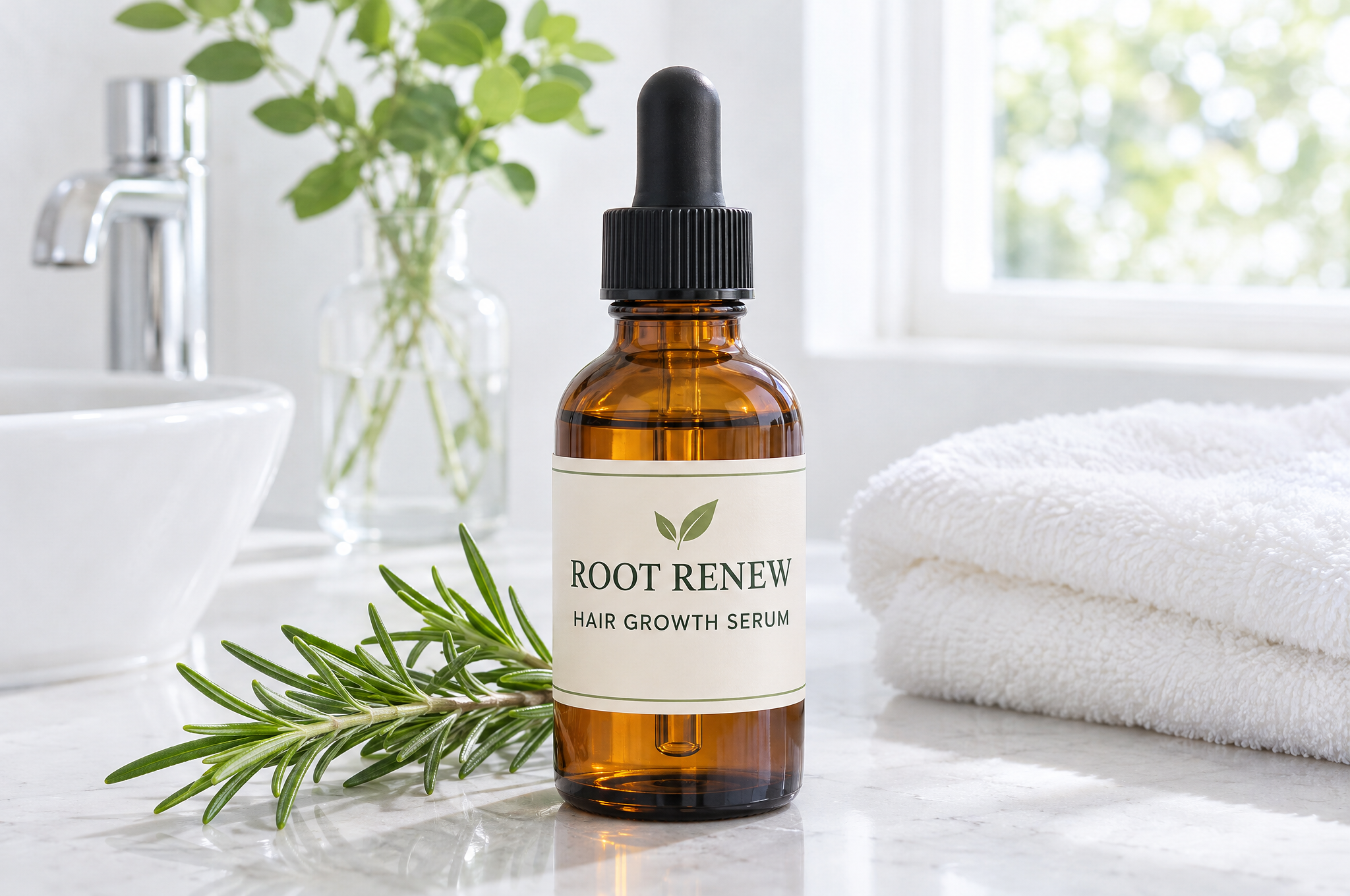
Most hair growth serums fall into two groups. The first is the plant-based kind: rosemary oil, caffeine, peppermint, and peptides in a light carrier, made to support the scalp and the hair follicles. The second is the treatment kind, built around minoxidil, the one ingredient with the longest track record for hair regrowth, sold over the counter in 2% and 5% strengths. Both kinds work the same way in practice — a few drops or a measured dose, massaged into the scalp, once or twice a day, for months — and neither one works overnight.
How Hair Growth Serum Works
A hair growth serum helps in three quiet ways, and understanding them is what keeps expectations honest. First, it supports the scalp itself: a healthy scalp, clean and calm and well-circulated, grows better hair than a tight, dry, irritated one. Second, some ingredients — rosemary oil and caffeine are the best-known — are traditionally used to support circulation to the follicles, which is why so many serums include them. Third, a serum keeps the scalp moisturized and comfortable, which means less itching, less flaking, and less breakage at the root.
What a serum does not do is grow hair where the follicles have stopped working entirely, or replace the hair that genetics and hormones have already taken. That is the honest part, and it matters: a serum is a support, not a rescue. The people who see the most from one are the ones whose hair is thinning gradually, whose scalp is healthy, and who use it every single day without skipping.
Hair Growth Serum Ingredients to Look For
The label is where a good serum proves itself, and a few ingredients are worth looking for. Rosemary oil is the one I look for first — it is the best-supported plant ingredient for hair growth, and it is the reason so many natural serums lead with it. Caffeine is another good sign, traditionally used to support the follicles and often paired with rosemary. Peptides show up in the newer serums, and they are worth trying if your budget allows. Niacinamide supports the scalp barrier, and peppermint oil gives that cool, tingling feeling that makes a scalp massage feel like it is doing something.
What I skip is a serum that hides its ingredients behind a proprietary blend with no amounts, or one that promises new hair in thirty days. A good label names its key ingredients plainly, in order, with nothing to hide. And if you are choosing between a hair growth oil and a hair growth serum, the difference is texture and time: an oil is richer and heavier and best used as a weekly treatment, while a serum is light enough to use every day and leave in.
How I Use Hair Growth Serum
My routine is simple, and the simplicity is the point — a routine I will actually do every day beats a perfect one I quit in a week. I part my hair in sections, apply a few drops of serum directly to the scalp along each part, and massage it in with my fingertips for two or three minutes. The massage matters as much as the serum: it spreads the product, wakes up the scalp, and turns a chore into a small, calming ritual.
I use my serum at night, so it can sit on the scalp undisturbed while I sleep, and I wash my hair as normal in the morning. If I am using a rosemary-based serum, I sometimes add a drop of rosemary oil to my shampoo too — it is the same ingredient, in a gentler dose, and it makes the whole wash smell wonderful. The key habit is consistency: the same time, the same amount, every single day, even on the days when nothing seems to be happening.
For a fuller routine, my Cedarwood Essential Oil Benefits guide covers cedarwood oil, another scalp-friendly oil I pair with rosemary — cedarwood in the evening blend, rosemary beside it, and the two smell wonderful together.
Hair Growth Serum: What to Expect
Here is the honest timeline, because it is the part most people are not told. A hair growth serum takes at least three months of daily use before you can fairly judge it, and most people see the first real changes around month four or five: less shedding in the shower, a fuller-looking part, baby hairs along the hairline. Hair grows about half an inch a month, so anything you do today shows up slowly, and the first sign of progress is usually less hair coming out rather than more hair coming in.
Take a photo of your part and your hairline on day one, in the same light, and take the same photo once a month. It is the only way to see slow change honestly, because the mirror lies a little every day. And if a serum makes your scalp itch, flake, or break out, stop using it — a product that irritates your scalp is not helping your hair, no matter what the label promises.
Hair Growth Serum Safety: What to Know
A hair growth serum is gentle as treatments go, but it still deserves respect. Patch test any new serum on a small area behind your ear first and wait a day before using it all over your scalp. If you are pregnant, nursing, taking medication, or managing a health condition, check with your clinician before starting one — minoxidil in particular is not for everyone, and it is worth asking first rather than guessing. Never use a serum on broken or irritated skin, and keep it out of your eyes.
One more note: if your hair loss is sudden, patchy, or comes with other symptoms, see a doctor before reaching for a serum. Sudden shedding can have causes a serum cannot touch — thyroid changes, iron levels, stress, or medication — and finding the cause matters more than any bottle. A serum supports healthy growth; it does not diagnose why hair is falling out.
Hair Growth Serum: Best For
A hair growth serum is best for you if your hair is thinning gradually, if your ponytail feels lighter than it used to, or if you want a simple daily habit that supports your scalp. Try it first with a rosemary-based serum — a few drops, massaged in nightly — and give it a full three months before you decide whether it is working. If you want faster or stronger results, or if your hair loss is sudden or patchy, a dermatologist is the better next step than a stronger bottle.
The Bottom Line on Hair Growth Serum
A hair growth serum is a quiet, patient habit: the right ingredients, massaged into the scalp, used every day for months. It will not grow hair overnight, and it will not replace what genetics has already taken — but for gradual thinning, a good serum, used consistently, supports the scalp and the hair it grows. Pick one with ingredients you recognize, use it nightly, take a monthly photo, and give it time. Your hair grows slowly, and the habits that help it work slowly too.
This article is for general information only and is not medical advice. Talk to your doctor before using a hair growth serum if you are pregnant, nursing, taking medication, or managing a health condition, and see a doctor promptly if your hair loss is sudden, patchy, or comes with other symptoms.