You can’t see them, you can’t taste them, and they’re in just about everything — your water, your food, your clothes, the air in your kitchen. Microplastics are tiny pieces of plastic, smaller than 5 millimeters, that shed from the plastic all around us. And once I learned where they hide, I couldn’t unlearn it.
Here’s the part I love, though: you can’t eliminate microplastics completely, but small swaps cut your exposure a lot. I didn’t overhaul my whole life. I changed a few daily habits, starting with the ones that matter most, and this guide walks through exactly how to avoid microplastics — starting with what I did first.
On This Page
- What Microplastics Are
- Microplastics in Food
- Microplastics in Water
- How to Avoid Microplastics in the Kitchen
- How to Avoid Microplastics When You Shop
- How to Avoid Microplastics Around the House
- How to Avoid Microplastics: My Favorite Swaps First
- The Bottom Line on How to Avoid Microplastics
What Microplastics Are
Microplastics are pieces of plastic smaller than 5 millimeters — about the size of a pencil eraser or much, much smaller. Their tinier siblings, nanoplastics, are thinner than a strand of hair. They form when plastic breaks apart — a bottle in the sun, a cutting board under a knife, a fleece jacket in the wash, a tire on the road. Plastic doesn’t biodegrade like cotton or wood; it just breaks into smaller pieces that travel into soil, water, clouds, and food.
Researchers have found microplastics in blood, lungs, brains, placentas, even the plaque in arteries. That’s why I care about cutting down — not to be perfect, just to give my body less plastic to deal with, one swap at a time.
The good news is that the biggest sources are also the easiest to change. Your kitchen and your shopping cart are where most of your daily exposure comes from, and that’s exactly where I started.
Microplastics in Food
Testing has found microplastics in rice, tea, salt, sugar, beer, milk, bottled water, and seafood. One study tested 16 protein sources — steak, chicken nuggets, tofu — and found microplastics in every single one. Processed foods carried the most: the more a food is handled and packaged, the more chances plastic has to shed into it.
Hot food in plastic is the biggest culprit I learned about. Food that sat in a plastic takeout container for 45 minutes carried 34% higher levels of plastic chemicals than the same food served fresh. Heat makes plastic shed faster, and fatty or acidic foods pull even more out of the packaging. That one fact changed how I handle takeout forever.
The fixes are simple: rinsing rice with filtered water before cooking cuts its microplastic levels by up to 40%. Loose-leaf tea skips the plastic many tea bags contain. Foods in glass jars never sit in plastic at all. None of these take extra time — just a different choice at the shelf.
Microplastics in Water
Water is the single biggest pathway into our bodies, and bottled water is the worst of it: an average liter contains about 240,000 plastic particles, most of them nanoplastics. The water sits in that bottle for months before you drink it.
Tap water is the better starting point. It does contain some microplastics, but far fewer than bottled water, and it’s more tightly regulated. I switched to filtered tap water as my everyday drink, and it’s the single swap I recommend first. A good filter makes the water taste better too, which makes the habit easy to keep.
Boiling and filtering together can remove up to 90% of the plastic particles in water. I keep a glass pitcher of filtered water in the fridge and a reusable glass bottle for the car — simpler, cheaper, and I haven’t bought a case of bottled water in months.
How to Avoid Microplastics in the Kitchen
The kitchen is where I made my biggest changes, because it’s where food meets plastic most often. Here’s what I swapped, in the order I did it:
Glass instead of plastic for storage. — I moved leftovers into glass containers — they don’t shed anything into food, they don’t stain, and they last forever. I started with five and replaced the rest as the old plastic ones wore out.
Never microwave in plastic. — One study found that microwaving food in a plastic container for just three minutes released millions of microplastic particles and billions of nanoplastic particles per square centimeter. Heat plus plastic is the worst combination there is — I transfer food to glass or ceramic first. Ten seconds, and my food never touches hot plastic.
Wood cutting boards instead of plastic. — Every knife cut on a plastic board sheds tiny shavings into your food. I switched to wood — prettier, longer-lasting, and a quick oiling keeps them beautiful for years.
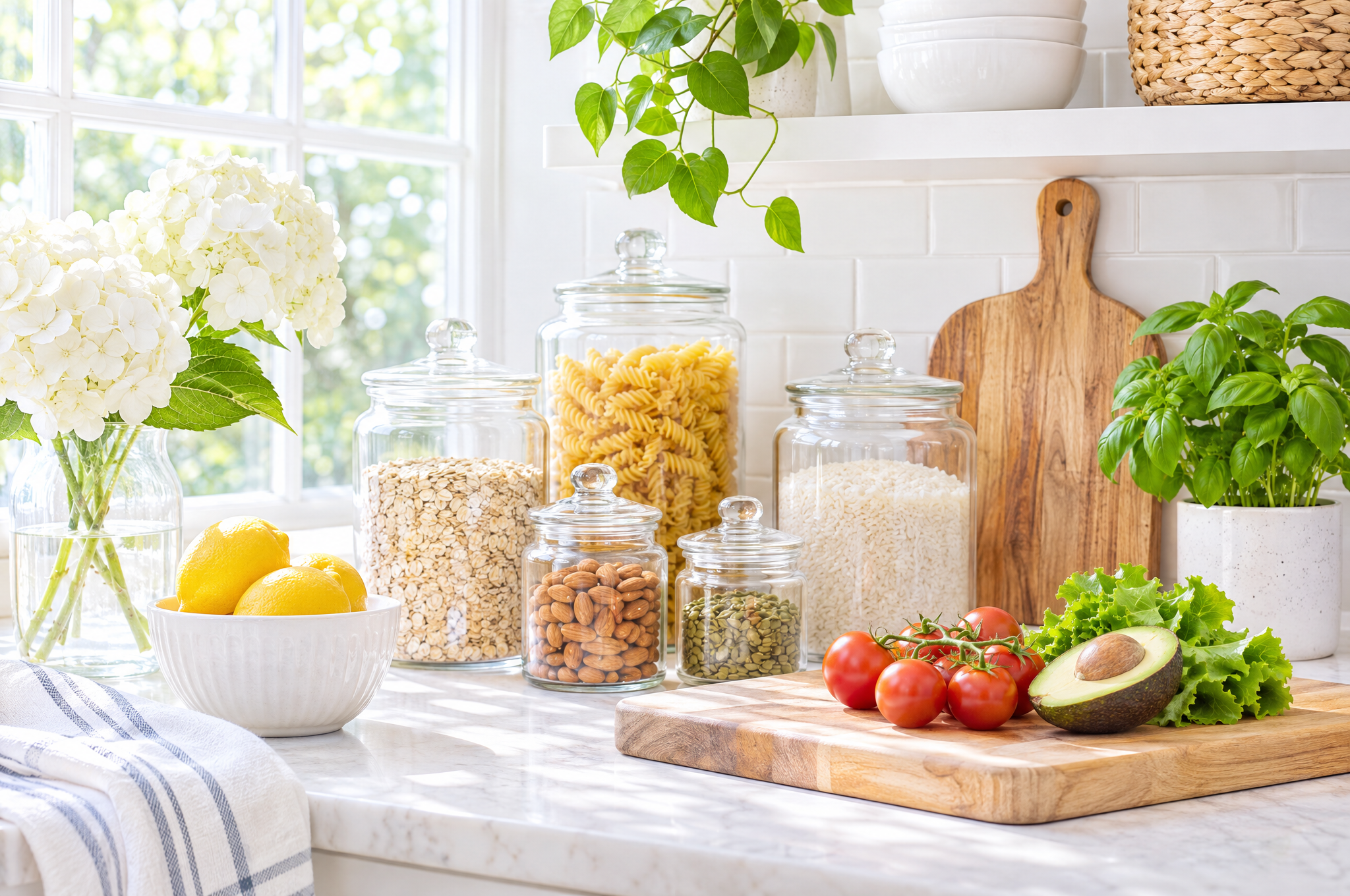
Glass and stainless steel for cooking and drinking. — I drink from glass and stainless steel, cook with cast iron and stainless steel, and store dry goods in glass jars with wooden lids — pretty on the shelf, and zero plastic touching my staples.
How to Avoid Microplastics When You Shop
Shopping is where the swaps get fun. I buy ketchup in a glass jar, greens bundled with a rubber band instead of wrapped in plastic, and produce loose whenever I can. Cloth produce bags and tote bags mean much less plastic comes home with me.
Farmers markets are my favorite hack. The vendors there usually wrap less, and I can ask for my bread in paper and my vegetables loose. Smaller shops and bulk bins are lovely for the same reason — less packaging between the food and me.
I also buy less processed food overall. Whole foods spend less time in plastic packaging and being handled by machines — a head of lettuce, loose carrots, peanut butter in a glass jar are the foods with the least plastic in their story.
How to Avoid Microplastics Around the House
Synthetic clothes shed microplastics in the wash — a big share of ocean microplastics comes from laundry — so I wash synthetics less often, in cold water, and reach for natural fibers more. A laundry filter bag catches the fibers that do shed.
I switched my cleaning products to a non-toxic system, which cut down on plastic spray bottles and harsh chemicals at the same time. My Branch Basics review walks through the system I use — one concentrate, glass bottles, and a much simpler shelf under my sink. I love that one change fixed two problems at once.
Dusting and vacuuming help too, since microplastics settle into house dust — I vacuum with a HEPA filter and dust with a damp cloth.
How to Avoid Microplastics: My Favorite Swaps First
Start here — my five favorite swaps, easiest first:
- Drink filtered tap water. Ditch bottled water. This one swap cuts your biggest source of microplastics, and it saves money from day one.
- Never microwave in plastic. Transfer food to glass or ceramic first. Ten seconds, huge difference.
- Store food in glass. Start with five containers and replace the rest over time.
- Rinse your rice. A quick rinse in filtered water before cooking cuts microplastics by up to 40%.
- Buy in glass, shop loose. Glass jars over plastic tubs, loose produce over wrapped, farmers market when you can.
I did one swap a week, and within a month my kitchen looked different and my exposure was way down. You don’t have to change everything at once — take your time, start with water, and let the rest follow.
The Bottom Line on How to Avoid Microplastics
Microplastics are everywhere, and that’s not going to change overnight. But how to avoid microplastics in everyday life turns out to be a lovely, practical project: filtered tap water, glass in the kitchen, no hot plastic, and a few smarter choices at the store. I love that every swap makes my home a little healthier and a little prettier at the same time.
Start with water, add one swap a week, and give yourself grace for the plastic you can’t avoid. Your body will thank you for every piece you keep out.
This article is for general information only and is not medical advice. Talk to your doctor if you have concerns about environmental exposures, especially if you are pregnant or have a health condition.