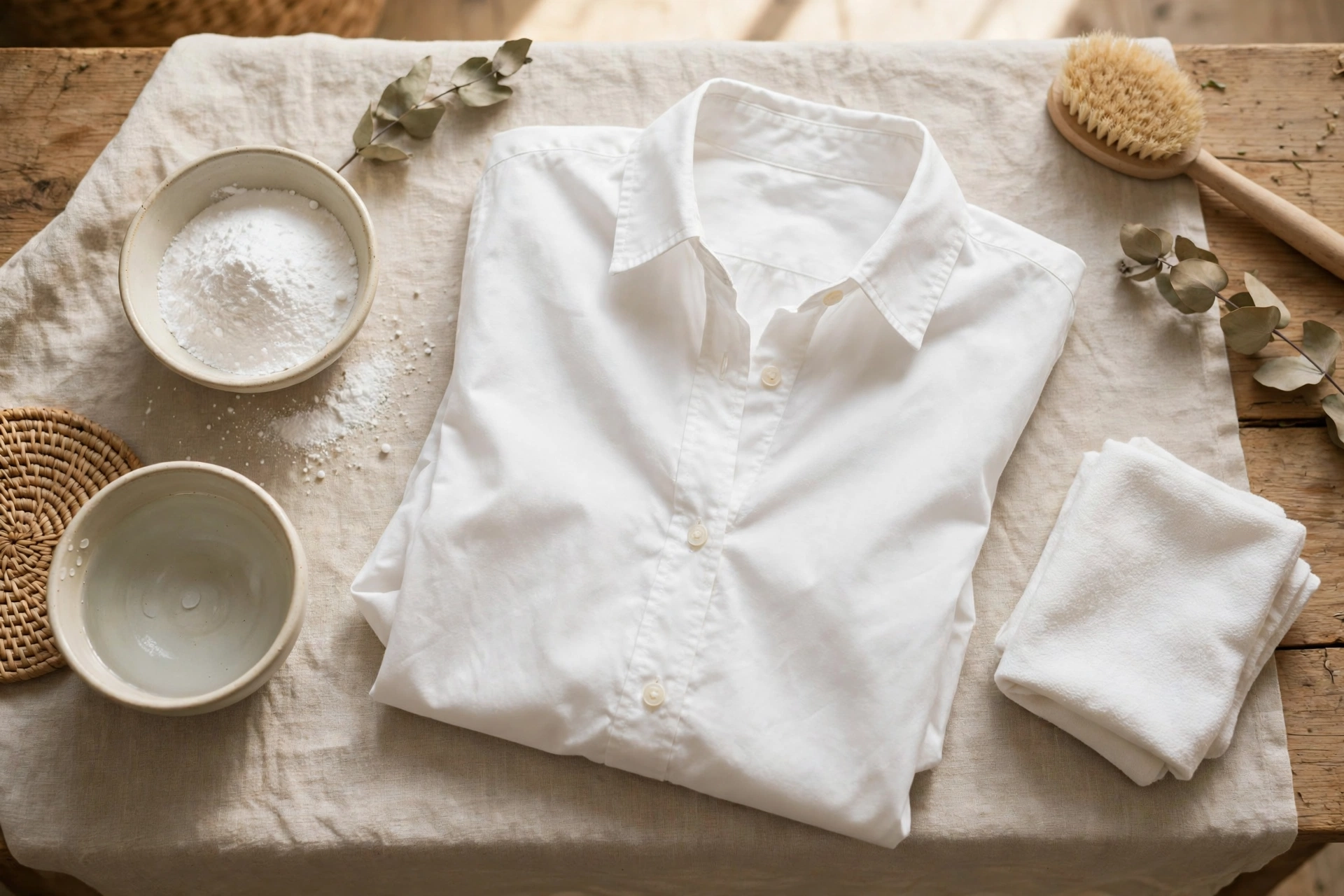
You know the moment. You look down, there’s a stain, and your first instinct is to grab whatever’s under the sink and start scrubbing. I get it. But most ruined clothes aren’t ruined by the stain itself. They’re ruined by the wrong treatment applied in a panic — hot water on blood, bleach on the wrong fabric, or a stain baked in by the dryer before anyone checked whether it was gone.
Stain removal is mostly matching the method to the stain. Once you know which kind you’re dealing with, the choices get simple.
The first rule: blot, don’t rub, and check before you dry
Almost every stain guide starts here because almost every stain gets worse when you skip it. Blot up as much as you can with a clean cloth or paper towel, working from the outside of the stain inward so you don’t spread it. Rubbing pushes the stain deeper into the fibers and frays the fabric around it, which is how a small spot turns into a faded patch.
Then, before the garment goes anywhere near heat, check the care label and check the stain. Heat sets many stains permanently. If the stain is still visible after washing, do not put the garment in the dryer — treat it again first.
Cold water is your default for most stains, especially protein-based ones like blood, milk, and sweat. Hot water cooks protein into fabric the way heat cooks an egg, and once that happens, the stain is much harder to lift.
What works on what: the quick table
This is the cheat sheet I wish I’d had years ago. Find your stain, start with the first method, and only move on if the stain is still there after rinsing.
| Stain type | Start with this | Avoid this |
|---|---|---|
| Coffee and tea | Cold water rinse, then plain dish soap worked into the stain | Hot water first, which can set tannin stains |
| Grease and cooking oil | Dish soap to cut the grease, then warm water | Water alone, which just spreads oil around |
| Blood | Cold water soak, then salt paste or hydrogen peroxide on whites only | Hot water, which sets blood fast |
| Grass | Dish soap and white vinegar, or rubbing alcohol on sturdy fabric | Chlorine bleach on colored fabric |
| Red wine | Salt or baking soda to absorb, then cold water and dish soap | White wine as a remedy, and heat before the stain is out |
| Sweat and yellowing | Baking soda paste or white vinegar soak before washing | Chlorine bleach on synthetics, which can yellow them further |
| Tomato sauce | Cold water rinse, dish soap, then sunlight for remaining color | Hot water before the stain is lifted |
| Ink (ballpoint) | Rubbing alcohol dabbed on, blotted, and rinsed | Water first on some inks, which can spread the mark |
Coffee, tea, and red wine: tannin stains
Coffee, tea, and red wine are tannin stains, which means they come from plant material and they bond to fabric over time. Speed matters more than strength here. Rinse with cold water as soon as you can, then work a small amount of plain dish soap into the stain with your fingers and rinse again.
For red wine, the old advice to pour white wine on it is a myth that mostly leaves you with two stains. What actually helps is absorption first: blot, cover the spot with salt or baking soda to draw out moisture, brush it off, then treat with cold water and dish soap. For a stain that has dried, a soak in cold water with a little dish soap before washing gives the soap time to loosen the tannin.
With tannin stains, patience beats scrubbing — a soak does more than force ever does.
Grease and oil: fight fat with a fat-cutter
Water alone doesn’t remove grease because oil and water don’t mix. That’s why a drop of plain dish soap — the kind made to cut grease on dishes — is the right tool here. Work it into the stain, let it sit for a few minutes so it can break up the oil, then rinse with the warmest water the care label allows.
Baking soda helps as a first step on a fresh grease spot: sprinkle it on, let it absorb the oil, brush it off, then treat with dish soap. This works on cooking oil, salad dressing, butter, and even the mystery grease spot that appears on a shirt for no apparent reason.
Blood, milk, and sweat: protein stains
Protein stains — blood, milk, egg, sweat — have one non-negotiable rule: cold water only, at least at first. Hot water sets protein stains, and once set, they are stubborn in a way fresh ones aren’t.
For fresh blood, rinse under cold running water right away, then soak in cold water. A paste of salt and cold water, applied and left for a while, helps lift what’s left. On white cotton, hydrogen peroxide can help with a dried blood stain, but keep it off colored fabric, where it can lighten the color. Hydrogen peroxide is a mild bleach, not a gentle all-purpose cleaner — treat it with that respect.
Sweat stains and underarm yellowing are a mix of protein and body oils, plus a reaction with antiperspirant. A baking soda paste, or a soak in water with white vinegar added, before a normal wash, usually lightens them. Chlorine bleach can make yellowing worse on synthetics, so it’s the wrong instinct here even though it feels like the strong option.
Grass, mud, and tomato: the outdoor and kitchen set
Grass stains are part dye, part protein, and they respond to dish soap plus white vinegar on sturdy fabrics like cotton and denim. On delicate fabrics, stick to dish soap alone and test first. Mud is the exception to the act-fast rule: let it dry completely, brush off as much as you can, then treat what’s left with dish soap and cold water.
Tomato sauce is a combination stain — oil plus pigment — so rinse in cold water, treat with dish soap for the oil, and then, if a faint orange shadow remains, lay the garment in sunlight. Sunlight is a genuinely useful fading tool for white and light fabrics, handling the last trace of tomato, berry, and grass color that soap leaves behind.
The natural toolkit, and what each item actually does
You don’t need a shelf of specialty products. A small set of ordinary items covers most stains, as long as you use each one for what it’s good at.
- White vinegar. A mild acid that helps dissolve mineral deposits, soap residue, and some dyes. Good in a pre-wash soak and for sweat stains.
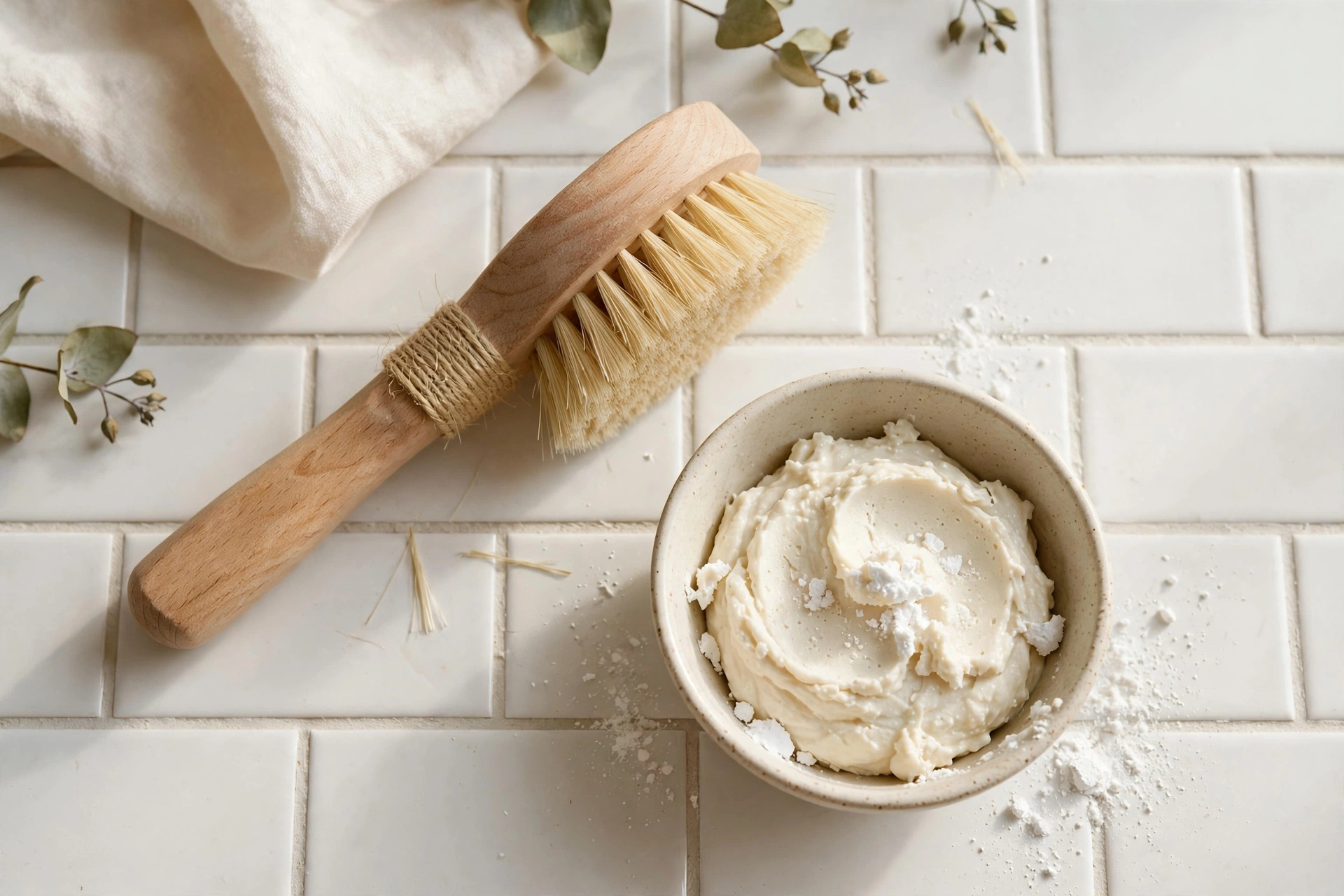
- Baking soda. A mild abrasive and an absorber. Good as a paste for sweat and odor, and sprinkled on fresh grease to absorb oil.
- Plain dish soap. Your grease-cutter. The workhorse for oil, food, and many combination stains. Use a clear version if you can, and rinse thoroughly.
- Hydrogen peroxide. A mild bleach for whites only. Useful on blood and some organic stains on white cotton. Keep it away from colors, wool, and silk.
- Salt. An absorber for fresh liquid stains like wine. It buys you time by drawing moisture out before you can wash.
- Sunlight. A gentle fading agent for whites and light fabrics.
The pattern is simple: match the tool to the stain, use the gentlest option that works, and test anything new on a hidden spot first. That last step takes thirty seconds and prevents the most common stain-removal disaster, which is a treatment that works on the stain and wrecks the fabric around it.
What ruins fabric: the mistakes to avoid
Some of these sound obvious until you’re standing over a favorite shirt with a stain spreading.
- Chlorine bleach on the wrong fabric. Bleach is fine on white cotton in the right amount. It damages wool, silk, and many synthetics, and it can yellow white synthetics instead of whitening them. When in doubt, skip it.
- Hot water on protein stains. Blood, milk, egg, and sweat all set in heat. Cold first, always.
- The dryer before the stain is gone. Heat sets almost everything. Check before drying, every time.
- Vinegar and bleach together. Never mix bleach with vinegar or any acid — the combination creates toxic chlorine gas. This is the one safety rule in this guide that is absolute, not a preference.
- Scrubbing delicate fabric. Silk, wool, and vintage fabrics need dabbing and soaking, not scrubbing. If the care label says dry clean only, believe it — some stains on those fabrics are a job for a professional cleaner, not your kitchen sink.
- Colored cloths and soaps. Anything with color can transfer it to a wet stain. Use white cloths and clear soap.
Safety notes for kids, pets, and sensitive skin
Stain treatment is household chemistry, even when the ingredients come from the kitchen. Keep hydrogen peroxide and rubbing alcohol out of reach of children, and never leave a garment soaking in a bucket where a small child or pet could get to it. Vinegar and baking soda are low-risk, but even they can irritate eyes and skin in concentration, so rinse hands after handling and rinse treated clothes well before wearing.
If someone in the house has sensitive skin or eczema, rinse treated clothes an extra time and skip added fragrances in your stain routine. A garment that looks clean but still carries soap or vinegar residue can irritate skin. And if a stain involves something hazardous — paint thinner, workshop chemicals, or an unknown substance — don’t improvise. Check the product label for cleanup instructions first.
The bottom line
Stain removal isn’t about having the strongest product. It’s about knowing what kind of stain you’re looking at, starting with cold water and the gentlest effective method, and never letting heat near a stain that hasn’t come out yet. Dish soap for grease, cold water for protein, patience and a soak for tannin, sunlight for the last shadow of color.
Blot first, match the method to the stain, test on a hidden spot, and check before you dry. Do those four things and most stains stop being emergencies and start being ten-minute fixes.
This post is for general information only and is not medical advice. If you have a health condition, check with your clinician before changing supplements or routines.