Nobody wants to share their kitchen with ants, or their garden with aphids, or their pantry with anything that moves. And nobody loves the idea of spraying chemicals around their food, their kids, and their pets either. So natural pest control sounds like the perfect answer, and sometimes it is. Sometimes it is a polite suggestion that the pests completely ignore.
I have tried enough of these methods to have a clear view of where they shine and where they do not. The honest version is that natural pest control is mostly prevention plus a few targeted tools, not a single spray that replaces everything else. Used that way, it works well. Expected to wipe out an established infestation on its own, it disappoints.
The principle nobody skips: make your home less inviting
Every pest is looking for the same three things: food, water, and shelter. Take away all three and most pests move on to an easier house.
Food means crumbs on counters, open cereal boxes, pet food left out overnight, fruit sitting past ripe, and grease on the stove. Store dry goods in sealed containers, wipe counters after cooking, and do not leave pet food out all day if you can feed on a schedule instead. In the garden, pick ripe fruit promptly and clean up fallen fruit, which is a buffet for wasps, flies, and rodents.
Water means drips under sinks, standing water in trays, condensation, and clogged gutters. Fix the drip, empty the tray, and check the places water collects that you never look at. Ants, cockroaches, and mosquitoes all need water.
Shelter means gaps, cracks, and clutter. Caulk gaps around windows and doors, seal where pipes enter walls, repair torn screens, and keep firewood and clutter away from the house. A mouse needs a gap the width of a pencil to get in. Sealing entry points is the single most effective pest control step there is.
If you do nothing else in this guide, do the sealing, the food storage, and the water fixes. Those three steps prevent more pest problems than every natural spray.
Inside the home: what works, pest by pest
Ants are the most common complaint, and the most fixable. Find the trail and follow it to the entry point, because spraying the ants you see without sealing where they come in is a loop you will repeat all summer. Seal the gap, wipe the trail with soapy water to remove the scent path, and store the food they were after in sealed containers. Borax-based baits, kept strictly out of reach of children and pets, are a targeted tool that ants carry back to the colony, which is why they work better than a spray that kills only the ants you can see.
Cockroaches are a different story, and honesty matters here. A light, occasional cockroach problem in a clean, sealed home sometimes responds to boric acid powder placed in cracks and crevices where roaches travel, kept strictly away from children, pets, and food surfaces. An established population, especially in an apartment building where they travel between units, is rarely solved by natural methods alone. If you are seeing them daily, in daylight, or in multiple rooms, that is a professional job.
Pantry moths and weevils come from food you brought home, not from outside. Toss infested packages, sealed bag and all, clean the shelves thoroughly, and store everything new in sealed glass or hard plastic. Bay leaves in the pantry are a folk remedy people swear by, but the evidence for them is thin, and they are no substitute for tossing the infested food and sealing the rest. Pheromone traps catch adult moths and tell you whether the problem is ongoing, but traps alone do not end an infestation without the cleaning step.
Spiders, for most homes, are more of a nuisance than a threat, and they eat other pests, which is worth remembering before you declare war. Reducing clutter, sealing gaps, and vacuuming webs and egg sacs handles most spider issues. If you live in an area with medically significant spiders, identification matters more than any spray.
Mice need a different mindset entirely. Natural repellents like peppermint oil get recommended constantly, and the honest truth is that the evidence for them is weak. Mice may avoid a strong smell for a day, and then they walk right past it to the food. What works for mice is sealing entry points, removing food and nesting material, and using snap traps placed along walls where mice travel, checked daily.
In the garden: working with the garden, not against it
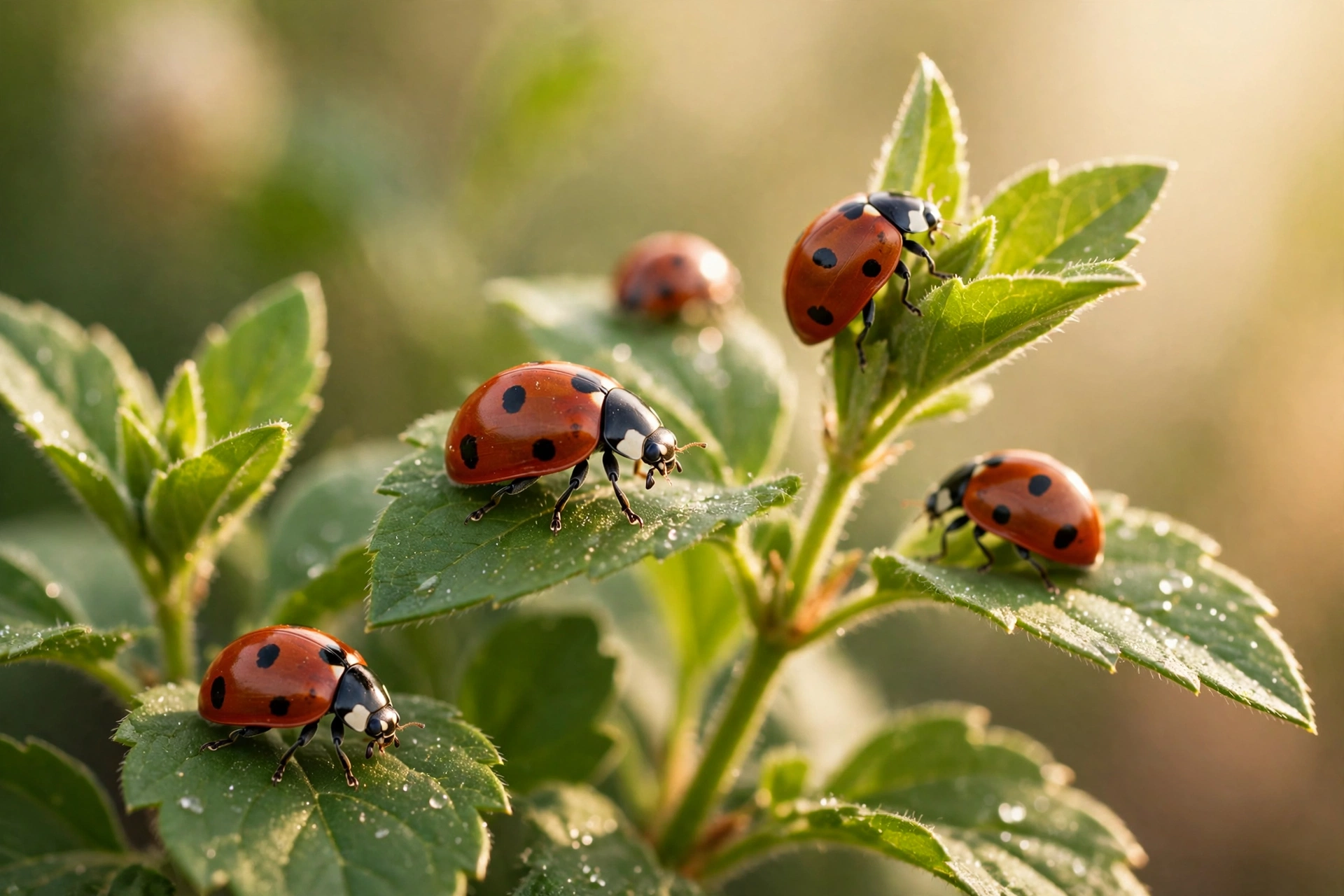
Garden pest control has one advantage over indoor control: you have allies. Ladybugs eat aphids. Lacewings eat aphids and mites. Birds eat caterpillars. A garden that supports those allies has fewer outbreaks than a garden that sprays everything, because broad spraying kills the helpers too.
For aphids, a strong jet of water from a hose knocks them off plants, and it is often enough if you repeat it for a few days. Insecticidal soap, a specific product made for plants, not dish soap from your sink, smothers soft-bodied insects like aphids and whiteflies on contact, and it breaks down quickly. It needs to actually touch the insects, and it needs reapplying after rain.
For slugs and snails, beer traps catch some, and copper tape around pots deters some, but neither ends a real slug problem in a wet garden. Hand-picking at dusk, when slugs are active, is unglamorous and effective, and removing the damp hiding places they shelter under during the day does more long-term good than any trap.
For caterpillars on vegetables, hand-picking works for a small garden, and a biological product based on Bacillus thuringiensis, often shortened to Bt, targets caterpillars specifically and breaks down in sunlight. It is still a pesticide, just a naturally derived one, which is a useful reminder that "natural" and "harmless to everything" are not the same thing. Bt harms caterpillars, including butterfly caterpillars, so use it where you have a real crop problem, not as a routine spray.
For garden problems generally, the boring fundamentals matter most: give plants space for air, water at the base rather than overhead, rotate crops, and pull diseased plants out instead of composting them at home.
The options, compared honestly
| Method | Best for | How it works | Honest limitation |
|---|---|---|---|
| Sealing gaps and cracks | Nearly every indoor pest | Removes entry and shelter | Tedious; needs regular checking as houses shift |
| Sealed food storage + cleaning | Ants, pantry pests, cockroaches, mice | Removes the food source | Only works if everyone in the house keeps it up |
| Soapy water on ant trails | Ants | Removes the scent path ants follow | Temporary; does not affect the colony |
| Borax baits (out of reach of children and pets) | Ants, some cockroaches | Carried back to the colony | Toxic if eaten; keep away from kids and pets |
| Diatomaceous earth (food grade) | Crawling insects in dry cracks | Fine powder damages insect exoskeletons | Useless when wet; breathing the dust irritates lungs, so wear a mask |
| Essential oil repellents | Light, occasional pests | Strong scent pests avoid briefly | Evidence is weak; fades fast; some oils are toxic to pets, especially cats |
| Hose spray + insecticidal soap | Aphids, whiteflies, mites | Physical removal + contact smothering | Needs direct contact and reapplying; dish soap can damage leaves |
| Hand-picking + removing shelter | Slugs, caterpillars, garden pests | Direct removal, no chemicals | Time-consuming; only practical for smaller gardens |
| Professional treatment | Established infestations, termites, bed bugs, wasps in walls | Targeted products and expertise | Necessary when natural methods cannot reach the problem |
Notice the pattern in that table: the most effective natural methods are not sprays at all. They are sealing, cleaning, storage, and removal. The sprays help at the margins.
Safety notes, because "natural" is not "safe for everyone"
This is the section people skip, and it is the one that matters most if you have kids or pets. Borax and boric acid are naturally derived and also toxic if swallowed, so they belong in cracks and crevices, never on counters, floors where pets walk, or anywhere a child can reach. Diatomaceous earth is a fine powder, and breathing it irritates lungs, so wear a mask when applying it and keep it out of bedrooms. Essential oils are concentrated plant compounds, and several are toxic to cats and dogs, so check before diffusing or spraying any oil in a home with pets, and never apply undiluted oils to a pet.
And a general rule for any pest product, natural or synthetic: read the label, use the amount it says, and store it where children and pets cannot get it. Diatomaceous earth, for example, only works when dry.
When to call a professional
Natural methods have a clear boundary, and respecting it saves you months of frustration. Call a professional if any of these apply.
- Termites, or any sign of them: mud tubes, hollow-sounding wood, discarded wings. Termites cause structural damage, and no home remedy addresses a colony in your walls.
- Bed bugs. They hide in seams, furniture, and walls, they spread easily, and they are famously resistant to do-it-yourself approaches.
- Wasps or bees nesting in walls, attics, or high-traffic areas, especially if anyone in the home is allergic to stings. Do not seal a wasp nest into a wall yourself. They will find another way out, often into the house.
- An established cockroach, mouse, or rat population that persists after sealing, cleaning, and trapping.
- Any pest problem where someone in the home has a health condition that makes bites or stings a medical concern.
Calling a professional is not giving up on natural methods. It is recognizing that some problems are bigger than prevention and spot treatment.
The bottom line
Natural pest control works best as a system, not a spray. Seal the gaps, store the food, fix the water, remove the shelter, and use targeted tools like baits, soap, and hand-picking for pests that still show up. Be honest about the limits: peppermint oil will not stop mice, and no home remedy handles termites or bed bugs.
Prevention first, targeted tools second, and a professional when the problem is bigger than both. That order keeps your home mostly pest-free, your kids and pets safe, and your money spent on what works.
This post is for general information only and is not medical advice. If you have a health condition, check with your clinician before changing supplements or routines.