PectaSol shows up in conversations about cellular health, healthy aging, and detox in a way most supplements don’t — because behind it is a genuinely unusual research story. It’s modified citrus pectin, a form of fiber from citrus fruit, and its maker, ecoNugenics, positions it around a single protein called galectin-3. But the research is also small, preliminary, and often overstated by sellers. Here’s what PectaSol actually is, what the studies show and don’t show, and whether it’s worth considering.
What PectaSol Is
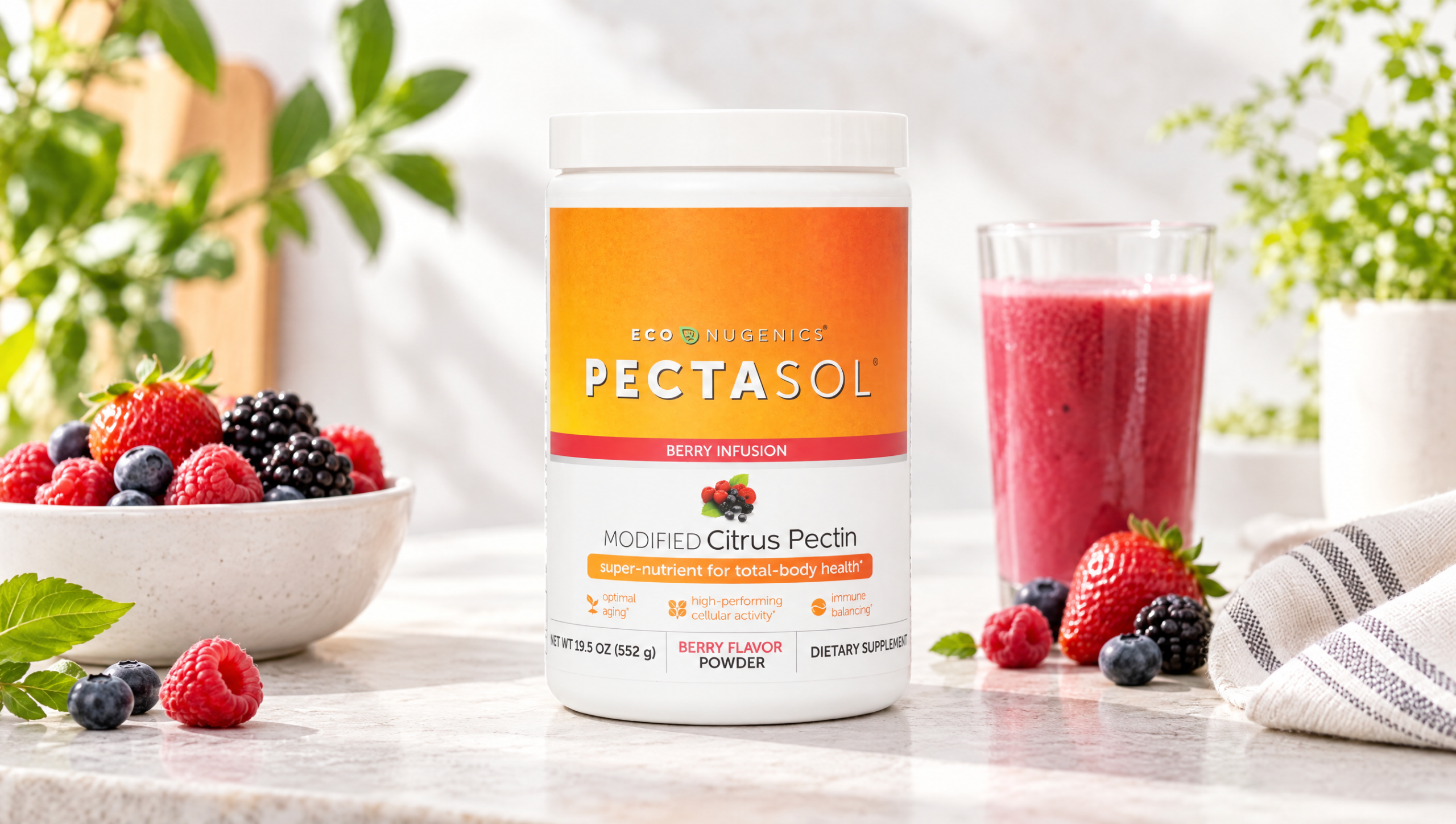
PectaSol (full name PectaSol-C) is modified citrus pectin (MCP) made by ecoNugenics in Santa Rosa, California. Regular pectin — the stuff that thickens jam — has molecules too large to enter circulation. PectaSol is citrus pectin that has been enzymatically modified to reduce its molecular size, so the resulting low-molecular-weight chains can be absorbed into the bloodstream. That modification is the whole product: unmodified pectin and other unresearched MCP forms don’t have the same molecular profile, according to the published literature.
It’s sold as a powder and in capsules, is vegan and gluten-free, and is essentially a specialized dietary fiber.
The Galectin-3 Story
The central claim is about galectin-3 (Gal-3), a protein that is normally present in small amounts throughout the body but rises with age and other factors. Elevated Gal-3 is associated with inflammation, fibrosis, cardiovascular strain, and cellular dysfunction — and there are thousands of published studies on Gal-3’s role in disease processes (the brand cites 8,000+).
PectaSol’s pitch: it is the only available agent shown to enter circulation and bind and block excess Gal-3. That’s a brand claim built on real Gal-3 biology, but the leap from “Gal-3 matters in disease” to “blocking it with this supplement improves outcomes” is where the evidence gets much thinner. Gal-3 research is extensive; PectaSol-specific human outcome research is not.
What the Human Research Actually Shows
This is where honesty matters, because the studies are real but small and preliminary:
- Lead in children (2008): Seven children ages 5–12 with elevated blood lead took 15 grams of PectaSol daily in three divided doses for 28 days. Blood lead levels changed by an average of 161% and urinary lead excretion rose 132%, without depleting beneficial minerals. Tiny sample, no control group — interesting, not conclusive.
- Mercury case report: One 57-year-old man taking 5 grams three times daily for twelve months saw a 73% decrease in mercury, which rose again after stopping for nine months. A single case, not a trial.
- Uranium excretion: A family of six with low-level uranium exposure took MCP with sodium alginate for six weeks; fecal uranium excretion rose significantly and fell after washout. Again small, and the first report of any supplement promoting uranium excretion — which also means unreplicated.
- Advanced cancer pilot: 49 patients with advanced solid tumors took 5 grams three times daily; after two cycles, about 21% showed clinical benefit (stabilization or improved quality of life) and about 22% had stable disease. No control group, advanced disease, and quality-of-life benefit is not tumor shrinkage. This is preliminary research, not evidence that PectaSol treats cancer — and it must never be presented that way.
The pattern across all of these: small numbers, short durations, often no control group, and outcomes that are suggestive rather than proven. The brand also reports no toxicity in short- or long-term use, which is reassuring as far as safety, but safety is not the same as proven benefit.
How It’s Taken
The brand’s active dose is 15 grams per day (the dose used in most of the studies above), typically as powder stirred into liquid. It should be taken apart from food — 30 minutes before or 1.5 hours after eating — to maximize absorption, and separately from other medications, since fiber can interfere with absorption. Some people experience loose stools at the start of use, which usually settles.
Capsules exist for convenience, but reaching 15 grams via capsules means a lot of capsules — the powder is the practical route at the studied dose.
What It Isn’t
- It isn’t a cancer treatment. The cancer pilot is preliminary and uncontrolled. Anyone considering PectaSol alongside cancer care needs to discuss it with their oncology team, not a supplement seller.
- It isn’t a general “detox.” The heavy-metal findings are small and specific (lead, mercury, uranium in particular studies), not proof of broad detoxification.
- It isn’t the same as any citrus pectin. Regular pectin and unresearched MCP products don’t share PectaSol’s molecular profile or its (limited) human data. If the research matters to you, the specific product matters.
- It isn’t a substitute for medical care for heart, kidney, immune, or cellular conditions — all areas the brand mentions.
Cautions
- Pregnancy and nursing: consult a healthcare professional first — the brand says so itself.
- Potassium or sodium restriction: the sodium-to-potassium ratio is controlled in production, but anyone restricting either should check with their clinician.
- Citrus sensitivity: it’s derived from citrus fruit; avoid if you have citrus sensitivities.
- Medication timing: take it separately from medications to avoid absorption interference.
- Results take time: user reports consistently say benefits, if any, appear gradually with consistent use — not overnight.
Who It’s For
PectaSol makes the most sense if you’re interested in the galectin-3 research specifically, you understand the evidence is preliminary, and you want a well-tolerated fiber supplement with an unusual research profile. It’s less suited to anyone looking for proven treatment of a specific condition, anyone wanting quick results, or anyone who would use it instead of medical care.
My Experience
I’ve taken PectaSol for the last three years for mold recovery, and it’s been one of my daily staples since.
The Bottom Line
I think PectaSol is one of the more interesting supplements on the market — and one of the most oversold. The Gal-3 biology is real, the modification science makes sense, and the small human studies are genuinely intriguing, especially the metal-excretion findings. But intriguing is the right word: small samples, no large controlled trials, and outcomes that fall well short of the marketing. If you try it, try it as a well-tolerated experiment with modest expectations and your clinician in the loop — not as a proven therapy for anything.
This post is for general information only and is not medical advice. If you have a health condition, check with your clinician before changing supplements or routines.