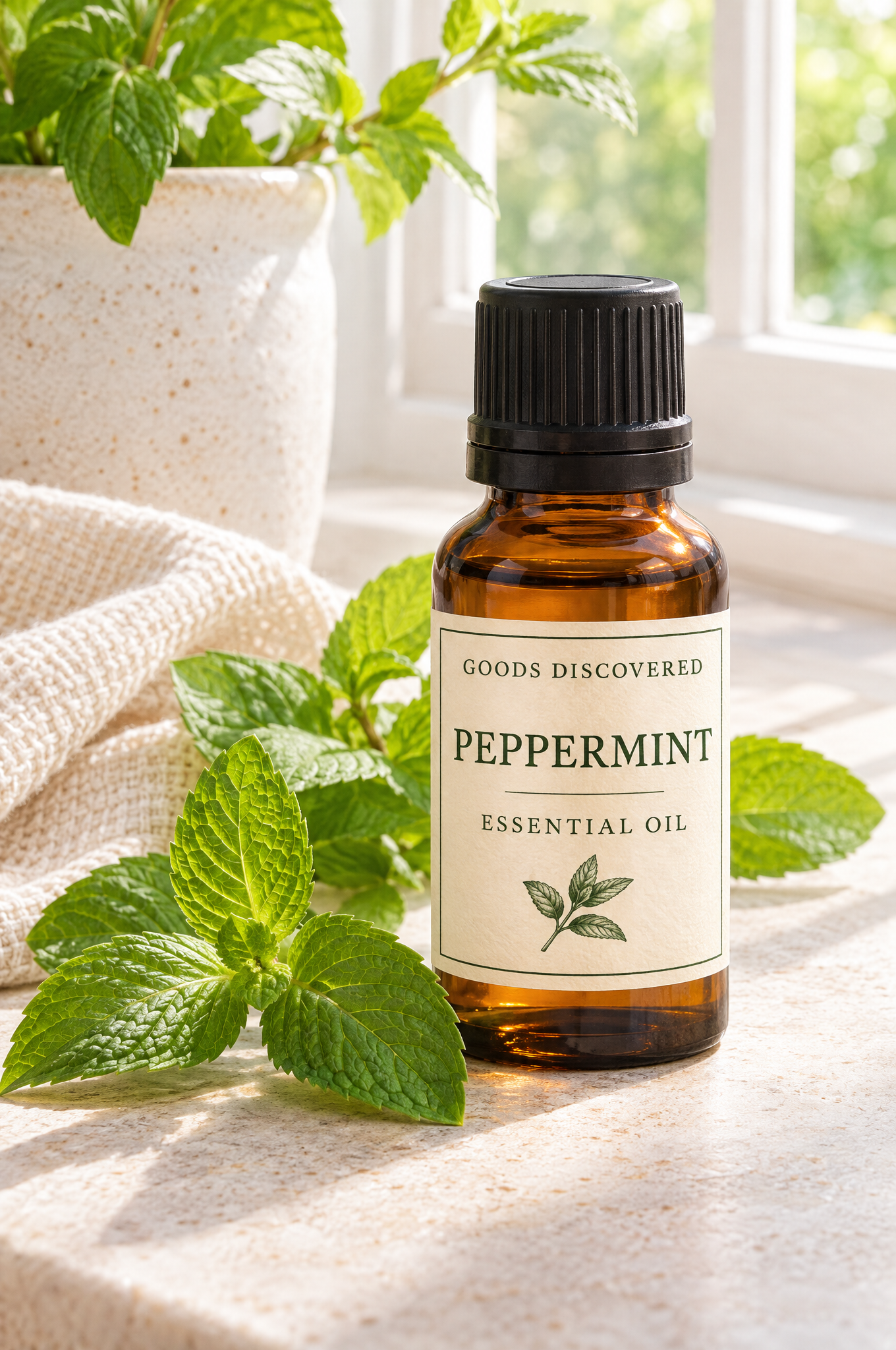
If you have ever crushed a fresh peppermint leaf between your fingers, you know the scent — cool, sharp, and instantly clearing, like a deep breath of fresh air. Peppermint essential oil bottles that feeling, and it is one of the most useful oils I own.
Peppermint essential oil benefits for headaches, digestion, energy, and focus are why this bright green oil has been loved for centuries. This guide shares what it is, what it is good for, how I use it every day, and the safety rules — including the pet rules — that matter most.
On This Page
- What Peppermint Essential Oil Is
- Peppermint Essential Oil Benefits for Headaches
- Peppermint Essential Oil Benefits for Digestion and Nausea
- Peppermint Essential Oil Benefits for Energy and Focus
- Peppermint Essential Oil Benefits for Muscles and Cooling
- How to Use Peppermint Essential Oil
- Is Peppermint Essential Oil Safe for Dogs and Cats
- Peppermint Essential Oil Safety
- Peppermint Essential Oil: Good If You
- The Bottom Line on Peppermint Essential Oil Benefits
What Peppermint Essential Oil Is
Peppermint essential oil comes from the leaves and flowering tops of peppermint, Mentha × piperita — a natural cross between watermint and spearmint — steam-distilled into a clear, pale oil. Its power comes mainly from menthol, the compound behind the cooling tingle, along with menthone and other fresh, minty compounds.
The scent is cool and penetrating, much stronger than the fresh leaf, and a little goes a long way — one drop is plenty to scent a whole room. Peppermint is one of the most studied essential oils, and it is also one of the most versatile: it shows up in headache blends, tummy rubs, muscle oils, and focus diffusers alike.
When you shop, look for the botanical name on the label — Mentha × piperita — and choose a brand that shares GC/MS test results. True peppermint oil should smell clean and cool, never syrupy-sweet; a sweet, candy-like scent is a sign the oil has been stretched or adulterated.
If you are new to essential oils, my Essential Oils: What Actually Helps guide is a good place to start — it walks through how I choose oils and use them safely.
Peppermint Essential Oil Benefits for Headaches
Peppermint essential oil benefits for headaches are the reason most people buy their first bottle. The cooling menthol relaxes the muscles of the forehead and neck and creates a tingling, cooling feeling that many people find soothing when a tension headache sets in.
Small studies have found that a 10% peppermint oil solution applied to the temples and forehead was linked with easing tension-type headaches, in a way that felt similar to a standard headache remedy. I love it as a first response: a drop of a diluted blend rubbed onto the temples and the back of the neck, then a few slow breaths with my eyes closed.
My blend is simple: two or three drops of peppermint oil in a teaspoon of jojoba or fractionated coconut oil, massaged gently onto the temples and neck. Keep it well away from the eyes — the menthol sting is real — and wash your hands after applying it.
Peppermint Essential Oil Benefits for Digestion and Nausea
Peppermint essential oil benefits for digestion and nausea go back the furthest of all — peppermint tea has been the traditional after-meal remedy for generations, and the oil carries the same cooling, settling character in a much more concentrated form.
Menthol relaxes the smooth muscle of the gut, which is why peppermint is traditionally used for bloating, gas, and that over-full feeling after a big meal. I love it as an inhalation remedy: one drop on a tissue or cotton ball, held near the nose and breathed in slowly, when my stomach feels unsettled or queasy — on a car ride, in the morning, or after a rich meal.
A drop in the diffuser after dinner works the same gentle way, filling the room with a clean scent that feels settling rather than heavy. Peppermint oil is not a drink — never add it to water or take it by mouth unless a qualified practitioner has specifically guided you — but inhaling it is a lovely, simple way to use it for the tummy.
Peppermint Essential Oil Benefits for Energy and Focus
Peppermint essential oil benefits for energy and focus are why I keep a bottle on my desk as well as in the bathroom. The scent is a wake-up call: cool, bright, and alerting, like opening a window on a cold morning.
I diffuse three or four drops in my workspace in the afternoon, when my energy dips and my focus starts to wander. The cool scent seems to sharpen the room, and I pair it with rosemary when I want the focus to feel even clearer, or with lemon when I want it brighter.
It is also my favorite for the car: a drop on a cotton ball clipped to the vent keeps me alert on a long drive, and it freshens the whole car at the same time.
Peppermint Essential Oil Benefits for Muscles and Cooling
Peppermint essential oil benefits for muscles and cooling come from the same menthol tingle that helps headaches. Rubbed onto skin in a diluted blend, it feels cool first, then warm — a sensation athletes have used for generations in muscle rubs and sports balms.
I love it after a workout or a long day on my feet: two or three drops in a tablespoon of carrier oil, massaged into tired calves, shoulders, or the back of the neck. The cooling feeling is immediate and refreshing, and it pairs beautifully with eucalyptus for a classic muscle-rub scent. On a hot day, a drop in a cool compress on the back of the neck is the fastest way I know to feel cooler.
A little goes a long way here — peppermint is a strong oil, and more drops do not mean more benefit. Start with one or two, and add more only if you need it.
How to Use Peppermint Essential Oil
Peppermint essential oil is wonderfully versatile once you know the dilution rules — here are the ways I use it most:
In a diffuser. Add three or four drops to your diffuser with water and let it run for thirty minutes in your workspace or living room. Peppermint essential oil diffuser benefits are the cool, clearing scent — it freshens a room and lifts the energy in it. Diffuse in a ventilated room and take breaks rather than running it all day.
On skin, always diluted. For the body, use a 1–2% dilution — about six to twelve drops per ounce of carrier oil. For the temples, a 10% blend has been studied for tension headaches, but keep it away from the eyes and mucous membranes. Always patch test first: a little of your diluted blend on the inside of your forearm, then wait a full day.
As an inhalation. One drop on a tissue or cotton ball, breathed in slowly, for nausea or a stuffy head. Or cup your hands over a drop in your palm — diluted, not neat — and take three slow breaths.
Around the home. Peppermint helps keep insects away, and a few drops on a cotton ball in a drawer or by a door keeps things smelling fresh.
Is Peppermint Essential Oil Safe for Dogs and Cats
Is peppermint essential oil safe for dogs and cats is one of the most searched questions about this oil — and the answer needs care, because peppermint is stronger than many people expect.
Peppermint oil is considered toxic to cats and dogs if ingested or applied to their skin, and cats are more sensitive than dogs — they lack some of the liver enzymes needed to process essential oil compounds. Never apply peppermint oil to a pet, and never let a pet lick or eat it.
The safe rule for both: only diffuse in a large, well-ventilated room that your pet can leave whenever they want, and never diffuse around young pets, small animals, or pets with health problems. If you notice any change — lethargy, drooling, pawing at the face, or hiding — stop diffusing and open a window. And if you are unsure, ask your vet first.
Peppermint Essential Oil Safety
Peppermint is a strong oil, and a few rules keep it safe:
Dilution is the big one. Never apply peppermint essential oil undiluted — even a small amount can irritate skin and mucous membranes. Always patch test first, and keep it away from your eyes, nose, and mouth.
Do not use peppermint oil on babies or young children. Menthol can affect breathing in infants, so peppermint oil is generally not recommended for children under three, and many aromatherapists wait until age six. If you are pregnant or breastfeeding, check with your healthcare provider first. And peppermint essential oil is not for internal use — skin, diffusing, and inhalation only, unless a qualified practitioner has guided you.
Store the bottle upright in a cool, dark place with the cap on tight. Peppermint oil is potent, so keep it well out of reach of children and pets.
Peppermint Essential Oil: Good If You
Peppermint essential oil is a lovely fit if you want one strong, versatile oil — a bottle for headaches, tummy troubles, focus, and tired muscles. It suits you if you love cool, fresh scents, or if afternoons are when your energy and focus need the most help.
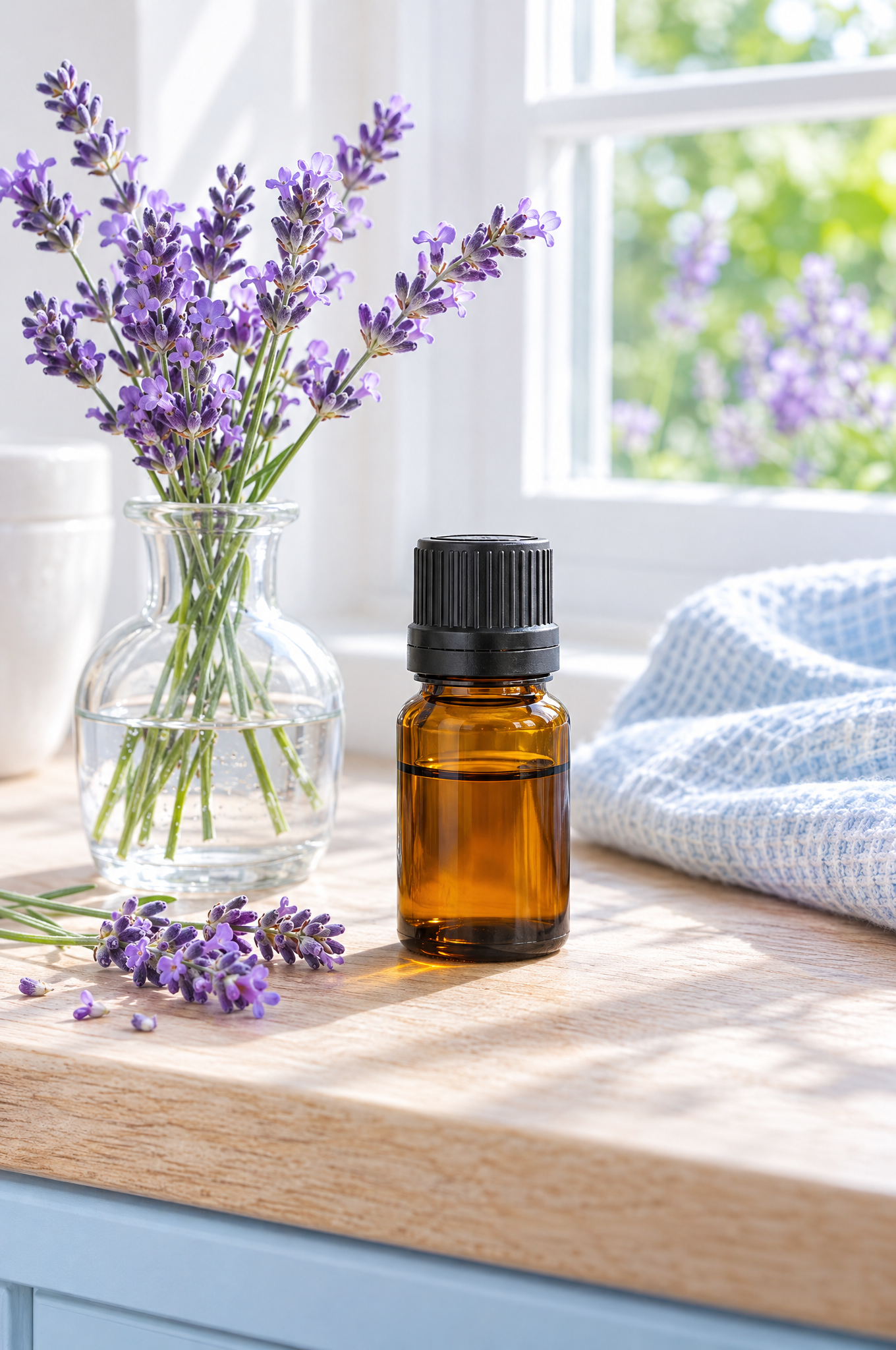
Try it first as three drops in the diffuser one afternoon, thirty minutes before you need to focus, and see how the room feels. If the scent is too sharp on its own, blend it with lavender — a drop of each — for a cool, calm combination that softens the edge.
The Bottom Line on Peppermint Essential Oil Benefits
Peppermint essential oil benefits for headaches, digestion, energy, and focus are why this cool green oil earns its place on my shelf — bright, strong, and genuinely useful, one drop at a time.
Start with proper dilution, patch test first, and let this crisp, clearing oil do its quiet work.
This article is for general information only and is not medical advice. Talk to your doctor before using essential oils if you are pregnant, nursing, taking medication, or managing a health condition. Never apply essential oils undiluted to skin, and do not use peppermint oil on babies or young children.