You have probably seen both words on the same shelf, sometimes on the same bottle, and wondered whether you need one, the other, or both. I did too, and the confusion is understandable — the words sound almost identical, they both relate to gut health, and marketing treats them as interchangeable. They aren't.
Here's the distinction in one sentence: probiotics are live microbes, and prebiotics are the food those microbes eat.
The simple version: seeds and fertilizer
Think of your gut as a garden. Probiotics are like adding new plants — live bacteria and yeasts that you consume, hoping they settle in and do useful work. Prebiotics are like fertilizer — fibers and compounds in food that feed the beneficial microbes already living in your gut, helping them grow and stay active.
Neither picture is perfect, but it captures the key difference: one adds microbes, the other feeds the ones you already have. That changes what each one can realistically do, how you get it, and who should be careful with it.
Probiotics add live microbes. Prebiotics feed the microbes you already have. Everything else in this guide follows from that.
What each one is, side by side
| Probiotics | Prebiotics | |
|---|---|---|
| What it is | Live bacteria or yeasts, consumed in food or supplements | Fibers and plant compounds that gut microbes ferment |
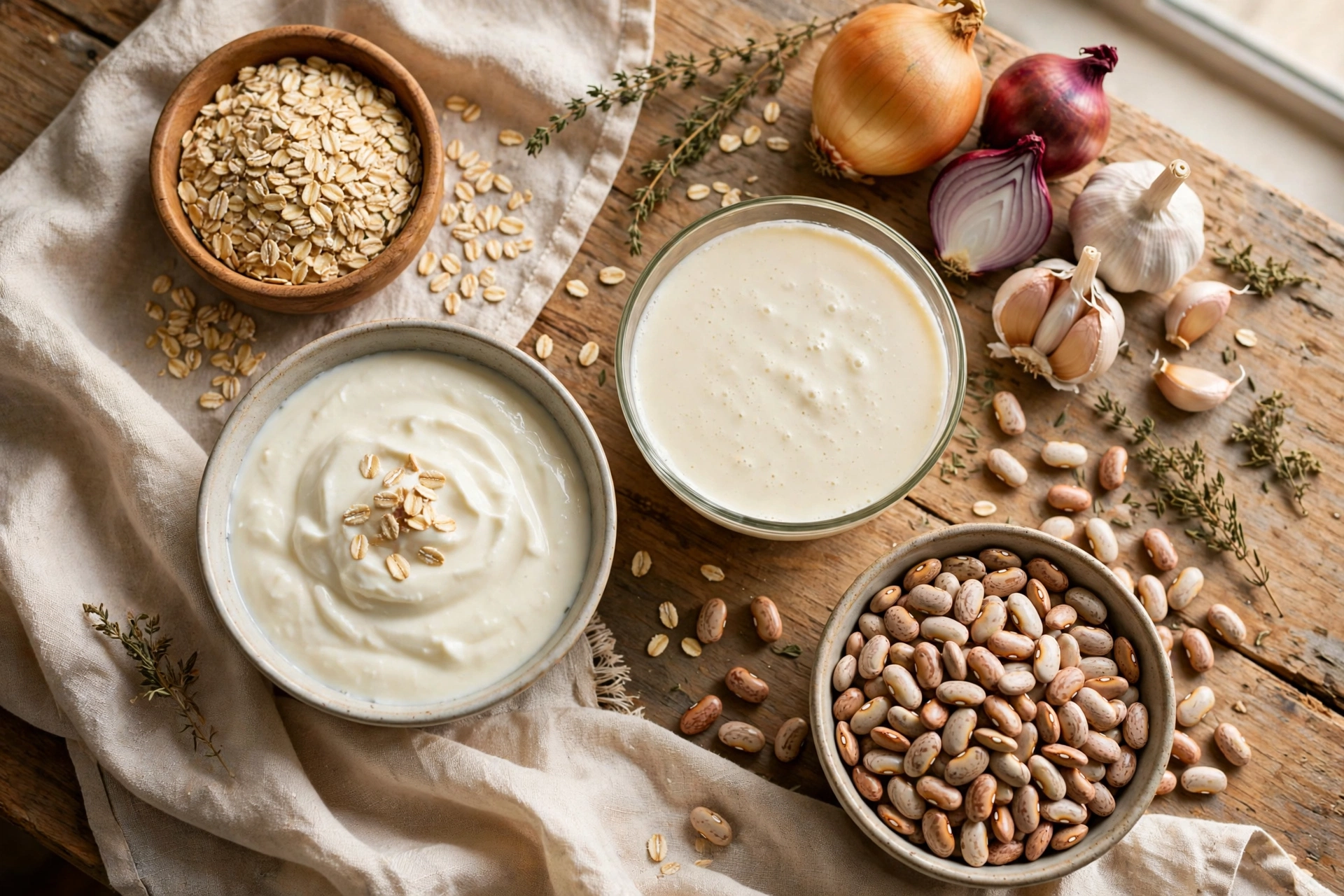
| Where it comes from | Fermented foods and supplements | Everyday plant foods like onions, garlic, beans, and oats |
| What it does | Adds microbes that may support digestion and gut balance | Feeds beneficial microbes already in the gut |
| Does it survive to the gut? | Some strains do, in meaningful numbers; many don't | Yes — prebiotics are designed by nature to reach the colon undigested |
| Main risk | Usually mild digestive upset; higher risk for some medical conditions | Gas and bloating, especially if you increase fiber quickly |
| Best starting point | Fermented foods you enjoy eating | A varied, fiber-rich diet |
Prebiotics: the foods-first story
Prebiotics are mostly types of fiber that your body can't digest but your gut microbes can ferment. When microbes ferment these fibers, they produce compounds associated with gut lining health. Much of that science comes from lab and animal studies, and human evidence is still catching up for many specific claims.
You don't need a supplement to get prebiotics. They're in ordinary foods:
- Onions, garlic, and leeks. Rich in inulin and related fibers, and they show up in cooking so often that most people eat them without trying.
- Bananas, especially slightly underripe ones. A source of resistant starch and fiber that feeds gut microbes.
- Oats and barley. Contain beta-glucan fiber, which also has well-studied effects on cholesterol and fullness.
- Beans, lentils, and chickpeas. High in fiber overall, including prebiotic fibers, plus protein and minerals.
- Asparagus and Jerusalem artichokes. Particularly rich in inulin, if you want to be deliberate about it.
- Apples, berries, and whole grains. Broader fiber sources that support gut microbes as part of a varied diet.
The prebiotic strategy that actually works is boring: eat a variety of fiber-rich plant foods, regularly, and increase the amount gradually. A sudden jump in fiber — say, adding a large serving of beans and a fiber supplement on the same day — is the fastest route to gas and bloating, which convinces people that fiber doesn't agree with them. It usually does; it just doesn't like surprises. Build up over a week or two, drink water, and let your gut adjust.
Probiotics: the fermented foods first
Probiotics are live microorganisms that, when consumed in adequate amounts, are intended to confer a benefit. The key words there are "live" and "adequate amounts" — a product that once contained live cultures but sat on a warm shelf for months may not deliver what the label promises.
Fermented foods are the natural starting point, and they have an advantage supplements don't: they're food first, with flavor and nutrition beyond the microbes.
- Yogurt and kefir. The most familiar sources. Look for "live and active cultures" on the label, and note that yogurt with added sugar is still dessert with microbes, not a health food by default.
- Sauerkraut, kimchi, and other fermented vegetables. Rich in live cultures when unpasteurized and refrigerated. Shelf-stable, pasteurized versions have been heated, which kills the microbes.
- Miso, tempeh, and some aged cheeses. Fermented foods with live cultures, in varying amounts.
- Kombucha. Fermented tea with live cultures, but also sugar, caffeine, and a small amount of alcohol. It's a drink to enjoy, not a medicine.
If you enjoy fermented foods, eating them regularly is the simplest probiotic habit, and it doesn't require a supplement aisle. If you don't enjoy them, that's useful information too — a supplement you dread taking is a supplement you'll stop taking, and consistency matters more than the delivery method.
Supplements second: what the evidence actually supports
This is where I want to be straight with you, because supplement marketing is not.
The evidence for probiotics is strongest in a few specific situations, and much weaker as a general wellness claim. Here's how I'd rank it honestly:
- Strongest evidence: certain digestive situations. Specific strains have reasonable evidence for reducing antibiotic-associated diarrhea and for helping some people with irritable bowel syndrome (IBS). But — and this matters — the evidence is strain-specific. A strain that helped with one condition in studies doesn't automatically help with another, and a generic "probiotic blend" may contain none of the studied strains.
- Moderate evidence: some gut conditions. There's growing research on probiotics for certain types of infectious diarrhea and for some aspects of gut health, but results vary by strain, dose, and person, and reviews often conclude the evidence is promising rather than settled.
- Weak or early evidence: immunity, mood, skin, and general wellness. These are the claims you see most in advertising, and they're the ones with the least solid human evidence. There are interesting studies, especially around the gut-brain connection, but "interesting" is not "proven," and a supplement that promises all of them at once is promising more than the science supports.
For prebiotic supplements — usually inulin or similar fibers in powder or capsule form — the evidence is more straightforward: they do feed gut microbes. But they also cause gas and bloating more readily than whole foods, because a concentrated dose hits the gut all at once. For most people, food sources give the same benefit with fewer side effects.
The honest summary: probiotic supplements are worth considering for a specific, researched purpose, not as a daily insurance policy for general health. If you're considering one, look for the specific strain (not just the species), evidence for your particular concern, and a product that stores its cultures properly. And be skeptical of any product that claims to fix a long list of unrelated problems.
Should you take both? Synbiotics, explained
You'll also see "synbiotic" products, which combine a probiotic with a prebiotic in one supplement, so the prebiotic feeds the probiotic strain in the same capsule. The logic is sound, and some studies support specific combinations. But the same strain-specific rule applies: a synbiotic is only as good as its particular combination, and "contains a prebiotic and a probiotic" is not itself evidence that it works.
For most people eating a varied diet with some fermented foods, you're already getting both — prebiotics from plant foods, probiotics from fermented foods — without needing a combined supplement.
Who should check with a clinician first
This section matters more than the shopping advice, so please read it carefully.
Talk with your clinician before taking probiotic supplements if you are immunocompromised, have a serious gut condition, or are dealing with a significant illness. This includes people undergoing chemotherapy, people who take immune-suppressing medication, people with a central line or recent major surgery, and people with conditions like severe inflammatory bowel disease. In these situations, introducing live microbes carries a small but real risk of infection that doesn't apply to the general population, and the decision should be made with a clinician who knows your history.
If you have SIBO (small intestinal bacterial overgrowth), be especially cautious with both prebiotics and probiotics. SIBO involves bacteria growing where they shouldn't be in large numbers, and feeding those bacteria with prebiotic fiber or adding more microbes can worsen symptoms like bloating and discomfort. People with SIBO often find that the standard "eat more fiber and fermented foods" advice backfires, and they need a plan tailored to their condition, not a general gut-health guide.
Other situations worth a conversation with a clinician: persistent digestive symptoms that haven't been evaluated (ongoing pain, blood in stool, unexplained weight loss, or symptoms that keep getting worse), pregnancy, and giving probiotics to infants or young children. None of these are automatic reasons to avoid fermented foods or fiber, but they are reasons to get personalized advice rather than following general guidance.
How to choose, if you do choose a supplement
If you've read all of that and still want to try a supplement for a specific reason, here's the checklist I'd use:
- A specific strain, named on the label. Look for the full strain designation, not just the species.
- Evidence for your purpose. Search for the strain and your concern together, and look for human studies, not just lab results or testimonials.
- Proper storage. Some probiotics need refrigeration; others are shelf-stable by design. Follow the label.
- A reasonable number of strains. More strains isn't better by default. A product with one well-studied strain often beats a blend of many unstudied ones.
- No miracle claims. If the label promises to fix your digestion, immunity, mood, and skin at once, it's selling, not informing.
The bottom line
Prebiotics feed your gut microbes; probiotics add live microbes. Both are available from ordinary foods — fiber-rich plants for prebiotics, fermented foods for probiotics — and for most people, that's the best place to start. Supplements have real but narrower evidence, mostly for specific digestive situations and specific strains, and they're not a general wellness shortcut.
Eat a variety of plant foods, include fermented foods you actually enjoy, increase fiber gradually, and check with your clinician first if you're immunocompromised, have SIBO or a serious gut condition, or have symptoms that haven't been evaluated. Your gut mostly needs variety, patience, and food you like eating.
This post is for general information only and is not medical advice. If you have a health condition, check with your clinician before changing supplements or routines.