You step out of a sauna, skin pink, muscles loose, and your brain feels like someone turned the volume down. It’s a good feeling. But is it actually doing anything for you, or is it just a really pleasant way to sweat?
Short answer: it’s doing something. Longer answer: some of the benefits have solid evidence behind them, some are overstated, and a few popular claims are just wrong. Here’s the honest version.
What the heat actually does to you
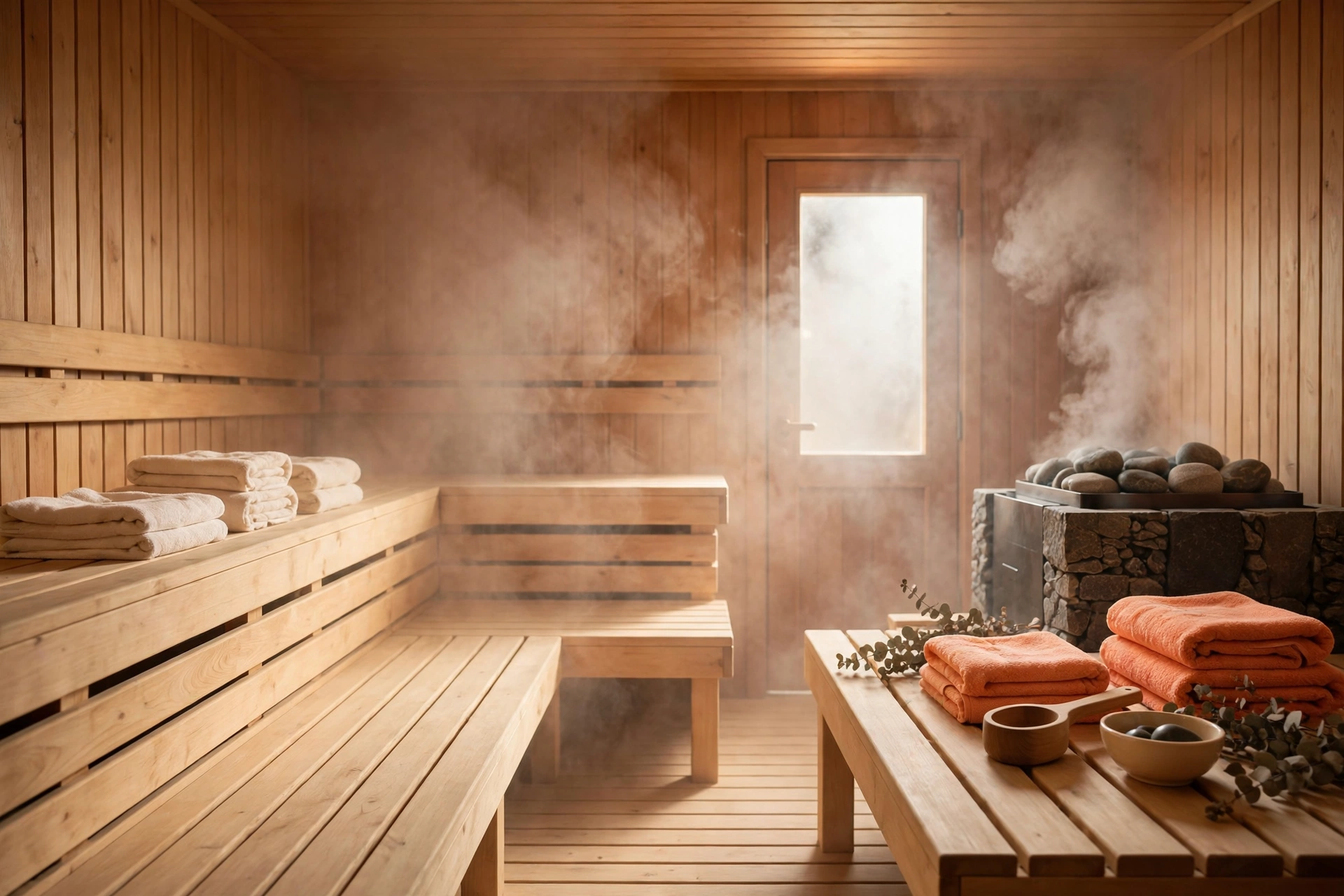
A sauna is a controlled heat stress. Your core temperature rises, your heart rate climbs, your blood vessels widen, and you sweat — a lot. Researchers sometimes call this “passive heat therapy,” because your cardiovascular system is working hard while you’re sitting still doing nothing.
That last part matters. A sauna session can push your heart rate to levels you’d hit on a brisk walk or a light jog, without moving a muscle. That’s not a replacement for exercise — nobody’s saying skip your walk and sit in a hot box instead — but it explains why so many of the studied benefits look cardiovascular. Your heart and blood vessels are genuinely getting a workout.
The heat is the active ingredient, not the sweat. Sweating is just your cooling system doing its job. The benefits come from what the heat does to your circulation, your nervous system, and your muscles while you’re in there.
The benefits with the best evidence
Let’s start with the strongest stuff, because the sauna world is full of big claims and it’s worth knowing which ones hold up.
Heart health. This is the headline. Long-running Finnish studies — Finland being the land of saunas, where researchers could actually track regular users for decades — found that people who used a traditional sauna several times a week had lower rates of cardiovascular disease and sudden cardiac death than people who rarely used one. The more frequent the sessions, the stronger the association. One honest caveat: these are observational studies, not lab experiments. Sauna users in Finland also tend to live active lives, so the sauna isn’t the whole story. But the association is consistent and large, and it’s the best evidence in the whole sauna conversation.
Muscle recovery. After hard training, heat helps blood flow to tired muscles, which can ease soreness and stiffness. Athletes have used saunas for this forever, and smaller trials back it up. If you lift or run, a sauna session after training genuinely feels like it speeds up the “I can move normally again” timeline.
Sleep. A sauna session in the late afternoon or evening can help you fall asleep faster. The mechanism is simple: your body temperature drops after you get out, and that drop is one of the signals your body uses to wind down for sleep. It’s the same reason a warm bath before bed works. Don’t take one right before bed if it leaves you wired, but a session a couple of hours before usually helps.
Mood and stress. This one is more about how you feel than a lab measurement, and it counts. Heat triggers endorphins, and the forced stillness of a sauna — no phone, no noise, nowhere to be — is a real break for your nervous system. People who sauna regularly often describe it as their decompression ritual, and I get it. Sitting quietly in a hot room is one of the few socially acceptable ways to do absolutely nothing.
Skin. Sweating opens pores and increases blood flow to the skin, which can leave your complexion looking better afterward. That’s real but temporary — it’s a glow, not a treatment. If you have a skin condition, heat can also aggravate it, so this one cuts both ways.
Infrared vs traditional vs steam, in plain English
Not all saunas are the same experience, and the differences matter when you’re choosing one — or deciding whether the one at your gym counts.
| Type | How it heats | Typical temperature | Humidity | How it feels |
|---|---|---|---|---|
| Traditional (Finnish) | Hot rocks heat the air | 175–195°F | Low, unless you pour water on the rocks | Dry, intense, classic sauna |
| Infrared | Panels heat your body directly | 120–140°F | Very low | Gentler, easier to stay in longer |
| Steam room | Boiling water makes steam | 110–120°F | 100% | Wet, heavy, hard to breathe for some |
Traditional saunas have the most research behind them, because that’s what the Finnish studies tracked. Infrared saunas run cooler, which a lot of people prefer — you can sit in one longer without feeling overwhelmed. Steam rooms are a different experience entirely: the humidity makes the same temperature feel much hotter, and some people love that while others find it suffocating.
One note on infrared: the heaters are electric, and some people ask about EMF exposure. Low-EMF infrared models exist specifically for that concern, with shielded heaters and wiring. The science on whether low-level EMF from a sauna matters isn’t settled, so I treat it as a personal-comfort choice, not a safety verdict — if it matters to you, it’s an easy thing to shop for.
How to actually use one
If you’re new to saunas, the learning curve is short, but a few basics make the difference between a good session and a miserable one.
- Start short. Ten to fifteen minutes is plenty for your first sessions. You can work up to twenty or thirty as you get used to it.
- Hydrate before and after. You lose a lot of water sweating. Drink before you go in, and drink again when you get out. Don’t try to be tough about this.
- Frequency beats intensity. The Finnish research points to several sessions a week, not one heroic marathon session. Two to four times a week is the range most often associated with the benefits.
- Cool down after. A cool shower, a few minutes in fresh air, or a cold plunge if you’re that person. The temperature drop afterward is part of what makes you feel good — and part of what helps sleep later.
- Listen to your body. Dizziness, nausea, or a racing heart that feels wrong are your cue to get out. There’s no prize for staying in the longest.
The pattern matters more than any single session. One sauna visit is a nice experience. Regular sessions over months are where the research shows benefits stacking up.
The detox claim, honestly
You’ve probably seen saunas sold as a way to “flush toxins.” Let’s be straight about this: your liver and kidneys do your detoxing, and they do it very well without any help from a hot room. Sweating does release tiny amounts of some substances, but the idea that a sauna session purges your body of toxins is marketing, not science.
What a sauna does do is make you sweat, improve circulation, and help you relax — and those are plenty. It doesn’t need a detox story to be worth doing. If a sauna brand leans hard on “toxin flushing,” that’s a sign to be skeptical of its other claims too.
Who should be careful
Saunas are safe for most healthy adults, but they’re not for everyone, and a few situations deserve a pause.
- Pregnancy. High core temperatures in early pregnancy are a known risk, so most clinicians advise skipping saunas while pregnant.
- Heart conditions or low blood pressure. The cardiovascular workout a sauna gives you is the point, but if your heart or blood pressure is already a concern, talk to your clinician first.
- Dizziness or feeling faint. Get out, cool down, drink water. This isn’t a toughness test.
- Alcohol. Don’t sauna after drinking. Alcohol plus heat plus dehydration is a bad combination, and it’s how people actually get hurt in saunas.
- Kids and older adults. Shorter, cooler sessions, and supervision for kids. Older adults should be especially careful about hydration and standing up slowly afterward.
None of this is meant to scare you off. It’s the same common sense you’d apply to a hot bath or a hard workout — know your limits, and check with a clinician if you have a condition that makes heat risky.
The bottom line
Saunas aren’t magic, and they aren’t a scam either. The honest version is somewhere in the middle: regular heat sessions are associated with better heart health, easier recovery, better sleep, and a calmer nervous system, with the strongest evidence behind traditional saunas used several times a week. The detox hype is overblown, and the experience itself — twenty quiet minutes with nowhere to be — might be half the benefit.
If you’ve been curious about saunas, the barrier to trying one is low. Your gym probably has one. Sit in it for ten minutes, drink some water, and see how you feel after. That’s the whole experiment, and it’s a pleasant one.
This post is for general information only and is not medical advice. If you have a health condition, check with your clinician before changing supplements or routines.